- 98
- Episodes
- Bi-weekly
- Cadence
- 2019
- First episode
- 311K
- YouTube views
About ONE Podcast
ONE Podcast from True Underground is a leading electronic music mix series featuring exclusive DJ mixes and in-depth artist interviews. Each episode spans techno, house, tech house, melodic techno, progressive, bounce, nu-trance, and underground electronic music, delivering long-form sets and behind-the-scenes insights from the world’s best electronic artists.
- Publisher
- True Underground
- Category
- music
- Language
- en
- Explicit
- No
- First episode
- 27 Dec 2019
- Latest episode
- 6 Aug 2026
Latest episodes
98 episodes in the feed.
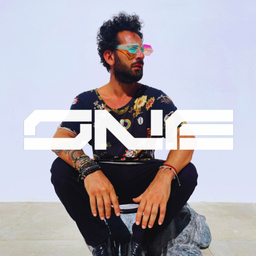
6 Aug 2026
Chus & Ceballos Live from Chicago 2026 (ONE Podcast 111)
© 2026 True Underground. All rights reserved. Chus & Ceballos Return: Stereo Productions Marks 25 Years with Renewed Purpose and the Spirit of Somos Uno Twenty-five years after founding Stereo Productions, Chus and Ceballos stand at a meaningful crossroads. The Spanish duo behind the influential Iberican Sound have reunited after a five-year pause, returned to the world’s biggest dance floors on The Reunion Tour, and released “Somos Uno,” a track that crystallises the renewed connection they rediscovered with each other and with their audience. What follows is the full arc of that journey, from late-1990s Madrid studios to the present chapter of a label built on authenticity rather than fashion. The story begins in the late 1990s, when two producers from different musical backgrounds first began exchanging ideas. One came from house, the other from techno. What they shared was more important than what separated them. Even coming from two genres as different as house and techno, we both found a balance in the way we combined our ideas. We immediately realized we shared the same philosophy. Neither of us wanted to imitate what everyone else was doing. We were both searching for a sound that was emotional, rhythmic, and unmistakably our own. That shared vision became the foundation of everything that followed, and it’s still the reason we’re making music together today. Those early sessions in Madrid absorbed the city’s vibrant nightlife, Latino diaspora culture, ethnic rhythms, African percussion and flamenco. Rather than copy what was happening elsewhere, the pair fused those influences into something that felt personal. Years later the resulting style would be called the Iberican Sound. The distinction was never about a single piece of equipment or a production trick. It was about treating percussion as the lead instrument instead of mere support. Layered organic rhythms, deep grooves and emotional musicality gave the records a character that stood apart from much of the European house of the era. Like most producers of their generation, they worked with a mixture of analogue gear, early digital tools and whatever else they could access. The decisive education, however, came from the clubs themselves. Endless nights on Madrid dance floors taught them more about rhythm and low-end weight than any studio manual. In 2001 they launched Stereo Productions. The mandate was simple and remains unchanged. Our vision wasn’t technical; it was musical. We wanted complete artistic freedom. Stereo Productions was created so we could release music we truly believed in, regardless of whether it fitted current industry trends. That philosophy remains unchanged today. Early club records such as “That Feeling” established the percussive blueprint. Clarity against heavy kick drums was achieved through disciplined arrangement as much as processing. Ninety percent of the rhythm sections came from live recording sessions with real drummers and percussionists. The remaining ten percent was drawn from personal sound libraries, record collections and rare tape sources. The pair have never believed in overcrowding a mix. Every rhythmic element must have a clear role. When cutting sub-bass-heavy tracks to vinyl in the early-to-mid 2000s, the physical limitations of the format enforced rigorous discipline. Working fully analogue at the time, they paid close attention to balance, phase and low-frequency control so that needles would not jump on powerful club systems. Those lessons still shape their productions even in the digital era. Long residencies at venues such as Stereo Montreal refined their sense of dynamics and space. In rooms with world-class sound systems every detail is exposed. The experience taught patience and the value of tension rather than constant loudness. Stereo Montreal became the ultimate testing ground for new material. Throughout the 2010s, as house and tech-house shifted around them, Stereo Productions stayed locked on organ
5 Aug 2026
Mitch Oliver @ SLAPPED Amsterdam July 4th (ONE Podcast 110)
© 2026 True Underground. All rights reserved. ONE-110 | Mitch Oliver Live at Het Sieraad Amsterdam for SLAPPED Records Mitch Oliver is a Montréal melodic house DJ, producer, and SLAPPED Records founder who delivered the 110th installment of the True Underground One podcast. Recorded live on July 4, 2026, inside the Plaatwerkerij room at Het Sieraad in Amsterdam, Netherlands, the set captures an immersive, phone-free club performance co-hosted alongside Offbeat House. The recording highlights July 2026 and August 2026 label releases alongside deep audio selections focused on physical low-end weight and dynamic club tension. Key Takeaways Recorded live on July 4, 2026, Mitch Oliver delivered ONE-110 inside the Plaatwerkerij room at Het Sieraad during a strict phone-free showcase in Amsterdam. Establishing SLAPPED Records as an artist-centric platform, Mitch Oliver guarantees complete master ownership for musicians alongside an executive team comprising Corey Steinke, Victor Rodriguez, and Chloe Gastinel. The live podcast set features premier club plays of Yulia Niko’s remix of “Let You Go” featuring Keilimei and DOX’s remix of “Control” by Forgivmetommy! and Joyia. Long-format sets at Montréal institutions Stereo and Stereobar refined the technical approach of Mitch Oliver toward low-end frequency management and four-deck track layering. Musical heritage provided the initial foundation for the audio development of Canadian selector Mitch Oliver. Raised in Montréal surrounded by a grandfather classically trained on piano and violin alongside parents performing jazz and blues at home, immediate exposure to acoustic dynamics trained his ear before formal studio education began. Transitioning away from competitive alpine ski racing at age 13 after discovering electronic broadcasts on satellite radio, machine-driven rhythms offered a hypnotic alternative to professional athletic training. Initial exposure to electronic arrangement crystallised through pivotal radio transmissions during the turn of the decade. Early listening habits focused on melodic composition and emotive progression rather than peak-time intensity alone. By far the most impactful artist I discovered at that time was Avicci. I remember his BBC radio 1 set in 2010 as Tim Berg blowing my mind. His ability to lift my spirit into another dimension and to really let me self go into the music was unmatched and something I had never experienced before. Mitch Oliver Formal audio training commenced in 2017 when Mitch Oliver enrolled in music school to study composition and music theory fundamentals. His early hardware setup remained minimalist, pairing a compact Focusrite Scarlett audio interface with a small MIDI keyboard and entry-level studio monitors. Translating dancefloor utility into digital audio workstation session files required bridging technical synthesis with crowd dynamics observed inside Québec clubbing spaces. Dancefloor tension relies on balance rather than continuous acoustic saturation. Managing spatial dynamics and frequency separation remains central to his engineering methodology across every original mix and production project. I strongly believe that the secret to a successful dance record is contrast and that’s where the magic of tension and release lies. Extended club sets inside Montréal nightlife institutions Stereo and Stereobar provided the testing ground for refining low-end frequency management. Operating custom, high-definition sound systems demanded precise sub-bass control, allowing extended transitions and four-track layering without muddying the mix or fatiguing audience ears. Navigating varying room acoustics requires altering performance parameters when shifting from intimate club booths to large festival mainstages like Piknic Électronik or Igloofest. Outdoor festival environments demand direct track progression, whereas dark club rooms allow subtle, atmospheric cuts with raw sub-bass weight
30 Jun 2026
Rolbac Live At Moga Festival | ONE Podcast (#108)
© 2025 True Underground. All rights reserved. Rolbac Channels the Raw Resilience of the Lebanese Underground Middle Eastern electronic music producer Rolbac has delivered an exclusive live performance mix for the latest edition of the True Underground audio series. Recorded live at Moga Festival, the session features a curated selection of unreleased regional edits alongside his debut single on Yousef’s Circus Recordings. The podcast episode lands on 26 June 2026 to showcase the ongoing artistic resilience defining the contemporary Lebanese underground scene. Key Takeaways Rolbac originates from the mountain region of Zahle, Lebanon. The single ‘Where Is My Love’ releases via Circus Recordings on 26 June 2026. The track was developed during an isolated music retreat surrounded by nature. Rolbac recorded his upcoming ONE Podcast mix live at Moga Festival. Rolbac developed his musical foundations in the mountain landscapes of Zahle, Lebanon. Raised by a drummer father and a DJ uncle, his childhood home provided constant exposure to rhythmic experimentation and diverse record archives from the 1980s and 1990s. Classic driving rock arrangements, alternative pressings, and formative tracks like Rare Earth’s ‘Get Ready’ served as primary creative catalysts, shaping how he approaches modern sound design and linear track arrangement. To protect his creative process from industry distractions, Rolbac maintains a highly disciplined schedule. He treats studio production hours as an official employment commitment, forcing himself to show up consistently to discover unexpected sonic pathways. This systematic isolation from short-form digital marketing trends allowed him to log the hundreds of solitary hours required to build his complex electronic signature. This technical framework relies heavily on intentional contrast, balancing intense dancefloor momentum with quiet moments of psychological introspection. Rolbac structures his arrangements to mirror human complexity, utilizing shadow and tension to ensure his tracks carry physical weight. This deliberate juxtaposition prevents his sound from feeling flat, creating an engaging experience that resonates far beyond standard club environments. This production methodology directly guided his debut single, ‘Where Is My Love’, dropping on Yousef’s Circus Recordings on 26 June 2026. The initial track concepts emerged during an isolated music retreat surrounded by nature, entirely detached from urban pressure and daily industry routines. Label boss Yousef heard the early instrumental drafts and secured the track for his imprint, establishing an international platform for the Lebanese artist. “‘Where Is My Love’ came out of a music retreat. We were away from our usual routines, surrounded by nature, and creating without any pressure, which really shaped the energy of the track. Yousef heard it and loved it, so we were able to collaborate.” The single seamlessly blends futuristic, late-twentieth-century synthesiser lines with classic house piano stabs and a driving club groove. Achieving this frequency balance required weeks of exhaustive trial and error rather than standard mixing equations. Rolbac constantly restructured the drum parts and auditioned different hardware emulations to ensure the heavy bassline remained completely clean without crowding the low-end spectrum. A defining characteristic of the single is the complex synthesiser progression positioned immediately after the main arrangement drop. Rolbac applied heavy manual modulation and filter movement to this specific sequence, transforming it into the central melodic identity of the project. This meticulous attention to synthesis detail ensures the track delivers high-tier clarity on expansive warehouse sound systems. This studio milestone directly informs his contribution to the ONE Podcast s
Reach and audience
Public platform figures. Ratings count people who left a rating, not total listeners.
- YouTube views
- 310,628
- Score snapshot 15 Sept 2025
Podcast Authority Score: 40 / 100
A composite of feed quality, social presence, YouTube performance and engagement. Read the methodology.
- Quality
- 45
- Social presence
- 0
- YouTube
- 86
- Engagement
- 0
Contact ONE Podcast
- Guest appearances
- Books guests
Based on episode analysis; this does not confirm that the show is currently accepting guests.
Shows with a similar audience

Host of ONE Podcast?
Claim your podcast to manage its listing and keep your show details accurate.
Pod Engine is an independent podcast discovery and analytics service and is not affiliated with or endorsed by this podcast. Artwork and show content belong to their owners. Full legal notice.
Explore this show
Podcast research with Pod Engine