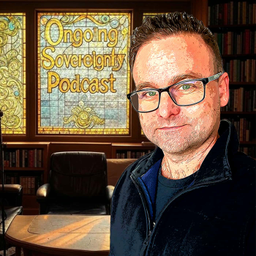
Ongoing Sovereignty Theology Podcast
Michael Mathis
5.0from 3 ratings
- 8
- Episodes
- 3
- Ratings
- Monthly
- Cadence
- 2025
- First episode
About Ongoing Sovereignty Theology Podcast
Join the Ongoing Sovereignty Theology Podcast as we explore a unique perspective on Time as a Measure, resolving tensions in traditional theology. Discover how our created purpose—to Glorify God and Enjoy a relationship with Him forever—is possible. New episodes weekly, blending faith, insight, and visual slides.
- Publisher
- Michael Mathis
- Category
- religion & spirituality · religion & spirituality
- Language
- en
- Explicit
- No
- First episode
- 11 Mar 2025
- Latest episode
- 22 Sept 2026
Latest episodes
8 episodes in the feed.
22 Sept 2026
The Doctrine of Job
Welcome to the Ongoing Sovereignty Theology Podcast. The Doctrine Of Job: how to think about God, and how to approach Him, in the midst of suffering. True wisdom begins with fearing the LORD — honoring God as God, and trusting Him more than we trust ourselves. When God finally answered Job, He did not explain Himself. He showed Job the world He made. Then He stood with the hurting man who never let go of Him, and condemned the men who told lies to defend God. This episode reads the Doctrine of Job: • The Short Statement • Written Against — the teachings of Eliphaz, Bildad, Zophar, and Elihu that God has already rejected in writing • The Full Statement, drawn from the book in its plain sense God stays in no box. No one may judge Him — and nothing will stop Him from being moved by the people who fear Him. Full text and sources: https://ongoingsovereignty.org/the-doctrine-of-job/ Book: Ongoing Sovereignty: The God Who Is Here https://ongoingsovereignty.org/ Podcast home: https://ongoingsovereignty.org/podcast-home/ Like, subscribe, and share. If this meets you in a hard place, leave a comment — or take it to God first. #OngoingSovereigntyTheology #BookOfJob #Suffering #FearOfTheLord #ChristianTheology #PodcastEpisode8
25 Apr 2025
Statement of Faith
Ongoing Sovereignty Theology Statement of Faith Our faith exalts the living God—sovereign, present, and relational—who defines the singular present with His name, “I AM,” engaging dynamically with His creation in the stream of moments as “God with us,” inviting us into eternal fellowship for His glory and our everlasting joy. We affirm the following beliefs, grounded in the supreme authority of Scripture, interpreted in its historical and contextual intent, as the foundation of Ongoing Sovereignty Theology (OST). 1. The Authority of Scripture We believe the Holy Scriptures, comprising the Old and New Testaments, are the inspired, inerrant, and authoritative Word of God. They reveal God’s character, will, and redemptive purposes, serving as the ultimate standard for faith, theology, science, and practical living. All doctrines must align with Scripture’s clear teaching, interpreted with respect to its original author, audience, context, and divine intent (2 Timothy 3:16-17; 2 Peter 1:20-21). 2. The Triune God We believe in one God, eternally existing in three persons—Father, Son, and Holy Spirit—coequal in perfect glory, each with distinct roles in creation and salvation. The Father decrees with all authority the frame on which all creation exists and specific future events He has promised. The Son creates and sustains all creation. The Holy Spirit facilitates communion between creation and the Godhead. All three persons exist within a singular present with us. God (the sum of all three persons) is infinite in holiness, wisdom, love, justice, and mercy, actively thinking thoughts higher than ours and engaging creation with relational intimacy. As Creator and Sustainer, He is sovereign in the present, worthy of all worship and obedience (Deuteronomy 6:4; Matthew 28:19; Ephesians 1:4; John 1:3; Romans 8:26; Isaiah 55:8-9; Psalm 139:17-18; Colossians 1:16-17). 3. God’s Relationship with Time We believe God, existing before creation in an eternal sequence of moments, is the “I AM,” the very definition of the singular present, the sole locus of existence. He created time as a measure to order events for created beings, using the sun, moon, stars, and earth, remaining Himself the unchanging present in which He brought us to exist with Him, not in some dimension apart from Him. One day, He will replace this universe along with its measure of time with a new heaven and earth, where a newly created time will measure dynamic fellowship (Revelation 22:2). God interacts dynamically with His creatures in the stream of moments, responding to human actions. Neither God nor any created thing exists in the future, which, apart from God’s decrees, remains open and not fully actualized until it becomes the present, known perfectly by His omniscience (Exodus 3:14; Revelation 1:8; John 17:5; Genesis 1:1-5, 14-19; Psalm 90:2; Revelation 21:1; 22:2; Jeremiah 18:7-10; Exodus 32:7-14; Isaiah 46:10; Ephesians 1:4). 4. God’s Omniscience We believe God is omniscient, knowing all knowable things—past, present, and all possible outcomes—in the singular present. To know all things is not the same as having felt or experienced all things. The totality of knowledge expands infinitely as new moments unfold through human choices and divine acts, yet God’s perfect knowledge remains complete, encompassing every actuality and possibility in the present. His perfect omniscience is placed in a new light with the emotion of experiential dimensions, such as empathy gained through the incarnation and through His relational interactions with creation, experiencing joy and grief, enriching His relational engagement without implying prior ignorance (Psalm 147:5; Isaiah 46:10; Hebrews 4:15; Ephesians 1:4; Genesis 6:6; Zephaniah 3:17). 5. God’s Ongoing Sovereignty We believe God exercises ongoing sovereignty in the singular present, actively ruling as the “I AM” who does all He pleases. In every moment, He has the power and authority to decree specific outcomes, such as redemption through Christ and the new creation, while granting humanity autonomy in non-decreed events. God responds to prayers, choices, and circumstances in the stream of moments, weaving all things together for the good of those who love Him, demonstrating His relational freedom and sovereign love (Psalm 115:3; Romans 8:28; Exodus 32:7-14; Jonah 3:10; Ephesians 1:3-5). 6. Humanity and the Fall We believe God created humanity in His image to exist with Him in the present, giving us genuine autonomy to make meaningful choices that shape non-decreed events. Through Adam’s sin, humanity fell, inheriting a sinful nature and total inability to earn salvation. God’s grace calls us to repentance and faith, honoring our responsibility to respond while sovereignly guiding history. Yet no one will turn from sin apart from being born again by the work of the Holy Spirit after being called by God in response to the prayers of the saints or God’s decree, because no one seeks God and all have gone astray. (Genesis 1:26-27; Genesis 3:6-7; John 3:3; Romans 3:10-12, 3:23; Deuteronomy 30:19-20; Acts 17:30). 7. Jesus Christ and the Incarnation We believe Jesus Christ, the eternal Son, is fully God and fully man, born of a virgin, sinless in life, and the only Savior. In His incarnation, He experienced human temptation, suffering, and limitation, gaining experiential empathy to sympathize as our High Priest, enriching the Trinity’s relational engagement within His omniscient nature. His atoning death, bodily resurrection, ascension, and promised return, decreed in the present, secure salvation for all who believe (John 1:1, 14; Luke 1:34-35; Hebrews 4:15; 1 Corinthians 15:3-4; 1 Timothy 2:5-6; 1 Thessalonians 4:16-17). 8. The Holy Spirit We believe the Holy Spirit, the third person of the Trinity, convicts the world of sin, regenerates believers, indwells them, and empowers them for holiness, service, and mission. The Holy Spirit also bestows spiritual gifts upon believers for the edification of the church and the advancement of God’s mission. He illuminates Scripture, guides into truth, and fosters communion with God, enabling believers to participate in His ongoing work (John 16:8, 13; Titus 3:5; Romans 8:26-27; Ephesians 5:18; 1 Corinthians 12:4-11). 9. Salvation by Grace We believe salvation is by grace alone, through faith alone, accomplished through the unified work of all three persons of the Trinity, not by human works. The Father sovereignly predestinates, calls, and elects. The Holy Spirit draws and regenerates sinners, transforming hearts of stone to flesh and granting faith as a gift. Jesus Christ atones for sin through His finished work on the cross and intercedes as our High Priest, applying salvation to believers. God desires all to be saved, yet elects some, and believers, as bearers of the gospel, intercede like Moses to seek God’s call for others, spreading the good news to all nations. Believers are justified, adopted, and assured of eternal life, called to live in gratitude and obedience (John 6:44; Ephesians 1:4; Ezekiel 36:26; Ephesians 2:8; 1 Timothy 2:5-6; Hebrews 7:25; John 3:16; Romans 5:1; 1 Timothy 2:1-4; Matthew 28:19-20). 10. The Church Christ is the head and ultimate authority of the local and universal church. We believe the Local Church is part of the universal body of Christ, comprising all believers, and is expressed in local communities called to worship, make disciples, serve, and proclaim the gospel. The Local Church must be led by qualified men who are shepherds to the people under the authority of Christ, leading the body to participate in God’s ongoing work through prayer, love, observing baptism, communion, conflict resolution, and mission, reflecting His glory. (Matthew 16:18; Acts 1:8; Ephesians 4:11-16; John 13:34-35). 11. Prayer and Intercession We believe prayer is a vital act of partnership with God, influencing outcomes within His sovereign will. As exemplified by Moses and Christ, intercession shapes history’s non-decreed events, amplifying God’s grace and glory in the stream of moments. This includes corporate prayer in the church, where believers gather to intercede for one another and the world. Believers are called to pray persistently, trusting God’s responses to work all things for His purposes (Exodus 32:7-14; Deuteronomy 9:13-29; Hebrews 7:25; 1 Timothy 2:1-4; Acts 12:5; James 5:16). 12. The Christian Life We believe Christians are called to live holy, obedient lives, loving God and others, and serving in humility. Empowered by the Holy Spirit, believers grow in faith, bear fruit, and engage in God’s mission, trusting His ongoing sovereignty to guide their steps in the stream of moments (Romans 12:1-2; John 13:34-35; Galatians 5:22-23; Matthew 5:16). 13. Eschatology and Eternal Fellowship We believe (with an open hand for the sake of our brothers who do not) in a literal rapture and a coming tribulation, followed by Christ’s return to establish His literal 1,000-year reign, fulfilling God’s decreed promises. At the end of the 1,000 years, a final judgment will occur, after which the current heavens and earth will pass away, replaced by a new heaven and new earth where a newly created time continues to measure dynamic fellowship. Human actions influence non-decreed outcomes within God’s will, while His sovereignty ensures eternal communion with His people, filled with unending possibilities (Daniel 12:1; Matthew 24:21; Revelation 20:4-6, 11-15; Revelation 21:1-5; Revelation 22:2; 1 Thessalonians 4:16-17). 14. The Purpose of Creation We believe God created all things for His glory and the mutual enjoyment of eternal relationships with His people. God is with us in a singular stream of moments. He rejoices, grieves, and responds relationally, inviting us into a partnership that glorifies Him and fulfills our purpose. His ongoing sovereignty ensures that all things work together for our good and His eternal praise (Isaiah 43:7; Zephaniah 3:17; Genesis 6:6; John 17:24; Romans 8:28; Revelation 21:3). 15. Divine Passibility We believe God, in His relational nature, experiences emotions such as joy, grief, and compassion in response to His creation, enriching His engagement with humanity. These emotional responses, expressed in the singular present, reflect His deep love and commitment to fellowship with His people (Genesis 6:6; Zephaniah 3:17; Psalm 86:15). Conclusion Ongoing Sovereignty Theology exalts the God whose existence defines the singular present. He is the ultimate sovereign, relational, and perfect, knowing all knowable things while engaging dynamically in the stream of moments. Rooted in Scripture’s authority, OST rejects static or deterministic views, celebrating the “I AM” who invites us into an eternal, creative, and loving fellowship. We stand in awe of His infinite wisdom, trust His ongoing work, and commit to glorifying Him through faith, prayer, obedience, and mission, now and forever (Psalm 145:3; Revelation 1:8; Colossians 1:16-17).
19 Apr 2025
Why Does God Allow Evil? Augustine, Jonathan Edwards, and Michael Mathis Explore
Michael Mathis The news hits like a gut punch: a teenage girl, full of life, raped and murdered, her body found in a desolate alley. Her family stands at a candlelit vigil, their faces etched with grief, voices cracking as they whisper, “Why, God? If You’re good, how could You let this happen?” This is the problem of evil, not a textbook debate but a raw, bleeding wound. Welcome to this week’s podcast, where we’re wrestling for hope in the face of such darkness. My theology, Ongoing Sovereignty Theology, sees God as the “I AM” of Exodus 3:14, alive in this moment alone. Time isn’t His chain; it’s His creation, a stream of moments measuring His eternal now. Before creation, He was; when He spoke in Genesis 1, time began. He knows every possible path every choice that murderer made, every tear that family sheds but doesn’t fix most outcomes, honoring our freedom. Evil, like this horror, isn’t His script; it’s the fracture of a free world, yet He weaves it toward good, shaping us into Christ’s image, as Romans 8:28–29 promises. I’m joined by Augustine of Hippo, whose insights on evil echo through history, and Jonathan Edwards, whose fire for God’s glory burns bright. Augustine, kick us off: how do you explain this family’s pain and God’s role in such evil? Augustine of Hippo Mike, the anguish of that family stirs my soul, as I mourned human brokenness in Confessions. Evil is not God’s creation, for Genesis 1:31 declares all He made was very good. It is a privation, a turning from the good, like a tear in a radiant tapestry. The murderer’s act, born of corrupted desire, echoes the fall in Genesis 3, where free will, God’s gift, was twisted. This freedom lets us love God truly, but its misuse births such atrocities. God’s eternal now sees all time at once, as Psalm 145:9 sings of His mercy over all. His foreknowledge of this crime didn’t cause it; He permitted it, weaving it into His redemptive plan. How do you account for this evil, Mike, if God is bound to the present? Michael Mathis That’s a fair question, Augustine. I see God as present, not bound, engaging each moment with perfect knowledge of possibilities, not a fixed future, so He can respond to human choices without scripting them. But let’s unpack your view first your tapestry image is vivid, and I want to hear more. How does God’s eternal perspective comfort that family, knowing their daughter’s death was foreseen? What do you think, Augustine? Augustine of Hippo Mike, your present God intrigues me, and I’ll return to it. For that family, God’s eternal now offers hope, not despair. In City of God, I teach that foreknowledge doesn’t cause evil God sees the murderer’s act as a poet knows a poem’s end, yet the words are ours. Psalm 139:4 says He knows our speech before we speak, yet we choose. Their daughter’s death, though foreseen, flows from human sin, not God’s will, as Romans 8:20–21 speaks of creation’s groan. God permits it, like Job’s trials (Job 42:12), for ends we can’t fully grasp perhaps refining faith or revealing justice. Their pain finds meaning in His eternal plan, where even evil serves redemption. Edwards, your view of God’s decree is bolder. How do you see this tragedy? Jonathan Edwards Augustine, Mike, this murder kindles holy indignation, yet it serves God’s sovereign purpose. In Freedom of the Will, I teach that God’s absolute sovereignty ordains all for His glory, as Isaiah 46:10 declares He works all according to His purpose. This crime, though heinous, is within His decree, displaying His justice and mercy, as Romans 9:14–18 shows His power over vessels of wrath and honor. Human freedom exists, but it’s subordinate to God’s will, directing even sin to His ends. That family’s pain glorifies God, perhaps awakening souls to eternity. Mike, your present-only view seems to limit His dominion. Augustine, foreknowledge lacks decree’s certainty. How do you see God governing this evil? Michael Mathis Edwards, your passion for God’s glory is powerful; Augustine, your poet analogy paints a picture. But let me clarify why my view doesn’t limit God, especially on time and freedom, since it’s central to this. When God created time in Genesis 1, He didn’t step into a future or fix a script. Time measures His eternal now, like a river of moments He flows in, not a road stretching forward. He’s the “I AM,” present alone, with authority to control all but choosing to decree only some like Christ’s cross or Israel’s call leaving vast possibilities open. This gives created beings, like that murderer or us, real autonomy, as Romans 3:23 shows we all sin freely, none deserving His goodness. Yet God rules dynamically, weaving our choices for Christlikeness, per Romans 8:29, not our wants. That murderer’s act wasn’t decreed or foreseen as fixed; it was a free fracture God grieves, as Psalm 34:18 vows He’s near the brokenhearted. Edwards, doesn’t your decree make God the author of this evil? Augustine, doesn’t foreknowledge make it inevitable? What do you both think? Augustine of Hippo Mike, your river of moments is a fresh lens, and I’m struck by God choosing to leave possibilities open it honors freedom in a way my eternal now might obscure. In On Free Choice, I argue the will chooses freely, though foreknown, as Psalm 139:1–4 shows God searches our hearts, yet we act. The murderer’s sin wasn’t inevitable; it was permitted, redeemed by God’s plan, as Christ’s cross (Hebrews 12:2) turned pain to joy. Edwards, your decree feels heavy does it not risk God’s goodness? Mike, your God responding in each moment fascinates me. How does He weave such evil for good without seeing all time? Jonathan Edwards Mike, Augustine, your present God challenges me. I hold in The End for Which God Created the World that all, including evil, is ordained for God’s glory, as Ephesians 1:11 states He works all after His will. This murder manifests His justice, per Romans 9:22–23, revealing mercy to the elect. But Mike, your view God ruling in the now, leaving autonomy open stirs curiosity. If He decrees only some, like the cross, and weaves free choices, His sovereignty shines in responsiveness. Augustine, your foreknowledge seems passive next to this. Mike, how does God’s present rule comfort that family, ensuring their pain serves Christlikeness? Michael Mathis Great question, Edwards, and I love your curiosity, both of you. God’s present rule means He’s with that family, hearing their prayers, as James 5:16 urges, working their grief for Christ’s image, not just relief, per Romans 8:29. Romans 9:22–23 shows He permits evil to reveal His attributes, so we worship fully, knowing mercy through wrath. His ongoing reign, unbound by a fixed future, lets Him shape every choice like theirs to pray or forgive toward Revelation 21:4’s new creation. Let’s turn to Scripture’s first murder, Cain and Abel in Genesis 4, to see this in action. Cain’s envy killed Abel, but God warned, “Sin is crouching at the door” (Genesis 4:6–7). Augustine, how does my view of God’s present response to Cain compare to your eternal perspective? Augustine of Hippo Mike, I’m drawn to your vision of God engaging Cain in real time. In City of God, I see God’s warning as eternal mercy, foreknown yet free, with Cain’s sin permitted, as Romans 8:20–21 speaks of creation’s groan. But your view God as the “I AM,” responding moment by moment, like Jonah 3:10’s relenting casts new light. In Genesis 4:9, when God asks, “Where is Abel?” it’s not ignorance but a present invitation to confess, as Psalm 34:18 shows His nearness to the broken. The curse and mark (Genesis 4:10–15) tailor justice and mercy to Cain’s heart. The knowledge to do this for every soul, as Psalm 139:1–4 describes, is vast. Edwards, doesn’t this magnify God’s care beyond a decreed plan? Jonathan Edwards Augustine, Mike, I’m stirred. In Freedom of the Will, I see Cain’s act ordained for God’s glory, as Isaiah 46:10 states. But Mike’s God, present in each moment, knowing all possibilities, as Psalm 139:1–4 details, responds with care that humbles me. Genesis 4:15’s mark on Cain shows mercy tailored to his sin, aiming for redemption, like Romans 8:29’s Christlikeness. The vastness of God’s knowledge, seeing every creature’s path, surpasses my decrees. Augustine, how does this present care, clearer than our own sight per Isaiah 55:8–9, deepen our view of that family’s grief? Augustine of Hippo Edwards, Mike, I’m in awe. My eternal now feels distant compared to this God, present in every cry, as Genesis 4:10’s blood and that family’s tears show. Psalm 34:18’s nearness, with Psalm 139’s knowledge, paints a God who sees each need far beyond our limits, as Isaiah 55:8–9 humbles us. Mike, for that family, how does God’s vast knowledge shape their pain, knowing their needs better than they? Michael Mathis Augustine, your awe captures it. God’s knowledge is personal He sees that family’s grief, their prayers, as James 5:16 urges, and knows their need for Christlikeness, per Romans 8:29, beyond their wish for relief. In Genesis 4, He engages Cain’s heart, warning, questioning, protecting, each act precise. Romans 3:23–25 shows none deserve His grace, yet He weaves their pain, like Cain’s, for His glory, per Romans 9:22–23. Imagine the care to tend every soul, every moment, across creation! Edwards, how does this shift your view of God’s glory in suffering? Jonathan Edwards Mike, Augustine, this vision glorifies God beyond my decrees. His knowledge, searching every heart per Psalm 139, and care, near per Psalm 34:18, shine in each moment. That family’s pain, like Cain’s sin Chili, is woven for Christ’s image, revealing mercy, per Romans 9:22–23. His thoughts, per Isaiah 55:8–9, surpass ours He sees their true need. Augustine, doesn’t this unite us in worship? Augustine of Hippo Edwards, Mike, it does. My poet pales beside this God, present in every wound, as Genesis 4 and that family’s grief attest. His knowledge and care, per Psalm 139 and 34:18, surpass our sight, as Isaiah 55:8–9 teaches. Mike, how do we live this truth today? Michael Mathis Augustine, Edwards, we live by praying, trusting, acting, as James 5:16 urges, knowing God hears, shaping us for Christ, per Romans 8:29. That family’s vigil, our pain God’s near, per Psalm 34:18, seeing our needs, per Isaiah 55:8–9. Romans 3:23–25 shows none deserve grace; Romans 9:22–23 reveals mercy through evil. Listeners, marvel: is God conducting your moments, His knowledge vaster than yours? Keep wrestling.
12 Apr 2025
Unpacking Deuteronomy 9 and Our Call to Pray
Michael Mathis Welcome to the Ongoing Sovereignty Theology Podcast. I’m your host, Michael Mathis, and this is a journey into the heart of Christian theology, to reveal the ongoing sovereignty of God. Our mission is to wrestle with how God’s existence unfolds in the present moment. Today, I decided to share my personal Bible study […]
5 Apr 2025
The Council of Nicaea: Athanasius vs Arius
Welcome to the Ongoing Sovereignty Theology Podcast. I’m your host, Michael Mathis, and this is a journey into the heart of Christian theology, where the past meets the now, and the debates of old reveal the ongoing sovereignty of God. Our mission is to wrestle with how God’s existence unfolds in the present moment, but […]
29 Mar 2025
Virtual Debate, John Calvin vs. Jacobus Arminius
Welcome, everyone, to this special episode of our theological podcast, brought to you by Ongoing Sovereignty Theology at ongoingsovereignty.org. Today, we’re plunging into a virtual debate featuring two towering figures of Christian history: John Calvin and Jacobus Arminius. No, we haven’t invented a time machine these men aren’t joining us from the 16th and 17th […]
21 Mar 2025
Jacobus Arminius, Discusses Ongoing Sovereignty
Welcome to another episode of our virtual podcast! I’m Michael Mathis, your host, and today we’re digging into Ongoing Sovereignty Theology. It’s a framework where God’s sovereignty is active, playing out moment by moment, balancing His total control with real freedom for us as creatures. We’ve already had John Calvin on, and he seemed like […]
11 Mar 2025
Dr. McGee, John Calvin and the Apostle Paul Discuss Ongoing Sovereignty Theology
Note about this interaction produced using Grok 3: I began to explorer this ability of AI to extract the thoughts and opinions of great men who we will not get a chance to speak with until we arrive in heaven. However it must be said that even though it likely does a great job capturing […]
Reach and audience
Public platform figures. Ratings count people who left a rating, not total listeners.
- Apple Podcasts (US)
- 5.0 / 5
- 3 ratings
Contact Ongoing Sovereignty Theology Podcast
- Guest appearances
- Books guests
Based on episode analysis; this does not confirm that the show is currently accepting guests.
Host of Ongoing Sovereignty Theology Podcast?
Claim your podcast to manage its listing and keep your show details accurate.
Pod Engine is an independent podcast discovery and analytics service and is not affiliated with or endorsed by this podcast. Artwork and show content belong to their owners. Full legal notice.
Explore this show
Podcast research with Pod Engine