
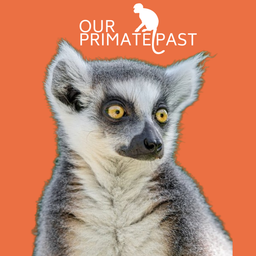
Podcast Overview
<p>How did primates evolve, and what can they tell us about being human? Our Primate Past takes you inside the science of primate evolution, fossils, and living primates through in-depth conversations with the world’s leading researchers. Leading biological anthropologists discuss their careers, discoveries, and the big questions driving their work.</p><p>Our Primate Past is an interview based podcast featuring experts in primatology, paleoanthropology, paleontology, osteology, evolutionary biology, and conservation. In accessible episodes for a general audience, renowned scientists explore primate behavior, fossil discoveries, evolutionary theory, and the origins of lemurs, lorises, monkeys, apes, and humans.</p><p>Each episode highlights a distinguished academic as they share their research, career journey, and the evolving questions shaping their field, from early primates and extinct species to modern conservation challenges. Guests also reflect on science communication, museum collections and curation, ethics, data sharing, conferences, and public outreach.</p><p>Whether you are a student, researcher, educator, or simply curious about primates and our place in the natural world, Our Primate Past offers direct access to cutting edge science and the people behind it.</p>
Language
🇺🇲
Publishing Since
1/25/2026
Reach the team behind Our Primate Past
Verified contact details for this show aren't on file yet — sign up to get notified when they land.
Recent Episodes
March 1, 2026
Lemur Discoveries, Fossils, and Conservation – Patricia Wright
<p>How do you rediscover a species thought to be extinct, and help protect an entire rainforest at the same time?</p><p>In this episode, we explore the remarkable career of Professor Patricia Wright, one of the most influential figures in lemur research and conservation.</p><p>Professor Wright is a primatologist, anthropologist, and conservationist best known for her groundbreaking work in Madagascar. She rediscovered the greater bamboo lemur (Hapalemur simus), once believed extinct, and discovered a new species, the golden bamboo lemur (Hapalemur aureus). Her efforts were central to the creation of Ranomafana National Park, now a UNESCO World Heritage Site.</p><p>She also founded Centre ValBio, a leading research and education center focused on biodiversity conservation, scientific research, and community engagement in Madagascar.</p><p>In this interview, Professor Wright discusses her career path and major discoveries, including fossil and subfossil lemurs, extinct Malagasy hippos, and Milne-Edwards’s sifakas. She explains what these finds reveal about lemur evolution and extinction, explores how and when humans first arrived on Madagascar, and reflects on the conservation challenges facing lemurs today. Another theme of the conversation is one of the great evolutionary puzzles, how did lemurs first reach Madagascar?</p><p>Whether you’re interested in primate evolution, fieldwork in Madagascar, or the role of science in conservation, this episode offers a rare insight into both the biology of lemurs and the human stories behind their discovery and protection.</p>
February 2, 2026
Origins of the Genus Homo – Brian Villmoare
<p>Where did our genus Homo come from, and how confident are we about its earliest members? In this episode, we explore the fossil evidence for human origins with one of the researchers reshaping how we define our own genus.</p><p>Dr Brian Villmoare is a paleoanthropologist at the University of Nevada, Las Vegas, whose research focuses on the origins of Homo, hominin craniofacial evolution, and the African fossil record. He is best known for his work at Ledi-Geraru in Ethiopia, which has played a key role in redefining what the earliest members of our genus looked like and how, and when, they evolved.</p><p>In this interview, Dr Villmoare shares his career journey and reflects on major figures who shaped paleoanthropology. He discusses what his research has found out about the emergence of Homo, how species boundaries are drawn in the fossil record, and how advances in biomechanics and analytical methods are improving our understanding of hominin cranial evolution.</p><p>The conversation also covers fieldwork across eastern and southern Africa, the evolutionary relationships of Homo naledi and Homo floresiensis, debates over Neanderthal taxonomy, and the most underrated fossil sites for understanding human evolution. Dr Villmoare also talks about his book The Evolution of Everything and reflects on challenges surrounding fossil access, digital data, and resource sharing in paleoanthropology.</p><p></p>
January 26, 2026
Loris Evolution, Venom, and Conservation – Anna Nekaris
<p>How do slow lorises use venom, and what can these elusive primates tell us about evolution and conservation? In this episode of Our Primate Past, Anna Nekaris takes us inside the world of nocturnal primates, sharing her groundbreaking research and conservation work.</p><p>Professor Anna Nekaris OBE is a leading primatologist and conservationist whose pioneering research focuses on lorises and other nocturnal primates. She is particularly renowned for her work on slow loris venom, its ecological and evolutionary significance, as well as her studies of loris behavior and sociality, naming new taxa, and dedication to conservation and public outreach.</p><p>In this interview, Professor Nekaris shares her career journey, key research contributions, and perspectives on lorisoid evolution. She discusses the challenges of fieldwork on nocturnal species, the evolution of venom and the toothcomb, and how initiatives like <a target="_blank" rel="noopener noreferrer nofollow" href="https://www.nocturama.org/en/welcome-little-fireface-project/">the Little Fireface Project</a> are helping protect these elusive primates. Conservation challenges, including the pet trade and the impact of social media on loris welfare, are also explored.</p>
6 total episodes available
Deep-dive analytics for Our Primate Past
Frequently asked questions
Have a different question and can't find the answer you're looking for? Reach out to our support team by sending us an email and we'll get back to you as soon as we can.
- What is Our Primate Past?
<p>How did primates evolve, and what can they tell us about being human? Our Primate Past takes you inside the science of primate evolution, fossils, and living primates through in-depth conversations with the world’s leading researchers. Leading biological anthropologists discuss their careers, discoveries, and the big questions driving their work.</p><p>Our Primate Past is an interview based podcast featuring experts in primatology, paleoanthropology, paleontology, osteology, evolutionary biology, and conservation. In accessible episodes for a general audience, renowned scientists explore primate behavior, fossil discoveries, evolutionary theory, and the origins of lemurs, lorises, monkeys, apes, and humans.</p><p>Each episode highlights a distinguished academic as they share their research, career journey, and the evolving questions shaping their field, from early primates and extinct species to modern conservation challenges. Guests also reflect on science communication, museum collections and curation, ethics, data sharing, conferences, and public outreach.</p><p>Whether you are a student, researcher, educator, or simply curious about primates and our place in the natural world, Our Primate Past offers direct access to cutting edge science and the people behind it.</p> - How often does this podcast release new episodes?
This podcast updates daily.
- Where can I listen to this podcast?
This podcast is available on 4 platforms including Apple Podcasts, Spotify, and more. You can also use the RSS feed directly.
- Does this podcast accept guests?
Yes, this podcast regularly features guests.
Legal Disclaimer
Pod Engine is not affiliated with, endorsed by, or officially connected with any of the podcasts displayed on this platform. We operate independently as a podcast discovery and analytics service.
All podcast artwork, thumbnails, and content displayed on this page are the property of their respective owners and are protected by applicable copyright laws. This includes, but is not limited to, podcast cover art, episode artwork, show descriptions, episode titles, transcripts, audio snippets, and any other content originating from the podcast creators or their licensors.
We display this content under fair use principles and/or implied license for the purpose of podcast discovery, information, and commentary. We make no claim of ownership over any podcast content, artwork, or related materials shown on this platform. All trademarks, service marks, and trade names are the property of their respective owners.
While we strive to ensure all content usage is properly authorized, if you are a rights holder and believe your content is being used inappropriately or without proper authorization, please contact us immediately at hey@podengine.ai for prompt review and appropriate action, which may include content removal or proper attribution.
By accessing and using this platform, you acknowledge and agree to respect all applicable copyright laws and intellectual property rights of content owners. Any unauthorized reproduction, distribution, or commercial use of the content displayed on this platform is strictly prohibited.