
This is a podcast of the Project on Autocratic Legalism (PAL). PAL seeks to understand how law can be used to further, as well as to resist autocratic forces that have been on the rise around the globe. The project involves scholars from multiple countries and disciplines. PAL participants are currently conducting research on autocratic legalism in Brazil, India, and South Africa. Learn more about our project at autocratic-legalism.net. In this podcast, we will share some of the conceptual debates behind, and research findings stemming from our project. Our episodes will be released every month. PALcast is sponsored by the University of Oklahoma and hosted by Fabio de Sa e Silva
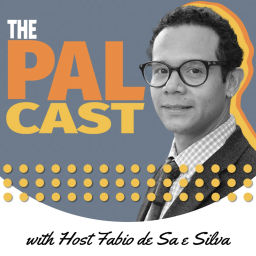
PALcast
Claim This Podcastby Fabio de Sa e Silva
5.0(7 reviews)
23 episodes
Updated Weekly
Accepts GuestsHas SponsorsLocation 🇺🇸
Podcast Overview
This is a podcast of the Project on Autocratic Legalism (PAL). PAL seeks to understand how law can be used to further, as well as to resist autocratic forces that have been on the rise around the globe. The project involves scholars from multiple countries and disciplines. PAL participants are currently conducting research on autocratic legalism in Brazil, India, and South Africa. Learn more about our project at autocratic-legalism.net. In this podcast, we will share some of the conceptual debates behind, and research findings stemming from our project. Our episodes will be released every month. PALcast is sponsored by the University of Oklahoma and hosted by Fabio de Sa e Silva
Language
🇺🇲
Publishing Since
1/27/2021
1 verified contact email on file for PALcast
Pitch yourself as a guest, propose sponsorships, or reach out directly to the host.
Recent Episodes
June 10, 2024
#20 – Sindiso MnisiWeeks and the Case for an Alter-Native Constitutionalism in South Africa
<p>Today, Fabio talks to Sindiso MnisiWeeks. </p> <p>Sindiso is Associate Professor in Legal Studies and Political Science at the University of Massachusetts Amherst and Adjunct Associate Professor in Public Law at the University of Cape Town (UCT). She is currently finishing a monograph titled “Alter-Native Constitutionalism: Common-ing ‘Common’ Law, Transforming Property in South Africa”.</p> <p>Sindiso brings a different perspective to debate on the crisis of South African democracy that Fabio had with Dee Smythe, Michelle LeRoux, and Dennis Davis in PALcast's last episode. </p> <p>As listeners may remember, those guests contended state capture is at the center of South Africa's democratic crisis, whose main “victim” is the “transformative” spirit of that country's constitution even more than the abstract scheme of liberal-democratic governance based on separation of powers and the rule of law. </p> <p>Sindiso agrees that "state capture” is there and that it compromises the efficacy of the South African state and its ability to meet its constitutional promises. But she argues that South African constitutionalism has a deeper democratic deficit, which derives from colonialism and the way it deprived natives South African from their own laws. This continues through the current constitution, whose interpretation has been driven by understandings of things like property that are “uncommon” to most in the country.</p> <p>Building on this insight, Sindiso argues that rather than structuring and sustaining democracy from the top down, by putting together and protecting an institutional framework typical of liberal-democracy and constitutionalism, and then socializing the people into those; we should do it from the ground up, by taking seriously “the normative conceptions and convictions of ordinary South Africans”. This is what she calls an “alter-native constitutionalism”. </p> <p>In the interview, Fabio and Sindiso unpack this notion and discuss how it relates to liberal-democracy and constitutionalism and what would mean, in practice, to take seriously those “normative conceptions and convictions”. </p> <p>They also discuss how to reconcile her argument with the finding that traditional authority and legality have been historically misused or abused in South Africa. And they finish with a conversation about what she is expecting from the upcoming elections in that country.</p>
May 29, 2024
#19 – Dee Smythe, Michelle LeRoux, and Dennis Davis on "state capture" and South African democracy
<p>Today, Fabio talks to Dee Smythe (UCT honorary), Michelle Leroux (UCT and Wits), and Dennis Davis (UCT Emeritus).</p> <p>Fabio and his guests focus mostly on the piece that the latter wrote for the PAL project, titled “What Future for Constitutional Democracy in South Africa?,” which was published in 2022, in VRÜ/World Comparative Law. That piece argues that “state capture” by sectors of the African National Congress, so-far the dominant party in South African politics, is at the center of the country’s ongoing democratic crisis. The main victim of this particular form of democratic decay is not just the ideal of liberal-democratic governance, based on separation of powers and accountability, but also – and perhaps more importantly – the promise of deep societal transformation that came along with South Africa's constitution, enacted after the end of apartheid.</p> <p>Fabio and his guests then spend time unpacking an intriguing feature of democratic decay in South Africa: the “capture of tradition” or the cooptation and repurposing of “traditional leaders” by Zuma to build a more robust scheme of unaccountable governance. They finish with a discussion about the extent to which South African institutions have demonstrated resilience against this “capture,” as well as about the hopes and fears of interviewees regarding the upcoming South African elections.</p> <p>Link to the VRÜ/World Comparative Law special issue: <a href="https://www.nomos-elibrary.de/10.5771/0506-7286-2022-4/vrue-verfassung-und-recht-in-uebersee-jahrgang-55-2022-heft-4?page=1" target="_blank">https://www.nomos-elibrary.de/10.5771/0506-7286-2022-4/vrue-verfassung-und-recht-in-uebersee-jahrgang-55-2022-heft-4?page=1</a><br></p>
March 1, 2024
#18 – Three Students on Democratic Legalism in the US
<p>Today, Fabio talks to Konrad Sartorius, Caleb Wisinger, and David Taitano – three students in the Masters of International Affairs program at the University of Oklahoma. </p> <p>Konrad and Caleb attended a course on Autocratic Legalism taught by Fabio. With David, they built on what they learned with Fabio to develop a project for another course, which they named Democratic Legalism. In such project, they mapped vulnerabilities in the US constitutional order, which would make the country more susceptible to autocratic leadership, and proposed legal changes aimed at fortifying the resilience of the US system against such threats. </p> <p>The episode begins with a discussion on what drew these students to studies of democracy, and how much attention they had paid to the nexus between law and democracy before interacting with Fabio. The episode moves onto a discussion about their project: what points of vulnerability do they identify in the US constitutional system and what remedies do they propose to fix those? </p> <p>Fabio and his students then engage in a very lively conversation about the role and the limits of law in safeguarding democracy – recognizing that closing gaps in constitutional design alone may be insufficient to shield a country like the US from authoritarian leadership, but also that there are still strong and important reasons why we should care about building such legal resilience in democracies. </p> <p>Like three others episodes in this series, this one offers yet another compelling illustration of how impactful the discussions promoted through this podcast and the PAL project can be in the academic, professional, and civic lives of students.</p>
23 total episodes available
Deep-dive analytics for PALcast
Frequently asked questions
Have a different question and can't find the answer you're looking for? Reach out to our support team by sending us an email and we'll get back to you as soon as we can.
- What is PALcast?
- How often does this podcast release new episodes?
This podcast updates weekly.
- Where can I listen to this podcast?
This podcast is available on 9 platforms including Apple Podcasts, Spotify, and more. You can also use the RSS feed directly.
- Does this podcast accept guests?
Yes, this podcast regularly features guests.
Legal Disclaimer
Pod Engine is not affiliated with, endorsed by, or officially connected with any of the podcasts displayed on this platform. We operate independently as a podcast discovery and analytics service.
All podcast artwork, thumbnails, and content displayed on this page are the property of their respective owners and are protected by applicable copyright laws. This includes, but is not limited to, podcast cover art, episode artwork, show descriptions, episode titles, transcripts, audio snippets, and any other content originating from the podcast creators or their licensors.
We display this content under fair use principles and/or implied license for the purpose of podcast discovery, information, and commentary. We make no claim of ownership over any podcast content, artwork, or related materials shown on this platform. All trademarks, service marks, and trade names are the property of their respective owners.
While we strive to ensure all content usage is properly authorized, if you are a rights holder and believe your content is being used inappropriately or without proper authorization, please contact us immediately at hey@podengine.ai for prompt review and appropriate action, which may include content removal or proper attribution.
By accessing and using this platform, you acknowledge and agree to respect all applicable copyright laws and intellectual property rights of content owners. Any unauthorized reproduction, distribution, or commercial use of the content displayed on this platform is strictly prohibited.