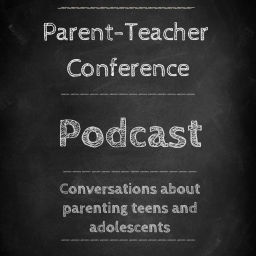
Parent-Teacher Conference: Conversations on parenting teens and adolescents.
Braden Bell
- 13
- Episodes
- 2023
- First episode
About Parent-Teacher Conference: Conversations on parenting teens and adolescents.
A father of 5 and veteran middle school teacher reflects on his own experience and engages with other interesting voices about parenting adolescents. bradenbellphd.substack.com (https://bradenbellphd.substack.com?utm_medium=podcast)
- Publisher
- Braden Bell
- Category
- education · kids & family
- Language
- en
- Explicit
- No
- First episode
- 4 Aug 2023
- Latest episode
- 16 Aug 2025
Latest episodes
13 episodes in the feed.
16 Aug 2025
Use the wisdom of the past to help parent your kids today. Dont parent from your own traumas. Plus some thoughts on when to adjust or discard past ideas.
Hi Everyone! I thought I would try a format that I *think* will provide a transcript, a podcast, or video so you can, hopefully, access it in the most convenient possible format for you. Let me know what you think. Cheers, Braden Great — here’s the full transcript fully formatted all the way through the end, cleaned for readability but with every word intact: Transcript Hey everybody, I hope you are doing well. Lovely to see you. I want to share one of the most single helpful secrets to, I don’t know, adulting—but also just kind of getting through life when you have challenging things. And this is gonna maybe seem strange for a second, but follow me and I think it’ll hopefully make sense. **Note: I used an AI service to transcribe the video and put it into a hopefully-readable-format. Transcript Hey everybody, I hope you are doing well. Lovely to see you. I want to share one of the most single helpful secrets to, I don’t know, adulting—but also just kind of getting through life when you have challenging things.A And, I would say that parenting is both of those things. This is gonna maybe seem strange for a second, but follow me and I think it’ll hopefully make sense. Overalls So, I’m a big gardener, as I think you know if you follow me at all. And I do a lot of work out in the yard and it’s such a pain. I’ll get like jeans or kind of work clothes on and then I go out. But gosh, I was always having to stand up and pull my pants up or adjust the belt or this or that. It was such a pain and it made it hard to get work done. I just remember thinking, gosh, I wish there was something that could attach my jeans. I wish I just had a one-piece pair of jeans that wouldn’t fall down. And at that point it hit me: oh yes, they’ve invented these. They’re called overalls. This is what farmers wear and other people who are out doing a lot of manual labor. I got some overalls. It’s not the greatest aesthetic for me, but it works really well. And now I’m not always trying to hitch my belt up or pull my pants up or whatever. Nightcap Second thing: I get really, really cold at night—freezing. And my wife tends to be hot at night. I’ve always kind of felt like if you’re cold, you can always add more; if you’re hot, you can’t. So I feel like it’s the responsibility of the cold person to just add more layers. But one night it was really, really cold, and I just couldn’t sleep. So I put a hoodie on because I wanted to have my head covered. And I did that, and it was miserable sleep because the hood kept my head warm but it’s very constricting and confining—even a loose hoodie. So that didn’t work out so well. I remember thinking, gosh, if only there’s a lightweight head covering that I could wear—some kind of cap I could wear at night in bed—just to give me the little extra warmth to keep the body heat in. Maybe it could even slide off in the middle of the night, but it wouldn’t encumber me or make me feel all twisted. Oh yeah—guess what? They invented those too. It’s called a nightcap, and people wore them for hundreds of years. So I bought a nightcap. Again, it’s not a great aesthetic—don’t get me wrong, I’m not bragging about my look here—but it’s really effective. And it’s so great. Hats and Heat Okay, recently my hair started thinning and the dermatologist said, “If you’re out in the sun you need to wear a hat, or you need to put sunblock on.” Well, I’m not gonna like put sunblock on my hair—that’s just weird and gross. So I’ve worn a hat. Baseball cap, I like it, but man, they’re hot. Plus it kind of has an informal feel; I don’t feel like it always fits every occasion. It’s like, gosh, if only they had lightweight hats that let the heat out of your head so they don’t hold the heat in but still keep your head protected. Oh! Straw. Actually, I already had a straw hat because I had this discovery years ago when I was working in the yard. So now I wear a straw hat almost whenever I’m out in the sun, or in the winter, a heavier hat. Linen Suits All right, also: super hot. I have to be outside a lot in my new position at work. I have to stand out in the morning for morning drop-off. It’s really hot. Well, turns out that southern men have worn linen suits for a long time. Southern men wear linen, seersucker, etc.—suits and shirts—and it’s kind of been done for a long time. Turns out it’s really, really cool. It works very well in the heat and it’s very comfortable. So I started doing that. Lessons From the Past Here’s the point: almost everything in our society… there are thousands and tens of thousands of years of people who’ve already done this the hard way, who’ve learned through experience. And because of that, we have customs and traditions and sometimes kind of folk wisdom and maybe even old “wives’ tales”—can we say that anymore? Old spouses’ tales? Anyway. We live at a time when I feel like there’s almost this instinct to just get rid of it. If it’s something that you heard from your parents or your grandparents, it’s like, “Nah, can’t be right. The world’s different.” There’s kind of an arrogance in that, to be honest, in my opinion. Because yeah, some things are different for sure—but the fundamentals really haven’t changed that much in many ways. Not everything should be kept. There are things we should discard. Parenting practices, for example—we know more now, we should do different, we should raise our kids differently. However, that doesn’t mean we throw everything out. Chesterton’s Fence So here’s my suggestion: try to learn about the traditions of the past. Learn about the ways people used to do things. And then understand why. Once you understand why, you can decide to keep it or not. It may be perfectly fine to discard—that is a very natural and acceptable part of growth and change. Evolution. My dad talks about when he was a kid, it was just like, you know, if you made an adult mad, they just kind of give you a backhand and tell you to shut up. No one cared about his feelings. Teachers too—literally no one. Now, I think we may have come, in correcting that, a little bit too far, perhaps. But at any rate, I’m not saying knock your kids around. What I am saying is this: G.K. Chesterton, the English author, had a really good thought experiment. He said there’s a certain kind of reformer that when they see a fence in the woods or in the country, they just say, “Tear down this fence. It no longer serves a purpose. What is it doing here anyway? It doesn’t belong here. Just get rid of the thing.” But you don’t do that until you actually know why the fence was put there. It’s entirely plausible that there is a reason the fence was there. So you can tear the fence down, no problem, but you need to know why it’s there. Once you understand the function—why someone put this fence there—they probably weren’t crazy, weren’t stupid, weren’t evil. It may be that the fence is no longer serving its purpose. Fine. Or maybe the fence could be replaced by something sleeker, less intrusive, sturdier—any number of things. But don’t just throw things out. Think about it carefully. Parenting and Trauma I’d say especially this: it’s really important that we not parent from our own traumas. And what I mean by that is—we all have them. Even if you had really loving, caring parents, chances are you’ve got some wounds, some baggage you’re carrying around. Happens with the best of parents. I know my parents had baggage from their parents. I have some baggage from them, and undoubtedly my children have baggage from me. Ideally, we can try to make it so it’s not terrible baggage, but it happens. But just because I may have some issues or some baggage with something, that doesn’t mean the principle is wrong. Maybe the execution was a little too much. Maybe my response wasn’t great. But if I’m parenting out of my traumas, I’m not parenting my children—I’m parenting myself. That’s not my job. I need to parent them, and I need to do what’s best for them, not what would have been best for me. The Dose Makes the Medicine It’s an easy mistake to make. I’ve caught myself doing it sometimes. I’ve seen a lot of other people doing it and it really can be destructive. It’s just not healthy for your child. Remember this: the difference between poison and medicine is often the dose. For example, you may have had a parent who was really insistent on getting good grades and achieving high. Maybe that was too much. Maybe it caused stress on you. That may be true. But it’s also true that it is a good thing to try to achieve to your best potential. It’s not good to feel pressure to achieve some arbitrary standard, but getting good grades in school, working hard—those are good things. They can be stretched too far, yes. But if you grew up carrying this baggage, this trauma, whatever—we need to use the word trauma carefully, because it has a specific meaning—we don’t do our children a favor if we just say, “Nope, I hated it, so I’m not gonna push them at all.” That’s not healthy for the child. That is parenting yourself, not your child. For me, it was never about the grade itself. I always told my kids: I don’t care if you work to the best of your ability and you’re not goofing around and you get a B or C. If you’re really trying, I’m okay with the grade. But I do insist that you work hard. I don’t want to hear that you’re goofing off or being lazy. That’s important. Trial and Error of Humanity Putting all of this together—humankind has evolved, and it’s easy to take for granted how this happens. Think about herbs, for example. Which ones will help or heal you? Or even just edible berries. Think of all the trial and error that had to happen for humankind to get the knowledge reliably of what was safe to eat and what was not, or how it had to be prepared. Some people died pretty painful deaths or had severe gastrointestinal distress or weird hallucinations in order for us to have that knowledge. And that’s been passed down and handed down. White After Labor Day So many things that seem arbitrary and weird actually had a reason. I was talking to my wife the other day—I meant to research this—but you know how often you’ll hear a really fussy old rule and it makes no sense? Like, why can’t you wear white after Labor Day? I have no idea. But I wonder if it was this: my assumption is that this grew out of the wealthy elite in the Gilded Age, maybe, when they went away to summer in nice places. They lived in New York City, but they would go summer in Long Island or the Catskills. NOTE: Since recording the vidoe, I researched this a bit and it turns out I was directionally correct about this rule. From pictures I’ve seen (I could be wrong), it appears they often wore white during the summer months. Makes sense—it’s cool, it’s light. Well, traditionally summer runs from Memorial Day to Labor Day. So part of me wonders if this old rule came because they summered in whites and then after Labor Day, you went back to the city. And you wouldn’t want to walk around New York City in whites—it’s just too dirty. So maybe that’s where it came from. A lot of etiquette and rules probably came out of those waspy early socialite classes. Could be wrong—but the point stands: often when you dig, there’s a reason and if you can learn from the reason, and not simply follow an outdated rule, it can give you tremendous parenting power! The Ham Story Now, sometimes it’s the opposite. There’s an old story about a young bride who was making a ham for Sunday dinner. She invited her parents over, and while preparing it, she cut off the ends of the ham. Her husband said, “Why are you cutting the ends off?” She said, “Because that’s how my mom did it. That’s how you make a ham.” So they asked her mom, and she laughed: “Oh no, that wasn’t about the ham. My oven was just small. I had to cut the ends off so it would fit.” See? Sometimes it’s just habit, not wisdom. What We Keep and What We Discard So you have extremes: * Things we do with no utility at all. * Things that once had utility but no longer do (like the white clothes rule). * Things that are good in the right dose but may need a different approach. * And things that really shouldn’t be thrown away, even if they are very old. For example: adults should be adults. Adults are in charge for a reason. Children are not. They are, by definition, immature. Their brains aren’t fully formed until their 20s. Executive function doesn’t fully kick in until late 20s. There’s this weird idea that children are somehow wiser, more pure in their passions. I just don’t think that’s true. Children don’t understand cause and effect, delayed gratification—they’re still figuring out the world and themselves. So just because a child feels strongly about something doesn’t mean it’s the right thing. That’s why parents, teachers, coaches exist. The Collective Wisdom The point of all this: you don’t have to parent alone. You have tens of thousands of years of behavior, trial, and error. Some practices weren’t good and should be discarded. Some are good but need adapting. Some don’t fit our times anymore. And some are old but should be kept. For example, kids used to have to wake up super early to milk cows. That’s not great. We know more now about sleep. We can discard that practice. But that doesn’t mean we discard everything. If you feel rootless, like you don’t have traditions or wisdom to draw on—find an old person. Honestly, most of us are happy to tell you how things used to be and why they were better. Listen carefully, and think about the why. And remember: don’t parent from your baggage. Don’t parent from your trauma. That’s parenting yourself, not your child. I hope all that makes sense. I hope it’s helpful. I’m gonna talk more later about another principle, but let me know if this format works for you. Sometimes I want to write out a really long nuanced piece, and other times I feel like this is a nice way to share—you can read the transcript or listen to it if you’re on podcasts or whatever. I hope it’s useful to you, and I wish you well. Happy parenting—you’ve got this. Sincerely,Braden This is a public episode. If you'd like to discuss this with other subscribers or get access to bonus episodes, visit bradenbellphd.substack.com/subscribe (https://bradenbellphd.substack.com/subscribe?utm_medium=podcast&utm_campaign=CTA_2)
15 Jan 2025
Why I am confident you are a good parent and your kids will turn out well. Also: parenting is a long conversation, not magic formulas or equations.
Braden Bell, a seasoned educator and director, shares his conviction that engaged parents who prioritize their relationships with their children will raise successful kids, contrary to the myth that specialized knowledge is essential for good parenting.
6 Jan 2025
Reflections on Norovirus, parenting for adulthood, being a lighthouse vs. helicopter parent, what will maturity do automatically vs. where we need to focus our parenting carefully? (Pt. 1)
Hi, everybody. I hope you're doing well today! This week there's a lot I'm thinking about parenting wise and I’ll be sharing some articles with you about about these things through the week. Norovirus returns The most urgent is Norovirus. If you have not heard yet, Norovirus is making a comeback, as happens in the winter months. It's especially acute in places like schools and nursing homes and daycares and places like that. I most parents don't like hearing it either so I will share an article today or tomorrow that has kind of some expert information and tips. However, the long and the short of it is highly contagious and hand sanitizer is not very effective. Hand washing—like serious 20 second hand washing—is really the only way to um consistently get rid of it. It’s a tough tough little virus and will stay on surfaces for days. So keep that in mind for teaching your children, but also for your own sake! It’s a good time to remind your children to be washing their hands a lot. And, while girls may be, on the whole, better at that than boys, I would not assume your girls are doing it either. You should probably also know that many girls spend a lot of time in very close proximity to their friends all day long. So even if they do wash their hands, they are often whispering, playing with hair, laughing, etc. Raising children to be adults I continue to be thinking a lot about adult children and how we really should be raising our children to be adults. That's how they'll spend the bulk of their time. The bulk of their problems will be adult level problems. They will be dealing with other adults. They will need to solve problems in adult ways. I’ve been thinking about conceptual frameworks or mantras, ways to help us stay aware of that and focused on the goal: what are ideas that we can use to help ourselves in the moment remember this? For now, this is a little cumbersome, but I’ve have been thinking that when you are in a situation with your child, something you feel requires parental involvement of some kind, try this: before you do anything, start by saying, “What is the long-term lesson that he or she may learn from this experience and and from the way I handle it as a parent?” What messages am I sending? What am I teaching them, either by what I say or by what I do? Then, and only then, I would look at the more immediate short term response. Most times in my experience—meaning myself, but also other parents I've seen—we just usually kick into problem-solving mode or we turn into Mama and Papa bear. We’ve all done this, our child has a problem and our initial impulse is usually to try to solve the problem right away, to address a need, or a perceived problem, danger, or threat. That's instantly what we do. So I think learning to flip that response: take a few minutes, just like we would tell our child if they're having anger issues, maybe count to 10, calm down. Then ask try to look at this in two dimensions: First—what is the long-term implication? What is the learning and growth for my child long-term, and not only from their own experience, but from what I model? What will I teach them from how I respond, and if I respond. Then, think about the immediate, short-term response. Lighthouses vs. helicopter and SWAT teams One of the things I've tried to tell parents over the years is that when they're dealing with schools, if you have a complaint or a concern, you can always escalate, but you can never ratchet it back down. I think that’s a good thing to remember when you're helping your child work through a problem as well. What is the minimum amount of support that they need? Do they really need you to respond, or do they need support and guidance? Do they need coaching or do they need intervention? I just read something today that I really liked. I don't think this is new, but I only read about it now. Does your child need lighthouse or a helicopter (or a SWAT team)? A lighthouse is steady, always there. It illuminates. It provides safety and shows the way. It gives continual reassurance and guidance. It doesn't move and doesn't change, but it's not doing the work. I find that to be a really helpful guide. I wish I had heard of that when my kids were younger. How much happens with maturity and how much happens because of parenting? As I’ve been with my adult children, I've been thinking a lot about how there's certain things that maturity will do for us vs. how much of our child’s future well-being comes down to our parenting. It is a fact that, if we can hold on long enough, maturity will kick in. The brain will become functional. Emotions will settle down. They'll start having some life experience. Things get so much better just with time. At the same time, if you don't do anything while your child is growing up, if you just wait for maturity, they will mature with some really bad habits or they will mature without really important, good habits. So you can't just let that happen! But there are times when you're really able to just say it's “Okay. This is going to be okay in a couple years.” So what is the way to help people understand that? What's the dividing line? I've been thinking a lot about that because so much of what I worried about when my kids were younger, in terms of like their emotional regulation, in terms of their understanding of things, has just not been something I needed to worry about. Maturity took care of it. On the other hand, there are a few things maturity has not taken care of quite as well as I’d hoped, and I feel I let my child down a bit. I have one child who was very angry as a little child, very aggressive and quite explosive. And my wife and I worried all the time that, you know, someday we'd get a call from the school and like our child might have hit another kid or a teacher even worse or something like that. Well, that child never did that. And that child became one of the most gentle, affectionate, big hearted parents and spouses I've ever seen. Not just a solid parent and spouse, but an actively good one. I know that from hearing that from the spouse in question. At the same time, you know, you do hear about people who had little problem as a teenager that grew into a big problem as an adult. And, as I mentioned, there are places I’ve seen where I do wish I’d done more to help a child with something I think would have benefited them in adulthood. So how do you suss that out? How do you find and explore what the balance is there? I don't know the answer and I'm going to be thinking about that a lot, though, more in this new year. (Incidentally, if you have not seen Inside Out 2, I would highly recommend it. It's a good movie, but even if you hate the movie, it is such a really good movie. quick and easy insight primer into what happens to the brain during puberty. And it is really, really useful. My friend who's a school counselor had the same reaction too). At any rate, if it’s something Inside—something that everyone goes through, like lack of minimal emotional regulation, bad judgment, bad decision-making skills, heightened sensitivity, heightened conflict with parents and peers and things like that, then I don't think that's the stuff you need to worry about so much. If your child is communicating in grunts and monosyllabic growls, or if your child is crying all the time and you're not even sure why, or if you do know why and it just seems like their response is disproportionate, if they're fighting with siblings, if they're not interested in doing family things together, if you know they've outgrown if things they used to like and now think are dumb or babyish or embarrassing, that is, often, pretty normal teen stuff and that will resolve itself with time. (Note: Not every teen goes through all of this—that but but many do). But when it comes to their choices, habits, and things that involve their choices, that I think is what we need to watch out carefully for. So for example, you're emotional and moody. Yes, you're a teen. However, if you lash out at your mother because she had the temerity to ask you to take out the trash or even just asked you how your day was, that is not okay. That is a choice. Now, I'm not saying you yell at them and punish them, but that can't go unchallenged. That has to be addressed. It’s natural for kids to want to be on the phone all the time. But they have to put it down for some family time and when they go to bed like and when they're doing homework. They may want to lay around all the time—and that wold be nice—but they have to do their chores. I'm still trying to kind of suss this out a little bit more, but it’s important that they are not allowed to let their feelings determine their choices. They need to understand that their feelings are real, bu really don't matter in terms of what they do. So, when it comes to OUT, we may need to intervene much more. It matters in the sense that they're feeling it and we love them. We don’t want them to not be unhappy, but they don’t get to drop out of the family, or be rude because of their feelings. They don't get to not do schoolwork just because they don't feel like it, right? I want to write more about this but, for the momen, I guess I would just say it's probably useful to think in terms of Inside and Out. A lot of this was just going to come out the wash as their brains come back online. They will have better emotional regulation, better risk management. They will have a better sense of cause and effect. They'll see better what actions bring about which consequences, good or bad. That sort of thing. But they won't just suddenly develop self-discipline. They will not develop the understanding that they are accountable to others for how they act and what they do. They will not just develop a work ethic. They will be more aware of the fact that they need to work, but a work ethic is something that is not just, you know, a switch that comes online. In other words how they act and what they do. I had some tech issues—this piece was meant to be longer, but it does seem to have gone on a bit already. I think I’ll end it here for now, and send Part 2 out shortly! In the meantime, Happy Parenting; you’ve got this (just try not to get Norovirus too)! Sincerely, Braden Get full access to Parent-Teacher Conference: A teacher-dad on parenting teens at bradenbellphd.substack.com/subscribe (https://bradenbellphd.substack.com/subscribe?utm_medium=podcast&utm_campaign=CTA_4)
3 Jan 2025
Your child will spend more time as an adult than as a teen. All my kids are now adults, and. here are some things I've learned about parenting teens to become happy adults.
Hi Everyone! As many of you know, I needed to take a little hiatus for some various reasons, but I'm back and planning on resuming this newsletter. I'm excited to jump back in! I think I'm going to experiment with different formats. Since I stopped, Substack has really increased its capabilities and what it can do. So I am going to try making videos that will automatically be uploaded as podcasts. But there will also be a transcript generated for people who prefer to read. Hopefully, that will give a format for every taste and schedule. But let me know what works best for you. Regardless, I did wanna just do a video and quickly welcome you to 2025. I have some really phenomenal articles of interest to parents that I'm excited to share with you. First, however, there’s something really important that I want to share with you. My children are all now adults (at least legally—I still have a high school senior). From Thanksgiving until now, I have had unusual opportunities to be with them, observe their lives, talk to them, and so forth. It has really brought home something important to my mind: We are raising our children to be adults, not to be teens. Lord willing, they will spend far more time as adults than as adolescents. That also means that our relationship with that child will include more years where they are an adult than it includes years when they were teens. It’s easy to respond to situations and sort of move from crisis to crisis, or situation to situation during the adolescent years. But if we are wise, we will remember that the goal is not to help the kids have a smooth life in middle or high school. Our purpose is to prepare them to be happy, productive, successful adults. I’ve been reflecting on this idea and have some thoughts on what I think makes a difference in preparing kids to be successful adults. There are things I did well and things I wish I had done differently to this end. You should be able to watch and/or listen here or, if you prefer, read a transcript—which is below this. You can also listen on Apple Podcasts if you prefer: Happy New Year—and Happy Parenting! You’ve got this. Sincerely, Braden P.S. For those who are interested, I started doing a short, mostly-daily pep talk: short videos/podcasts that just serve to encourage and cheer people on, share some things that have helped me be happier, etc. If you are interested, they are on TikTok: https://www.tiktok.com/@your.internet.grandpa You can also get them on Substack here: https://bradenbell.substack.com/s/internetgrandpa And as a podcast here (although I don’t post them every day; it tends to be more sporadically): Apple Podcasts: TRANSCRIPT: Hi, everybody. Happy New Year. It's Braden. I am excited. I'm planning to start back up again with the Parent Teacher Conference. As many of you know, I need to take a little hiatus for some various reasons, but now I'm back and I'm planning on resuming and I'm excited to jump back in. 0:18 So I wanted to give you that news. I think I'm going to be trying some different formats, even since I stopped. Things that kind of the technical abilities and capabilities of Substack have really increased. So I'm going to probably try doing maybe more videos and less written pieces, 0:37 or maybe it'll end up being a little balance of both. Or we'll see. Maybe everyone will hate the videos and we'll go back. But we'll see how it works. Regardless, I did wanna just do a video and quickly welcome you to 2025. I have some really phenomenal articles I'm excited to share with you that I've read 0:56 over the holidays and have been saving up to share with you. Before I get to all that though, There's one thing I wanted to talk about. Over the holidays, from Thanksgiving up till now, I've had some unusual chances to interact with my own children. My youngest now is 18, and so he's a high school senior, but technically, 1:18 legally, all of my children are now adults. And it has reminded me of something that I've tried to write about before, which... But I think maybe it needs to be emphasized even more to the parents of adolescents, and that is we are raising our children to be adults, not to be teens. 1:35 We are not raising our child to be popular in middle school. We're not raising our child to be successful, like a super successful athlete or student or scholar in high school. Those are great, don't get me wrong. And being a successful athlete or being a successful scholar, whatever, 2:00 that may well help them in the next part of their life. But our goal is not to help life be smooth now. It's to help prepare them to be happy adults because that is... the way they'll spend the bulk of their life so if we succeed in helping them be 2:17 having a pretty smooth adolescence but they don't learn critical adult skills then that's not going to be a very good trade-off for them also we need to always keep in mind that the bulk of our relationship heaven willing will be with them as an adult the years we have with them as an adolescent are 2:34 pivotal and they are important, but they are the minimum, hopefully, of the number of years we'll have with our child. So keeping all those things in mind, there's a few things that have occurred to me that I feel really good about and there's things I wish I would have done differently now. 2:54 Um, and I have raised my five children, um, that, that covers a lot of years. So it's almost like I have two families in a, in a way, um, just kind of depending on the, when the culture, how the culture was happening when they were raised. 3:08 Um, my older kids didn't have smartphones because none of us had smartphones. Um, And so it was a much different world back then, for example. Here's though, I think the number one thing that your child needs, and that is that they need to learn early to take responsibility. Any number of ways I think can help. 3:30 that happened but it's critical that it happened and here's just a few key places I would suggest that this will have a huge impact on your child's life they need to do chores at home I think they should be doing their own chores like I think they 3:45 should be you know cleaning their bed cleaning their room and my wife's been good to have our kids do their own laundry for example I think that's critical. I also think they need to be doing chores that benefit just the family. Like you live in this house, you're going to do this chore. 4:02 And I think they should have a few of those. I think it should be pretty routine. If you think about it, that is a key part of adulthood. It's doing chores to take care of yourself, but also doing chores to help out other people, whether that's in a relationship or whether that's in the office or whatever. 4:22 Second thing that I really think they need to do, and this is an area I think I wish I would have done a little more of, to be honest. I think they need to do more taking care of the details of their own life. So, for example, if your child, I don't know, 4:38 if there's a doctor appointment that needs to be scheduled or if there's, I don't know, a dentist appointment or little things like that, just sort of the minutia, the details of their life. I think they should do that as much as possible. Absolutely. They probably will need some help and some coaching and probably standing next to them. 4:57 Conversely with that, I think there's a couple things you should never do. I really don't think you should ever bail your child out. Like I don't think you should bring their gym clothes or their instrument or their homework or whatever it is that they're missing. Like if your child forgets something at school, 5:13 unless it is a literal crisis, meaning there's no way they can recover from it, no way at all, I really don't think that you should help them out. I think it's important that they learn early that there are consequences when we don't do things. Likewise, I think I would never try to bail them out on an assignment. 5:34 I think I would never argue or pressure a teacher to change a grade, for example. Again, maybe there's some cases that But there's an important lesson that they need to learn. And that is that, you know, reality around us imposes things. And we can't always argue our way or plead our way. 5:53 We don't always get credit just because of how we feel. Like there are people and institutions who will expect that we just do certain things. The sooner they learn that, the better off they'll be. And learning it young, when the consequences are pretty low... 6:10 um and not terribly going to be real invasive or intrusive into their life is a really really healthy thing um i think another thing that i would do and this has kind of happened with my kids automatically for the most part i would make sure 6:27 they have a job as soon as they're able to work and i would honestly i think they should have probably kind of a crummy job i think having a kind of a crummy job where you have to work really hard and your boss Um... hope they're not mean certainly not abusive but having maybe a tough boss who 6:44 expects you to show up and do a certain you know doing an amount of work for what you're paid to do and if it's a little bit of a grubby job i think that's really good i feel like most kids today we just most of us live in a fairly comfortable 7:00 situation many of us i shouldn't say most um where we are insulated from a lot of just the harsher realities that used to happen that people are just used to face we don't mostly have to get our own food or our 7:13 own water we don't have to go and chop wood or haul coal or things like that to have heat and water and things like that and kids just have it pretty well as a society we care a lot about how kids are feeling i think that's good in many ways 7:27 it's a good shift for sure from when like my dad describes what when he was a kid no one cared what they felt or thought then but i think maybe we've gone a little too far It is important though that your child has experiences where someone is going to 7:42 help them understand that sometimes you have to do something and it doesn't really matter how you feel. That's a critical lesson. I think anyone who has a happy marriage or long-term relationships or has a job that they like and been successful at, you're going to understand that there's just times when we have to engage 8:01 regardless of how we feel. So those are kind of the big things that I am thinking about that I feel like probably make a big impact on a child's adult life. I also think that they should know we love them, that we should know we are always in their corner. 8:20 That may not mean that we always become like their, you know, advocate that we're always you know again i mentioned you know i wouldn't be calling teachers all the time to complain or or bosses to ask for different schedules or you know whatever it is like that but they should know that we love 8:35 them that we believe in them i also find i've been very busy for most of my children's lives and i do wish i'd had a little more time to just be be around and be fun and engage with them so i think having fun together is really important 8:52 I think helping your child find something that they love to do and that they're good at. I think that's really important as well. That's an important part of a well-lived life. I also think spending time helping your child working through problems in a way that models how adults in a healthy way 9:11 you know, encounter challenges and then solve them. How do you work through an unpleasant emotion? Or how do you work through conflict with people you like even or that you love or that you don't even like? But how do you work through those? How do you manage those emotions? 9:25 What are the skills that are involved in learning how to work through those kinds of things? i i have um with my older kids i set some rules i think they're pretty good rules but uh i wish i would have spent more time with them maybe explaining the why and 9:40 helping them understand not just kind of laying down the law i did better with that i think with my my last uh my last few um at any rate those are just some things i would encourage you to be thinking about but as the parent of the team just remember You're not raising a teen. 9:56 You're not raising a 7th grader. You're not raising a 9th grader. You're not raising a 16 year old. You are raising an adult who currently happens to be in 9th grade. Or rather you're raising a 9th grader who is very quickly going to be an adult. And so what skills in every situation just think what skill can 10:15 child learn from this or what attribute can they develop that's going to help them as an adult or that will build our relationship for when my child becomes an adult um anyway be thinking about those things i'd love to hear from you on things you 10:30 have learned and you have found um it's always lovely to talk to you happy parenting you've got this! Get full access to Parent-Teacher Conference: A teacher-dad on parenting teens at bradenbellphd.substack.com/subscribe (https://bradenbellphd.substack.com/subscribe?utm_medium=podcast&utm_campaign=CTA_4)
5 Sept 2024
I am back...and I'd like to talk about the importance of cultivating autonomy.
I took a sabbatical from this newsletter for some various personal reasons, but my life is now in a place where I think I can get back to thinking and reflecting and writing about parenting adolescents. I wanted to try a new form, though. I started making what I hope are short, positive TikTok videos each morning as I have a long drive to work (I pinkie swear that I am very careful about this). That time has allowed me to create some content, but it is very spontaneous, un-edited, and what you see is what you get. So I thought about trying to do this with my parenting stuff. I am curious if this format has any appeal, and wanted to experiment. Let me know what you think and if this would be useful to you. Also, I have had several encounters lately with my adult children. These encounters have been positive, but have also impressed on me the importance of cultivating the attributes and skills in children and teens that will lead them to have autonomy as adults, as that is the key to happiness, self-actualization, and success. Warmly, Braden This is a public episode. If you would like to discuss this with other subscribers or get access to bonus episodes, visit bradenbellphd.substack.com (https://bradenbellphd.substack.com?utm_medium=podcast&utm_campaign=CTA_1)
11 Nov 2023
"[Parents] can mess up, and then you can heal together as a family. That's the process that makes you have a family that is peaceful and joyful." (episode 8)
Parents, if you have ever felt that your weaknesses and mistakes mighg mess your child up; if you feel that a happy family means attaining some arbitrary and impossible standard of perfection that implies being free of real challenges; if you have a child who argues with you; if you have real and difficult problems in your family, today’s guest has wonderful news for you: it’s okay. And you can still build a happy family, one where each member feels peace and joy. What if, instead of feeling insecure, you were confident that you have the innate ability to raise your child? What if you could feel good about what you do and not bad about what you don’t do? What if you could spend less time and focus on your perceived parenting weaknesses? What if your main goal as a family was to simply create a place where each member feels peace, joy, and has fun--and what if you had some simple techniques to get there? What if your parenting mistakes—even the big ones—didn't really matter? What if they not only didn’t matter but could even be net positives—and what you had a template to make that happen? What if being a happy family is not the absence of problems, but rather, a family that encounters problems, small or big, tackles them together, and comes out intact and closer than before? What if an argumentative child is actually a good sign? What if you had a clear, simple way to sift through all the parenting advice out there, draw only on what was useful for you, and find the most authentic version of yourself as a parent? My guest today touches on all these things, and more. Mina Brandes is a former psychiatrist turned mom. She is now an executive family coach, drawing upon her years of professional and personal experience to help families achieve peace and joy. Today, she shares some of her techniques and philosophy. I think you will be really empowered and peaceful at the end of this episode. You can find more about Mina and her work at: Family at the Top: https://www.familyatthetop.com You can contact Mina at: FamilyattheTop@gmail.com This is a public episode. If you would like to discuss this with other subscribers or get access to bonus episodes, visit bradenbellphd.substack.com (https://bradenbellphd.substack.com?utm_medium=podcast&utm_campaign=CTA_1)
30 Sept 2023
"There are so many amazing voices out there with so many amazing thoughts." Reflections on parenting from a mom who is also the parenting editor from The Washington Post
Amy Joyce is the editor of the “On Parenting (https://www.washingtonpost.com/lifestyle/on-parenting/)” section of The Washington Post. In her role, Amy encounters hundreds of parenting pieces a week. She fields questions from regular parents and hears from leading thinkers and writers on parenting. She is also a parent. Like all parents, Amy has questions. Unlike most of us, however, she is able to commission a reporter or writer to think about those questions and share their reflections or answers. That has put her in a unique position, giving her a fascinating perspective on trends, themes, and ideas in parenting. In light of this, I wanted to ask Amy how she manages to stay current without getting overwhelmed with information. How does she decide what to integrate in her own parenting, and what does she leave at the office? Amy does this on a large scale, but we all have a similar challenge, since we all have to sift through the vast amount of information we have access to. I was also curious to hear from Amy about shifts, developments, and changes she has observed in parenting over the years—what’s better? what’s harder? what’s just different?—as well as some of the memorable pieces she was written or published and key lessons she has learned as a parent. Some of Amy’s favorite/memorable pieces: “Are you raising nice kids? A Harvard psychologist gives 5 ways to raise them to be kind.” (https://www.washingtonpost.com/news/parenting/wp/2014/07/18/are-you-raising-nice-kids-a-harvard-psychologist-gives-5-ways-to-raise-them-to-be-kind/) Amy Joyce. “How to raise superpowered tweens in turbulent times (https://www.washingtonpost.com/parenting/2023/08/14/how-raise-superpowered-tweens-turbulent-times/).” Phyllis Fagell. “Seven things to understand about your teen, according to a veteran teacher and father of five (https://www.washingtonpost.com/lifestyle/2020/06/29/seven-things-understand-about-your-teen-according-veteran-teacher-father-five/).” Braden Bell “Teens are crumbling under extreme pressure. Parents need to change: ‘Never Enough’ delves into how and why today’s teens are suffering as they are pushed to achieve.” (https://www.washingtonpost.com/parenting/2023/08/28/teens-achievement-pressure-parents/) Amy Joyce with Jenny Wallace “Why I still read aloud to my tween and teen (https://www.washingtonpost.com/lifestyle/2021/04/21/reading-to-kids-reluctant-dyslexia/),” Amy Joyce. Books: “The Gift of Failure (https://www.jessicalahey.com/the-gift-of-failure-2),” by Jessica Lahey “Middle School Superpowers: Raising Resilient Tweens in Turbulent Times (https://www.amazon.com/Middle-School-Superpowers-Resilient-Turbulent/dp/0306829754),” by Phyllis Fagell. This is a public episode. If you would like to discuss this with other subscribers or get access to bonus episodes, visit bradenbellphd.substack.com (https://bradenbellphd.substack.com?utm_medium=podcast&utm_campaign=CTA_1)
16 Sept 2023
"When you have children you become a skinned heart out there in the world." (Episode 6)
Bringing her trademark wit, humor, and empathy, award-winning author Mary Laura Philpott drops by to talk about both the paradox of parenting: it brings us great joy and also brings us significant vulnerability. Mary Laura discuss her own parenting journey, including how we come to make peace with the fact that our empathize with our own parents, how we can instill kindness, and some unique thoughts on when and when not to reach out to schools or teachers with problems. As a bonus, she also reads a powerful chapter from her book, I Miss You When I Blink, which is called, “A Letter to the Type-A Person in Distress,” and I think you will want to hear it! I Miss You When I Blink (https://www.amazon.com/Miss-You-When-Blink-Essays/dp/1982102810/ref=tmm_pap_swatch_0?_encoding=UTF8&qid=1694827818&sr=8-1) Bomb Shelter: Love, Time, and Other Explosives (https://www.amazon.com/Bomb-Shelter-Love-Other-Explosives-ebook/dp/B09841WSGD/ref=sr_1_1?crid=1DGLJIVEBTXDX&keywords=bomb+shelter+mary+laura+philpott&qid=1694827886&sprefix=bomb+shelt%2Caps%2C134&sr=8-1) This is a public episode. If you would like to discuss this with other subscribers or get access to bonus episodes, visit bradenbellphd.substack.com (https://bradenbellphd.substack.com?utm_medium=podcast&utm_campaign=CTA_1)
4 Sept 2023
The value of the creative arts in education: thoughts on mentorship, socio-emotional learning loss, and helping teens find their voices and take responsibility for their lives
Theatre arts educator Dr. Jim DeVivo stops by for a wide-ranging discussion about the value of the creative arts in education, mentorship, encouraging creativity, helping kids find their voices, dealing with pandemic-era, social-emotional learning loss, and an article in The New York Times that says theatre kids run the world. During this podcast, we discuss ways that the creative arts help children develop as individuals and enhance their ability to more fully be themselves in every context and in every place. Show notes: Grown-Up Theater Kids Run the World: A Supreme Court justice. The governor of New Jersey. Senator Ted Cruz. A prominent MSNBC host. Practically half the tech world. What’s behind this moment of thespian power? (https://www.nytimes.com/2023/08/20/style/grown-up-theater-kids.html) (Madison Malone Kirchner. New York Times, August 20, 2023.) This is a public episode. If you would like to discuss this with other subscribers or get access to bonus episodes, visit bradenbellphd.substack.com (https://bradenbellphd.substack.com?utm_medium=podcast&utm_campaign=CTA_1)
26 Aug 2023
Understanding and troubleshooting friendships with Dr. Eileen Kennedy-Moore Pt. 2 (Episode 4) Making friends, dealing with social problems, anxiety, bullying, overcoming regular meanness
Navigating friendships and social relationships is one of the most significant parts of a child’s life. During adolescence, social relationships take on enormous, out-sized importance. That also means that when things get challenging, it can be very difficult. The good news is that there are habits and skills that can be built and research-supported techniques and information that can help. Today’s podcast is the second half of a discussion with THE expert in friendship. Noted child development expert, Dr. Eileen Kennedy-Moore comes by to discuss making friends, bullying, unkindness, social problems, anxiety, and much more! Show notes: Dr. Friendtastic Podcast (https://drfriendtastic.com/podcast/) Growing Feelings: A Kids' Guide to Dealing with Emotions about Friends and Other Kids (https://www.amazon.com/Growing-Feelings-Dealing-Emotions-Friends/dp/1582708789/ref=sr_1_1?keywords=growing+feelings+kennedy-moore&qid=1692374512&sprefix=growing+feelings%2Caps%2C143&sr=8-1) Growing Friendships: A Kids' Guide to Making and Keeping Friends (https://www.amazon.com/Growing-Friendships-Making-Keeping-Friends/dp/1582705887/ref=sr_1_1?qid=1692374611&refinements=p_27%3ADr.+Eileen+Kennedy-Moore&s=books&sr=1-1&text=Dr.+Eileen+Kennedy-Moore) Open Door with Dr. Kennedy-Moore (https://eileenkennedymoore.com/video-tips/open-door-videos/) Dr. Kennedy-Moore’s website (https://eileenkennedymoore.com/). This is a public episode. If you would like to discuss this with other subscribers or get access to bonus episodes, visit bradenbellphd.substack.com (https://bradenbellphd.substack.com?utm_medium=podcast&utm_campaign=CTA_1)
19 Aug 2023
Understanding and troubleshooting friendships with Dr. Eileen Kennedy-Moore Pt. 1 (Episode 3)
Navigating friendships and social relationships is one of the most significant parts of a child’s life. During adolescence, social relationships take on enormous, out-sized importance. That also means that when things get challenging, it can be very difficult. The good news is that there are habits and skills that can be built and research-supported techniques and information that can help. Today’s guest is an expert in friendship. Noted child development expert, Dr. Eileen Kennedy-Moore comes by to discuss making friends, bullying, unkindness, social problems, anxiety, and much more! Show notes: Dr. Friendtastic Podcast (https://drfriendtastic.com/podcast/) Growing Feelings: A Kids' Guide to Dealing with Emotions about Friends and Other Kids (https://www.amazon.com/Growing-Feelings-Dealing-Emotions-Friends/dp/1582708789/ref=sr_1_1?keywords=growing+feelings+kennedy-moore&qid=1692374512&sprefix=growing+feelings%2Caps%2C143&sr=8-1) Growing Friendships: A Kids' Guide to Making and Keeping Friends (https://www.amazon.com/Growing-Friendships-Making-Keeping-Friends/dp/1582705887/ref=sr_1_1?qid=1692374611&refinements=p_27%3ADr.+Eileen+Kennedy-Moore&s=books&sr=1-1&text=Dr.+Eileen+Kennedy-Moore) Open Door with Dr. Kennedy-Moore (https://eileenkennedymoore.com/video-tips/open-door-videos/) Dr. Kennedy-Moore’s website (https://eileenkennedymoore.com/). Dr. Ross Greene, Collaborative and Proactive Solutions (https://www.cpsconnection.com/ross-greene) This is a public episode. If you would like to discuss this with other subscribers or get access to bonus episodes, visit bradenbellphd.substack.com (https://bradenbellphd.substack.com?utm_medium=podcast&utm_campaign=CTA_1)
12 Aug 2023
"What's good for you is good for your kids": Self-compassion, parenting from your strengths, aligned values, personal development, and other bucket-fillers for parents (especially moms)
Eliza Thompson has a Master's of Social Work from Utah State University. She's a certified social worker and is working as a therapist at a private practice, specializing in perinatal mental health. Eliza's a self-described self-development junkie. She frequently posts and shares thoughts on her journey and other things she learns on her Instagram account, Elizainprogress (https://www.instagram.com/elizainprogress/). Last year, Eliza shared some wonderful insights about motherhood, things that she had learned, sort of letters to a younger self. She posted those on Instagram, where they got a lot of notice and received a lot of positive feedback. I then shared them on my Substack page and they also got a wonderful response there. Today Eliza talks about those five lessons she learned, and her own journey from parenting in profound darkness to finding her own parenting path. Show notes: Elizainprogress (https://www.instagram.com/elizainprogress/?igshid=MzRlODBiNWFlZA%3D%3D) Self-Compassion: The Proven Power of Being Kind to Yourself, by Kristen Neff, Ph.D. https://self-compassion.org/ (https://self-compassion.org) Fairplay (https://www.amazon.com/Fair-Play-Game-Changing-Solution-When-ebook/dp/B07NTX84PY/ref=sr_1_1?keywords=fairplay+book&qid=1691629766&sprefix=Fairplay+%2Caps%2C120&sr=8-1) by Eve Rodsky This is a public episode. If you would like to discuss this with other subscribers or get access to bonus episodes, visit bradenbellphd.substack.com (https://bradenbellphd.substack.com?utm_medium=podcast&utm_campaign=CTA_1)
4 Aug 2023
Parent-Teacher Conference Podcast: Building boys: Jennifer L. W. Fink explains the why and how (Episode 1)
Before I introduce this episode, I’d like to ask a favor if I may. This is my first podcast ever and I really enjoyed doing it. Are you, my wonderful readers, interested in more? If so, do you have suggestions or ideas for guests and/or topics? I’d love your feedback as well. I personally love long conversations on the podcasts I listen to. But maybe you feel differently. There’s a lot for me to learn yet and I’d love for you to teach me. Send me an email if you like @bradengbell@gmail.com or leave a comment. As always, this is a reader-supported publication, so if you can like, share, and spread the word, I’d be ever so grateful! —BB It isn’t easy to parent, mentor, or teach boys today. In fact, it is not easy to be a boy today. Conflicting voices, changing societal conditions, shifting values and expectations all make the ground on which boys must walk much more complex. Let me pause there and address the inevitable rejoinder: What about girls? They are struggling too! Yes. But I’d like to suggest that a good hospital can—and should—treat both heart attacks and car-crash victims at the same time. We need to move beyond seeing the welfare of our children as a zero-sum, either/or situation. A number of bleak statistics make a compelling case that boys are in trouble. While acknowledging that girls still face difficulties, advocates for boys make the point that we are, at least, aware of and working on some of the gender-based difficulties girls face, while essentially ignoring or even belittling the gender-based challenges boys face. This is bad for individual boys, but also bad for our society. This becomes all the more difficult when there is a high-profile tragedy where a boy or man has done something awful. If a young boy puts up his fingers and makes a gun motion as young child, does that mean he’s on the road to becoming a school shooter? If he is curious about and aware of another person’s body, does that mean he will sexually harass people? If he thinks girls have cooties, does that lead to misogyny? Or, are these natural phases of development? Sincere, well-intentioned parents, teachers, and policymakers often take this very seriously. But in doing this, are we being unduly harsh and missing the forest for the trees? Unfortunately, discussions about the needs and problems of boys has taken on a political valence and is tainted by the culture war. Sadly, some people’s responses to hearing about the problems of boys are shaped by larger narratives, political leanings, and cultural positions which can result in minimizing, belittling, and ignoring real problems. Equally sad, some people’s advocacy for boys seems far more about scoring political points and using this as a weapon in the culture war. What is a parent, teacher, grandparent, mentor, concerned citizen to do? My guest today has some important thoughts on how to help boys thrive and reach their fullest potential in a world that can feel very hostile to them. Jennifer L. W. Fink is the author of a new book called, “Building Boys Raising Great Guys in a World That Misunderstands Males (https://www.amazon.com/s?k=building+boys+jennifer+fink&crid=21V9GP68V5RGU&sprefix=building+boys+%2Caps%2C342&ref=nb_sb_ss_ts-doa-p_1_14).” Jennifer also has a wonderful, must-read Substack called the Building Boys Bulletin (https://buildingboys.substack.com/). I mentioned that discussion about the struggles and needs of boys often has a political valence, but Jennifer's work cuts through this and she can speak to everyone. She is not wearing a political jersey, nor is she a demagogue who uses concerns about boys as a cudgel to make political points. She's a mom of four boys who started to be concerned by what she saw and is deeply sympathetic to boys, their parents, and the problems they face. At the same time, she comes from the more progressive side of the political aisle. In her writing, you will discern genuine concern about boys and their well-being but you will also hear her concerns about gender equity, fighting misogyny, breaking through this kind of traditional notion that men need to be stoic and not have feelings, preventing sexual violence and so on. But most of all, as much as anyone I know, Jennifer follows the data. She has a background as a nurse, so she sees symptoms and problems and then searches for evidence-based responses. She reads widely and is engaged in this subject. She is constantly scouring the Internet and reading new research. For those reasons, I think she's a very important voice, and I'm so happy to have her on my first-ever podcast. Happy parenting! Braden This is a public episode. If you would like to discuss this with other subscribers or get access to bonus episodes, visit bradenbellphd.substack.com (https://bradenbellphd.substack.com?utm_medium=podcast&utm_campaign=CTA_1)
Podcast Authority Score: 10 / 100
A composite of feed quality, social presence, YouTube performance and engagement. Read the methodology.
- Quality
- 21
- Social presence
- 0
- YouTube
- 0
- Engagement
- 0
Host of Parent-Teacher Conference: Conversations on parenting teens and adolescents.?
Claim your podcast to manage its listing and keep your show details accurate.
Pod Engine is an independent podcast discovery and analytics service and is not affiliated with or endorsed by this podcast. Artwork and show content belong to their owners. Full legal notice.
Explore this show
Podcast research with Pod Engine