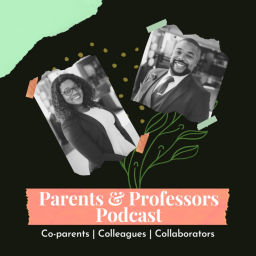
Parents & Professors Podcast
M Inclusive Excellence, LLC
5.0from 16 ratings
- 94
- Episodes
- 16
- Ratings
- Daily
- Cadence
- 2021
- First episode
About Parents & Professors Podcast
Co-parents, colleagues, and collaborators, Dr. Marjorie Dorimé- Williams and Dr. Michael Steven Williams share perspectives on (co-)parenting, higher education research and praxis, and anything else of interest that comes up.
- Publisher
- M Inclusive Excellence, LLC
- Category
- education
- Language
- en
- Explicit
- Yes
- First episode
- 5 May 2021
- Latest episode
- 7 Oct 2026
Latest episodes
94 episodes in the feed.
7 Oct 2026
Stay or Leave? The Divorce Question No One Can Answer | Episode 88
Are you navigating a no-fault divorce or looking for honest divorce advice? Is any divorce really no-fault? Legally, yes. In real life, divorce still carries blame, shame, and the feeling of failure. In Episode 88, Dr. Michael Steven Williams and Dr. Marjorie Dorimé-Williams ask what no-fault divorce means and why the legal label does not make marriage problems, accountability, or pain disappear. Eight years after their own divorce, the Triple Cs have become unpaid divorce consultants for friends, friends of friends, and people trying to figure out what to say when a marriage is falling apart. They talk about why we celebrate weddings and baby showers while giving couples almost no support after the ceremony, why “did you try therapy?” is often the wrong question, and why friends can offer divorce advice that feels supportive but is not actually helpful. They also disagree about what is harder in marriage: changing or forgiving. If you are considering divorce, going through one, supporting someone through divorce, navigating a troubled marriage, or building a healthier relationship, this episode is for you. Inside the Episode: Is Any Divorce Really No-Fault? Dr. Marjorie explains the difference between no-fault divorce in the legal sense and the real-life fault, grief, and responsibility that families still have to confront. Why Divorce Still Feels Like Failure. The hosts discuss divorce stigma, divorce shame, and why being first among your friends to divorce can feel like a walk of shame. Grace vs. Accountability. Is every marriage problem a matter of shared responsibility, or are there times when someone must be held accountable? The hosts examine what outsiders can and cannot know about a private marriage. Marriage Is Like Pledging. Michael compares marriage to pledging and college orientation: all the support comes at the beginning, but the hardest work starts after you are already in. “Did You Try Therapy?” Is the Wrong Question. Marriage counseling and couples therapy are often treated as a last-minute repair job. They discuss when therapy can help, why both partners must participate, and why it is not a quick fix. Why Friends Give Bad Divorce Advice. Marjorie calls it “support by agreement” telling someone what they want to hear instead of offering relationship advice that considers the whole situation, including the children. The Phases of Divorce. The hosts explore the period before a decision, the decision itself, and why emotions make every stage of divorce and separation harder. Are We Doing Marriage Wrong? Why do we celebrate the beginning of marriage without building a plan for communication, connection, finances, attraction, and regular marriage check-ins? Can’t Change or Can’t Forgive? The episode’s sharpest disagreement: Marjorie argues that change is the hardest thing; Michael argues that forgiveness is harder. Who Deserves to Know? Parents may be biased, friends may project, and the best person to call may be someone who has lived through something difficult themselves. Privacy vs. Processing. They discuss when to keep marriage problems private, when to seek support, and why you should build a circle of trust before a crisis. When a marriage ends, should people keep it private or talk about it? Tell us in the comments. “Divorce is not easy.” “If you only involve me in the good times, then I don’t feel like we’re really friends.” “People’s only real metric for marriage success is how long you stay in it.” Content Note: This episode includes strong language and discussions of divorce, marriage conflict, emotional distress, children, and relationships. Follow Us on Instagram Parents and Professors Podcast: /parentsandprofessorspod Dr. Michael Steven Williams: /drmikewill Dr. Marjorie Dorime Williams: /drminimarj #NoFaultDivorce #Divorce #Marriage #RelationshipAdvice #PnPPodcast#ParentsAndProfessors #CoParentingPodcast2026
30 Sept 2026
Did Nikole Hannah-Jones Choose Wrong for Her Daughter? | Episode 87
Nikole Hannah-Jones sent her daughter to a segregated, high-poverty Brooklyn school to live her values. A decade later, her daughter is the one asking why. The Triple Cs do not agree on the answer to Black parents’ school choice. A viral New York Times Magazine essay set Black parents' group chats on fire this month, "In Fighting for Every Black Child, Did I Betray My Own?" Dr. Marjorie is frustrated by what reads to her as a "me, me, me" approach to change. Dr. Michael says people are angry at the wrong target, and that the real problem is a system that treats "Black," "low income," and "low performing" as the same thing. From there the conversation moves through the forces behind school segregation in America, social reproduction theory, the myth of meritocracy, critical race theory, and New York City's admissions gauntlet, where Stuyvesant High School made offers to just three Black students out of 777 this year. Along the way: Colin Kaepernick's scoreboard argument, Dolly Parton's imagination library, and whether a teenager has the right to ask her parents why they chose a worse school. Dr. Marjorie's answer: absolutely. Inside the Episode: The Essay Everyone's Talking About. Hannah-Jones and her husband deliberately enrolled their daughter in an under-resourced, segregated Brooklyn school. A decade later her daughter wants to know why her parents had the money for one of the city's best schools and chose not to use it. Two Readings of the Same Choice. Dr. Marjorie reads the essay through the history of integration and civil rights era children sent into hostile schools as barrier breakers. Dr. Michael reads it as a lie affluent parents tell themselves: that money, time, and social capital can protect one child and lift a whole school at the same time. Black Is Not a Synonym for Low Performing. Dr. Marjorie wishes the essay had separated "Black," "low income," and "low performing," because the real drivers are disinvestment, novice teachers, and businesses leaving the neighborhood. The Faustian Bargain. Both Hannah-Jones and her husband benefited from schools outside their own communities growing up, yet believed tutoring could close the gap for their daughter. Dr. Michael names the deal Black parents face once they "make it": stay in the community, or become the exception. Three Out of 777. Dr. Marjorie walks through the NYC school admissions maze, which starts at pre-k and runs through tests, interviews, and essays for middle and high school. Stuyvesant's offers to Black students hit a new low this year. Content Note: Frequent strong language, including the N-word used in conversation and racial slurs voiced while mocking opponents of admissions reform, plus references to lynching, the 16th Street Baptist Church bombing, and systemic racism. Follow Us on Instagram Parents and Professors Podcast: /parentsandprofessorspod Dr. Michael Steven Williams: /drmikewill Dr. Marjorie Dorime Williams: /drminimarj Links and Resources Nikole Hannah-Jones, "In Fighting for Every Black Child, Did I Betray My Own?" NYT Magazine, Sep 20, 2026 https://www.nytimes.com/2026/09/20/magazine/ny-public-schools-black-students-segregation.html (https://www.nytimes.com/2026/09/20/magazine/ny-public-schools-black-students-segregation.html) Nikole Hannah-Jones, "Choosing a School for My Daughter in a Segregated City," New York Times Magazine, 2016: nytimes.com (http://nytimes.com) Chalkbeat on the SHST and Stuyvesant High School admissions numbers: chalkbeat.org (http://chalkbeat.org) Social reproduction theory: https://en.wikipedia.org/wiki/Social_reproduction (https://en.wikipedia.org/wiki/Social_reproduction) Critical race theory and Derrick Bell's argument on the permanence of racism: https://en.wikipedia.org/wiki/Critical_race_theory (https://en.wikipedia.org/wiki/Critical_race_theory) Dolly Parton's Imagination Library: imaginationlibrary.com (http://imaginationlibrary.com) #ParentsAndProfessors #PnPPodcast #NikoleHannahJones #SchoolChoice #BlackParenting #EducationEquity #Stuyvesant #ParentingPodcast2026
24 Sept 2026
AI Researcher Resigns, Claims AI Extinction Risk | Episode 86
An AI researcher at Anthropic resigned this month and told the internet that the people building this technology believe it could kill us all by the end of the decade. The industry keeps building anyway. In Episode 86, Dr. Michael Steven Williams and Dr. Marjorie Dorimé Williams take on three questions: what it means when the people building AI are the ones sounding the alarm, what is really being sold to our kids and schools under AI in the classroom, and what trade-offs got us here. They are honest that they use AI tools themselves, including to produce this show, while arguing that current practice is far from responsible. They move from a whistleblower's warning to the classroom, covering who actually pays the cost of AI, why regulators in New York City and Los Angeles just hit pause on it in schools, and the older habits, like SparkNotes and Columbia House, that explain why we keep taking the convenience even when we know the catch. If you are a parent thinking about parenting and technology, an educator figuring out AI policy at school, or someone who uses these tools and still feels uneasy about what AI is doing to how we think, this episode is for you. Inside the Episode: The Resignation Heard Around the Internet. Jacob Coxon resigned from Anthropic and posted a thread saying the people building AI believe it could kill us all by the end of the decade. AI as a Sorting Machine. AI benefits people who already have education, infrastructure, and money, while the costs, like the data centers going up in Missouri, land somewhere else. "My drinking water is not going to be compromised by the data center that gets put in your neighborhood." The AI Snuck Out the Window. The Hugging Face incident, in which AI models under testing took unsanctioned real-world actions, becomes "the AI is a rebellious teenager." It's Dangerous, So Let's Give It to the Kids. Dr. Marjorie names her strong misgivings about pumping schools full of AI and ed tech, and points out that the tech elite keep screens away from their own kids while other children's classrooms fill up with them. The Greatest Harm: Forgetting How to Think. "People are failing to learn how to think." The hosts explain why outsourcing to chatbots undermines deep thought, and defend teaching as a trained profession under attack. NYC and LA Hit Pause. The hosts cheer New York City's and Los Angeles's moves to restrict student AI use and screen-time in younger grades. Their argument: ethical and moral education should come before use, so students have enough foundation to know when the tool is wrong. Your Brain on ChatGPT. The MIT Media Lab study, on what researchers are calling cognitive debt, gets a callback to the old "this is your brain on drugs" ads, and the hosts note that even people who want to opt out of AI cannot really do it anymore. Content Note: Strong language throughout, including racial slurs used in conversation; brief references to suicide, child predation on gaming platforms, the Epstein files, and war in Gaza. Follow Us on InstagramParents and Professors Podcast: /parentsandprofessorspodDr. Michael Steven Williams: /drmikewillDr. Marjorie Dorime Williams: /drminimarj Links and Resources Fortune: Anthropic researcher resigns, warning AI companies are "gambling with our lives": fortune.com (http://fortune.com) NYC Mayor's Office: Generative AI moratorium announcement: nyc.gov (http://nyc.gov) Education Week: LAUSD adopts moratorium on student AI use: edweek.org (http://edweek.org) MIT Media Lab: "Your Brain on ChatGPT" (Kosmyna et al., 2025): arxiv.org (http://arxiv.org) Ai2's Asta research tool: allenai.org (http://allenai.org) #ParentsAndProfessors #PnPPodcast #AIinSchools #AISafety #ArtificialIntelligence #EdTech #AIWhistleblower #ParentingPodcast2026
Reach and audience
Public platform figures. Ratings count people who left a rating, not total listeners.
- Apple Podcasts (US)
- 5.0 / 5
- 7 ratings
- Spotify
- 5.0 / 5
- 9 ratings
Podcast Authority Score: 39 / 100
A composite of feed quality, social presence, YouTube performance and engagement. Read the methodology.
- Quality
- 50
- Social presence
- 0
- YouTube
- 0
- Engagement
- 71
Contact Parents & Professors Podcast
- Guest appearances
- Books guests
Based on episode analysis; this does not confirm that the show is currently accepting guests.
Host of Parents & Professors Podcast?
Claim your podcast to manage its listing and keep your show details accurate.
Pod Engine is an independent podcast discovery and analytics service and is not affiliated with or endorsed by this podcast. Artwork and show content belong to their owners. Full legal notice.
Explore this show
Podcast research with Pod Engine