- 10
- Episodes
- 3
- Ratings
- Monthly
- Cadence
- 2026
- First episode
About Peeling the Onion
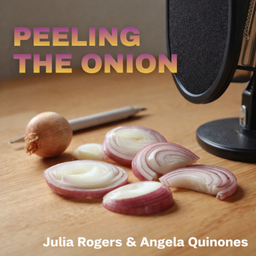
Peeling the Onion is where we hold popular psychology up to the light — and see what’s actually inside. Hosted by coaches Julia Rogers and Angela Quinones, this podcast challenges the bite-sized quotes and viral self-help advice that dominate social media. We’re not here to mock. We’re here to think. If you suspect that real development is messier, more nuanced, and far more interesting than the motivational wallpaper in your feed, join us. Put down the Pinterest quote. Pick up your critical thinking.
- Publisher
- Julia Rogers
- Category
- education · society & culture
- Language
- en
- Explicit
- No
- First episode
- 27 Feb 2026
- Latest episode
- 30 Jul 2026
Latest episodes
10 episodes in the feed.
30 Jul 2026
Why Peeling the Onion?
In today’s episode hosts Julia Rogers and Angela Quiñones share why they chose the title “Peeling the Onion”. It takes a complex interaction of relationships, systems, privilege, opportunity, timing, and effort, and reduces it to a single cause, the individual. They talk about: Why Peeling the Onion The meaning behind it Cognitive bias Blame and responsibility Elemental Smugness 1:05 Why we chose this title “PTO” 2:07 Do we always have to explore deeper? 3:15 The overuse and what does PTO actually mean 4:03 Simply using pop psychology phrases will not actually help 6:42 There are many levels of understanding behind every phrase 8:38 Is there higher wisdom in using pop psychology phrases? 11:22 Engaging your critical thinking skills
16 Jul 2026
Be grateful, it could be worse
In today’s episode hosts Julia Rogers and Angela Quiñones share their thoughts on the phrase: “be grateful, it could be worse” and the practices on gratitude at different levels and sometimes taken to extremes. They talk about: Being grateful and gratitude How sometimes can invalidate emotional experiences Emotional bypassing Boundaries You are allowed to complain People dont need fixing Here are the highlights of this episode: 0:55 The words grateful and gratitude 2:43 You can’t complain 4:16 It can invalidate emotional experiences 5:01 It stops you to think about what’s underneath 5:59 Emotional bypassing 9:16 Complaining as a way of processing what needs changing 10:39 Always being grateful and not complaining can also foster isolation 11:28 Negating the importance of the situation 13:37 Sometimes people just need to be heard
11 Jun 2026
The only thing holding you back is you
In today’s episode hosts Julia Rogers and Angela Quiñones share their thoughts on the phrase: “the only thing holding you back is you” and how it's actually a form of blame. It takes a complex interaction of relationships, systems, privilege, opportunity, timing, and effort, and reduces it to a single cause, the individual. They talk about: Victim blaming Dynamics and projection Cognitive bias Blame and responsibility Elemental Smugness Here are the highlights of this episode: 1:27 The amygdala gets hijacked. 1:46 This phrase appeals to personal agency 2:21 You are the only one responsible for anything happening in your life 2:30 There are so many variables to take into account 3:32 It takes away any critical analysis 3:38 We don’t all have the same 24 hours in the day 7:45 People can not just forget about their personal circumstances 8:15 Dynamic and projection 9:28 Positions of power and higher status 10:43 Elemental Smugness 11:53 You and only you is the one to blame 12:28 Cognitive bias 13:13 People are doing their best with what they have
28 May 2026
Fake it until you make it
In today’s episode hosts Julia Rogers and Angela Quiñones share their thoughts on the phrase; “ fake it until you make it” and how it went from bringing courage in moments of self-doubt to becoming an unethical way to succeed in professions and life. They also talk about the implications of faking your emotions and pains which will then translate into burnout and poor mental health They talk about: Professionalism and ethics The two sides of the phrase “ fake it until you make it” How social media and some industries praise fakeness Reputation as a professional in any area Self abandonment False sense of success Here are the highlights of this episode: 1:03 You don’t want a brain surgeon to fake it.. 1:48 How serious and real are you being? 2:09 There are two sides of the coin 2:54 You don't want professionals to fake it but it’s also motivational 3:44 Where is the responsibility in this? 3:58 The false sense of grandiosity. 4:41 Is it ethical? 5:40 Don’t confuse ‘fake it until you make it’ with lack of knowledge,and professionalism 7:49 The industry encourages you to fake it to then sell you -get over your impostor syndrome course. 8:03 Safety is a key aspect 8:21 When we fake it… who are we putting first? Ourselves 8:53 Why is it ok for some professions to fake it but not for others? 9:46 Social media can confuse people with all these phrases. 10:52 Are you putting out a version of yourself that isn’t quite true? 11:13 Is all about reputation 11:39 The entrepreneurial industry has become a rat race that encourages people to fake it until they make it. 12:32 Faking it may also mean you need to dismiss your emotions 14:05 Self abandonment 14:47 Social media will wrongly rewire your thoughts 16:16 Staying in your comfort zone because faking it is actually working
14 May 2026
You're never given more than you can handle
In today’s episode hosts Julia Rogers and Angela Quiñones deconstruct the popular phrase "you're never given more than you can handle". They argue it's harmful, dismissive, and isolating. The duo also agrees it invalidates real pain, suppresses emotions, promotes solo resilience over relational support and discourages help-seeking, especially for women and across cultures. They talk about: Resilience is not a one-size-fits-all tool. Societal pressure to "keep up" alone; reinforces failure narrative and isolation. Suppressing feelings, invalidates pain (burnout, trauma, grief, chronic illness). British culture expects people to get on with it and in Latin American to accept God’s will Lack of connection Empathetic response options Here are the highlights of this episode: 00:59 Life is not evenly distributed. How can we put everyone in the same group and say... you are never given more than you can handle?" 01:31 If you're having a hard time... the implication is you should be able to handle it on your own. 03:40 It isolates people instead of encouraging them to find the support they need. 04:32 It encourages emotional suppression. 07:00 Do you have to endure the difficult situation no matter what? 07:55 Not looking for help top not look weak. 08:27 Stiff upper lip 09:27 It dismisses real pain 10:20 This phrase is anti relational 10:44 This is hard, how can I support you? 11:54 We thrive, heal and grow when we connect with others 13:34 I am not valuable, I am not important enough 14: 39 No pressure, take your time to process. You don’t have to handle it all on your own 15:09 Struggle doesn't mean failure, it means something needs attention
30 Apr 2026
Feel the fear and do it anyway
In today’s episode hosts Julia Rogers and Angela Quiñones share their thoughts on “feel the fear and do it anyway”. Fear as a primal instinct, was used for survival, nowadays it is used to name any emotion that brings discomfort and it should not be misused as it can be dangerous and reckless to use it lightly. They talk about: Fear as a primitive emotion The difference between fear, discomfort, anxiety, vulnerability Putting fear in the same box as other emotions may not allow personal growth Learn to describe what you are feeling with different words. Here are the highlights of this episode: 01:05 Fear as the most primitive emotion, evolved for survival. 02:53 Fear is there to tell you there is danger ahead. 03:32 But is it actually fear or is it something else? 04:36 We can't make an informed choice about what we do because we're just blindly leaping in and doing it anyway. 05:07 Putting everything in the same box does not allow us to perceive danger or maybe grow. 06:03 Learn to describe what you are feeling to know what to do next. 07:18 Standing on a cliff and jumping without assessing risks? 09:15 People need to name the emotion and the feelings for what they are. 12:50 Name the emotion or the feeling using different words (expand your vocabulary) 14:49 The internal narrative may tell us to do something we shouldn't 15:23 Try not to confuse the emotions 16:40 Take your time to pause, to reflect, and to feel your emotions.
16 Apr 2026
Finding your purpose
In today’s episode hosts Julia Rogers and Angela Quiñones share their thoughts on “purpose” : find your purpose, live your purpose. By definition purpose is the reason for which something or someone exists, is done or is created. But purpose can also be as simple or as meaningful as you’d like. They talk about: Meaning of purpose by definition Who are you if you have no purpose? Purpose can and may be dynamic and change overtime Purpose can be as simple or and meaningful as you’d like Being ok with who you are and not necessarily trying to save others Here are the highlights of this episode: 1:02 Meaning of purpose by definition 1:38 My purpose is to be ok with my decisions and the things that I do. 2:09 Not everything needs to make everyone happy all the time 2:38 Finding purpose could create an awful lot of pressure on some 3:05 Who am I If I don’t know what my purpose is? 4:03 Doing purposeful things to please others and feel accomplished 5:56 Does not need to be meaningful to other people nor huge 6:03 Finding purpose and validation 7:10 Purpose now can be different from what it was 10 years ago, 7:41 Purpose is dynamic 8:50 Maybe you don’t need to find your purpose right now 9:56 I am better because I have a purpose and you don’t? 10:52 Is it mandatory to have a purpose in life to be successful? 11:40 Purpose does not have to be grandiose 13:51 Purpose could be seen as aims or goals for different stages in your life
2 Apr 2026
Neurodiversity is a superpower
In today’s episode hosts Julia and Angela discuss the phrase "neurodiversity is a superpower" and the implications it can have for individuals with neurodiversity and encourage listeners to share their own perspectives and experiences, and to engage on LinkedIn post in a deeper discussion about the complexities and nuances of the "neurodiversity is a superpower" narrative. They talk about: "Neurodiversity is a superpower". Struggles and challenges individuals with neurodiversity face. Managing the anxiety of neurotypical and neurodiverse people. Validating the lived experiences of those with neurodiversity Lack of real inclusion and diversity initiatives (01:07) Negating the struggles (01:47) We are all in the spectrum… no we are really not (02:17) Who came up with “neurodiversity is a superpower”, a neurodiverse or a neurotypical? (04:23) As neurodiverse I do feel judged and not accepted (05:43) “Neurodiversity is a superpower" can be an attempt to manage anxiety (06:16) Glossing over things, is never going to help people (07:14) Masking: coping behaviours to fit in and be accepted (07:52) Constantly masking can be hurtful. (08:37) The responsibility of having to be less (09:08) Is there really inclusion in companies and schools? (10:40) Nuances of neurodiversity (13:13) Invitation to share how do you feel about this phrase as neurodiverse adult or parent
19 Mar 2026
Always think positive
Today Julia and Angela deconstruct “Always think/be positive” and share how positivity can be helpful, but forcing positivity can invalidate human emotions and prevents honest relationships, personal growth, and can build a sense of frustration or wrong doing. Healthy emotional life requires accepting all emotions. They talk about: 1. Constant positivity is psychologically unrealistic 2. The Pressure to stay always positive invalidates other emotions 3. Emotions as data 4. Suppressing emotions prevents awareness of problems that need change. 5. Toxic positivity blocks authentic relationships. Here are the highlights for this episode: (02:22) Constant positivity is physically impossible (03:02) Pressure to stay positive at all costs invalidates other emotions (04:34) Emotions are data. (05:09) Children need to express and live with their emotions safely. (05:59) Learning how to express emotions and not be frighten of them. (07:26) Other emotions may allow you to see things thart need changing. (08:29) Staying positive all the time makes you avoid real issues that might need adressing. (10:06) We can not hide behind constant positivity just to avoid, conflict, difficult converstions and reality. (10:37) Staying always positive may not allow you to have real relationships (12:04) Pause and reflect about your feelings and emotions about different situations and people Connect with Angela (https://www.linkedin.com/in/angela-quinones-t/) and Julia (https://www.linkedin.com/in/julia-rogers-cpc-mcc-ma-a2238bb8/)
27 Feb 2026
If you keep working on it, it has to work.....
We have all read motivational statements on social media and pop psychology, but what happens when that statement actually negatively impacts our mental health and wellbeing? The hosts, Julia Rogers and Angela Quinones, challenge the common belief that if you keep working hard on something, it will eventually work out. They share personal experiences where instead this led to frustration and sense of not feeling enough. Instead suggest to keep goals and effort realistic, pivot goals when necessary and find the right support when things are not working the way we expected. (01:11) Exploring the notion that "If You Keep Working on It, It Has to Work" (03:53) Sometimes it is better to rearrange what you’re doing to make it work. (04:40) Sense of frustration. Stop-Refllect. (06:09) The Importance of Thoughts, Reflection, Consideration and Analytical Skills (07:53) Question yourself, without sabotaging (07:58) The need for balance between hard work and realistic expectations through reflection and critical thinking. (08:25) Realign and Pivot Goals if you need to (10:50) Realism vs Unrealistic Dreams (12:25) Awareness
Reach and audience
Public platform figures. Ratings count people who left a rating, not total listeners.
- Spotify
- 5.0 / 5
- 3 ratings
Contact Peeling the Onion
- Guest appearances
- Does not typically book guests
Based on episode analysis; this does not confirm that the show is currently accepting guests.
Host of Peeling the Onion?
Claim your podcast to manage its listing and keep your show details accurate.
Pod Engine is an independent podcast discovery and analytics service and is not affiliated with or endorsed by this podcast. Artwork and show content belong to their owners. Full legal notice.
Explore this show
Podcast research with Pod Engine