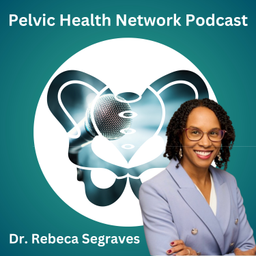
United States: a hysterectomy is performed every 60 seconds. A C-section every 27 seconds. Most women wait too long for a recovery plan after birth and pelvic surgery. This podcast is about the people changing that.
I’m Rebeca Segraves, founder of Pelvic Health Network. I sit down with the leaders who built early recovery programs that didn't exist anywhere else and pushed for earlier care for the largest patient population in the world.
We talk about what they tried, what failed, what patients taught them, and how the next program gets built.
Mothers are leaving hospitals without understanding their birth injuries - Dr. Meredith Grady
Physical therapists routinely use models and anatomical images to help patients understand their injuries.Why would we stop doing that after birth?Acute care pelvic health physical therapist, Dr. Meredith Grady, PT, DPT, says she is often the first person to fully explain a mother’s birth injury using a pelvic model. She shows patients where they tore, how the pelvic floor and surrounding structures were affected, and what that means for urinating, bowel movements, sitting, getting out of bed, climbing stairs, and caring for a baby at home.None of this requires an internal pelvic floor exam. It's the same basic rehab principle used throughout healthcare: patients deserve to understand what happened to their bodies at the time of their injury and how to recover safely.Meredith now provides pelvic health physical therapy on the postpartum unit at University of Utah Health. In this webinar, she explains how her own difficult recovery led her to this work, what a bedside postpartum PT session includes, and how she earned the trust of nurses, midwives, and physicians one conversation at a time.She discusses:• Using a pelvic model to explain birth injuries • Screening for urinary retention and bladder concerns • Preparing mothers for toileting, bed mobility, stairs and newborn care • Supporting recovery after C-section and severe perineal injuries • Why education must be individualized instead of giving every mother the same list • Why postpartum rehabilitation should be routinely offered, with the option to decline • Lessons learned while introducing PT onto an established maternity unit Find U.S. hospitals offering occupational therapy and/or physical therapy after birth: https://pelvichealthnetwork.org/hospitals/Support the clinicians expanding early maternal rehabilitation: https://pelvichealthnetwork.org/maternal-rehab-project/This webinar is intended for professional education and does not replace individualized medical care.
16 Sept 2026
How an OTD Student Built a Postpartum Rehab Program in a Hospital - Dr. Emily Gill
Emily Gill laminated referral cards and placed them on every monitor in labor and delivery and the postpartum unit. If OB/GYNs had to remember to order OT and PT manually, she was going to make postpartum rehab hard to forget.Emily developed her OTD capstone around a major gap in Cesarean recovery: mothers spent 2 - 4 days in the hospital yet received very little rehab support before their first postpartum follow-up several weeks later.At Banner Gateway Medical Center, she worked with occupational therapists, physical therapists, nurses, OB/GYNs, anesthesiologists, rehabilitation leadership, and hospital administrators to help establish an inpatient postpartum rehabilitation program.When a system-wide automatic referral order was declined because of staffing differences across facilities, Emily changed strategies. She rounded on the unit, trained rehabilitation staff, created referral instructions, attended hospital meetings, and learned how to explain the value of OT and PT to each profession.The team received 43 OT and PT referrals during her four-month capstone. When Emily returned for a later follow-up, the hospital had recorded 89 referrals without an automatic order set.In this conversation, Emily shares:• How she chose her doctoral capstone topic• How she gained support from hospital leaders and physicians• Why “protect your work” resonated with OB/GYNs• How she responded when the automatic order pathway was denied• What OT and PT addressed after Cesarean birth• How patient feedback changed the team’s approach• How she prepared hospital rehabilitation clinicians for a new population• What she would measure next as the program continuesFor OTD students searching for a capstone idea, Emily’s work shows what can happen when a capstone is designed to solve a real clinical problem and continue after graduation.Learn more about how Pelvic Health Network highlights leaders like Emily every month: https://pelvichealthnetwork.org/Explore ERAD® training in hospital and home-based pregnancy and postpartum rehabilitation:https://enhancedrecoveryafterdelivery.com/program/#occupationaltherapy #otdstudent #physical therapy #acute care #hospital birth #postpartumrehab
13 Aug 2026
Dr. Marley Sisler, OTD, OTR/L: "Every Mother Gets Rehab"
It started with mothers on ECMO at WVU Medicine, a Level 1 trauma center. Dr. Marley Sisler had a capstone idea for her doctoral degree in occupational therapy. Today, mothers at her hospital after every vaginal and Cesarean delivery, live and stillbirth, receive an evaluation of their mental health and functional recovery by a rehab therapist. The postpartum recovery program she built has reached more than 6,000 OB patients. This is how one therapist turned a research question into a service line that prioritizes early recovery after birth.Credits: Dr. Marley Sisler - OTD Capstone Defense: Acute Care Postpartum Rehab Program -https://pelvichealthnetwork.org/wp-content/uploads/2026/08/Sisler-Capstone-Defense-Acute-Care-Postpartum-Recovery-Program.pdfVideo Sponsor: Enhanced Recovery After Delivery® Maternal Rehab Project1. Find a hospital offering OT and PT after birth: https://pelvichealthnetwork.org/hospitals/2. Find a therapist offering rehab to mothers in the first 7 days after birth: https://pelvichealthnetwork.org/directory/3. Start a program in the hospital or home that offers early recovery services after birth: http://enhancedrecoveryafterdelivery.com/program/
Reach and audience
Public platform figures. Ratings count people who left a rating, not total listeners.
YouTube views
270,690
Score snapshot 15 Sept 2025
Podcast Authority Score: 26 / 100
A composite of feed quality, social presence, YouTube performance and engagement. Read the methodology.
Quality
18
Social presence
0
YouTube
82
Engagement
0
Contact Pelvic Health Network Podcast
Guest appearances
Books guests
Based on episode analysis; this does not confirm that the show is currently accepting guests.
Host of Pelvic Health Network Podcast?
Claim your podcast to manage its listing and keep your show details accurate.
Pod Engine is an independent podcast discovery and analytics service and is not affiliated with or endorsed by this podcast. Artwork and show content belong to their owners. Full legal notice.
Explore this show Podcast research with Pod Engine