- 14
- Episodes
- 1
- Ratings
- Weekly
- Cadence
- 2025
- First episode
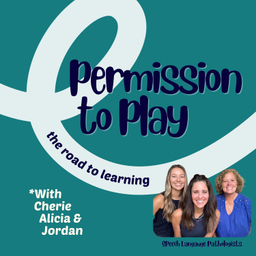
About Permission to Play
Welcome to *Permission to Play* — a podcast for parents, teachers, speech-language pathologists (SLPs), and paraprofessionals who want to unlock meaningful connection and communication with autistic students and minimally speaking communicators. We’ll explore how playful, creative strategies rooted in connection-first communication can spark progress, reduce frustration, and transform how you reach and teach autistic learners. You’ll discover why play isn't extra- it's the key to unlocking communication, joint attention, and meaningful progress.
- Publisher
- Connect-it's not just speech
- Category
- education
- Language
- en
- Explicit
- No
- First episode
- 30 Sept 2025
- Latest episode
- 24 Feb 2026
Latest episodes
14 episodes in the feed.
24 Feb 2026
Are We Building Independence or Dependence? A Perspective Shift for Special Education
Welcome back! In this episode, we’re diving into a powerful and sometimes uncomfortable question: Are we truly building independence for our complex communicators — or are we accidentally creating dependence? As school-based therapists and educators, we are constantly pulled toward efficiency. We prompt. We assist. We fix. We help. But what if the smallest daily moments — plugging in a blender, throwing away a tissue, handing over a tool — are shaping long-term outcomes more than we realize? In this episode, we share real classroom stories from high school and transition programs that challenged our own thinking about: Creating independence for autistic students Supporting nonspeaking and minimally speaking learners Presuming competence in special education Avoiding over-prompting and hand-over-hand habits Teaching life skills with a long-term lens Building confidence through productive struggle Shifting from short-term task completion to future autonomy We discuss how true independence is built intentionally — not just in communication, but in daily living skills, classroom routines, vocational tasks, and social participation. Through cooking lessons, tote bag businesses, and even simple routines like leaving for speech therapy, we explore how: Waiting matters. Patience matters. Letting students try (and try again) matters. The “Goldilocks zone” of support and challenge builds competence. The tiniest repeated moments shape identity, confidence, and future outcomes. This episode also connects directly to our communication philosophy:Just like we build internal motivation and communicative intent through intentional interaction, we must also build internal belief in capability through intentional independence. If you work with autistic students, complex communicators, or minimally speaking learners — whether you’re a teacher, SLP, OT, PT, paraprofessional, administrator, clinical manager, or parent — this episode will challenge and encourage you to examine: How is what I’m doing today shaping my student’s independence years from now? Because true progress doesn’t happen in one big breakthrough. It’s built one tiny, thoughtful, patient interaction at a time. Chapters 00:00 Creating Independence for Complex Communicators 02:59 The Importance of Long-Term Thinking 04:07 Learning Through Real-Life Experiences 08:04 The Challenge of Patience in Teaching 10:18 Building Competence and Confidence 11:23 Daily Routines and Independence 12:51 Collaboration and Continuous Learning
10 Feb 2026
Movement, Regulation, and Learning: The Critical Role of OT and PT in Special Education
In this episode, we wrap up our Staff Celebration Series by highlighting two essential — and often underutilized — members of the school-based therapy team: occupational therapists (OTs) and physical therapists (PTs). While OTs and PTs may be seen on campus less frequently than speech-language pathologists, their role in supporting autistic students, nonspeaking learners, and complex communicators is foundational. These professionals help students access learning, regulate sensory systems, improve mobility, and build independence so meaningful communication and participation can grow. We discuss the roles of occupational therapists and physical therapists in schools, including: How OTs support fine motor skills, activities of daily living, sensory processing, and classroom participation How PTs improve gross motor development, posture, balance, mobility, and physical access to education The importance of sensory diets, movement breaks, adaptive seating, proprioception, and vestibular regulation Practical ways teachers, SLPs, administrators, and parents can collaborate with OT and PT teams — even beyond shared caseloads Why movement, regulation, and environmental access are prerequisites for learning, engagement, and communication We also explore how OTs and PTs naturally “listen with their eyes,” reading body signals, anticipating regulation needs, and helping teams become more proactive in preventing frustration, shutdown, and meltdowns. Most importantly, this episode highlights how true progress for complex communicators happens through collaboration. When educators, therapists, and families learn to see through each other’s professional lens, classrooms become more supportive, learning becomes more meaningful, and communication grows one small interaction at a time. If you are a teacher, speech-language pathologist, occupational therapist, physical therapist, administrator, clinical leader, or parent of an autistic child, this conversation will deepen your understanding of how interdisciplinary teamwork supports connection, participation, independence, and long-term success. 1:59 Understanding the Roles of OTs and PTs 4:58 Collaboration for Student Success 7:23 The Importance of Movement and Sensory Needs 8:24 Enhancing Communication Through Collaboration
27 Jan 2026
School Psychologists: The Untapped Resource on Your School Team | Celebrating Staff Series
In this episode of our Celebrating Staff Series, we highlight the powerful and often underutilized role of the school psychologist—and why their expertise is essential for supporting students, especially complex communicators. School psychologists support students’ ability to learn and teachers’ ability to teach through expertise in assessment, mental health, learning, behavior, and executive functioning. We explore what school psychologists assess, how their evaluations shape effective IEPs, and why their reports provide critical insight into students’ strengths, needs, and learning styles. This episode emphasizes the importance of collaboration across school teams, showing how using assessment data intentionally can help teachers, paraprofessionals, and service providers meet students exactly where they are—and ultimately make their jobs easier. We also recognize the challenges school psychologists face, celebrate those who advocate for the whole child, and encourage school teams to better utilize this invaluable resource. This episode is packed with real-world insights, practical examples, and reminders of why collaboration across school staff is essential for creating inclusive, supportive learning environments where students are truly seen and understood. ✨ Whether you’re a teacher, paraprofessional, SLP, OT, school psychologist, administrator, or service provider, this episode will help you: Better understand the role of school psychologists Use assessment results more effectively Support complex communicators with intention Strengthen collaboration across IEP teams Create meaningful change through connection and communication 00:00 The Role of the School Psychologist 2:36 Understanding Assessments and Their Impact 5:27 Collaboration and Communication in Education 8:10 Valuing the School Psychologist’s Insight 10:53 Empowering Students through Effective Support
13 Jan 2026
The Role of the Speech-Language Pathologist: What SLPs Really Do and Why Collaboration Matters
In this episode of Permission to Play, Cherie, Alicia and Jordan turn the spotlight on speech-language pathologists (SLPs)—what we are trained to do, what we actually work on, and why our role is often misunderstood in schools and clinics. Many people assume SLPs “just work on speech,” but the scope of speech-language pathology extends far beyond articulation. In this conversation, we break down the full scope of SLP practice, including language, AAC, social communication, cognition, feeding and swallowing, and how these areas directly impact learning, behavior, and long-term outcomes—especially for autistic and complex communicators. We also explore why collaboration with teachers, paras, OTs, PTs, psychologists, and families is essential for creating internally motivated communication and learning. This episode is both a celebration of SLPs and a call to rethink session-based, goal-driven models in favor of a connection-first, long-term lens that leads to meaningful progress. Whether you’re an SLP, educator, administrator, or parent, this episode will help you better understand how communication works across the school day—and how responsive, joyful interaction is the foundation for true learning. ✨ Because communication doesn’t happen in isolation—and neither should the people supporting it. 00:00 Understanding the Role of SLPs 04:41 The Big Nine Areas of SLP Expertise 08:00 Collaboration between SLPs and School Staff 12:15 The Importance of Communication in Education 15:43 Strategies for SLP Practice You can find us on IG @connectspeech to learn more! If you are a parent of an early autistic communicator, check out our previous podcast Autism Communication Toolkit! https://open.spotify.com/show/5GnH2v3qxwtQZqqxdlsXAI?si=812f5410411243e2 (https://open.spotify.com/show/5GnH2v3qxwtQZqqxdlsXAI?si=812f5410411243e2)
9 Dec 2025
The Untapped Potential in Your Classroom: The Impact of Empowered Paraprofessionals
In this episode of Permission to Play, we shine a long-overdue spotlight on the quiet strength behind every thriving classroom — our paraeducators, paraprofessionals and teacher and classroom aides.. Often underpaid, underestimated, and underrecognized, these incredible team members are the heartbeat of our schools. They work side by side with students who need the most support, shaping not only learning outcomes but the entire classroom culture through their daily acts of patience, empathy, and connection. Join us as we explore how empowering and valuing paras can transform student success, teacher collaboration, and school environments from the inside out. You’ll hear real stories of paras who change lives through compassion, communication, and consistency — and how teachers and SLPs can create partnerships that uplift everyone involved. Whether you’re an education specialist, para, SLP, or school administrator, this episode will remind you that the greatest impact often comes from the unseen influence — the quiet force that makes every student feel heard, understood, and capable. Because when paras thrive, students rise. 🌱 00:00 Understanding the Role of Paraeducators 04:48 The Impact of Connection and Culture 11:23 Empowering Paraeducators for Student Success 16:06 Transforming School Culture through Collaboration **You can find us on IG @connectspeech to learn more! If you are a parent of an early autistic communicator, check out our previous podcast Autism Communication Toolkit! https://open.spotify.com/show/5GnH2v3qxwtQZqqxdlsXAI?si=812f5410411243e2 (https://open.spotify.com/show/5GnH2v3qxwtQZqqxdlsXAI?si=812f5410411243e2)
2 Dec 2025
The Backbone of SPED: Celebrating Special Education Teachers and the Power of Collaborative Teams
In this episode of Permission to Play, hosts Cherie, Alicia and Jordan launch their School Staff Series by shining a spotlight on the heart of every inclusive classroom — special education teachers. These educators are the backbone of student growth, creativity, and connection, yet so many work in isolation. This conversation dives deep into how collaboration between SLPs, OTs, PTs, paras, psychologists, and teachers transforms burnout into empowerment and creates classrooms where every student can thrive. You’ll hear stories of teamwork, problem-solving, and authentic connection that remind us all why collaboration matters more than ever. Learn how shared insight, open communication, and respect across disciplines help build internally motivated communication and learning for autistic students and all diverse learners. 💡 In this episode, you’ll learn: Why special education teachers are central to developing school cultures that support genuine communication and meaningful progress. How interdisciplinary collaboration reduces burnout, increases effectiveness, and strengthens schoolwide impact. Ways to break down isolation among school staff and create shared ownership of student success. How trial-and-error learning across roles generates deeper insights into student strengths, sensory needs, and communication styles. Practical strategies for collaboration between SPED teachers and SLPs, OTs, PTs, school psychologists, and paras. How shared philosophy and consistent support create internally motivated learners — not compliance-based responders. Why connection, communication, and teamwork are essential for long-term student growth. Whether you’re a special education teacher, therapist, or administrator, this episode will leave you feeling seen, valued, and re-energized — ready to reconnect with your purpose and your team. You can find us on IG @connectspeech to learn more! If you are a parent of an early autistic communicator, check out our previous podcast Autism Communication Toolkit! https://open.spotify.com/show/5GnH2v3qxwtQZqqxdlsXAI?si=812f5410411243e2 (https://open.spotify.com/show/5GnH2v3qxwtQZqqxdlsXAI?si=812f5410411243e2)
18 Nov 2025
The Culture You Create: How collaboration and connection shapes communication, learning, and long-term success
In this episode of Permission to Play, hosts Cherie, Alicia and Jordan dive deep into one of the most important—and overlooked—factors in every classroom: the culture you create. Every classroom, every school, and every team has its own culture. But is yours built on connection, collaboration, and long-term thinking… or is it stuck in “just getting by” mode? Whether you’re an education specialist, general education teacher, speech-language pathologist (SLP), paraprofessional, or administrator, this conversation will help you rethink how culture impacts your students—especially autistic communicators—and how small mindset shifts can lead to more joy, trust, and progress for everyone. 💡 In this episode, you’ll learn: The two dominant types of school cultures and how to recognize them How collaboration between teachers, paras, and therapists creates real progress Why communication and connection—not compliance—drive student success Practical ways to shift your classroom or team culture starting today How joyful, inclusive classrooms reduce burnout and improve outcomes This episode is a reminder that meaningful change doesn’t start at the district level—it starts with you. By choosing connection over control and collaboration over isolation, you help build a culture that truly supports every communicator. 🎧 Tune in to “The Culture You Create” and discover how one person can light up an entire school. 00:00 Introduction to school staff celebration series 02:49 Creating a culture of connection 05:57 Understanding school culture: the good and the bad 08:51 The culture of just getting by 11:56 The culture of engagement and support 15:09 Empowering change in school culture You can find us on IG @connectspeech to learn more! If you are a parent of an early autistic communicator, check out our previous podcast Autism Communication Toolkit! https://open.spotify.com/show/5GnH2v3qxwtQZqqxdlsXAI?si=812f5410411243e2 (https://open.spotify.com/show/5GnH2v3qxwtQZqqxdlsXAI?si=812f5410411243e2)
11 Nov 2025
The Hidden Superpower in Your Classroom: Using Parent Insights to Boost Learning and Communication
In this episode, we uncover one of the most overlooked secrets to meaningful student progress, the power of parent collaboration. Whether you’re a teacher, paraeducator, or speech-language pathologist, finding ways to communicate with parents can completely transform your impact in the classroom. Join Cherie, Alicia and Jordan as they share real stories, practical tools, and mindset shifts that help educators turn potential conflict into powerful collaboration. Discover how parent insight can unlock new communication breakthroughs for non-speaking and minimally speaking students, improve behavior and motivation, and build lasting trust between home and school. You’ll learn: ✅ How to turn parents into partners, not adversaries ✅ Simple systems to gather insight from families ✅ How understanding a child’s world at home can change everything at school Whether you’re navigating IEP meetings, supporting students with AAC, or simply wanting more success and joy in your work — this conversation will remind you that parents aren’t just participants… they’re your most valuable resource. 00:00 The Importance of Parental Collaboration 05:45 Building Trust with Parents 11:40 Leveraging Parent Insights for Student Success 15:58 Creating Lasting Connections with Families You can find us on IG @connectspeech to learn more! If you are a parent of an early autistic communicator, check out our previous podcast Autism Communication Toolkit! https://open.spotify.com/show/5GnH2v3qxwtQZqqxdlsXAI?si=812f5410411243e2 (https://open.spotify.com/show/5GnH2v3qxwtQZqqxdlsXAI?si=812f5410411243e2)
4 Nov 2025
Reframing Potential: What SLPs and Educators Need to Know About Underestimation
In this powerful episode, we explore how speech-language pathologists (SLPs) and educators can transform learning outcomes by shifting from underestimation to presuming competence. Too often, outdated practices like cognitive referencing limit how students are seen and supported—but research in neuroplasticity tells a very different story. Join hosts Cherie, Alicia, and Jordan as they discuss how SLPs, teachers, and school staff can recognize every student’s potential, unlock meaningful communication, and build inclusive classrooms that empower growth. You’ll hear real-world examples from schools and therapy rooms that reveal how a small shift in perspective can ignite massive progress. Whether you’re a speech-language pathologist, special educator, or school-based professional, this episode will inspire you to reframe how you view student capability—and remind you that when we presume competence, potential flourishes.
28 Oct 2025
What You Do Today Matters: How Long-Term Thinking Transforms Progress for Autistic Learners
In this episode of Permission to Play, hosts Alicia, Jordan, and Cherie invite you to rethink what real progress looks like for autistic learners. Too often, we measure success by checklists and short-term goals. We explore how shifting from session-based thinking to a long-term, connection-focused lens transforms outcomes for autistic learners. Discover why what you do today can profoundly shape communication, confidence, and independence years from now. If you’re a speech-language pathologist, special educator, parent, or autism professional who’s ready to rediscover the heart behind your work, this episode will remind you that every moment — big or small — truly matters. You can find us on Instagram @connectspeech to learn more! Website: www.connect-speech.com
21 Oct 2025
The Only Route: Why Internally Motivated Communication Unlocks Learning for Autistic Students
In this episode, we dive deep into why internally motivated communication is the key to real learning for autistic communicators. Join Cherie, Alicia, and Jordan as they explore how to move beyond compliance-based strategies like prompting, withholding, and rewards — and instead build authentic connection and communication that lasts. You’ll learn: ✅ The difference between external vs. internal motivation in autism learning ✅ Why autistic students may appear to “ignore” directions (and what’s really happening) ✅ How to create meaningful communication moments that spark true engagement ✅ Practical ways to help your students or children tune in, connect, and learn naturally ✅ Why connection always comes before compliance Whether you’re a speech-language pathologist, teacher, paraprofessional, or parent, this episode will help you reframe how you see communication and learning — showing you how meeting autistic learners exactly where they are opens the door to growth, joy, and self-driven learning. You can find us on Instagram @connectspeech to learn more! Website: www.connect-speech.com
14 Oct 2025
Creating a Culture of Connection - How to get staff on board!
In this episode of Permission to Play, Cherie, Alicia, and Jordan dive into one of the biggest keys to lasting change in schools—getting your whole team on board. Learn how to shift your classroom culture from compliance-based strategies to connection-centered collaboration where every staff member—teachers, paras, SLPs, and OTs—plays a vital role. You’ll discover how small perspective shifts can transform your school community, helping every autistic communicator feel seen, heard, and motivated to connect. From using communication dictionaries to modeling joy and authentic engagement, this episode shows how collaboration ignites progress—for students and staff. You can find us on Instagram @connectspeech to learn more! Email us at info@connect-speech.com!
7 Oct 2025
Our IRC Approach
Welcome back to Permission to Play, the podcast for parents, teachers, and SLPs who want to build joyful, meaningful communication with autistic learners. Today we explore the IRC Approach — Ignite the Social Driver, Read and Respond to all communication, Create Communication Opportunities — a proven method to spark connection, internal motivation, and real progress. Discover how small, consistent interactions can transform speech, learning, and connection for complex communicators. Related Episodes from Autism Communication Toolkit: Creating Communication Opportunities: https://open.spotify.com/episode/4utQWLDJoQixLdTA4EF2yp?si=7sUOSvmkROm5p3W1XxjwmA Ignite the Social Driver: https://open.spotify.com/episode/3nL2XjQqMLSWiKnwSHiwY5?si=gD_cAycjSmOI3_JlF1kguA You can find us on Instagram @connectspeech to learn more!
30 Sept 2025
Welcome to Permission to Play!
Welcome to *Permission to Play* — a podcast for parents, teachers, speech-language pathologists (SLPs), and paraprofessionals who want to unlock meaningful communication with autistic children and minimally speaking communicators. In our very first episode, hosts Cherie Somers, Alicia McManaman, and Jordan Wright-Gonzalez share their experiences in schools, clinics, and homes, where so many professionals feel stuck in systems that prioritize compliance over true connection. If you’ve ever felt ineffective, discouraged, or overwhelmed when working with autistic students, you’re not alone. We’ll explore how playful, creative strategies rooted in connection-first communication can spark progress, reduce frustration, and transform how you reach and teach autistic learners. You’ll discover why play is not wasted time but a powerful, strategic tool that helps unlock joint attention, communication, and learning. Whether you’re an SLP looking for practical strategies, a special education teacher struggling to meet goals, or a parent searching for hope and support, this episode will inspire you to rethink old rules, trust your instincts, and embrace the joy of playful connection. You can find us on Instagram @connectspeech to learn more!
Reach and audience
Public platform figures. Ratings count people who left a rating, not total listeners.
- Apple Podcasts (US)
- 1.0 / 5
- 1 ratings
Contact Permission to Play
- Guest appearances
- Does not typically book guests
Based on episode analysis; this does not confirm that the show is currently accepting guests.
Host of Permission to Play?
Claim your podcast to manage its listing and keep your show details accurate.
Pod Engine is an independent podcast discovery and analytics service and is not affiliated with or endorsed by this podcast. Artwork and show content belong to their owners. Full legal notice.
Explore this show
Podcast research with Pod Engine