- 10
- Episodes
- 3
- Ratings
- Monthly
- Cadence
- 2023
- First episode
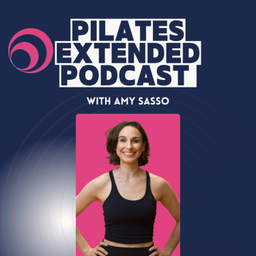
About Pilates Extended Podcast
A no-nonsense podcast for Pilates teachers who want to grow their confidence, master clear cueing, and help their clients get real results. Join me as we dive into evidence-based teaching, strength principles, and practical strategies to make your classes more effective—without the fluff. Whether you're looking to refine your skills, challenge industry myths, or just get stronger in your own practice, this is the place for you.
- Publisher
- Amy Sasso
- Category
- health & fitness
- Language
- en
- Explicit
- No
- First episode
- 1 Nov 2023
- Latest episode
- 10 Jul 2026
Latest episodes
10 episodes in the feed.
10 Jul 2026
10. How to Teach Safe Group Pilates Classes When Clients Have Injuries
keywords Pilates, exercise safety, injury prevention, group classes, special populations, medical clearance, programming, Pilates teaching, chronic injuries, client assessment summary In this episode of the Pilates Extended Podcast, Amy addresses the challenges Pilates teachers face when accommodating clients with chronic injuries in group classes. She emphasizes the importance of safety in exercise, the low injury rates associated with Pilates, and the necessity of medical clearance for clients with pre-existing conditions. Amy provides guidelines for teaching special populations and offers practical strategies for programming classes that meet the diverse needs of clients without compromising safety or effectiveness. takeaways We all have the same mission, which is to help people. Exercise has been proven to be protective of injuries. Injuries in Pilates are very, very less likely to occur than in other forms of exercise. It's important to get medical clearance from clients before they start exercising. Each population has different guidelines for exercise. You should program your class for the person that has the most restrictions. Having a class plan prepared is essential, but flexibility is key. Understanding how injuries happen can help reduce their likelihood. You can manage each client by giving them props to help them get into position. Creating one class that fits the requirements of everyone is possible. References Videbæk, Solvej et al. “Incidence of Running-Related Injuries Per 1000 h of running in Different Types of Runners: A Systematic Review and Meta-Analysis.” Sports medicine (Auckland, N.Z.) vol. 45,7 (2015): 1017-26. doi:10.1007/s40279-015-0333-8 https://pmc.ncbi.nlm.nih.gov/articles/PMC4473093/?utm_source=chatgpt.com (https://pmc.ncbi.nlm.nih.gov/articles/PMC4473093/?utm_source=chatgpt.com) Mehrab, Mirwais et al. “Risk Factors for Musculoskeletal Injury in CrossFit: A Systematic Review.” International journal of sports medicine vol. 44,4 (2023): 247-257. doi:10.1055/a-1953-6317 https://pmc.ncbi.nlm.nih.gov/articles/PMC10072928/?utm_source=chatgpt.com (https://pmc.ncbi.nlm.nih.gov/articles/PMC10072928/?utm_source=chatgpt.com) Work with Amy Pilates Teachers Community membership 2-week free trial (https://www.pilatesextended.com/join-the-community) www.pilatesextended.com (http://www.pilatesextended.com)
19 Jun 2026
9. Is That Really Unsafe? Challenging Fear-Based Pilates Teaching
Episode Summary In this episode, Amy explores a recent social media controversy where a prominent Pilates educator publicly criticized another instructor's reformer warm-up, labeling it unsafe and dangerous. Using an evidence-based lens, Amy examines why fear-based messaging can be harmful to Pilates teachers, especially those who are new to the profession. She discusses how public shaming and unsupported claims can create unnecessary anxiety, undermine confidence, and discourage critical thinking. The episode dives into what exercise science actually tells us about warm-ups, injury mechanisms, herniated discs, and spinal movement. Amy explains why movement itself is rarely the problem, how injuries typically occur through trauma or excessive load beyond a person's capacity, and why blanket statements about "unsafe" exercises are often unsupported by research. Key Takeaways ✅ A warm-up should prepare the body for the movements and demands of the workout to follow. ✅ Spinal rotation and lateral flexion are normal human movements and are not inherently dangerous. ✅ Many people have disc bulges or herniations without experiencing pain or symptoms. ✅ Injury generally occurs through trauma or loading beyond a person's current capacity—not because a specific exercise exists. ✅ Movement intolerance and symptom aggravation do not necessarily mean tissue damage is occurring. ✅ Fear-based messaging can create unnecessary anxiety for teachers and clients. ✅ Evidence-based practice requires questioning claims and examining the science behind them. Learn More If this episode resonates and you want to keep exploring these ideas in a more structured way, you can join our Pilates Teachers Community. It’s a space for ongoing mentorship, evidence-based education, and support as you build confidence working with pain, injuries, and real-world clients. https://www.pilatesextended.com/join-the-community ( https://www.pilatesextended.com/join-the-community) Inside the membership, you’ll find: Weekly teacher workouts Research-backed education on pain and injury Practical teaching tools you can apply immediately A community of instructors learning to teach with clarity instead of fear References Brinjikji, W. et al. (2015). Systematic Literature Review of Imaging Features of Spinal Degeneration in Asymptomatic Populations American Journal of Neuroradiology, 36(4), 811–816. This systematic review analyzed imaging findings from over 3,000 pain-free individuals and found that disc bulges and other degenerative changes are extremely common and increase with age. The authors concluded that many imaging findings traditionally associated with back pain are often part of normal aging and are not necessarily related to symptoms. Article: Systematic Literature Review of Imaging Features of Spinal Degeneration in Asymptomatic Populations (https://pmc.ncbi.nlm.nih.gov/articles/PMC4464797/?utm_source=chatgpt.com) Essman, M., & Lin, C.Y. (2022). The Role of Exercise in Treating Low Back Pain Current Sports Medicine Reports, American College of Sports Medicine. This ACSM review highlights exercise as a key strategy for the prevention and management of low back pain. The authors note that no single exercise approach has been shown to be superior and emphasize individualized exercise prescription, activity, and movement rather than avoidance. Article: The Role of Exercise in Treating Low Back Pain (ACSM) (https://journals.lww.com/acsm-csmr/fulltext/2022/08000/the_role_of_exercise_in_treating_low_back_pain.4.aspx?utm_source=chatgpt.com) Disclaimer The information discussed in this episode is intended for educational purposes and should not be interpreted as individualized medical advice. Exercise prescription should always be tailored to the individual's presentation, symptoms, goals, and tolerance. Movement recommendations should be based on clinical reasoning and current evidence rather than blanket rules about "good" or "bad" movements.
27 Mar 2026
8. New ACSM Resistance Training Guidelines Explained
Amy Sasso discusses the latest ACSM resistance training guidelines, emphasizing that consistency in resistance training is more important than complexity. She explores how Pilates can incorporate strength principles and provides practical tips for optimizing training for strength, hypertrophy, and power. Work with Amy : Pilates Teachers Community FREE 2 WEEK TRIAL (http://www.amysasso.com/join-the-community) Episode attachments: Infographic #1 (https://static.wixstatic.com/media/e5770a_74ffca1a2e54473e907d62e236554213~mv2.png) Infographic #2 (https://static.wixstatic.com/media/e5770a_d814fa8967b4411294d61a41995c49e3~mv2.png)
6 Mar 2026
7. Case Study: Client With Knee Bone Spurs and Osteoarthritis & Pain Climbing Stairs
A Pilates teacher asks a great question in the Pilates Teachers Community: how do you program for a client with knee bone spurs who has pain going up and down stairs? In this episode, Amy unpacks the thinking behind the question and uses it to explore how Pilates teachers can approach knee pain, osteoarthritis, and functional limitations in a more evidence-based way. You’ll learn why the goal isn’t necessarily to “take pressure off the knee,” why pain during exercise isn’t always a problem, and how current guidelines recommend approaching osteoarthritis. Amy also explains practical strategies you can use in the studio—like longer warm-ups, working within tolerable pain levels, and encouraging clients to meet general strength and cardio guidelines. Most importantly, she walks through a simple way to help clients return to activities that currently hurt. Using the example of stair climbing, Amy explains how to apply graded exposure and progressive overload—starting with easier movements like reformer footwork and gradually building toward step-ups and more demanding functional tasks. If you work with clients who have knee pain or arthritis, this episode will give you a clearer framework for programming sessions that are both safe and effective while helping clients rebuild real-world capacity. Click Here (https://www.amysasso.com/join-the-community) for a 2 week free trial of the Pilates Teachers Community
17 Oct 2025
6. The Biggest Difference Between Teaching Privates vs Group Classes and How To Measure Progress
In this episode of the Clinical Pilates by Amy podcast, host Amy Sasso speaks with Brittany Brie, a Pilates instructor from Toronto, Canada. They discuss Brittany's journey from a dancer to a Pilates instructor, the creation of her Morning Walk Club, and the transition to independent teaching. The conversation delves into the challenges of teaching private sessions, building confidence, tracking client progress, and integrating strength training into Pilates. They emphasize the importance of creating a therapeutic alliance with clients and how to effectively communicate and set goals. The episode concludes with a focus on community engagement and the value of connection in the Pilates world. Connect with Brittany here:https://www.instagram.com/brittanybriemovement/ (https://www.instagram.com/brittanybriemovement/) Join the Pilates Teachers Community for a free 2-week trial here:https://community.amysasso.com (https://community.amysasso.com) Takeaways Brittany Brie transitioned from dance to Pilates after feeling unfulfilled in the dance industry. The Morning Walk Club was created to foster community among mothers. Independent teaching allows for more control and less burnout compared to teaching at multiple studios. Teaching private sessions requires a different approach than group classes. Tracking client progress is essential for both instructor and client confidence. Integrating strength training into Pilates can enhance client outcomes. Building a therapeutic alliance with clients is crucial for effective teaching. Communication about goals and expectations is key in private sessions. Clients often have multiple goals that can be addressed simultaneously in Pilates. Community engagement is vital for personal and professional growth in the Pilates field. Chapters 00:00 Introduction to Brittany Brie and Her Journey 03:05 The Morning Walk Club: Building Community 05:53 Transitioning to Independent Teaching 08:51 Navigating Private Sessions and Self-Doubt 11:58 Measuring Client Progress in Pilates 20:59 Integrating Strength Training into Pilates 21:53 Building Confidence Through Structured Exercises 29:53 Tracking Progress for Client Empowerment 38:47 Understanding Client Goals for Tailored Instruction 42:01 Fostering a Therapeutic Alliance in Pilates Teaching
9 Jun 2025
5. You Don't Need To Engage You Core for Swan
In this episode, Amy Sasso discusses the controversial topic of core engagement cues in Pilates, particularly during the swan exercise. She explores the biomechanics of movement, the distinction between pain and sensation, and the implications of compression on spine health. Through anecdotal evidence and scientific principles, Amy challenges common beliefs about core engagement and emphasizes the importance of understanding individual experiences in movement practices. The conversation encourages a deeper exploration of how we cue movements and the role of the body in organizing itself naturally. *** A caveat that must be considered when talking about experiencing pain symptoms during an exercise is that all clients with back pain should be screened for red flags to rule out any medically serious conditions. If you would like to learn more about how to screen for red flags, and help clients with back pain , sign up for a free 2 week trial of the Pilates Teachers Community where Amy provides various workshops on these topics and more! www.amysasso.com/join-the-community (www.amysasso.com/join-the-community) takeaways The cue to engage the core during the Swan exercise is not biomechanically sound. Pain and sensation are often confused, but they serve different purposes in movement. Compression in the spine is not inherently dangerous; it depends on the context. Movement is essential for joint health and should not be restricted unnecessarily. Individual experiences in movement can vary widely; what works for one may not work for all. Eccentric muscle contractions require load; simply stretching is not the same. The thoracic spine has limited flexibility and should not be the primary focus for extension movements. Core engagement should not be a blanket cue for all exercises, especially extension movements. Understanding the anatomy of the abdominals is crucial for effective movement cues. Trusting the body's natural ability to organize movement is essential for effective practice. titles Chapters 00:00 Introduction to the Controversy in Pilates Cues 06:09 Understanding Pain and Sensation in Movement 11:58 Individual Experiences and Anecdotal Evidence 18:01 The Function of Abdominals in Movement 24:04 Debunking Myths About Core Engagement
16 May 2025
4. Understanding The Physical Activity Guidelines Changed The Way I Teach
In this episode, Amy Sasso discusses the importance of physical activity guidelines and how they have transformed her approach to teaching Pilates. She emphasizes the scientific backing of these guidelines, which recommend a minimum of 150 minutes of moderate cardiovascular exercise and 2-3 strength training sessions per week for adults. Amy reflects on the low percentage of adults meeting these guidelines and the implications for health and longevity. She shares her insights on adapting Pilates sessions to prioritize strength training and cardiovascular benefits, ensuring her clients lead healthier lives. Join The Pilates Teachers Community FREE for 2 weeks using this link: www.amysasso.com/join-the-community (www.amysasso.com/join-the-community) By joining you'll get access to workshops that explain how to add cardio and strength training to your Pilates classes, as well as other topics like osteoporosis, herniated and bulging discs, scoliosis and more.
12 May 2025
3. Why I Stopped Using The Term "Neutral Pelvis"
I used to teach neutral pelvis alignment in exercises like the Footwork on the reformer. I taught it for years... Until I learned that we can't accurately assess it, and since everyone's bones are different the definition we use in Pilates isn't a very good one. So I haven't used this term in the past 2 or 3 years, and honestly I don't miss it and neither do my clients! Do you use this term? Is it helpful? Let me know your thoughts! Click Here (https://www.amysasso.com/join-the-community) for a 2 week free trial of the Pilates Teachers Community
31 Mar 2025
2. Do Clients Need to Feel It? The Truth About Muscle Engagement in Pilates
In this episode, Amy Sasso discusses the common misconception that clients must feel something during Pilates classes to validate their experience. She emphasizes that the body naturally engages the correct muscles for tasks and that feelings during exercise are subjective. Additionally, she addresses the misconception that soreness is an indicator of a good workout, explaining that it often results from unfamiliar movements rather than effective training. The episode encourages instructors to reflect on their teaching methods to better challenge clients and enhance their experience. Find Amy on instagram here: https://www.instagram.com/amysassopilates/ or here: website www.amysasso.com Click Here (https://www.amysasso.com/join-the-community) for a 2 week free trial of the Pilates Teachers Community
1 Nov 2023
1. How does pain indicate to a Pilates instructor what exercises would be useful for a client?
Hey listeners! Thanks for tuning in. In this episode I start to discuss how we can use our client's pain to inform us on what exercises will be best for them! Please don't hesitate and reach out it you have more questions, or totally different questions. Looking forward to connecting with you. You can find me on instagram under @amysassopilates https://www.instagram.com/amysassopilates/ or my website www.amysasso.com Click Here (https://www.amysasso.com/join-the-community) for a 2 week free trial of the Pilates Teachers Community
Reach and audience
Public platform figures. Ratings count people who left a rating, not total listeners.
- Spotify
- 5.0 / 5
- 3 ratings
Host of Pilates Extended Podcast?
Claim your podcast to manage its listing and keep your show details accurate.
Pod Engine is an independent podcast discovery and analytics service and is not affiliated with or endorsed by this podcast. Artwork and show content belong to their owners. Full legal notice.
Explore this show
Podcast research with Pod Engine