Port Cities and Maritime Cultures - a new podcast from the University of Portsmouth - focuses on the past, present and future importance of the waterfront and coastal communities. Too often such places and their peoples have been forgotten and marginalised. In each 30-minute episode, <a href="https://www.port.ac.uk/about-us/structure-and-governance/our-people/our-staff/guy-collender" rel="noopener noreferrer" target="_blank">Dr Guy Collender</a> interviews researchers to find out about the peoples, cultures, cargoes and ships found at sea, in port, and along the coast. The podcast is produced by the <a href="port.ac.uk/portcities" rel="noopener noreferrer" target="_blank">Centre for Port Cities and Maritime Cultures</a> at the <a href="port.ac.uk" rel="noopener noreferrer" target="_blank">University of Portsmouth</a>.<hr><p style='color:grey; font-size:0.75em;'> Hosted on Acast. See <a style='color:grey;' target='_blank' rel='noopener noreferrer' href='https://acast.com/privacy'>acast.com/privacy</a> for more information.</p>
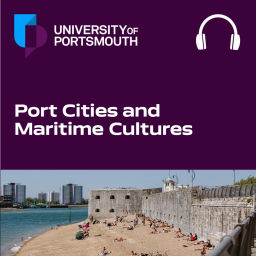
Port Cities and Maritime Cultures
Claim This Podcastby Guy Collender
Podcast Authority
Beta
Podcast Overview
Port Cities and Maritime Cultures - a new podcast from the University of Portsmouth - focuses on the past, present and future importance of the waterfront and coastal communities. Too often such places and their peoples have been forgotten and marginalised. In each 30-minute episode, <a href="https://www.port.ac.uk/about-us/structure-and-governance/our-people/our-staff/guy-collender" rel="noopener noreferrer" target="_blank">Dr Guy Collender</a> interviews researchers to find out about the peoples, cultures, cargoes and ships found at sea, in port, and along the coast. The podcast is produced by the <a href="port.ac.uk/portcities" rel="noopener noreferrer" target="_blank">Centre for Port Cities and Maritime Cultures</a> at the <a href="port.ac.uk" rel="noopener noreferrer" target="_blank">University of Portsmouth</a>.<hr><p style='color:grey; font-size:0.75em;'> Hosted on Acast. See <a style='color:grey;' target='_blank' rel='noopener noreferrer' href='https://acast.com/privacy'>acast.com/privacy</a> for more information.</p>
Language
🇺🇲
Publishing Since
5/7/2024
Unlock The Full Podcast Authority Score Report
See how your podcast performs across key metrics
Podcast Authority
BetaRecommendations available
Unlock the full report to see detailed tips
Recommendations available
Unlock the full report to see detailed tips
Unlock comprehensive insights including:
- • YouTube presence analysis
- • Social media reach metrics
- • RSS compliance scoring
- • Podcast 2.0 features
- • Technical standards
Detailed Analytics
- Complete breakdown of all 19 authority metrics
- Personalized recommendations for each metric
- Industry benchmarks and comparisons
- Technical RSS feed analysis and compliance scoring
Growth Strategies
- Step-by-step action plans for improvement
- Quick wins to boost your score immediately
- Pro tips from successful podcasters
See how your show performs across every key metric
High authority scores make your podcast more attractive to industry leaders and influencers who want to appear on credible shows.
Sponsors look for podcasts with proven authority and engagement. Your score demonstrates your podcast's value to potential partners.
Understanding your strengths and weaknesses helps you make data-driven decisions to expand your listener base effectively.
1 verified contact email on file for Port Cities and Maritime Cultures
Pitch yourself as a guest, propose sponsorships, or reach out directly to the host.
Recent Episodes
July 2, 2026
The Ocean Decade, 2021-2030: Its aims, importance and progress so far
<p>The Ocean Decade – officially <a href="https://oceandecade.org/" rel="noopener noreferrer" target="_blank">the UN Decade of Ocean Science for Sustainable Development (2021-2030)</a> – is generating new marine research, advancing ocean solutions and celebrating our connection to the ocean. The global initiative seeks to revolutionise ocean science and support a productive, resilient, safe and sustainable ocean. It was established in response to the lack of scientific data referring to the ocean, particularly in relation to certain regions and countries. As we are more than halfway through the 2020s, it now seems appropriate to take stock of the Ocean Decade’s goals and progress. </p><br><p>In this episode, <a href="https://sdgs.un.org/panelists/ms-alison-clausen-46946" rel="noopener noreferrer" target="_blank">Alison Clausen, Deputy Coordinator of the Ocean Decade</a> (pictured above), shares her updates and thoughts about the importance of the ocean in a world where it is too often neglected in policy and media circles. Speaking from UNESCO’s headquarters in Paris during the height of a European heatwave in late June 2026, Alison explains how the ocean is being affected by climate change, but how it can also help address climate change. She describes how the health of the ocean is increasingly gaining public attention, in part due to the release of <a href="https://www.youtube.com/watch?v=cIZAdCtKT_g&t=7s" rel="noopener noreferrer" target="_blank">David Attenborough’s blockbuster nature documentary Ocean</a>. </p><p>The value of studying past energy transitions, particularly in the global south, is highlighted during a discussion about the <a href="https://www.port.ac.uk/research/research-projects/sail-to-steam-carbon-to-green-empowering-port-communities-in-the-global-south" rel="noopener noreferrer" target="_blank">Sail to Steam, Carbon to Green project, funded by Lloyd’s Register Foundation, at the University of Portsmouth</a>. Alison reflects upon how lessons need to be learned from the past to chart more sustainable pathways forward, and upon the urgency of saving the ocean, especially as coastal communities have shown how it is changing and being damaged. </p><br><p>The <a href="https://www.port.ac.uk/news-events-and-blogs/podcasts/port-cities-and-maritime-cultures-podcast" rel="noopener noreferrer" target="_blank">Port Cities and Maritime Cultures podcast series</a> is presented by <a href="https://www.port.ac.uk/about-us/structure-and-governance/our-people/our-staff/guy-collender" rel="noopener noreferrer" target="_blank">Dr Guy Collender</a>, of the <a href="https://www.port.ac.uk/research/research-groups-and-centres/centre-for-port-cities-and-maritime-cultures" rel="noopener noreferrer" target="_blank">Centre for Port Cities and Maritime Cultures</a> at the <a href="https://www.port.ac.uk/" rel="noopener noreferrer" target="_blank">University of Portsmouth</a>. </p><hr><p style='color:grey; font-size:0.75em;'> Hosted on Acast. See <a style='color:grey;' target='_blank' rel='noopener noreferrer' href='https://acast.com/privacy'>acast.com/privacy</a> for more information.</p>
October 27, 2025
Sail to steam, carbon to green: Learning from past energy transitions
<p>The invention and rise of steamships in the nineteenth century can provide valuable lessons for today’s shift from fossil fuels to green alternatives in the maritime sector. In this episode, <a href="https://www.port.ac.uk/news-events-and-blogs/blogs/research-culture/pgr-student-spotlight-carlos-ausejo" rel="noopener noreferrer" target="_blank">History PhD scholar Carlos Ausejo</a> discusses how the Peruvian port of Callao changed because of the switch from sail to steam, and how these insights can help steer policy today. He shows how technological change and the demand for coal had a major impact on the workforce, and the infrastructure of the port city. Carlos, from the Peruvian capital Lima, also describes his family’s own connections with nearby Callao. His great-grandmother was a pioneering woman as she worked in the masculine world of the port as a broker, buying and selling goods.</p><br><p>In this episode, Carlos shares his enthusiasm for studying at the University of Portsmouth, his affection for his new seaside home, and his interest in Portsmouth Historic Dockyard – his favourite place in Portsmouth. Carlos’ scholarship is funded by<a href="https://www.lrfoundation.org.uk/" rel="noopener noreferrer" target="_blank"> Lloyd’s Register Foundation</a> as part of its support for the<a href="https://www.port.ac.uk/research/research-projects/sail-to-steam-carbon-to-green-empowering-port-communities-in-the-global-south" rel="noopener noreferrer" target="_blank"> Sail to Steam, Carbon to Green research project</a> at the<a href="https://www.port.ac.uk/research/research-groups-and-centres/centre-for-port-cities-and-maritime-cultures" rel="noopener noreferrer" target="_blank"> Centre for Port Cities and Maritime Cultures</a> (PCMC) at the<a href="https://www.port.ac.uk/study/undergraduate/applying-for-undergraduate-courses/time-to-apply?utm_campaign=ug2026_uop&utm_medium=ppc&utm_source=google&utm_term=paid-search&utm_content=ucas-deadline-ec&gad_source=1" rel="noopener noreferrer" target="_blank"> University of Portsmouth</a>.</p><br><p>The discussion in this episode also refers to an<a href="https://www.port.ac.uk/news-events-and-blogs/podcasts/port-cities-and-maritime-cultures/podcast-focuses-on-shipping-and-energy-transitions-from-sail-to-steam-and-to-the-green-technologies-of-the-future" rel="noopener noreferrer" target="_blank"> earlier interview in this podcast series</a> with Dr Charlie McKinlay, Fuels and Technology Lead at Lloyd’s Register Maritime Decarbonisation Hub, in which he shared his thoughts about the multi-fuel future of the maritime sector (including ammonia, hydrogen and wind assistance).</p><br><p>The<a href="https://www.port.ac.uk/news-events-and-blogs/podcasts/port-cities-and-maritime-cultures-podcast" rel="noopener noreferrer" target="_blank"> Port Cities and Maritime Cultures podcast series</a> is presented by <a href="https://www.port.ac.uk/about-us/structure-and-governance/our-people/our-staff/guy-collender" rel="noopener noreferrer" target="_blank">Dr Guy Collender</a>, of PCMC.</p><hr><p style='color:grey; font-size:0.75em;'> Hosted on Acast. See <a style='color:grey;' target='_blank' rel='noopener noreferrer' href='https://acast.com/privacy'>acast.com/privacy</a> for more information.</p>
July 29, 2025
The Perilous Deep: A Supernatural History of the Atlantic
<p>The dangers and mysteries of the Atlantic have inspired compelling and supernatural tales of sea monsters, mermaids and ill-fated ships. In this episode, <a href="https://www.port.ac.uk/about-us/structure-and-governance/our-people/our-staff/karl-bell" rel="noopener noreferrer" target="_blank">Dr Karl Bell, Associate Professor of Cultural and Social History at the University of Portsmouth</a>, shares research from his new book about the creation and purpose of such maritime folklore, and how it evolved during the technological transition from sail to steam. His book is called The Perilous Deep: A Supernatural History of the Atlantic. <a href="https://reaktionbooks.co.uk/work/the-perilous-deep" rel="noopener noreferrer" target="_blank">The hardback publication can be bought online from Reaktion Books for £18</a>.</p><br><p>Dr Bell, Co-director of the <a href="https://www.port.ac.uk/research/research-groups-and-centres/centre-for-port-cities-and-maritime-cultures" rel="noopener noreferrer" target="_blank">Centre for Port Cities and Maritime Cultures</a> at the University of Portsmouth, also speaks about his involvement in the <a href="https://www.port.ac.uk/research/research-projects/sail-to-steam-carbon-to-green-empowering-port-communities-in-the-global-south" rel="noopener noreferrer" target="_blank">Sail to Steam, Carbon to Green project funded by Lloyd's Register Foundation</a>. In addition, he outlines the opportunities to study History at the University of Portsmouth this autumn, including the <a href="https://www.port.ac.uk/study/courses/postgraduate-taught/ma-victorian-gothic-history-literature-and-culture" rel="noopener noreferrer" target="_blank">MA Victorian Gothic: History, Literature and Culture MA</a>, which he leads.</p><hr><p style='color:grey; font-size:0.75em;'> Hosted on Acast. See <a style='color:grey;' target='_blank' rel='noopener noreferrer' href='https://acast.com/privacy'>acast.com/privacy</a> for more information.</p>
8 total episodes available
Deep-dive analytics for Port Cities and Maritime Cultures
Frequently asked questions
Have a different question and can't find the answer you're looking for? Reach out to our support team by sending us an email and we'll get back to you as soon as we can.
- What is Port Cities and Maritime Cultures?
- How often does this podcast release new episodes?
This podcast updates bi-weekly.
- Where can I listen to this podcast?
This podcast is available on 7 platforms including Apple Podcasts, Spotify, and more. You can also use the RSS feed directly.
- Does this podcast accept guests?
Yes, this podcast regularly features guests.
Legal Disclaimer
Pod Engine is not affiliated with, endorsed by, or officially connected with any of the podcasts displayed on this platform. We operate independently as a podcast discovery and analytics service.
All podcast artwork, thumbnails, and content displayed on this page are the property of their respective owners and are protected by applicable copyright laws. This includes, but is not limited to, podcast cover art, episode artwork, show descriptions, episode titles, transcripts, audio snippets, and any other content originating from the podcast creators or their licensors.
We display this content under fair use principles and/or implied license for the purpose of podcast discovery, information, and commentary. We make no claim of ownership over any podcast content, artwork, or related materials shown on this platform. All trademarks, service marks, and trade names are the property of their respective owners.
While we strive to ensure all content usage is properly authorized, if you are a rights holder and believe your content is being used inappropriately or without proper authorization, please contact us immediately at hey@podengine.ai for prompt review and appropriate action, which may include content removal or proper attribution.
By accessing and using this platform, you acknowledge and agree to respect all applicable copyright laws and intellectual property rights of content owners. Any unauthorized reproduction, distribution, or commercial use of the content displayed on this platform is strictly prohibited.