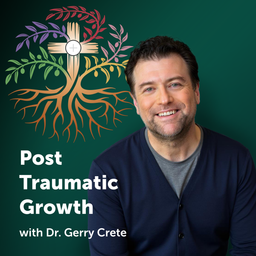
Post Traumatic Growth with Dr. Gerry Crete
Elijah Institute
5.0from 5 ratings
- 14
- Episodes
- 5
- Ratings
- Bi-weekly
- Cadence
- 2026
- First episode
About Post Traumatic Growth with Dr. Gerry Crete
What if trauma isn't the end of the story — but the doorway to deeper healing? Post Traumatic Growth with Dr. Gerry Crete is an Elijah Institute podcast exploring transformation after trauma through the integration of evidence-based psychotherapy and a living relationship with God. Going beyond symptom management, each episode asks a deeper question: What does it mean to heal as a whole person — mind, body, and soul? Hosted by Dr. Gerry Crete, licensed marriage and family therapist, licensed clinical counselor, trauma specialist, and author, the podcast weaves together trauma-informed psychotherapy with the ancient wisdom and practices of the Christian tradition. Each episode examines how trauma impacts attachment, identity, relationships, and our capacity for trust — especially our trust in God — and how restoring these foundations becomes the ground for genuine post-traumatic growth. Created for therapists, counselors, psychologists, chaplains, clergy, pastoral and school counselors, and other helping professionals, the podcast also welcomes anyone drawn to the intersection of trauma, faith, and meaning. Rooted in a Christian understanding of the human person — where each life holds inherent dignity, relational depth, and the capacity for healing — the content is offered with compassion and clarity that invites listeners from any background into thoughtful reflection and integration. This is a podcast for those who believe trauma does not have the final word — and that deep healing takes root in relationship: with ourselves, with others, and with God. Brought to you by the Elijah Institute. If you're a therapist, counselor, chaplain, or pastoral leader looking to deepen your practice, explore our online continuing education in whole-person, spiritually integrated care at Elijah-Institute.org (http://Elijah-Institute.org).
- Publisher
- Elijah Institute
- Category
- health & fitness · religion & spirituality
- Language
- en
- Explicit
- No
- First episode
- 7 Apr 2026
- Latest episode
- 6 Oct 2026
Latest episodes
14 episodes in the feed.
6 Oct 2026
Exciting News To Share
Post Traumatic Growth with Dr. Gerry Crete will be coming to you from Vatican City as Dr Gerry starts a new endeavor.
22 Sept 2026
The Importance of Faith Integrated Therapy with Dr. Anthony Isacco
In this episode, Dr. Gerry Crete speaks with Dr. Anthony Isacco about the intersection of psychology, spirituality, and the Catholic faith. They explore how faith-integrated clinical work can support human flourishing, better therapeutic outcomes, and a deeper understanding of the whole person. Key Topics Why faith integration matters in clinical psychology The importance of seeing each person with dignity and worth How Catholic anthropology shapes therapy and training The role of cultural humility in working with Catholic clients Why vocational psychology and calling matter for human flourishing How forgiveness supports healing, repair, and growth Dr. Isacco explains how the Elijah Institute and the program at St. Mary’s University is training clinical psychologists to integrate Catholic faith with evidence-based practice. He emphasizes that this is about a holistic view of the human person. The hosts discuss how therapy changes when clinicians see clients not as diagnoses or problems to solve, but as persons with inherent worth, meaning, and capacity for healing. Dr. Isacco argues that religion and spirituality are essential parts of cultural competence and that therapists should approach them with curiosity, respect, and humility. The episode closes with a reflection on forgiveness and relationship repair as essential parts of healing. Rather than defaulting to detachment or cutoff, they discuss the value of working toward reconciliation where appropriate, including self-forgiveness and divine forgiveness. About the Guest Dr. Anthony Isacco is a licensed psychologist, professor, researcher, and expert in the integration of psychology, spirituality, and the Catholic faith. He serves as program director and head of clinical research for the Catholic Faith Integrated Master of Science in Clinical Psychology program at St. Mary’s University in Minnesota. Elijah Institute (elijah-institute.org) Post Traumatic Growth with Dr. Gerry Crete is presented by the Elijah Institute. Find out more about Elijah Institute’s nationally approved, continuing education courses in spiritually integrated whole person care at elijah-institute.org (http://elijah-institute.org). This podcast provides education, not treatment. It does not replace therapy, diagnosis or professional care. If you are in crisis: Call 988,suicide and crisis lifeline For an immediate emergency call 911 Go to the emergency room Contact your provider Text HOME to 741741
8 Sept 2026
Flourishing at Work, Faith, and Post-Traumatic Growth with Dr. Karen Doll
In this episode, Dr. Gerry Crete speaks with licensed psychologist, executive coach, and workplace flourishing expert Dr. Karen Doll about what human flourishing really means in everyday life and at work. The conversation also explores how faith, meaning, and psychological care can coexist with pain, grief, and trauma without minimizing either one. They discuss workplace well-being, the difference between surviving and flourishing, and how post-traumatic growth can emerge without pretending suffering is good. Key Topics Dr. Doll’s work as a psychologist focused on assessments, coaching, executive development, and workplace mental health Why she approaches people as whole persons rather than separating “work self” and “home self” How flourishing moved from a long-standing interest in humanistic psychology to a core theme in her work The role of the Harvard Flourishing Program and the Flourishing at Work Network in applying research to organizations Why spirituality matters as one of the domains of flourishing, especially when understood broadly as connection to something beyond oneself What makes a workplace regenerative rather than extractive The practical ingredients of flourishing at work: manageable workload and capacity respect and dignity healthy relationships belonging mattering Why ROI language often dominates workplace conversations about well-being How post-traumatic growth differs from pretending trauma is good Why flourishing does not mean constant happiness or the absence of pain A continuum model of well-being, from flourishing to crisis, and why people can move fluidly along it Elijah Institute Post Traumatic Growth with Dr. Gerry Crete is presented by the Elijah Institute. Find out more about Elijah Institute’s nationally approved, continuing education courses in spiritually integrated whole person care at elijah-institute.org (http://elijah-institute.org). This podcast provides education, not treatment. It does not replace therapy, diagnosis or professional care. If you are in crisis: Call 988,suicide and crisis lifeline For an immediate emergency call 911 Go to the emergency room Contact your provider Text HOME to 741741
25 Aug 2026
EMDR, Dissociation, and Catholic Integration with Jennifer Madere
EMDR, Dissociation, and Catholic Integration with Jennifer Madere In this episode, Dr. Gerry Crete speaks with Jennifer Madere about how trauma treatment, Catholic anthropology, and nervous system regulation fit together in real clinical work. They focus on EMDR, dissociation, ego state therapy, and how healing can happen without bypassing the body or the complexity of suffering. Jennifer also shares insights from her book, EMDR, Dissociation and Beyond, and discusses why safety and stabilization are not preliminaries, but essential parts of healing. Key Topics They discuss why the Catholic faith can deepen trauma work by helping clinicians stay grounded in suffering while still making room for meaning, purpose, and hope. Jennifer describes EMDR as a way of helping the brain digest experiences it could not process when they first happened. Gerry and Jennifer talk about the importance of avoiding spiritual bypassing while still allowing faith to support healing in a genuine, integrated way. Jennifer explains why ego state therapy is useful for dissociation and complex trauma, especially when working with internal parts and movements that emerged from profound injury. They define dissociation as a disconnection or fragmentation in human experience that can be a protective adaptation, especially in childhood or overwhelming situations. The conversation distinguishes between single-incident trauma and complex relational trauma, including why events like shootings can carry an existential layer beyond the immediate event. They explore the importance of somatic healing, with both speakers affirming that healing often requires attention to body, mind, and spirit together. Elijah Institute Post Traumatic Growth with Dr. Gerry Crete is presented by the Elijah Institute. Find out more about Elijah Institute’s nationally approved, continuing education courses in spiritually integrated whole person care at elijah-institute.org (http://elijah-institute.org). The book EMDR, Dissociation, and Beyond, Reexamining and Expanding the Frame for Impactful Trauma Treatment by Jennifer Madere and Michael Coy can be found here: https://www.routledge.com/EMDR-Dissociation-and-Beyond-Reexamining-and-Expanding-the-Frame-for-Impactful-Trauma-Treatment/Madere-Coy/p/book/9781032712352 (https://www.routledge.com/EMDR-Dissociation-and-Beyond-Reexamining-and-Expanding-the-Frame-for-Impactful-Trauma-Treatment/Madere-Coy/p/book/9781032712352) This podcast provides education, not treatment. It does not replace therapy, diagnosis or professional care. If you are in crisis: Call 988,suicide and crisis lifeline For an immediate emergency call 911 Go to the emergency room Contact your provider Text HOME to 741741
11 Aug 2026
Integrating Faith and Mental Health in Parish Care (with Dr. Dorothy Goulart)
Post Traumatic Growth with Dr. Gerry Crete. Ep, 9 with Dr. Dorothy Goulart Integrating Faith and Mental Health in Parish Care This episode focuses on the practical gap between a parish noticing someone is struggling and actually knowing where to send them for help. Dr. Gerry Crete talks with Dr. Dorothy Goulart about the Elijah Institute’s certification program, the role of Catholic faith in clinical work, and the new Accompanied Network being piloted to connect parishes with mental health and support resources.We discuss why trust, competence, and ethical integration matter when faith and therapy meet, and how a parish can become a real point of coordination instead of just a place where people are prayed for and left without next steps. Key topics Dr. Dorothy Goulart’s background as a licensed independent clinical social worker who also teaches graduate social work students The Elijah Institute certification program and how it helps clinicians integrate Catholic faith and mental health practice ethically The Accompanied Network as a parish-based referral and care coordination model Why trust and vetting matter when parishes refer people to therapists, psychiatrists, and other support services The challenge of finding specific providers, especially Catholic clinicians with particular demographic or specialty needs Moral injury and moral questions in trauma work, especially in military and combat settings Why spiritual competence can improve care even for non-Catholic clinicians working with Catholic clients The importance of meeting clients where they are and letting their faith tradition inform the clinical conversation parish care, mental health, faith integration, Catholic counseling, referral network, moral injury spiritual assessment, clinical competence, trust, pastoral care Elijah Institute Post Traumatic Growth with Dr. Gerry Crete is presented by the Elijah Institute. Find out more about Elijah Institute’s nationally approved, continuing education courses in spiritually integrated whole person care at elijah-institute.org (http://elijah-institute.org).
28 Jul 2026
Healing After Trauma: Building Long-term Support Systems in Catholic Communities
Post Traumatic Growth with Dr. Gerry Crete Episode 8 with Rebecca Brubaker, founder of the Elijah Institute. Healing After Trauma: Building Long-term Support Systems in Catholic Communities In this episode, Dr. Gerry Crete and Elijah Institute founder Rebecca Brubaker discuss the long-term support needed after traumatic events, emphasizing the importance of spiritual and community care. Rebecca shares her firsthand experience responding to the 2025 church shooting in Minneapolis and explores how faith-based mental health initiatives can foster healing and resilience. The emotional journey of grief and trauma over time The role of the church and community in crisis response and ongoing care The setting up of the Elijah Institute to train clinicians in spiritually integrated psychotherapy Practical resources activated after the 2025 Minneapolis church shooting The significance of faith, moral, and spiritual dimensions in mental health treatment Evidence supporting the effectiveness of faith-integrated mental health care Developing programs for youth mental health in Catholic schools The importance of accessible care pathways for families in crisis Timestamps: 00:00 - Introduction 01:00 - Response to the Minneapolis church shooting 02:28 - The Elijah Institute’s mission to train clinicians in faith-based psychotherapy 04:03 - The importance of spiritual support in trauma recovery 05:01 - Practical support organizations involved in crisis intervention 06:20 - Building a care network grounded in Catholic faith 07:16 - Trauma and healing in families with adopted or special needs children 08:23 - The need for longer-term, continuous support systems 10:02 - The growing need for high-quality, spiritually integrated therapists 11:20 - Personal stories of trauma and faith's role in healing 12:31 - Challenges in finding Catholic mental health care 13:00 - The formation of Elijah Institute to fill this gap 14:22 - The potential for global impact beyond Catholic communities 15:10 - Developing effective training programs for clinicians 16:10 - Addressing mental health needs in the Catholic population 17:08 - Evidence that faith-based therapy enhances healing 18:20 - Integrating different dimensions of faith in therapy 19:12 - The universality of spiritual needs across faith backgrounds 20:32 - Research on flourishing and the role of religion in well-being 21:37 - Promoting wellness and active engagement in faith communities 23:32 - Moving beyond trauma healing toward living abundantly 24:16 - The importance of meaning, purpose, and community support 26:50 - The Elijah Institute's programs for clinicians and faith leaders 27:06 - Opportunities for training and credentialing in spiritually integrated psychotherapy 29:23 - The call for clinicians to serve Catholic families 36:44 - Reflection on biblical foundations of community care 37:04 - The vision for a more supported and loving church community 37:32 - Final encouragement for clinicians and families to seek integrated healing 38:21 - Closing thoughts: supporting families and seeking help when neededResources & Links: Find out more about Elijah Institute’s nationally approved, continuing education courses in spiritually integrated whole person care at elijah-institute.org (http://elijah-institute.org). Elijah Institute (https://elijah-institute.org/)
14 Jul 2026
The Examen (part 2 with Dr. Thomas Plante)
In part 2 of our discussion with Dr. Thomas Plante, we continue to explore the Examen, a five-step daily prayer from St. Ignatius of Loyola. The Examen invites us to reflect on the day with God by noticing gratitude, reviewing our thoughts and emotions, acknowledging where healing or forgiveness is needed, and choosing one small step toward greater love and purpose. This simple 15-minute practice can help deepen spiritual connection while also supporting emotional awareness, hope, meaning, and mental health. Featured Resources The Elijah Institute offers a downloadable Examen card along with two research papers exploring the psychological benefits of Examen-based practices: “A Clinical Trial of the Examen and Mindfulness Within a Secular Substance Use Disorder Treatment Program” Christopher M. Buenrostro and Thomas G. Plante, Journal of Addictions & Offender Counseling, 2024. “A Randomized Controlled Trial Assessing the Psychological Benefits of a Daily Examen-Based Practice” Thomas G. Plante, David B. Feldman, Jacqueline Ge, and Anthony Cortese, Journal of Religion and Health, 2025. Download the Examen card and research papers here: https://elijah-institute.org/white-papers-and-research (https://elijah-institute.org/white-papers-and-research) Elijah Institute Post Traumatic Growth with Dr. Gerry Crete is presented by the Elijah Institute. Find out more about Elijah Institute’s nationally approved, continuing education courses in spiritually integrated whole person care at elijah-institute.org (http://elijah-institute.org). examen, Jesuit spirituality, mindfulness, trauma healing, spiritual practices, mental health, research, therapy, religious integration, post traumatic growth key topics The examen prayer and its elements Research findings on the examen's effectiveness Adaptations for diverse populations Comparison with mindfulness and secular practices The role of imagery and visualization in healing Christian distinctives in spiritual practices Music and other sensory elements in spirituality Implications for trauma and addiction treatment Chapters 00:00 Introduction to the Examine and Its Impact 02:04 The Role of Gratitude in Therapy 09:03 Understanding Post-Traumatic Growth 12:01 Acceptance and Suffering in Healing 18:07 The Influence of Saints and Spiritual Models 22:47 Personal Journey and Embracing Faith 31:32 Integrating Faith and Evidence in Therapy
30 Jun 2026
The Examen: A 5-Step Daily Prayer for Peace, Clarity, and Connection
In Episode 7 of Post-Traumatic Growth with Dr. Gerry Crete, Dr. Thomas Plante introduces the Examen, a five-step daily prayer from St. Ignatius of Loyola. The Examen invites us to reflect on the day with God by noticing gratitude, reviewing our thoughts and emotions, acknowledging where healing or forgiveness is needed, and choosing one small step toward greater love and purpose. This simple 15-minute practice can help deepen spiritual connection while also supporting emotional awareness, hope, meaning, and mental health. Featured Resources The Elijah Institute offers a downloadable Examen card along with two research papers exploring the psychological benefits of Examen-based practices: “A Clinical Trial of the Examen and Mindfulness Within a Secular Substance Use Disorder Treatment Program” Christopher M. Buenrostro and Thomas G. Plante, Journal of Addictions & Offender Counseling, 2024. “A Randomized Controlled Trial Assessing the Psychological Benefits of a Daily Examen-Based Practice” Thomas G. Plante, David B. Feldman, Jacqueline Ge, and Anthony Cortese, Journal of Religion and Health, 2025. Download the Examen card and research papers here: https://elijah-institute.org/white-papers (https://elijah-institute.org/white-papers) Elijah Institute Post Traumatic Growth with Dr. Gerry Crete is presented by the Elijah Institute. Find out more about Elijah Institute’s nationally approved, continuing education courses in spiritually integrated whole person care at elijah-institute.org (http://elijah-institute.org). examen, Jesuit spirituality, mindfulness, trauma healing, spiritual practices, mental health, research, therapy, religious integration, post traumatic growth key topics The examen prayer and its elements Research findings on the examen's effectiveness Adaptations for diverse populations Comparison with mindfulness and secular practices The role of imagery and visualization in healing Christian distinctives in spiritual practices Music and other sensory elements in spirituality Implications for trauma and addiction treatment Chapters 00:00 Introduction to Post Traumatic Growth 01:36 Exploring the Examen: A 500-Year-Old Prayer 05:18 The Five Steps of the Examen Prayer 10:21 Research Findings on the Examen vs. Mindfulness 12:21 Imagining Tomorrow: Visualization in Recovery 16:18 The Power of Experiential Prayer 22:16 Christianity's Unique Approach to Suffering 25:52 Researching Sacred vs. Secular Music 30:02 Integrating Music and Spirituality in Therapy 34:24 Conclusion and Next Steps in Therapy
16 Jun 2026
From Addiction to Freedom: The Power of Faith and 12 Steps with Scott Weeman
This episode explores the intersection of faith, recovery, and mental health through the inspiring story of Scott Weemann, founder of Catholics in Recovery. Discover how the 12 Steps and the Sacraments can work together as pathways to healing and spiritual growth. Recovery, Faith, 12 Steps, Sacraments, Addiction, Catholic Church, Mental Health, Post-Traumatic Growth, Spirituality, Healing Key Topics The intersection of faith and recovery The role of 12 Steps and Sacraments in healing Trauma and addiction connection The importance of community and acceptance Practical steps for spiritual growth and reconciliation Chapters 00:00 Introduction to Addiction and Recovery 01:04 The Role of Faith in Recovery 08:22 Understanding Trauma and Addiction 19:20 The Importance of Community and Acceptance 24:30 Post-Traumatic Growth and Recovery 30:35 Integrating Mental Health and 12-Step Programs 40:56 Transformative Power of Recovery 44:50 Final Thoughts and Resources Resources Catholics in Recovery - https://catholicinrecovery.com (https://catholicinrecovery.com) The Twelve Steps and the Sacraments (Book) - https://www.avemariapress.com/products/the-twelve-steps-and-the-sacraments (https://www.avemariapress.com/products/the-twelve-steps-and-the-sacraments) Scott Weemann's Book - https://www.avemariapress.com/products/catholic-in-recovery-workbook (https://www.avemariapress.com/products/catholic-in-recovery-workbook)
2 Jun 2026
A Father, a Daughter, and the Cost of Chronic Illness
In this episode of Post-Traumatic Growth, Dr. Gerry Crete sits down with theologian and counseling student Dr. Donald Wallenfang and his daughter Ellen. Ellen, now a 25-year-old singer-songwriter, shares her diagnosis with Type 1 diabetes at age 15, her years-long struggle with diabulimia, and the road through residential treatment to healing. Main Topics: Ellen's Type 1 diabetes diagnosis and the shame and identity disruption it produced Diabulimia: how insulin manipulation became a form of disordered eating The moment Ellen chose to seek treatment—and what made that possible How chronic illness strained the father-daughter relationship and what family therapy revealed Integrating faith and professional mental health care without collapsing one into the other Chapters: 00:00: Welcome and Introduction 02:26: Ellen's Story: Diagnosis and Identity 08:46: Diabulimia and Insulin Manipulation 11:10: Hitting Rock Bottom and Seeking Help 15:40: Faith as an Undercurrent of Peace 17:56: Advice for Young People Struggling 19:27: What Treatment Actually Looked Like 26:05: A Father's Perspective 30:48: Resentment, Resistance, and Family Therapy 44:34: What Therapists and Parents Should Know Resources Mentioned: The Elijah Institute: https://elijah-institute.org/ (https://elijah-institute.org/) 988 Suicide and Crisis Lifeline: https://988lifeline.org/ (https://988lifeline.org/) National Alliance for Eating Disorders: https://www.allianceforeatingdisorders.com/ (https://www.allianceforeatingdisorders.com/) Produced by Saint Kolbe Studios: https://saintkolbestudios.com/ (https://saintkolbestudios.com/)
19 May 2026
The Theology of Listening with Dr. Donald Wallenfang
In this episode of Post-Traumatic Growth, Dr. Gerry Crete sits down with Dr. Donald Wallenfang—Secular Carmelite, theologian, professor at Sacred Heart Major Seminary, and father of six—to explore what the Church owes young people in a post-pandemic world. Drawing on the political theology of Johann Baptist Metz and the Carmelite contemplative tradition, Dr. Wallenfang makes the case that narrative, memory, and solidarity are the foundations of genuine accompaniment. Main Topics: The post-pandemic mental health crisis among youth and why advice alone is not enough Dr. Wallenfang's journey from youth ministry to theology to clinical psychology Johann Baptist Metz's political theology and the concept of "dangerous memories" How narrative and storytelling connect young people's suffering to Christ's passion Carmelite contemplative spirituality as a foundation for pastoral and clinical presence Chapters: 00:00: Welcome and Introduction 02:11: Adoption, Vocation, and the Path to Theology 05:27: Youth Ministry and Pastoral Accompaniment 09:19: Encountering Youth Trauma in Suburbia 16:26: Trauma, Empathy, and the Limits of the Minister 19:39: Safety Before Vulnerability 21:03: Johann Baptist Metz and Dangerous Memories 24:16: Narrative, Memory, and Dangerous Stories 31:07: Carmelite Contemplation and Full Presence 36:25: Advice for Parish Leaders and Youth Ministers Resources Mentioned: The Elijah Institute: https://elijah-institute.org/ (https://elijah-institute.org/) Roots: Catholic Youth Evangelization in a Post-Pandemic World: https://www.amazon.com/Roots-Catholic-Evangelization-Post-Pandemic-Perspectives/dp/1666732184 (https://www.amazon.com/Roots-Catholic-Evangelization-Post-Pandemic-Perspectives/dp/1666732184) The Mendicant Philosopher: https://www.youtube.com/@TheMendicantPhilosopher (https://www.youtube.com/@TheMendicantPhilosopher) Catholic Therapists: https://catholictherapists.com/ (https://catholictherapists.com/) Produced by Saint Kolbe Studios: https://saintkolbestudios.com/ (https://saintkolbestudios.com/)
5 May 2026
Finding Christ in Chronic Illness w/ Cameron Fradd
In this episode of Post-Traumatic Growth, Dr. Gerry Crete sits down with Cameron Fradd—host of Among the Lilies podcast and wife of Matt Fradd—to discuss her eight-year journey with chronic illness and the unexpected spiritual and emotional growth it has produced. Cameron shares how suffering has deepened her prayer life, shaped her children's empathy, and drawn her closer to Christ rather than further away. Main Topics: Cameron's journey with chronic illness and how it reshaped her sense of identity The invisible nature of chronic illness and the experience of feeling unseen How suffering deepened rather than damaged her relationship with God The impact of chronic illness on marriage and motherhood Integrating faith and healing without using spirituality to bypass pain Chapters: 00:01: Welcome and Introduction 00:30: Cameron's Health Journey and Chronic Illness 02:04: Accepting a New Normal 04:04: Discovering the Mind-Body Connection 06:10: A Profound Encounter 10:56: The Invisible Suffering of Chronic Illness 12:42: Speaking at SEEK Through the Pain 16:58: How Suffering Deepened Cameron's Prayer Life 20:36: The Impact on Marriage and Motherhood 26:57: Growing in Empathy as a Family 28:24: Redemptive Suffering and Human Flourishing 38:49: What Therapists Should Know Resources Mentioned: Hallow App: https://hallow.com/ (https://hallow.com/) Among the Lilies podcast with Cameron Fradd: https://www.cameronfradd.com/ (https://www.cameronfradd.com/) Litanies of the Heart by Dr. Gerry Crete: https://sophiainstitute.com/product/litanies-of-the-heart/ (https://sophiainstitute.com/product/litanies-of-the-heart/) The Elijah Institute: https://elijah-institute.org/ (https://elijah-institute.org/) Produced by Saint Kolbe Studios: https://saintkolbestudios.com/ (https://saintkolbestudios.com/)
21 Apr 2026
God Doesn't Hate Me After All w/ Greg Willits
In this episode of Post-Traumatic Growth, Dr. Gerry Crete sits down with Greg Willits—author, Catholic media pioneer, and co-founder of Rosary Army—to discuss his journey through complex trauma, PTSD, and the healing he's found through therapy, the sacraments, and the writings of St. Louis de Montfort. Greg shares his story with remarkable vulnerability, tracing how his deepest wounds became the foundation for his most meaningful work. Main Topics: Greg's experience of complex trauma, PTSD diagnosis, and the road to healing How sharing your story publicly reduces its power over you The role of the Sacrament of Reconciliation alongside professional therapy St. Louis de Montfort's Love of Eternal Wisdom and its connection to trauma healing Finding meaning and identity beyond earning your value Chapters: 00:04: Welcome and Introduction 02:02: Greg's History in Catholic Media 03:23: The 2017 Workplace Crisis and PTSD Diagnosis 09:41: Writing God Doesn't Hate Me After All 17:50: Learning to Forgive Yourself 20:10: The Confession That Changed Everything 24:39: St. Louis de Montfort and Trauma Healing 28:17: Praying Across Time for Your Wounded Self 34:20: Narrative Therapy and the Hero's Journey 48:37: The Importance of Catholic-Integrated Therapy 53:55: Finding Meaning Beyond Earning Your Value Resources Mentioned: God Doesn't Hate Me After All by Greg Willits: https://sophiainstitute.com/product/god-doesnt-hate-me-after-all/ (https://sophiainstitute.com/product/god-doesnt-hate-me-after-all/) Rosary Army: https://rosaryarmy.com/ (https://rosaryarmy.com/) The Love of Eternal Wisdom by St. Louis de Montfort: https://catholicbookpublishing.com/products/the-love-of-eternal-wisdom-red (https://catholicbookpublishing.com/products/the-love-of-eternal-wisdom-red) The Elijah Institute: https://elijah-institute.org/ (https://elijah-institute.org/) Produced by Saint Kolbe Studios: https://saintkolbestudios.com/ (https://saintkolbestudios.com/)
7 Apr 2026
What If Your Wound Is the Way Forward?
In this inaugural episode of Post-Traumatic Growth, Dr. Gerry Crete—licensed marriage and family therapist and trauma specialist—introduces the podcast and its mission: to walk alongside those who have experienced trauma and discover what it means to grow through it. Dr. Crete shares his own story as a survivor of childhood abuse and unpacks the Christian vision of suffering as a source of meaning, resilience, and transformation. If you've experienced something that shattered your sense of safety, your faith, or your understanding of yourself—this podcast was made for you. Too often, conversations about trauma stop at survival. We're told to cope, to manage, to just get through. But what if there's something beyond getting through? What if the very wounds that brought you to your knees hold the seeds of a deeper, more grounded life than you had before? That's the question at the heart of Post-Traumatic Growth. Drawing on decades of clinical experience and his own journey from crisis to flourishing, Dr. Crete introduces the Arc of Healing—a framework that maps the path from Crisis through Languishing, Surviving, and Thriving toward Flourishing. He also introduces the Bio-Psycho-Social-Spiritual-Moral model, a whole-person approach to healing that honors the complexity of what it means to be human: body, mind, relationships, soul, and conscience. This isn't a podcast that spiritualizes away your pain or reduces your suffering to a clinical diagnosis. It's a space where evidence-based psychotherapy and the rich tradition of Christian wisdom meet—where the science of trauma and the mystery of redemption are allowed to speak to each other honestly. Whether you're a clinician looking for a deeper framework for your practice, a pastoral leader walking with people in pain, or someone in the middle of your own healing journey, Dr. Crete invites you to begin here. Not with answers, but with the one question that changes everything: What if growth doesn't happen in spite of your suffering—but through it?
Reach and audience
Public platform figures. Ratings count people who left a rating, not total listeners.
- Apple Podcasts (US)
- 5.0 / 5
- 3 ratings
- Spotify
- 5.0 / 5
- 2 ratings
Contact Post Traumatic Growth with Dr. Gerry Crete
- Guest appearances
- Books guests
Based on episode analysis; this does not confirm that the show is currently accepting guests.


Host of Post Traumatic Growth with Dr. Gerry Crete?
Claim your podcast to manage its listing and keep your show details accurate.
Pod Engine is an independent podcast discovery and analytics service and is not affiliated with or endorsed by this podcast. Artwork and show content belong to their owners. Full legal notice.
Explore this show
Podcast research with Pod Engine