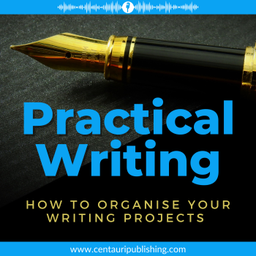
Podcast thumbnail for Practical Writing

Practical Writing

Claim This Podcast

by Catherine Langford

3 episodes
Updated Daily
Accepts GuestsHas SponsorsLocation 🇳🇿

Podcast Overview

Writers, have you ever misplaced a scene, worked on the wrong draft, or lost some important research? If so, you may need some help setting up better writing processes. In *Practical Writing*, Catherine, a freelance copyeditor, discusses how to organise a writing project, keeping in mind that no one system is suitable for everyone. Subscribe for tips and tricks that will give you more time to write. *Practical Writing* 'casts approximately monthly, pandemic and parenting willing. ~ This work is licensed under a Creative Commons Attribution-NonCommercial-ShareAlike 4.0 International License

Language

🇺🇲

Publishing Since

3/27/2022

1 verified contact email on file for Practical Writing

Pitch yourself as a guest, propose sponsorships, or reach out directly to the host.

Recent Episodes

Episode thumbnail for What are you capable of?

February 22, 2023

What are you capable of?

<p>Links mentioned in this podcast:</p> <p><a href= "https://www.centauripublishing.com/">Centauripublishing.com</a></p> <p><a href="https://calanthecolt.com/">CalantheColt.com</a></p> <p><a href= "https://www.etsy.com/shop/CentauriPrintables">https://www.etsy.com/shop/CentauriPrintables</a></p> <p><a href= "https://shop.centauripublishing.com/">https://shop.centauripublishing.com</a></p> <p><a href="https://www.notion.so/">https://www.notion.so</a></p> <p> </p> <p>Where you can find me:</p> <p><a href= "https://www.centauripublishing.com/">centauripublishing.com</a></p> <p><a href= "https://www.instagram.com/centauripublishing/">Instagram</a></p> <p><a href="https://reedsy.com/catherine-langford">Reedsy</a></p> <p><a href= "https://www.linkedin.com/in/clangford-editor/">LinkedIn</a></p> <p>This work is licensed under a <a href= "http://creativecommons.org/licenses/by-nc-sa/4.0/">Creative Commons Attribution-NonCommercial-ShareAlike 4.0 International License</a></p> <hr /> <p>[Transcript begins]</p> <p>Hello and welcome to Practical Writing: How to Organise Your Writing Projects. My name is Catherine, and I’m a freelance copyeditor. You can find me at <a href= "http://centauripublishing.com/">centauripublishing.com</a>.</p> <p>Well. I really thought that I would have been recording this podcast much, much earlier. If you don’t want to hear about the pandemic, skip forward about half a minute or so.</p> <p>So, long story short: since the last episode of my podcast, I developed long COVID. Because my energy is now much more limited than it used to be, I had to put some less urgent things on hold so I could attend to what’s most important. This podcast, sorry, is one of the things I put on hold.</p> <p>I had thought this second episode would be a deeper dive in how to match writing systems with how you think. But instead, I’m going to pivot somewhat to talk about how to match your writing systems to what you can do at any given time.</p> <p>In a perfect world, you will have all the energy and time that you need to do exactly what you want to get your writing projects organised, written, and finished in a timely manner. In a perfect world, we’d also have world peace, no climate crisis, and no hunger.</p> <p>If only.</p> <p>I’ve heard that there are some special unicorn writers out there who have as much time and energy as they need to work on their writing careers. I’ve never met one, though. The rest of us are juggling all manner of life commitments, important tasks, distractions, and health conditions. We carve out from among those things what time we can.</p> <p>If you’re anything like me, you often feel like it’s not enough, and guilt and doubt creep in at the edges, making you feel like you’re not good enough, that whatever you manage to do is never going to be enough.</p> <p>I want to say right here, before I go any further, both to you and to myself: those are just your demons. And they are lying to you.</p> <p>Whatever you are doing now is enough. You are doing great. This writing gig is tough. We’re doing this whole other thing on top of our lives that most people aren’t doing at all. We already won at being writers the moment we put that first word down on the page, or the screen.</p> <p>I’ve heard it said that 90% of people think that they have a novel in them, but almost all people never even start trying to write that novel. You have. You are fantastic.</p> <p>But if you’re here, listening to this podcast, then you’re looking to become a little more fantastic. And kudos to you.</p> <h2>Every word is progress</h2> <p>If you are struggling with health issues, or you have a child who is going through a difficult stage, or you have an elderly parent who suddenly needs more assistance, it can feel like you’re living as an embodiment of the Red Queen Hypothesis. That is to say, you feel like you have to run as fast as you can just to stay in place, and making any headway is impossible.</p> <p>But that’s not true. Or at least, not in your writing career. I certainly feel like making progress in my veggie garden is impossible. But I get edible food out of it, even if I never catch up to the weeds.</p> <p>When it comes to writing, though, keep in mind: every word is progress. If all you can carve out is 5 minutes to write every day while the kettle boils for you morning coffee, or right before you go to bed, you are still a writer. You are rocking this. The fact that other writers might be rocking their writing faster than you are rocking yours is irrelevant. This is not a race.</p> <p>I put part of the blame of this pressure we all feel to write faster on Amazon. Their algorithms have trained writers, particularly self-published writers, to try to release multiple books a year to keep their ranking.</p> <p>But think back to the pre-ebook days. Your favourite writers in the 80s, 90s and early 2000s released one book every several years and no one blinked an eye. Writers who wrote more than one book a year often used a pen name to offload some of their releases so that they wouldn’t look like they were writing too fast.</p> <p>Now, I know that you’re thinking “That’s all well and good, but I actually do drop down the rankings if I don’t release regularly, and lose out on money, and I like having a roof over my head and food on the table.” I know. And I don’t have a solution for that conundrum other than to say that capitalism sucks, and I hate that it is making you feel that way.</p> <p>Please be kind to yourself and your mental health in this capitalistic wasteland that we call the modern world. Because in this dystopia of late-stage capitalism and environmental degradation we live in, kindness is radical.</p> <p>Wow, this got dark. Wasn’t I supposed to be talking about the practical nitty-grittiness of writing systems?</p> <h2>The practical details</h2> <p>OK, so: everything sucks and the race is on to see which gets ground down to dust first: us or the political systems that are the framework of our civilisations. How can you get some writing done in the meantime?</p> <p>First of all: make it easy on yourself. You know how my first principle of organising your writing is to use a system that works for how you think? I discussed it in the previous episode. I also discussed that how you think will change over time, and that finding what is right for you will ever be an iterative process.</p> <p>“I am suffering a severe lack of spoons and I am having trouble getting things done” is a change to your thinking that needs to be taken into account when making changes to your writing system. If something is making you time and energy poor, change things up to lower the barrier of entry to your writing.</p> <p>If you are a mobile-friendly app-based writer, you probably already have this sorted. Scrivener for iOS, Google Drive, or Microsoft 365 all make it possible to whip your smartphone out of your pocket and dash off a bit of writing when you have a moment to think. The only thing holding you back is probably how apps like Instagram and TikTok are right there and really tempting to use when you are mentally tired but still in need of mental stimulation. If so, you could put your writing apps in prime position on your home screen and your social media apps tucked away in a folder a few screens over to level out the barriers of entry of the respective apps.</p> <p>Do you write long-form in a notebook? Keep your notebook on your bedside table, along with a pen, a water bottle, and maybe a little snack for energy. That way, if the inspiration strikes, even if you don’t have the impetus to get up, you’ll be able to jot down some important notes or add a few paragraphs to your story.</p> <p>If you are a computer-based writer, as I think most people are these days, you will probably have quite a high barrier of entry to get yourself writing. That will depend on how much time you spend in the vicinity of your computer, of course, and how many distractions (i.e. other programs) are installed. Some people have a dedicated writing computer that only has their writing-related software installed, but how many writers can afford to do that?</p> <p>If you find it difficult to get to your computer in the first place because you are busy elsewhere, then perhaps consider moving your computer somewhere more central or where you spend more time. For example, it may seem weird, but using a laptop on the kitchen bench might work well if you are in the kitchen a lot. Plus, the worktop height is perfect for a standing desk.</p> <p>If a laptop isn't an option, consider setting up a tablet or even a phone, if you don't mind typing on them, as a writing device. Set up the device with your writing software and any other necessary tools, and set up a special ‘writing dock’ for it, for example a tablet stand with some inspirational quotes around it, and any notes or reference materials you need close by. That way, whenever you are in the vicinity of your writing space, you will be reminded of your writing and be more likely to sit down and get some words on the page.</p> <p>If you're an app-based writer, make sure you're using the offline capabilities of your apps. For example, if you use Google Drive, you can set up your documents so they’re available offline. That way, you don't have to worry about being connected to the internet to write. And if you're using another mobile app, check if it can be used offline as well.</p> <p>Finally, if you are writing on a laptop or desktop computer, make sure you set up a comfortable writing environment with a supportive chair, a good desk, and plenty of natural light - if you like light. You want to be comfortable to work efficiently.</p> <h2>Reach out</h2> <p>My next recommendation is to find your people. Find other writers to connect with, some virtual water cooler on the internet to gather around and have a chin wag. Writing is a solitary pursuit, and that means we writers can so easily miss out on those interpersonal connections that other people get to have in an office or behind a counter.</p> <p>But there are lots of places on the internet where you can find writers, whether on social media, in Reddit groups, Discords, Slacks, you name it: it’s out there. Start with public-facing areas such as social media and put out feelers to see if you can find out where the closed groups are that you might be invited to. And if you can’t find anything in your niche, you could always start a group and invite others.</p> <p>These connections, once you forge them, can help you find your place as a writer, keep up your momentum, and learn to be a better writer by looking to others’ examples. And it’s not an exploitative thing to do if you’re contributing to the conversation too. A rising tide floats all boats.</p> <p>If you join these online communities, it's important to remember to be kind and respectful. Ask yourself if you're adding value to the conversation, and be mindful of who you’re talking to. Use the same language and etiquette you would use in-person. It's also a good idea to be aware of any cultural differences or language barriers, and be respectful of different points of view. Finally, don't forget to be open to criticism and feedback - it can be a great way to learn and grow as a writer.</p> <h2>Keep going: You can do it</h2> <p>That’s all from me for now. Keep going with your writing. I believe you can do it. You’ll get to where you want to be when the time is right.</p> <p>I won’t make any promises about when my next podcast will be out, or what the content will be. Everything is still too up in the air for that.</p> <p>If you want to know more about what I’m doing when I’m not making this podcast, at the moment I am gearing up a romance pen name for the release of my first book. I had a bit of a win over on that front recently when I heard that I am a finalist for the Great Beginnings contest with the Romance Writers of New Zealand. You can find out more about my writing at <a href= "http://calanthecolt.com/">CalantheColt.com</a></p> <p>I’ve also made some Notion templates to help writers with fantasy and romance novels. I’ve made two story bible templates to help writers keep all of their worldbuilding, character notes, plotting, etc. in one organised place. The templates also make great reader magnets, because you can publicly share the contents as a read only document for fans to pore over looking for details and hints. I have the templates for sale on my Etsy store and on my website. I’ll pop the links in the transcript.</p> <p>If you’d like to learn more practical writing management tips, I have a free ebook available to newsletter subscribers. Go to <a href="http://centauripublishing.com/">centauripublishing.com</a> and sign up on the front page or the side bar of any other page and you’ll be sent the link to The Essential Guide to Organising Your Writing Like an Expert.</p> <p>I look forward to speaking with you next time. Until then, happy writing!</p> <p>[Transcript ends]</p>

Episode thumbnail for The principles of organising your writing

May 13, 2022

The principles of organising your writing

<p>In this episode, I talk about the principles that will help you use any writing system effectively and efficiently.</p> <hr /> <p>Links mentioned in this podcast:</p> <p><a href="https://www.centauripublishing.com/" target="_blank" rel="noopener">Centauripublishing.com</a></p> <p><a href="https://a.paddle.com/v2/click/49535/136503?link=1570" target="_blank" rel="noopener">Scrivener</a></p> <p><a href="https://endnote.com/" target="_blank" rel= "noopener">EndNote</a></p> <p><a href="https://timeline.app/" target="_blank" rel= "noopener">Aeon Timeline</a></p> <p><a href="https://bulletjournal.com/" target="_blank" rel= "noopener">Bullet Journal</a></p> <p><a href="https://ulysses.app/" target="_blank" rel= "noopener">Ulysses</a></p> <p><a href="https://www.campfirewriting.com/" target="_blank" rel= "noopener">Campfire</a></p> <p>Where you can find me:</p> <p><a href="https://www.centauripublishing.com/" target="_blank" rel="noopener">centauripublishing.com</a></p> <p><a href="https://twitter.com/CentauriPubl" target="_blank" rel= "noopener">Twitter</a></p> <p><a href= "https://www.instagram.com/centauripublishing/">Instagram</a></p> <p><a href="https://reedsy.com/catherine-langford" target="_blank" rel="noopener">Reedsy</a></p> <p><a href="https://www.linkedin.com/in/clangford-editor/" target= "_blank" rel="noopener">LinkedIn</a></p> <p>This work is licensed under a <a href= "http://creativecommons.org/licenses/by-nc-sa/4.0/" target="_blank" rel="noopener">Creative Commons Attribution-NonCommercial-ShareAlike 4.0 International License</a></p> <hr /> <p>[Transcript begins]</p> <p>Hello and welcome to Practical Writing: How to Organise Your Writing Projects. My name is Catherine, and I’m a freelance copyeditor. You can find me at <a href= "http://centauripublishing.com/">centauripublishing.com</a>.</p> <p>This is the first episode of this podcast, so I wanted to talk today about what I see as the general principles of organising your writing; the ‘guiding lights’, so to speak.</p> <p>In this podcast, I will talk about systems for organising your writing. What I mean by ‘system’ is your filing and writing system, for example Word, physical notebooks, Scrivener, etc. All of these systems need a certain amount of organisation to be used efficiently (yes, even Scrivener!)</p> <p>So when I talk about principles of organisation, I mean the principles that will help you use whichever of these systems that is best for you.</p> <p>These principles are:</p> <ul> <li>Organise in a way that works for you and how you think</li> <li>Keep it simple</li> <li>Keep expandability in mind, and</li> <li>Future-proof.</li> </ul> <p>If you apply these principles, no matter what kind of organisational system you use, it should work well.</p> <p>So, first of all:</p> <h3>How do you think?</h3> <p>Many people use whatever system is popular, or that their friends use, or that has been relentlessly marketed to them. But just because your favourite writer uses such-and-such a program doesn’t mean it will be right for you. After all, we all think differently and have different needs.</p> <p>A key example of this is Scrivener. People who love Scrivener really love Scrivener. I really love Scrivener. But it’s not the right program for everyone. I’ve heard some people express the opinion that there’s something wrong with them or they are missing something because they don’t ‘get’ Scrivener, but nothing could be further from the truth. Those people did nothing wrong: Scrivener is just not the program for them.</p> <p>The same applies to every other program or system out there that can be used for writing. There is not a single way of writing and organising writing that works for everyone. If you try something and it isn’t right for you, move on. Don’t keep going deeper into that wrong tunnel.</p> <p>In fact, moving on and trying something new is the very best way to find that best system. Try on lots of different systems. Write a trial short story or blog post in a new potential system to give it a whirl without committing to using it for months. You’ll find your best way to work soon.</p> <p>You may think that moving systems is a huge hassle, and it can be if you try it at the wrong time, like half-way through a draft. Yeah, don’t do that. But if you move and try using something else at the right moment, say, between projects or between drafting and revising, it’s not that difficult.</p> <p>Keep in mind that your needs will change over time and what is the best writing system for you now may not be the right system in 5 years time.</p> <p>A long time ago, I used to work in Scrivener on desktop at home and in an iOS app called Index Card on my commute to and from work. It worked OK, for a while. But I had one too many compatibility issues between Scrivener, Index Card and Dropbox. At the time, there was no Scrivener iOS app, so I moved to Evernote and stayed there for a long time. I was great at drafting in Evernote, but come revision time I was in a pickle. Evernote doesn’t have Track Changes, so I was exporting to Word and revising there. But I don’t like Word all that much. The end result was that I didn’t finish my revisions. I ended up with notebook after notebook of drafted stories in Evernote and not a single finished project. I had moved beyond what Evernote could do for me.</p> <p>So, I took another look at my options. Scrivener by then had an iOS app, although I heard it could still have compatibility issues as it still synced through Dropbox. But I didn’t have that deskjob and lengthy commute anymore. I work from home now. I suddenly realised that even if I never managed to get a good mobile syncing option for Scrivener, it would be OK. I can just be a desktop writer now.</p> <p>In the end, I did try Scrivener for iOS, and I was pleasantly surprised. While it is not as fully featured as the full version, it has all the basics I need. Also, while sync issues can occur, modern Scrivener is far better at resolving conflicts than the old Scrivener/Index Card combo was. So I have my mobile option after all, which I mostly use for making brief notes while I’m parenting and unable to quickly get to the computer.</p> <p>So, don’t be afraid to iterate to find your best writing system, and don’t be afraid to iterate again if your situation or needs change.</p> <p>The next principle is:</p> <h3>Keep it Simple</h3> <p>The reason it is best to keep things as simple as possible is Procrastination. Many writers are horrible procrastinators, myself included. Writing takes a lot of thought and effort, and so it’s easy to rely on ‘writing adjacent’ tasks to feel busy and accomplished while putting off engaging with the actual difficult part of, well, writing. Social media, moodboards, research, and yes even organising your writing are tasks that are important in moderation but can be detrimental to your productivity if used as a crutch.</p> <p>Let’s talk about some things that might be too complicated with your writing organisation that you could streamline or leave out.</p> <p>Using unnecessary software that could be replaced with brief notes could be a big problem for you, such as organising your research references with EndNote or similar when you are not an academic; using special timeline software like Aeon Timeline when you just have a simple novel structure and not much backstory to include; or using special mindmapping software to map concepts that could have been quickly whipped up on paper or a notes app you already use.</p> <p>Also, filling out every single field in your character sheets, even for minor characters, can really hold you back. Just fill out what’s necessary for the character’s role and move on.</p> <p>Then there’s the pursuit of perfection, of course, which wears many guises. Unless you’re an artist as well, you don’t need to spend time drawing the perfect image of your character or location for your moodboard. Just find an image on the internet, use a profile pic builder, or mock up a character in a game like The Sims and take a screenshot if you really need a visual aid.</p> <p>Needless to say, these copyrighted visual aids are just for you, and can’t be used on your website or in your books! Be responsible and use Creative Commons or royalty free images for your public-facing profiles and work.</p> <p>Also, you really don’t need to waste any time making anything pretty. If you use notebooks or folders, you may be tempted to spend time ‘theming’ your pages, like some Instagramable bullet journal. But just think: all that time you would need to spend to do so, how many words could you write in that time?</p> <p>Ideally, you want to make sure you only need to spend a few minutes per writing session, max, filing and organising your writing. Any more than that and you are stealing writing time from yourself.</p> <p>The next principle to keep in mind is:</p> <h3>Expandability</h3> <p>You will never know off the bat exactly what you are going to need for any writing project longer than, say, 20,000 words. There will always be a new category of research you only realise you need later, a facet of the project you suddenly realise you need to dig into and brainstorm further, or a new section such as a prologue that needs to be tacked on after you have begun writing.</p> <p>If you use any digital writing system at all this should be no trouble to organise. Add a new page or folder in any writing app, a new file in your writing folder, or even just a new heading in your Word file. You will be sweet as.</p> <p>But if you prefer the tactile experience of writing your documents to get your thoughts in order and so you use an ‘analog’ writing organisation system, you are going to need to think about expandability.</p> <p>It’s not such a tricky thing, really, because your options are limited.</p> <p>If you use a folder, my recommendation is to use repositionable tabs (like sturdier post-it notes) on cardboard sheets to make your dividers rather than a pack of divider cards that are precut, because if you need to reorder your sections or add one in between, you can keep all your tabs in a tidy order.</p> <p>If you use a notebook, my recommendation for keeping your system expandable is to use the Bullet Journal method invented by Ryder Carroll. You can find everything you need about how to make a Bullet Journal on the website. I’ll link it in the show notes.</p> <p>The last of my general principles for writing file management is:</p> <h3>Future-proof</h3> <p>Your physical notebooks and whatnot are inherently future-proofed, assuming your belongings keep safe (touch wood).</p> <p>When it comes to your digital files, though, you need to keep future-proofing in mind when you set up your files and whenever you back them up.</p> <p>If you use Word, you are probably sweet. Microsoft is not likely to go under, and they do a good job at version compatibility these days.</p> <p>Same if you use Apple Pages.</p> <p>However, if you use one of the more specialised writing apps like Scrivener, Ulysses, or Campfire for your projects, do keep in mind that these apps are made by much smaller companies than Microsoft or Apple. They may not last forever.</p> <p>After all, we’ve all had that experience by now, right? Some app or service we were using disappears one day, or turns into something that doesn’t do what we need it to anymore.</p> <p>My city’s bus network outsourced their GPS data to a third party app to provide real-time arrivals for iOS, and about 4 years ago that app went defunct and now I have to look up bus arrival times in a web browser on their clunky website. I’m still pissy about it.</p> <p>Anyway, you do not want that to happen to your writing. But if it does, you at least do not want to lose all your writing.</p> <p>My recommendation is to check what file formats you can export your work to from your favoured writing app. Most of them can export to Word, or Rich Text, or at a pinch PDF. Even XML will do. Every now and then, export a backup to a more future-proofed file format and archive that version carefully. One day, that backup may just be a life-saver.</p> <p>That’s it from me today. In future podcasts I’ll drill down further into some of these principles and how they apply to specific pieces of software.</p> <p>If you’d like to learn more now, I have a free ebook available to newsletter subscribers. Go to <a href= "http://centauripublishing.com/">centauripublishing.com</a>and sign up on the front page or the side bar of any other page and you’ll be sent the link to The Essential Guide to Organising Your Writing Like an Expert.</p> <p>I look forward to speaking with you next time. Until then, happy writing!</p> <p>[Transcript ends]</p>

Episode thumbnail for Promo

March 27, 2022

Promo

<p>Welcome to Practical Writing!</p> <p>Learn about what my intentions for this podcast are.</p> <hr /> <p>[Transcript begins]</p> <p>Hello and welcome to Practical Writing: How to Organise Your Writing Projects.</p> <p>My name is Catherine, and I’m a freelance copyeditor. You can find me at <a href="https://centauripublishing.com/" target= "_blank" rel="noopener">centauripublishing.com</a></p> <p>First of all, what this podcast is not: this is not a writing craft podcast. There are already many writing craft podcasts out there that are doing a better job of teaching people how to write than I could.</p> <p>This podcast is about the practical side of organising a writing project, whether fiction or non-fiction. It’s about file management, backups, software, apps, services, and all the other factors that support your writing hobby or career. These things may not be so exciting, but if you sort them out early and do them well, you will make more time to do what you really want to be doing: the actual writing.</p> <p>Practical Writing will be an occasional podcast, ‘casting about once a month, pandemic and parenting willing.</p> <p>I’m looking forward to talking with you. Until then, happy writing!</p> <p>[Transcript ends]</p> <hr /> <p>Where you can find me:</p> <p><a href="https://www.centauripublishing.com/" target="_blank" rel="noopener">centauripublishing.com</a></p> <p><a href="https://twitter.com/CentauriPubl" target="_blank" rel= "noopener">Twitter</a></p> <p><a href="https://www.instagram.com/centauripublishing/" target= "_blank" rel="noopener">Instagram</a></p> <p><a href="https://reedsy.com/catherine-langford" target="_blank" rel="noopener">Reedsy</a></p> <p><a href="https://www.linkedin.com/in/clangford-editor/" target= "_blank" rel="noopener">LinkedIn</a></p>

3 total episodes available

Deep-dive analytics for Practical Writing

Frequently asked questions

Have a different question and can't find the answer you're looking for? Reach out to our support team by sending us an email and we'll get back to you as soon as we can.

What is Practical Writing?

Writers, have you ever misplaced a scene, worked on the wrong draft, or lost some important research? If so, you may need some help setting up better writing processes.

In Practical Writing, Catherine, a freelance copyeditor, discusses how to organise a writing project, keeping in mind that no one system is suitable for everyone. Subscribe for tips and tricks that will give you more time to write.

Practical Writing 'casts approximately monthly, pandemic and parenting willing. ~ This work is licensed under a Creative Commons Attribution-NonCommercial-ShareAlike 4.0 International License

How often does this podcast release new episodes?

This podcast updates daily.

Where can I listen to this podcast?

This podcast is available on 4 platforms including Apple Podcasts, Spotify, and more. You can also use the RSS feed directly.

Does this podcast accept guests?

No, this podcast does not typically feature guests.

Legal Disclaimer

Pod Engine is not affiliated with, endorsed by, or officially connected with any of the podcasts displayed on this platform. We operate independently as a podcast discovery and analytics service.

All podcast artwork, thumbnails, and content displayed on this page are the property of their respective owners and are protected by applicable copyright laws. This includes, but is not limited to, podcast cover art, episode artwork, show descriptions, episode titles, transcripts, audio snippets, and any other content originating from the podcast creators or their licensors.

We display this content under fair use principles and/or implied license for the purpose of podcast discovery, information, and commentary. We make no claim of ownership over any podcast content, artwork, or related materials shown on this platform. All trademarks, service marks, and trade names are the property of their respective owners.

While we strive to ensure all content usage is properly authorized, if you are a rights holder and believe your content is being used inappropriately or without proper authorization, please contact us immediately at hey@podengine.ai for prompt review and appropriate action, which may include content removal or proper attribution.

By accessing and using this platform, you acknowledge and agree to respect all applicable copyright laws and intellectual property rights of content owners. Any unauthorized reproduction, distribution, or commercial use of the content displayed on this platform is strictly prohibited.