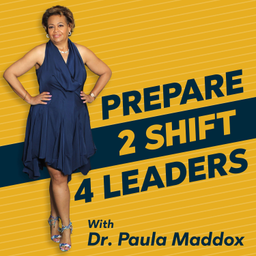
Prepare 2 Shift 4 Leaders
Dr. Paula Maddox
5.0from 3 ratings
- 12
- Episodes
- 3
- Ratings
- 2024
- First episode
About Prepare 2 Shift 4 Leaders
Welcome to the Prepare 2 Shift 4 Leaders Podcast with Dr. Paula Maddox, where each month we explore cutting-edge leadership strategies and best practices that you can apply immediately. Dr. Paula draws from extensive experience working a career with the U.S. Federal Government and coaching C-suite leaders, executives, and managers from Fortune 50, 100, and 500 companies across the globe. As an author and seasoned executive leadership coach, with a doctorate in Strategic Leadership, Dr. Paula has coached leaders in the U.S. and over 57 countries. By the end of each podcast episode, you'll walk away with proven strategies to lead more effectively, enhance your executive presence, and amplify your leadership impact and influence. Becoming a strategic and impactful leader is challenging, but it’s absolutely achievable. Dr. Paula is here to guide and support you on your leadership journey.
- Publisher
- Dr. Paula Maddox
- Category
- business · education
- Language
- en
- Explicit
- No
- First episode
- 4 Nov 2024
- Latest episode
- 1 Sept 2025
Latest episodes
12 episodes in the feed.
1 Sept 2025
Vision to Venture: How 2 Entrepreneurs Created GoWāndr!
Co-founders Caelyn Phillips and Christopher Bell discuss transforming their vision for GoWāndr into a reality, sharing insights on pivoting and creating a soulful travel app.
4 Aug 2025
No Bench? No Backup! The Power of a Strong Bench!
Leaders often have their sights set on promotion, growth, and new opportunities. What happens if there’s nobody prepared to take over their role once they move up? When an organization lacks bench strength, it can quietly threaten the stability and future success of the entire company. In this episode, we'll explore why having no bench and no backup is more than just an inconvenience. It’s a critical gap that can stall your progress and hinder long-term sustainability. You might have heard the phrase "bench strength" from sports, referring to skilled players ready to step in whenever they're needed. It turns out that business isn't so different. Having a deep talent pool of capable employees ready to fill key leadership roles at a moment’s notice is essential. We'll dive into why so few organizations feel confident about their bench and examine what truly makes a bench strong, adaptable, and ready to meet unexpected challenges. Whether you're someone looking to move forward in your career, or you're responsible for preparing your own team to handle future transitions, this conversation will offer practical strategies for assessing, developing, and reinforcing your organization's talent pipeline. Building a bench isn't just good business. It’s a critical factor in sustaining growth, adaptability, and success, no matter what comes your way. Episode Highlights: [02:27] No Bench, No Backup, The Power of a Strong Bench. This is a critical topic that can sometimes prevent leaders from advancing in their careers. [03:04] Bench has been used in sports to refer to the quality and number of players ready to step in. In business it's very similar. It's about having a deep talent pool of competent employees ready to step up when needed. [04:02] A strong bench means nurturing a talented pool of candidates that possess the right skills, knowledge, and experience to step up when needed. [05:24] Adopting a global mindset is critical. Common trade-offs that executive leaders must consider. [06:14] Cultural awareness and agility is also important for leaders. [07:10] Only 12% of companies have a strong leadership bench due to 1. Lack of investment in developing mid-level managers. 2. Company overlooking potential leaders. 3. Difficulties in creating effective succession plans. [08:04] Advantages of building a strong global bench includes top quality talent retention, reduced risk and enhanced agility, and improved business continuity and financial performance. [11:15] Companies with strong benches are three times more likely to be among top performing organizations. [11:33] Innovation and growth. Employees encouraged to grow are more likely to generate innovative ideas. [12:06] Preventing burnout is another benefit of having a strong global bench. Other advantages include maintaining institutional knowledge and preserving expertise. [13:04] Let's explore how leaders can assess their current leadership bench. 1. Identify critical roles and define competencies. 2. Conduct comprehensive talent assessments. 3. Conduct staffing reviews and discussions. 4. Take inventory of existing skills. [17:35] Once you've assessed your bench, the job of strengthening it begins. [18:34] 1. Invest in high quality leadership development programs. 2. Foster a culture of coaching and mentorship. 3. Encourage ownership and accountability by empowering potential leaders. [22:48] Communication is key! Resources & Links Related to this Episode Prepare 2 Shift (https://www.prepare2shift.com/) THINK Globally LEAD Strategically: A Christian Guide to Building Effective Leaders (https://www.amazon.com/dp/1737966956?) YOUTH LEADERSHIP: The Untapped Resource (https://www.amazon.com/YOUTH-LEADERSHIP-Untapped-Paula-Maddox-ebook/dp/B09MSQCX89/) Dr. Paula 4 Keys To Building Your Leadership Bench StrengthMaddox LinkedIn (https://www.linkedin.com/in/dr-paula-maddox-717362a2/) THINK Globally LEAD Strategically: A Christian Guide to Building Effective Leaders (https://www.amazon.com/THINK-Globally-LEAD-Strategically-Christian/dp/1737966948/) Leadership Bench Strength | Can You Spot Your Next CEO Early? (https://www.youtube.com/watch?v=LU8peTvD-DY) Leadership Succession Planning: Ensuring Continuity and Future Success (https://workplacestaffing.com/leadership-succession-planning/) Bench Strength: What Why and How (https://www.linkedin.com/pulse/bench-strength-what-why-how-phil-de-kock-/) Identifying and Building Your Leadership Bench Strength (https://keoghconsulting.com.au/tips-for-identifying-and-building-leadership-bench-strength/) Building Leadership Bench Strength for a Global Business Environment (https://diversityglobal.com/web/Article?AspxAutoDetectCookieSupport=1&id=Building-Leadership-Bench-Strength-for-a-Global-Business-Environment-1995) Top Companies Reap Benefits of Bench Activity (https://tinyurl.com/3jfny82z) 4 Keys To Building Your Leadership Bench Strength (https://www.forbes.com/sites/alainhunkins/2021/08/30/4-keys-to-building-your-leadership-bench-strength/) Developing A Global Mindset: The Five Keys To Success (https://www.imd.org/research-knowledge/leadership/articles/developing-a-global-mindset-the-five-keys-to-success/) 6 Ways to Improve your Companies’ Bench Strength (https://lynnfrasercoaching.com/2021/07/06/6-ways-to-improve-your-companies-bench-strength/) Building Deep Bench Strength: A Strategic Approach to Organizational Resilience and Growth (https://www.resourcequeue.com/blog/building-deep-bench-strength) How Managers Build a Strong Bench (https://www.boundlessnewleaders.com/boundless-blog/how-managers-build-a-strong-bench) Top Companies Reap the Benefits of Bench Strength (https://www.ddiworld.com/global-leadership-forecast-2023/bench-strength) Maxwell Executive Leadership Podcast #60: Leader Challenge: Building Bench Strength (https://www.maxwellleadership.com/podcast/executive-leadership-podcast-60-leadership-challenge-building-bench-strength/) Leader’s Playbook to Turn Feedback to Forward Motion (https://www.prepare2shift.com/podcast/leaders-playbook-to-turn-feedback-to-forward-motion)
4 Aug 2025
Changing My Mindset with Food
Crystal Paine shares her personal journey of shifting her mindset around food, detailing how she challenged long-held beliefs about calorie restriction and embraced intuitive eating to prioritize nourishment and well-being.
8 Jul 2025
Excuse Me! I Wasn't Finished Yet!
Paula Maddox discusses the dynamics of conversation interruptions, including power, rapport, and neutral types, and provides practical strategies for responding assertively and building inclusive conversations.
2 Jun 2025
Making Decisions in Complex Situations
DR. PAULA MADDOX explores making decisions in complex situations, emphasizing emergent strategy and adapting to uncertainty, which provides leaders with tools to navigate unpredictable dynamics effectively.
5 May 2025
Leader’s Playbook to Turn Feedback to Forward Motion
Feedback has the power to build trust, drive growth, and strengthen relationships but only if we know how to use it well. In this episode, I’m diving into what it really takes to turn feedback into forward motion. Whether you're leading a team, working across departments, or just trying to get better at what you do, the way we give and receive feedback makes all the difference. I'll share some of the ways I’ve shifted the tone of feedback conversations to make them more meaningful and less stressful, including why I started calling them brag moments. It changed everything. We’ll also get into how to ask better questions, how to handle feedback when it’s coming your way, and why the words you choose matter more than you think. This isn’t about sugarcoating tough conversations. It’s about making them clear, helpful, and actionable. If you're ready to create a feedback culture that actually helps people grow, this one's for you. Episode Highlights: [02:31] Let's talk about a Leader's Playbook to turn feedback into forward motion. [03:18] Understanding how to give and receive feedback effectively is a game changer. [04:24] Feedback is a key interpersonal skill that applies way beyond the workplace. It's essential for healthy relationships. [05:16] Key principles include differentiating between constructive criticism and negative feedback. Constructive criticism focuses on ways to improve. Negative feedback to grades others. [06:06] I share a personal story about my previous manager's feedback. [07:37] Feedback can be an opportunity to share what's working well and suggest improvements on both sides. [08:07] I remember my team members not being excited when I scheduled feedback discussions. I changed the tone and called them our brag moments. [11:25] Leaders need to be just as attentive as noticing accomplishments as observing areas of improvement. [12:01] An example of constructive feedback. Ask an open-ended "what" question. [13:43] I go into more detail in my book, YOUTH LEADERSHIP: The Untapped Resource (https://www.amazon.com/YOUTH-LEADERSHIP-Untapped-Paula-Maddox-ebook/dp/B09MSQCX89/). [14:34] Feedback should be timely and in private. [15:19] Using "I" statements and making a conscious effort to own our observations and opinions. [16:58] Begin with a comment of appreciation before beginning constructive criticism. [17:32] Multiple directions of offering feedback. Feedback can also be given to higher managers in the leadership chain. [18:04] The importance of selecting the right time and space and respecting time. [19:02] Feedback can also be phrased as a question to open the conversation. [20:24] An example of how to give negative feedback. Be clear and follow up. [22:13] The best ways to receive constructive feedback. Take an intentional pause and appreciate someone willing to give you feedback. [23:30] Reflect back and ask clarifying questions. [26:48] Reframing questions to begin with the word "what" meets people where they are and allows them to explore creative solutions. [29:24] In conclusion, constructive feedback is a vital ingredient for growth and strong relationships! Resources & Links Related to this Episode ● Prepare 2 Shift (https://www.prepare2shift.com/) ● THINK Globally LEAD Strategically: A Christian Guide to Building Effective Leaders (https://www.amazon.com/dp/1737966956?) ● YOUTH LEADERSHIP: The Untapped Resource (https://www.amazon.com/YOUTH-LEADERSHIP-Untapped-Paula-Maddox-ebook/dp/B09MSQCX89/) ● Dr. Paula Maddox LinkedIn (https://www.linkedin.com/in/dr-paula-maddox-717362a2/) ● Leadership Communications: The Top 5 Tips (https://www.prepare2shift.com/) ● How to Give Negative Feedback to Your Peers, Boss, or Direct Reports (https://hbr.org/2023/04/how-to-give-negative-feedback-to-your-peers-boss-or-direct-reports) ● 2 Dos and 3 Don'ts When Giving Feedback (https://www.psychologytoday.com/us/blog/the-evolving-self/202409/2-dos-and-3-donts-when-giving-feedback) ● 7 Examples Of How To Provide Employee Feedback For Managers (https://www.achievers.com/blog/feedback-for-managers/) ● How to Receive Feedback (Part 1) (https://www.managementcenter.org/resources/receive-feedback-pt1/)
7 Apr 2025
Evolving Leadership through Upskilling, Reskilling, and Outskilling
The pace of change in today’s workforce isn’t slowing down—and leaders who want to stay relevant can’t afford to stand still. In this episode, we’re talking about how intelligent leaders evolve by upskilling, reskilling, or even outskilling. It’s not just about staying employed—it’s about staying impactful. We’ll break down what each of these strategies actually looks like in practice, why they matter now more than ever, and how to decide which path makes sense depending on where you are in your career. From identifying skill gaps and finding the right mentors to building visibility and influence within your organization, this episode offers a practical roadmap for anyone ready to take charge of their growth. You’ll also hear about the global shift toward continuous learning—and why technical know-how alone isn’t enough anymore. Soft skills, strategic relationships, and a clear leadership brand are just as important. By the end, you’ll have tangible steps to future-proof your career and keep building a life and leadership path that’s sustainable, no matter what’s ahead. Episode Highlights: [00:02:30] Today, we'll talk about how intelligent leaders evolve and expand their impact by upskilling, reskilling, or outskilling. [00:03:29] Job markets are evolving and changing at a rapid pace. [00:04:19] Workers need to take ownership of their careers and create intentional plans. They must empower themselves by actively seeking out resources and sharpening their skills. [00:05:06] The responsibility to design the career and life that we desire rests within us. [00:05:48] What skills and experiences do I need to move forward? Clarify goals. What does advancement mean to you? [00:07:19] Ask directly what's needed to advance in your organization. Network, connect, and schedule information interviews. [00:08:04] How learning is a lifelong process even after retiring. Examples of successful launches of entrepreneurs who were at retirement age. [00:09:36] Who can I learn from and how can I expand my network? [00:11:52] Organizations want to invest in people who they know and believe in. Networking can help get you those recommendations. [00:12:49] Make building meaningful connections a priority. [00:13:19] How am I actively shaping the narrative of my leadership journey? [00:14:44] Intelligent leaders evolve and adapt by staying proactive. [00:15:50] Upcoming demands of the 4th Industrial Revolution will change the skills needed for jobs. [00:16:12] Upskilling involves improving a leader's existing skill sets through training and development programs. [00:17:13] Reskilling includes learning an entire new set of skills to take on a different job. [00:18:02] outskilling is an option for workers to self-initiate if they desire to find a new career path on their own. [00:19:59] Top skills needed this year and beyond include analytical thinking and innovation, active learning and learning strategies, complex problem solving skills, critical thinking and analysis, creativity, originality, and initiative. [00:21:15] Soft skills are often one of the most important factors for promotion. [00:22:35] Leaders need to become far more focused on how they sustain themselves. [00:23:45] Leaders should also practice sense making or understanding the complex dynamics of their environment. [00:24:37] If your role is shrinking, you may want to consider reskilling. [00:25:33] Steps to future proof yourself include assessing your transferable skills, investing in continuous learning, and leveraging your networks. [00:28:32] Find mentors and opportunities to gain additional experience. [00:29:47] Upskilling, reskilling, and outskilling aren't just survival tactics. They're strategies for thriving in an ever-evolving professional landscape. Resources & Links Related to this Episode ● Prepare 2 Shift (https://www.prepare2shift.com/) ● THINK Globally LEAD Strategically: A Christian Guide to Building Effective Leaders (https://www.amazon.com/dp/1737966956?) ● YOUTH LEADERSHIP: The Untapped Resource (https://www.amazon.com/YOUTH-LEADERSHIP-Untapped-Paula-Maddox-ebook/dp/B09MSQCX89/) ● Dr. Paula Maddox LinkedIn (https://www.linkedin.com/in/dr-paula-maddox-717362a2/) ● Leadership Communications: The Top 5 Tips (https://www.prepare2shift.com/) ● We Need A Global Reskilling Revolution – Here's Why (https://www.weforum.org/stories/2020/01/reskilling-revolution-jobs-future-skills/) ● Future of Jobs Report 2025 (https://www.weforum.org/stories/2025/01/future-of-jobs-report-2025-jobs-of-the-future-and-the-skills-you-need-to-get-them/) ● Bridging The Skills Gap: Fuelling Careers And The Economy In Asia-Pacific (https://impact.economist.com/perspectives/talent-education/bridging-skills-gap-fuelling-careers-and-economy-asia-pacific) ● Future-Proof India's Workforce: Top Strategies for Retention and Upskilling (https://www.shrm.org/in/topics-tools/news/blogs/a-blueprint-for-long-term-retention-and-upskilling-of-india-s-wo) ● Global Social Media Statistics (https://datareportal.com/social-media-users) ● How Leaders Can Adapt To An Evolving Workforce In The Age Of AI (https://www.forbes.com/councils/forbesbusinessdevelopmentcouncil/2025/01/16/how-leaders-can-adapt-to-an-evolving-workforce-in-the-age-of-ai/) ● Upskilling and reskilling for talent transformation in the era of AI (https://www.ibm.com/think/insights/ai-upskilling)
3 Mar 2025
Fear vs. Trust: How Your Leadership Style Shapes Success
Leadership isn’t just about having authority. It’s about influence, impact and inspiring others to a shared vision. Today we look at two different leadership styles: one that builds trust, creativity and innovation and another that uses fear, control and compliance. As organizations adjust to new workplace dynamics, understanding these leadership approaches is more important than ever. I’ll break down the key differences between inspirational and intimidatory leadership, and how each shapes workplace culture, team engagement and long term success. The way a leader communicates, empowers their team, and navigates challenges can make or break an organization. We’ll look at why inspiring leaders build high performing, engaged teams that drive innovation and growth, and fear-based leadership creates environments of stress, silence and stagnation. With research backed insights and real life examples, I’ll share key leadership traits and practical tips to help you refine your leadership approach. Whether you’re leading a global enterprise, managing a small team or stepping into a new leadership role, these insights will help you build a stronger, more motivated workforce. By the end of this episode you’ll know what it means to be a great leader and how to spot a fear based culture. More importantly you’ll have practical steps to increase your leadership presence and make a lasting impact in your organization. If you’re ready to shift your leadership mindset and level up your skills, stay tuned. Episode Highlights: [02:42] Do you lead by inspiration or intimidation? Today, we examine the impact of different leadership styles on workplace culture and performance. [03:14] Leaders need to be adaptable and foster engagement. Some workers are entering the work environment for the first time and will need time to adjust. [04:02] Today we're focusing on two leadership styles, inspirational and intimidating leadership. Inspiring leaders empower and inspire while intimidating leaders control actions through fear. [05:01] Leaders usually adopt multiple leadership styles depending on how they need to show up. This is why it's crucial for leaders to remain agile. [05:39] Teams led by collaborative and inspirational leaders tend to perform at high standards and achieve robust results. [07:12] The seven main differences between an inspirational leader and an intimidating leader. [07:32] Inspiring leaders focus on the needs of their teams, customers, and stakeholders, while intimidating leaders prioritize their own personal agendas and their egos. [07:48] Inspiring leaders encourage open communication, active listening, and collaboration. Intimidating leaders restrict communication. [08:17] Inspiring leaders empower their teams and enable them to take risk and grow professionally. Intimidating leaders disempowered their teams. [09:06] Inspiring leaders take responsibility for their actions. They are honest and will admit their mistakes. Intimidating leadership blames others. [09:27] Inspiring leaders make decisions with the team's best interest in mind. Intimidating leaders make decisions based on their own interests. [09:51] Inspiring leaders are authentic. Intimidating leaders use fear to mass their flaws. [10:23] Inspiring leaders increase productivity, employee engagement, and loyalty. Intimidating leaders create short-term focus with long-term negative consequences. [11:03] Benefits of inspirational leadership: 1. Enhanced engagement. 2. Increased productivity. 3. Improved profitability. 4. Foster's innovation. [13:04] Fear-based leadership: 1. Diminishes productivity. 2. Communication slows down. 3. Collaboration comes to a halt. 4. Creates a stifling toxic work environment. [14:16] When is a fear-based culture manifesting? 1. Silence in meetings. 2. Side bars and meetings after the meeting. 3. Low participation in surveys. 4. Increased attrition. [16:17] Children's innate ability to mediate conflicts. What hinders us as adults? It could come down to emotional regulation. [17:12] It's imperative for leaders to self-regulate regularly. If you want to know your potential derailers, consider taking a Hogan Leadership Assessment. [18:41] Leaders need to find productive processes to manage emotions. [19:00] Abraham Lincoln wrote hot letters to control his emotions. He just didn't send them. Some people self regulate by taking walks or listening to calming music. [20:26] Characteristics of inspiring leaders include approachability, vision, passion, authenticity, integrity, and values. [24:11] Your value is not diminished because someone won't see or acknowledge your worth. Create your own reality. Resources & Links Related to this Episode ● Prepare 2 Shift (https://www.prepare2shift.com/) ● THINK Globally LEAD Strategically: A Christian Guide to Building Effective Leaders (https://www.amazon.com/dp/1737966956?) ● YOUTH LEADERSHIP: The Untapped Resource (https://www.amazon.com/YOUTH-LEADERSHIP-Untapped-Paula-Maddox-ebook/dp/B09MSQCX89/) ● Dr. Paula Maddox LinkedIn (https://www.linkedin.com/in/dr-paula-maddox-717362a2/) ● Leadership Communications: The Top 5 Tips (https://www.prepare2shift.com/) ● Leadership: Theory and Practice (https://www.amazon.com/Leadership-Practice-Peter-G-Northouse/dp/1483317536) ● Hogan Leadership Assessment (https://www.hoganassessments.com/assessments/) ● Reviews of Academic Family and General Studies on Conflict Management (https://www.raisingmediators.com/blog/social-emotional-and-cognitive-child-development-milestones-for-constructive-conflict-resolution-among-preschoolers) ● The Benefits of Employee Engagement (https://www.gallup.com/workplace/236927/employee-engagement-drives-growth.aspx) ● Are You Leading With Fear — Or Inspiration? (https://www.summitleadership.com/are-you-leading-with-fear-or-inspiration/) ● Learning Humility From Lincoln (https://www.psychologytoday.com/gb/blog/political-intelligence/201204/learning-humility-from-lincoln)
3 Feb 2025
The Art of Healthy Disagreement for Leaders
Ever thought of disagreements and miscommunication in the workplace as your greatest leadership asset? With in-person work back in the mix, how we connect, communicate and collaborate has changed. Understanding how to manage conflict is more important than ever. If you’ve struggled with navigating different opinions or wondered how to turn discord into innovation this episode is for you. Today we dive into the art and science of alternative dispute resolution, how healthy conflict can spark creativity, improve relationships and create inclusive workplace cultures. We’ll look at why we shouldn’t avoid conflict but embrace it – and how strategic communication can turn challenges into opportunities for growth. So get ready for some practical tips – how to acknowledge opposing views and why sometimes silence is the best response. We’ll get into the nitty gritty of workplace dynamics, leadership presence and how to thrive in the modern workplace. Episode Highlights: [02:27] Today we will be discussing alternative dispute resolution or what HR specialists refer to as ADR or conflict resolution. [03:06] With many return to work policies in place workers are going to have to resocialize themselves and adjust to being back in the office. [04:20] We have to make adjustments. There are also going to be more face-to-face interactions. This results in more communication and possibly more miscommunication. [05:20] It's vital to be mindful of office etiquette and respectful behavior. Differences of opinion will and should happen. [06:08] It's healthy to see things differently.Different opinions create ground for innovation, creativity, and strategic thinking. [07:07] There are appropriate ways to disagree without being passive aggressive or disrespectful. [07:47] In, Why We Should Be Disagreeing More at Work (https://hbr.org/2018/01/why-we-should-be-disagreeing-more-at-work), Amy Gallo points out that there are better work outcomes when there are differences of opinion. [08:38] A quote by Liane Davey about how conflict creates opportunity for innovation. [09:19] Promoting interactions through the use of asking strategic questions supports thinking and learning. These same principles can be used with conflicts. [10:12] It's important to know how to communicate a response when we do disagree. Respectfully acknowledge their perspective. "I understand where you're coming from." [11:13] You can also say, "I see your point" and then offer your perspective. You could also say, "on the other hand" before offering your perspective. With these responses, you want to acknowledge the fact that their opinion matters. [12:42] The importance of staying emotionally regulated. Having an open and objective mindset and being patient and without judgment. [14:02] Organizations hire you for your professional opinion, not your personal opinion. [15:43] It's beneficial to leave the room if you are becoming emotionally unregulated. [16:49] Every conversation does not require a response. [17:30] Silence is a response and a source of great strength. Resources & Links Related to this Episode Prepare 2 Shift (https://www.prepare2shift.com/) THINK Globally LEAD Strategically: A Christian Guide to Building Effective Leaders (https://www.amazon.com/dp/1737966956?) YOUTH LEADERSHIP: The Untapped Resource (https://www.amazon.com/YOUTH-LEADERSHIP-Untapped-Paula-Maddox-ebook/dp/B09MSQCX89/) Dr. Paula Maddox LinkedIn (https://www.linkedin.com/in/dr-paula-maddox-717362a2/) Why We Should Be Disagreeing More at Work (https://hbr.org/2018/01/why-we-should-be-disagreeing-more-at-work) You First: Inspire Your Team to Grow Up, Get Along, and Get Stuff Done (https://www.amazon.com/You-First-Inspire-Along-Stuff/dp/1118636708/) Creating Cultures of Thinking: The 8 Forces We Must Master to Truly Transform Our Schools (https://pz.harvard.edu/resources/creating-cultures-of-thinking-the-8-forces-we-must-master-to-truly-transform-our-schools) 11 Tips for Talking to Someone You Disagree With (https://www.psychologytoday.com/us/blog/brave-talk/202101/11-tips-for-talking-to-someone-you-disagree-with)
6 Jan 2025
9 Leadership Trends Affecting Our Work in 2025
Have you noticed how much the workplace has changed in the last few years? From shifting workforce dynamics to the rapid rise of AI, we’re all in uncharted territory. These changes aren’t just changing businesses, they’re redefining what it means to lead, work and succeed in today’s world. If you’ve been wondering how to stay ahead, adapt and thrive, this episode is for you. Today we’re looking at the top leadership trends of 2025 and the skills that will make the leaders of the future. We’ll talk about how organisations are rethinking benefits, integrating AI and multi-generational workforce dynamics. And why conflict resolution, adaptability and open-mindedness are no longer optional but essential for anyone who wants to lead in a rapidly changing world. This episode will provide actionable insights to help you align with the demands of the modern workplace. Together, we’ll explore practical strategies to navigate disruptions, embrace innovation, and unlock new opportunities to lead with impact. Episode Highlights: [02:35] This episode is about leadership trends for 2025 and shifting needs of businesses. [03:17] Changes after COVID have resulted in businesses and consumers doing things differently. [04:09] Many companies may be hitting their tipping point as it relates to tech and workforce size. [05:03] We should begin to reframe our expectations by preparing for more disruptions. [05:53] 1. Organizations will offer creative ways to address expenses including housing subsidies or company sponsored housing, caregiver benefits, reevaluating company wellness plans, and help with student loan debt. [08:43] According to Pew research, one in four adults under the age of 40 have student loan debt totaling $1.6 trillion. [09:02] 2. AI will create workforce opportunities not diminish them. It will support the redesign of job responsibilities. [09:47] 3. Four day work weeks are being considered again. There are 15 countries who currently have this policy. [11:14] 4. Employee conflict resolution is a required skill for everybody. A staggering number of people have mental health issues. We need to consciously and intentionally respect others in the workplace. [13:27] We are working in a multi-generational workforce with each generation defining itself with a different set of values. [14:43] In the future, Gen Z and Gen Alpha may continue to redefine the work cultures they step into leadership roles. [15:31] Reverse mentorship is an opportunity for younger generations to lead us with AI and digital tools. [16:57] 5. Generative AI experiments will yield an increased cost and result in some hard lessons. There will be opportunities and benefits, but companies will need to assess the risks and look at all of the security aspects and ethics. [17:51] 6. Skill requirements will become more important than degrees. STARs or skilled through alternative routes. This is over 17 million workers in the US alone. [19:30] 7. Climate change protection is becoming a new hiring benefit. Climate change disaster response plans offer a lot of employee value. [20:29] 8. DE and I objectives may shift. Outcomes are sometimes difficult to measure. There will be a critical need for a diverse and inclusive workforce. We just have to find a way to incorporate it into a more strategic framework. [21:57] 9. Traditional career paths will collapse. In today's culture, employees will shift careers as opposed to retiring or shift during mid-career. Companies will have to work harder to retain top talent. [23:42] It's your choice to structure your career and your life in a way that works best for you. Resources & Links Related to this Episode Prepare 2 Shift (https://www.prepare2shift.com/) THINK Globally LEAD Strategically: A Christian Guide to Building Effective Leaders (https://www.amazon.com/dp/1737966956?) YOUTH LEADERSHIP: The Untapped Resource (https://www.amazon.com/YOUTH-LEADERSHIP-Untapped-Paula-Maddox-ebook/dp/B09MSQCX89/) Dr. Paula Maddox LinkedIn (https://www.linkedin.com/in/dr-paula-maddox-717362a2/) 9 Trends That Will Shape Work in 2024 and Beyond (https://hbr.org/2024/01/9-trends-that-will-shape-work-in-2024-and-beyond) 9 Future of Work Trends for 2024 (https://www.gartner.com/en/articles/9-future-of-work-trends-for-2024) SAMHSA Releases Annual National Survey on Drug Use and Health (https://www.hhs.gov/about/news/2024/07/30/samhsa-releases-annual-national-survey-drug-use-and-health.html)
2 Dec 2024
Managing Career Transitions, Building Resilience And Navigating Through Uncertainty
Have you ever faced a moment in your career where everything felt uncertain? Maybe you’re at a crossroads, dealing with a big shift, or trying to rebuild after something unexpected. I’ve been there too, and I know how overwhelming it can feel. But I also know those moments can be the spark for something new with a chance to grow, reinvent, and even thrive. Today, I’m drawing from real-world experiences, coaching conversations, and the challenges many of us have faced to share practical strategies for navigating career transitions and building resilience. Whether you’re an experienced leader, an entrepreneur, or just starting your journey, this episode has something for you. We’ll talk about managing the mental and emotional toll of disruptions, rediscovering your sense of self beyond job titles, and finding new opportunities to showcase your unique value. If you’re looking for ways to turn uncertainty into clarity, align with your passions, or take that next step with confidence, I’m here to guide you. Together, we’ll explore how to face these challenges head-on and come out stronger on the other side. Let’s dive in. Episode Highlights: [02:34] Today's episode will inspire you to turn uncertainty and opportunity. [03:01] Navigating uncertainty is a common topic all around the world, especially when it comes to business and politics. [04:01] Job loss and career disruptions involve far more than unemployment. I'll be unpacking what happens next after a career or life disruption. [05:02] There is so much grief after a job loss from shame to uncertainty about the future. Any life disruption can cause anxiety, lack of clarity, and confusion. [06:38] Asking questions about what makes us feel uncomfortable in moments of disruption and what specifically is making us feel uncertain about our future. Identifying the real cause of what we are feeling. [07:08] We need to be aware of the real problem before we can do something about it. [08:08] When facing major disruptions in your life or career experts recommend recentering yourself. Begin with self-acceptance.[09:02] We are not our job title. Don't let external things or people define you. [10:05] Our attachment to the external is typically our source of pain. [11:07] Questions we can ask ourselves to discover our core identity. What is important to me? What actually nurtures me? What do I trust inside of me? [12:49] In my book, Think Globally, Lead Strategically (https://www.amazon.com/dp/1737966956?), I remind readers that each of us determines our own worth and where we choose to place our focus. [13:34] Take advantage of benefits and training packages offered to you within your company. [14:10] We aren't usually paid what we are worth, we constantly need to renegotiate our salaries. [15:48] How we must increase our efforts to self-market and self-promote. [16:46] Align your self-marketing efforts and talk tracks with the organizational strategic plan of the company. [17:29] Graceful Self-Promotion offers 12 behaviors that we can implement to gracefully promote ourselves. [18:11] Incorporating these behaviors in our everyday communication will help gracefully promote our impact. [19:01] Males communicate in a report style whereas females communicate in a relationship talk style. [20:09] I share how I had to create my own metrics during my 31 year federal government career. I was managing 25 million square feet of office space and generating $224 million in annual revenue. [21:32] Managing my own metrics definitely boosted my confidence. [22:38] This life and career disruption may be an opportunity to see things differently. [23:16] What are you truly passionate about? [24:20] In my second book, YOUTH LEADERSHIP: The Untapped Resource (https://www.amazon.com/YOUTH-LEADERSHIP-Untapped-Paula-Maddox-ebook/dp/B09MSQCX89/), I found millionaires from the age of 6 to 22 years old. [24:41] How can you monetize your passion? How can I offer it globally? [26:05] It's about challenging ourselves and asking ourselves, "what's in the garage?" [27:49] How I challenged myself to sew and ended up making and selling quilts. [28:26] Look at yourself differently and open your eyes to what you may not be seeing. Resources & Links Related to this Episode Prepare 2 Shift (https://www.prepare2shift.com/) THINK Globally LEAD Strategically: A Christian Guide to Building Effective Leaders (https://www.amazon.com/dp/1737966956?) YOUTH LEADERSHIP: The Untapped Resource (https://www.amazon.com/YOUTH-LEADERSHIP-Untapped-Paula-Maddox-ebook/dp/B09MSQCX89/) Dr. Paula Maddox LinkedIn (https://www.linkedin.com/in/dr-paula-maddox-717362a2/) The Far-Reaching Impact of Job Loss and Unemployment (https://pmc.ncbi.nlm.nih.gov/articles/PMC4553243/) Reeling From a Sudden Job Loss? Here’s How to Start Healing. (https://hbr.org/2022/07/reeling-from-a-sudden-job-loss-heres-how-to-start-healing) Examining Our Sense of Identity and Who We Are (https://www.psychologytoday.com/us/blog/enlightened-living/200910/examining-our-sense-identity-and-who-we-are) Graceful Self-Promotion–It’s Essential (https://drexel.edu/~/media/Files/medicine/drexel-pdfs/programs/program-elam/APS-articles/ELAM-APS-Graceful-Self-Promotion-Its-Essential-Morahan-2004.ashx?la=en) Dr. Maddox’s shirt worn in this video podcast was custom-designed by Neemo Fashions (https://www.etsy.com/shop/NEEMOFASHION?ref=yr_purchases).
4 Nov 2024
First Steps to Strategic Leadership: Mastering Intentional Communication
Welcome to the Prepare 2 Shift 4 Leaders podcast! I’m Dr. Paula Maddox, and I couldn’t be more thrilled to have you join me for our first episode. After nearly 20 years of coaching leaders across the U.S. and over 57 other countries, working with Fortune 50, 100, and 500 companies, I’ve seen firsthand the challenges and triumphs of leadership. This show is designed for leaders at every stage—from the C-suite to emerging managers—looking to strengthen their executive presence, expand their influence, and lead with intention. Each month, I’ll share insights, strategies, and practical tools to guide you on your leadership journey. In today’s episode, I’m diving into a topic close to my heart: intentional communication for leaders. Communication is complex, yet it’s the backbone of effective leadership. We’ll explore what it means to communicate with clarity, purpose, and relevance and how to tailor messages for different audiences—whether they respond best to storytelling, data, or a structured approach. I’ll also walk you through the PREP framework (Point, Reason, Evidence, Point) as a tool for crafting concise, impactful messages, especially valuable in today’s fast-paced world where attention spans are shrinking. Looking ahead, we’ll be covering a wide range of leadership topics, from developing a personal leadership brand to understanding the role of gender in communication styles. I invite you to subscribe, engage, and join me each month as we unlock the full potential of your leadership. Let’s shift your approach and bring your best to those you lead. Thank you for joining me on this journey, and let’s get started! Episode Highlights: [02:43] Dr. Paula discusses why we should focus on leadership at all. We're all leaders, and we need to activate that within each and every one of us. [03:29] Today's episode is about communicating with intention. [04:01] What does it really mean to improve your communication skills? [05:21] The importance of being attentive to communications styles, especially in order to influence, persuade, or prompt action. [06:23] Frame your messages to appeal to those whose support you seek. [08:47] Paying attention to the palette of your guest. [09:28] Dr. Paula talks about digital communication and gender. [10:59] Male leaders often use big picture language. Female leaders often use specifics. [13:32] Asking strategic questions to clarify. [14:05] Four types of communication intentions: control, defend, relinquish, and affirming. [16:20] Concise communication. [21:03] Prepare in advance for short and concise talking points. Anticipate objections and have available supplemental data. Provide pre-reads. Highlight and set expectations early. Use the PREP framework. Point, reason, evidence, and point. [23:23] Listen attentively to your audience. Note how gender plays a role in communication. Attention spans have decreased. Be concise with pre-reads. Resources & Links Related to this Episode Prepare 2 Shift (https://www.prepare2shift.com/) THINK Globally LEAD Strategically: A Christian Guide to Building Effective Leaders (https://www.amazon.com/dp/1737966956?) YOUTH LEADERSHIP: The Untapped Resource (https://www.amazon.com/YOUTH-LEADERSHIP-Untapped-Paula-Maddox-ebook/dp/B09MSQCX89/) Dr. Paula Maddox LinkedIn (https://www.linkedin.com/in/dr-paula-maddox-717362a2/) How To Be A Confident, Concise Communicator (Even When You Have To Speak Off The Cuff) (https://www.forbes.com/sites/melodywilding/2020/07/27/how-to-be-a-confident-concise-communicator-even-when-you-have-to-speak-off-the-cuff/) Communication Styles: The Four Types of Intent (https://communicationstyles.org/the-four-types-of-intent/) Harvard Business Review: Research: Men Speak More Abstractly Than Women (https://hbr.org/2022/12/research-men-speak-more-abstractly-than-women) Speaking of Psychology: Why our attention spans are shrinking, with Gloria Mark, PhD (https://www.apa.org/news/podcasts/speaking-of-psychology/attention-spans)
Who has been a guest on Prepare 2 Shift 4 Leaders
Names identified in recent episode analyses. Showing up to five guests.
- Crystal Paine
- Paula Maddox
- DR PAULA MADDOX
Reach and audience
Public platform figures. Ratings count people who left a rating, not total listeners.
- Apple Podcasts (US)
- 5.0 / 5
- 3 ratings
Podcast Authority Score: 28 / 100
A composite of feed quality, social presence, YouTube performance and engagement. Read the methodology.
- Quality
- 43
- Social presence
- 0
- YouTube
- 0
- Engagement
- 32
Contact Prepare 2 Shift 4 Leaders
- Guest appearances
- Books guests
Based on episode analysis; this does not confirm that the show is currently accepting guests.
Host of Prepare 2 Shift 4 Leaders?
Claim your podcast to manage its listing and keep your show details accurate.
Pod Engine is an independent podcast discovery and analytics service and is not affiliated with or endorsed by this podcast. Artwork and show content belong to their owners. Full legal notice.
Explore this show
Podcast research with Pod Engine