
Product leaders show you exactly how they work - the frameworks, tools, and workflows they use to build great products. Every episode includes live demos and practical techniques you can use immediately, covering everything from prototyping and research to strategy and team collaboration. Walk away with tactics that make you better at the craft, not theory you'll forget tomorrow. Hosted by Axel Sooriah.
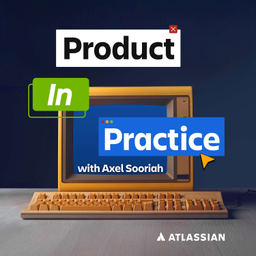
Podcast Overview
Product leaders show you exactly how they work - the frameworks, tools, and workflows they use to build great products. Every episode includes live demos and practical techniques you can use immediately, covering everything from prototyping and research to strategy and team collaboration. Walk away with tactics that make you better at the craft, not theory you'll forget tomorrow. Hosted by Axel Sooriah.
Language
🇺🇲
Publishing Since
10/22/2025
1 verified contact email on file for Product in Practice
Pitch yourself as a guest, propose sponsorships, or reach out directly to the host.
Recent Episodes
June 2, 2026
Crystal Widjaja: Why PMs Must Get Comfortable with the CLI
<p>Crystal Widjaja (former Chief Product Officer at Gojek and Reforge instructor) has built data and growth systems at an incredible scale. While many product managers are stuck using AI for surface-level summaries and "one-shot" artifacts, Crystal has spent her "semi-retirement" architecting a sophisticated AI agent harness that manages everything from her daily prep to maintaining a "friendship CRM."In this episode, Crystal pulls back the curtain on the messy practical reality of her technical stack—built with Obsidian, Python, and Claude Code—to demonstrate how PMs can move past the "trap" of abstracted GUI tools and start building infrastructure that truly scales their impact.We discussThe shift from surface-level prompting to building mature agent infrastructure and "context engineering"Automating low-leverage work like meeting notes and status updates so you can focus on creative strategy and customer interactionThe unique AI advantage in Southeast Asia: How a culture of delegation has prepared leaders for the age of agentsThree things that won't change: Vision setting, creative voice, and deep customer empathyThe "Ralph Loop" framework: Chaining complex AI tasks together for autonomous executionKey takeawaysPMs must get comfortable with the CLI. Crystal argues that relying solely on simplified AI interfaces is a "trap" that prevents you from understanding the underlying system. To truly improve your workflow and leverage AI's full power, you need to be willing to open the terminal and interact with the technical scaffolding yourself.Context is the new prompt engineering. The first wave of AI was about learning how to prompt; the next wave is about "context engineering." Quality output depends on the data you feed the system, from meeting transcripts to project files, and building the pipelines to sync that context automatically.Focus on the smallest unit of work first. Rather than aiming for "big bang" AI solutions, start by automating one specific task you hate, such as syncing meeting notes to your computer. Once that works, iterate and chain those units together into a more comprehensive agent harness.AI should enhance your humanity, not just your productivity. Crystal uses her AI chief of staff to maintain a "friendship CRM," tracking details like a friend's past mention of a marathon or gift ideas. By offloading the "menial" memory work to AI, she frees up mental energy to be a more present and thoughtful friend.Adopt a "semi-unemployed" mindset. The best way to stay relevant in the AI era is to create enough space in your schedule to play with new tools. By automating low-leverage tasks, you gain the time needed to stay ahead of the "AI overlords" and master the evolving landscape of agent orchestration.ChaptersHere are the timestamps and chapter titles for this podcast episode:00:00 - Introduction to Crystal Widjaja02:08 - AI Adoption and Practice in Southeast Asia04:24 - Demystifying AI through Practical Workflows07:41 - AI Maturity: Engineering vs. Product Management11:11 - Practical Steps to Build AI Fluency14:34 - Critical Skills for the AI Era18:48 - From Prompt Engineering to Context Engineering22:13 - Timeless Product Management Fundamentals23:59 - Demo: Building an AI "Chief of Staff"27:59 - Automating Work with "Ralph Loops"36:38 - Impact on Personal Productivity and Relationships39:46 - Hype, Reality, and the Future of AI in 202941:51 - Final Habits for Effective AI UseAbout Atlassian:Behind every great human achievement, there is a team. From medicine and space travel to disaster response and pizza deliveries, we help teams all over the planet advance humanity through the power of software. Our mission is to help unleash the potential of every team.</p>
April 1, 2026
Elena Verna: Why PMs who can't build will get left behind
<p>Elena Verna is Head of Growth at Lovable, one of the fastest-growing AI-native companies. She's previously held growth and product leadership roles at Dropbox, Miro, Amplitude, and SurveyMonkey, where she built some of the most influential frameworks in product-led growth.</p><p><br></p><p><strong>We discuss</strong></p><ul><li>The shift from "product manager" to "product builder" and why interviews now require working prototypes</li><li>Automating Growth 101 work so you can focus on creative strategy</li><li>The collapse of the talent stack: how roles in product, design, and engineering are blurring</li><li>Three things that won't change: customer interaction, vision setting, and understanding distribution</li><li>The "superpower framework" for career-accelerating decisions</li></ul><p><br></p><p><strong>Key takeaways</strong></p><ul><li>PMs who can't build are becoming obsolete. The shift isn't theoretical or five years away. Top tech companies are already changing their interview processes to require functional prototypes instead of case studies. If you can't translate your product thinking into something tangible, you're competing with one hand behind your back.</li><li>Automate Growth 101, then invest the freed-up time in creative strategy. The repetitive mechanics of growth marketing (A/B tests, funnel analysis, campaign setup) are increasingly automatable with AI. Elena argues that the PMs who thrive will be the ones redirecting that time toward the harder, more creative work that machines can't do yet.</li><li>The talent stack is collapsing, and that's exciting. Boundaries between product, design, and engineering are blurring as AI gives individuals more autonomy across disciplines. Elena sees this as liberating rather than threatening. The PMs who embrace building, not just specifying, can move faster and validate ideas without waiting for a team to assemble.</li><li>Three foundations won't change, no matter how good AI gets. Customer interaction, vision setting, and understanding distribution remain irreplaceably human. AI can accelerate execution, but it can't replace the judgment that comes from sitting with customers, setting a compelling direction, or knowing how your product actually reaches people.</li><li>Your superpower lives at the intersection of what you're good at and what you love. Elena's career accelerated when she stopped trying to be well-rounded and started leaning into product-led growth as her defining skill. Find that intersection, then make career moves that compound on it rather than scattering your energy across unrelated opportunities.</li></ul><p><br></p><p><strong>Chapters</strong></p><p>00:00: Introduction and highlights</p><p>01:13: Welcome and the current state of tech</p><p>02:10: Why Elena joined Lovable and automating Growth 101</p><p>05:36: The shift from product managers to product builders</p><p>08:39: Advising growth-stage companies on AI adoption</p><p>11:56: Fostering AI fluency and bottom-up adoption</p><p>14:54: Raising AI fluency at scale beyond checkbox exercises</p><p>17:38: The collapse of the talent stack: product, design, and engineering blur</p><p>20:42: Critical skills for the AI era PM</p><p>24:16: Three things that won't change: customers, vision, and distribution</p><p>28:20: Demo: Building a nonprofit offering spec and prototype with ChatGPT and Lovable</p><p>47:01: Lightning round: podcasts and Substacks</p><p>49:22: Career-accelerating decisions and the superpower framework</p><p>52:00: Desert island favourites and closing</p><p><br></p><p>#productmanagement #PM #atlassian</p><p><br></p><p>About Atlassian:</p><p>Behind every great human achievement, there is a team. From medicine and space travel to disaster response and pizza deliveries, we help teams all over the planet advance humanity through the power of software. Our mission is to help unleash the potential of every team.</p>
January 20, 2026
Cemre Güngor: How to ship AI features users actually use | Product in Practice
<p>Cemre Güngor has helped shape how billions interact with technology, from Facebook and Instagram's global sharing experiences to Figma's AI-powered workflows, and now reimagining the browser at The Browser Company with Dia.In this conversation, we break down:</p><ul><li>Product Craft in the AI Era</li><li>Why starting with the end in mind matters more than ever when prototyping is democratized</li><li>The difference between durable AI features and "demo candy"</li><li>How to evaluate prototypes without clear problem definition</li><li>Scaling Products Across Surfaces</li><li>What changes (and what doesn't) when building for social platforms vs creative tools vs AI-native workflows</li><li>Why product managers get too attached to their existing mental models</li><li>The hidden costs of ignoring new interaction paradigms</li><li>Real AI Workflows at The Browser Company</li><li>Practical examples: automated communication audits, personality type predictions, and workflow optimization</li><li>Why meeting transcripts are the most underutilized data source in remote work</li></ul><p>Jira Product Discovery is the home for all your product ideas, customer feedback, and bets, so you can prioritize what actually matters and share living roadmaps with your stakeholders. Turn scattered requests and spreadsheets into a single, shared source of truth that connects directly to delivery in Jira. </p><p>Get it free at https://www.atlassian.com/software/jira/product-discoveryChapters01:31 Welcome back to Product in Practice03:21 Starting with the end in mind and focusing on problems05:36 Product management behavior that stopped working, moving from Instagram to Figma08:30 Shift from metric-driven to judgment-based product management09:18 Cemre's background with AI at Figma10:50 Learning by doing and shipping quickly14:39 How LLM-based features change product development16:59 The Browser Company's focus on design and intentionality19:10 The single most important test for an AI feature: internal usage22:20 How evolving AI models (reasoning models) impact product roadmaps23:03 The Bitter Lesson: When to wait for model improvements25:09 Why agentic workflows (like computer use models) are not a priority yet26:12 The necessity of shipping first to learn what good looks like for general-purpose AI assistants29:22 The browser's responsibility in an AI world: holding all your context32:47 The key value of an AI browser: bringing in your context34:33 Advice for PMs: Do the boring thing with AI37:06 Demo: Simulating your manager's perspective (the "Josh skill")42:18 Demo: Revising a document with real meeting feedback/transcript47:00 Demo: Daily priority recommendations based on all context (Memory, Calendar, Slack)51:09 How AI tools have transformed productivity and PM workflows53:54 Demo: Coaching and feedback on communication style from all channels54:41 The advantage of browser-level integrations like Dia'sReferencedArc Search (mobile app): https://arc.net/search Arc (browser): https://arc.net/ Gemini (model): https://gemini.google.com and https://ai.google.dev/gemini-api/docs... Cursor: https://cursor.com/ Claude Code: https://claude.com/product/claude-code GPT Codex: https://openai.com/codex/ Granola (note-taking tool mentioned): https://www.granola.ai/ Four Thousand Weeks: https://www.goodreads.com/book/show/54785515-four-thousand-weeksAbout Atlassian:Behind every great human achievement, there is a team. From medicine and space travel to disaster response and pizza deliveries, we help teams all over the planet advance humanity through the power of software. Our mission is to help unleash the potential of every team.<br></p>
7 total episodes available
Deep-dive analytics for Product in Practice
Frequently asked questions
Have a different question and can't find the answer you're looking for? Reach out to our support team by sending us an email and we'll get back to you as soon as we can.
- What is Product in Practice?
- How often does this podcast release new episodes?
This podcast updates daily.
- Where can I listen to this podcast?
This podcast is available on 4 platforms including Apple Podcasts, Spotify, and more. You can also use the RSS feed directly.
- Does this podcast accept guests?
Yes, this podcast regularly features guests.
Legal Disclaimer
Pod Engine is not affiliated with, endorsed by, or officially connected with any of the podcasts displayed on this platform. We operate independently as a podcast discovery and analytics service.
All podcast artwork, thumbnails, and content displayed on this page are the property of their respective owners and are protected by applicable copyright laws. This includes, but is not limited to, podcast cover art, episode artwork, show descriptions, episode titles, transcripts, audio snippets, and any other content originating from the podcast creators or their licensors.
We display this content under fair use principles and/or implied license for the purpose of podcast discovery, information, and commentary. We make no claim of ownership over any podcast content, artwork, or related materials shown on this platform. All trademarks, service marks, and trade names are the property of their respective owners.
While we strive to ensure all content usage is properly authorized, if you are a rights holder and believe your content is being used inappropriately or without proper authorization, please contact us immediately at hey@podengine.ai for prompt review and appropriate action, which may include content removal or proper attribution.
By accessing and using this platform, you acknowledge and agree to respect all applicable copyright laws and intellectual property rights of content owners. Any unauthorized reproduction, distribution, or commercial use of the content displayed on this platform is strictly prohibited.