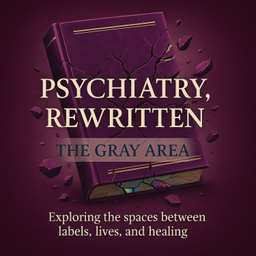
Podcast thumbnail for Psychiatry, Rewritten - The Gray Area

Psychiatry, Rewritten - The Gray Area

Claim This Podcast

by laine

5.0(2 reviews)
23 episodes
Updated Daily
Accepts GuestsHas Sponsors
50

Podcast Authority

Beta
FairBased on show quality, social media presence, reviews, charts, and more
Pod Engine
Quality73
Social0
YouTube66
Engagement0

Podcast Overview

Exploring the spaces between labels, lives, and healing. Hosted by Laine — a psychiatric nurse practitioner with lived experience — Psychiatry, Rewritten challenges the way we talk about mental health. With honest stories and real conversations, it explores the gray areas between symptoms and identity, diagnosis and humanity. Because healing isn’t linear, and the truth isn’t always clinical. This is where the rewrite begins.

Language

🇺🇲

Publishing Since

6/26/2025

Unlock The Full Podcast Authority Score Report

See how your podcast performs across key metrics

50

Podcast Authority

Beta
FairBased on show quality, social media presence, reviews, charts, and more
Pod Engine
Quality73
Social0
YouTube66
Engagement0
8
Excellent Areas
1
Good Performance
10
Growth Opportunities
excellent
Publishing Consistency
Every 3 days
Performing excellently!
good
iTunes Tags
6.5/10

Recommendations available

Unlock the full report to see detailed tips

poor
Episode Thumbnails

Recommendations available

Unlock the full report to see detailed tips

+16 More Metrics

Unlock comprehensive insights including:

  • • YouTube presence analysis
  • • Social media reach metrics
  • • RSS compliance scoring
  • • Podcast 2.0 features
  • • Technical standards
What's Included in Your Full Report

Detailed Analytics

  • Complete breakdown of all 19 authority metrics
  • Personalized recommendations for each metric
  • Industry benchmarks and comparisons
  • Technical RSS feed analysis and compliance scoring

Growth Strategies

  • Step-by-step action plans for improvement
  • Quick wins to boost your score immediately
  • Pro tips from successful podcasters
Get your free podcast insights report

See how your show performs across every key metric

Instant delivery
No spam
Attract Better Guests

High authority scores make your podcast more attractive to industry leaders and influencers who want to appear on credible shows.

Secure Sponsorships

Sponsors look for podcasts with proven authority and engagement. Your score demonstrates your podcast's value to potential partners.

Grow Your Audience

Understanding your strengths and weaknesses helps you make data-driven decisions to expand your listener base effectively.

1 verified contact email on file for Psychiatry, Rewritten - The Gray Area

Pitch yourself as a guest, propose sponsorships, or reach out directly to the host.

Recent Episodes

Episode thumbnail for Your Gut Has a Mind of its Own

September 11, 2025

Your Gut Has a Mind of its Own

<p>In this episode, we dive into the fascinating connection between the brain and the gut — sometimes called the second brain. The gut houses about 500 million neurons and communicates constantly with the central nervous system through the vagus nerve. In fact, around 80% of vagus nerve fibers run upward, meaning your gut is sending more messages to your brain than the other way around.</p><p><br /></p><p>We explore how this “gut–brain axis” shapes mental health conditions like anxiety, depression, and trauma responses, and why disorders like IBS, Crohn’s disease, and ulcerative colitis often flare with stress. For decades, people were told symptoms were “just in their head,” but research shows the gut and brain are locked in a feedback loop that can fuel both physical and emotional distress.</p><p><br /></p><p>The big takeaway? If we only focus on the brain, we miss half the conversation. The gut has a mind of its own — and understanding that changes how we see both psychiatry and whole-body health.</p><p><br /></p><p><br /></p><p>References &amp; Resources</p><p> 1. Oka, P., Parr, H., Barberio, B., Black, C. J., Savarino, E. V., &amp; Ford, A. C. (2020). Global prevalence of irritable bowel syndrome according to Rome III or IV criteria: a systematic review and meta-analysis. Gastroenterology, 158(5), 1262–1278. </p><p> 2. Carabotti, M., Scirocco, A., Maselli, M. A., &amp; Severi, C. (2015). The gut-brain axis: interactions between enteric microbiota, central and enteric nervous systems. Annals of Gastroenterology, 28(2), 203–209. </p><p> 3. Cryan, J. F., O’Riordan, K. J., Cowan, C. S. M., et al. (2019). The microbiota–gut–brain axis. Physiological Reviews, 99(4), 1877–2013. </p><p> 4. Mayer, E. A., Tillisch, K., &amp; Gupta, A. (2015). Gut/brain axis and the microbiota. Journal of Clinical Investigation, 125(3), 926–938. </p><p> 5. Breit, S., Kupferberg, A., Rogler, G., &amp; Hasler, G. (2018). Vagus nerve as modulator of the brain–gut axis in psychiatric and inflammatory disorders. Frontiers in Psychiatry, 9, 44. </p>

Episode thumbnail for Borderline: The Diagnosis Trauma Built

September 11, 2025

Borderline: The Diagnosis Trauma Built

<p>In this episode, we strip back the stigma of Borderline Personality Disorder and look at it through the lens of trauma. Instead of a “disordered personality,” what if borderline is better understood as the long shadow of chronic relational wounds—neglect, betrayal, abandonment, or ongoing invalidation?</p><p><br /></p><p>We’ll explore how many so-called “borderline symptoms”—fear of abandonment, emotional intensity, self-harm, rapid shifts—are the survival patterns of people who endured trauma without safety or repair. Seen this way, borderline isn’t manipulation or brokenness; it’s a set of strategies that once kept someone alive.</p><p><br /></p><p>This reframing matters, because when psychiatry pathologizes survival, healing gets blocked. When we recognize borderline as chronic trauma, the path forward opens—toward compassion, targeted treatment, and the possibility of rewriting the story from damage to resilience.</p><p><br /></p><p>References &amp; Resources</p><p> 1. Bozzatello, P., Morese, R., &amp; Bellino, S. (2021). The Role of Trauma in Early Onset Borderline Personality Disorder: A Biopsychosocial Perspective. Frontiers in Psychiatry. </p><p> 2. Ford, J. D. (2014). Complex PTSD, affect dysregulation, and borderline personality disorder. Borderline Personality Disorder and Emotion Dysregulation. </p><p> 3. Pagura, J., Stein, M. B., Bolton, J. M., Cox, B. J., Grant, B., &amp; Sareen, J. (2010). Comorbidity of Borderline Personality Disorder and Posttraumatic Stress Disorder in the U.S. population. Journal of Psychiatric Research. </p><p> 4. Lavvaf, M., Bagheri-Nesami, M., et al. (2025). Childhood trauma and Axis I disorders in borderline personality disorder. Middle East Current Psychiatry. </p><p> 5. Kolthof, K. A., et al. (2022). Effects of intensive trauma-focused treatment of individuals with PTSD on borderline personality disorder symptom severity. European Journal of Psychotraumatology. Link</p><p> 6. Riou, M., et al. (2024). Borderline personality disorder and post-traumatic stress: comparison of adolescent patients with and without PTSD. BMC Psychiatry. </p><p> 7. Smits, M. L., et al. (2022). Trauma and Outcomes of Mentalization-Based Therapy for Patients With Borderline Personality Disorder. American Journal of Psychotherapy. </p><p> 8. Bozzatello, P., et al. (2020). Trauma and psychopathology associated with early onset borderline personality disorder. Journal of Psychiatric Research. </p><p> 9. Tate, A. E., et al. (2022). Associations with psychiatric disorders, somatic illnesses, trauma and adverse behaviors in borderline personality disorder: A Swedish cohort study. Molecular Psychiatry. </p><p> 10. Zanarini, M. C., et al. (2017). Ten-year course of borderline personality disorder: The CLPS study. BMC Psychiatry. </p>

Episode thumbnail for Dementia in a Bottle

September 3, 2025

Dementia in a Bottle

<p>Benzodiazepines and gabapentin are handed out like candy — for anxiety, for sleep, for nerve pain, for “whatever works.” But the quiet cost often doesn’t make it into the conversation: memory loss, cognitive decline, and even dementia risk.</p><p><br></p><p>In this episode, we dig into the science and the stories behind the meds that calm today but may erase tomorrow. We’ll talk about how these drugs affect the hippocampus, why dependency is so hard to break, and what current research says about long-term brain health.</p><p><br></p><p>This isn’t about scare tactics — it’s about informed consent. Because your brain deserves more than a prescription that steals it piece by piece.</p>

23 total episodes available

Deep-dive analytics for Psychiatry, Rewritten - The Gray Area

Frequently asked questions

Have a different question and can't find the answer you're looking for? Reach out to our support team by sending us an email and we'll get back to you as soon as we can.

What is Psychiatry, Rewritten - The Gray Area?

Exploring the spaces between labels, lives, and healing.

Hosted by Laine — a psychiatric nurse practitioner with lived experience — Psychiatry, Rewritten challenges the way we talk about mental health. With honest stories and real conversations, it explores the gray areas between symptoms and identity, diagnosis and humanity. Because healing isn’t linear, and the truth isn’t always clinical.

This is where the rewrite begins.

How often does this podcast release new episodes?

This podcast updates daily.

Where can I listen to this podcast?

This podcast is available on 4 platforms including Apple Podcasts, Spotify, and more. You can also use the RSS feed directly.

Does this podcast accept guests?

No, this podcast does not typically feature guests.

Legal Disclaimer

Pod Engine is not affiliated with, endorsed by, or officially connected with any of the podcasts displayed on this platform. We operate independently as a podcast discovery and analytics service.

All podcast artwork, thumbnails, and content displayed on this page are the property of their respective owners and are protected by applicable copyright laws. This includes, but is not limited to, podcast cover art, episode artwork, show descriptions, episode titles, transcripts, audio snippets, and any other content originating from the podcast creators or their licensors.

We display this content under fair use principles and/or implied license for the purpose of podcast discovery, information, and commentary. We make no claim of ownership over any podcast content, artwork, or related materials shown on this platform. All trademarks, service marks, and trade names are the property of their respective owners.

While we strive to ensure all content usage is properly authorized, if you are a rights holder and believe your content is being used inappropriately or without proper authorization, please contact us immediately at hey@podengine.ai for prompt review and appropriate action, which may include content removal or proper attribution.

By accessing and using this platform, you acknowledge and agree to respect all applicable copyright laws and intellectual property rights of content owners. Any unauthorized reproduction, distribution, or commercial use of the content displayed on this platform is strictly prohibited.