Raincoast Radio
Hosted by Auston Chhor · Raincoast Conservation Foundation
5.0from 12 ratings
- 19
- Episodes
- 12
- Ratings
- 2024
- First episode
- 157K
- YouTube views
About Raincoast Radio
Join us for stories and conversations with the scientists and conservationists who investigate to understand coastal species and processes; inform by bringing science to decision-makers and communities; and inspire action to protect wildlife and wildlife habitats.
- Publisher
- Raincoast Conservation Foundation
- Category
- science · science
- Language
- en
- Explicit
- No
- First episode
- 17 Dec 2024
- Latest episode
- 12 Nov 2025
Latest episodes
19 episodes in the feed.
12 Nov 2025
Drones, science communication, and changing roles with Auston Chhor
Salmon Habitat Biologist Auston Chhor discusses his work with drones, science communication, and evolving roles in an interview with Sofia Osborne, revealing insights into fish behavior and conservation efforts.
4 Nov 2025
The journey upstream as a student with Arielle Koenig, Pacific Salmon Ecology and Conservation Lab
Student Arielle Koenig discusses her master's research on juvenile coho salmon overwintering in floodplain habitats and the challenges of fieldwork with host Auston Chhor in this interview.
28 Oct 2025
Careers in conservation with Jason Hwang, Pacific Salmon Foundation
Host Auston Chhor interviews Jason Hwang of the Pacific Salmon Foundation about career paths in conservation, emphasizing the value of practical experience alongside academic qualifications for prospective environmental professionals.
21 Oct 2025
Enriching relationships with watersheds and people, with Redd Fish Restoration Society’s Jessica Hutchinson
Restoration biologist Jessica Hutchinson of Redd Fish Restoration Society discusses process restoration and her organization's work with Indigenous knowledge to restore damaged ecosystems and rebuild wild salmon stocks in an interview with Auston Chhor.
7 Oct 2025
Communicating the “why care?”, the importance of listening and community empowerment with Tom Rutherford
Auston Chhor interviews Tom Rutherford, Executive Director of the Cowichan Watershed Board, about community empowerment for salmon and watershed sustainability, emphasizing the importance of listening and effective science communication.
1 Oct 2025
How crises lead to connection with Murray Ned, Lower Fraser Fisheries Alliance
Auston Chhor interviews Murray Ned, Executive Director of the Lower Fraser Fisheries Alliance, about the Fraser River Sockeye collapse and how crises can lead to connection and collaboration in fisheries management.
23 Sept 2025
Bridging the gap between salmon scientists and anglers with Fishing with Rod
Host Auston Chhor interviews Rodney Hsu of Fishing with Rod about bridging the knowledge gap between salmon scientists and recreational anglers in British Columbia, emphasizing sustainability in salmon returns.
16 Sept 2025
Salmon 101 with Allison Dennert and Dave Scott
Quantitative Salmon Ecologist Dr. Allison Dennert and Research Coordinator Dave Scott explain salmon species, life cycles, and challenges, while Auston Chhor interviews them about fish-land connections and habitat restoration.
15 Sept 2025
Introducing More than a fish
Host Auston Chhor introduces the new season of Raincoast Radio, which explores the complex nature of pacific salmon and their vital role in the ecosystem, highlighting the interconnectedness of the west coast.
10 Sept 2025
Raincoast Radio is back!
Raincoast salmon habitat biologist Auston Chhor interviews diverse experts about the vital role of Pacific salmon in coastal ecosystems and cultures.
18 Mar 2025
A special tribute to wolves and women with Paul Paquet
In this episode, large carnivore expert and Raincoast Senior Scientist Dr. Paul Paquet recounts some of his most impactful and memorable experiences from over 50 years of studying wolves around the world. From Russia, Ukraine, Poland, and the Carpathian mountains in Europe to Nunavut, Northwest Territories, and the Canadian Rockies, Paul was drawn to wherever wolves roamed. This included his time in northern Alaska with wolf researcher Bob Stevenson and author Barry Lopez, during the period when Lopez was writing Of Wolves and Men. Paul reflects on the profound impact the women featured in this series have had on both his life and his understanding of wolves. He shares the inspiration behind curating the Of Wolves and Women series, emphasizing how important it was to recognize these women for their remarkable contributions in a truly special way. After speaking with Paul, it became evident just how humble these women are about their achievements, despite the lasting impact they’ve had — and continue to have — on the field of wolf research and conservation. Finally, we discuss the core principles and values that have guided, and continue to guide, Raincoast’s work — emphasizing the importance of preserving scientific integrity, upholding ethical and moral frameworks in decision-making, and cultivating authentic, enduring relationships with Indigenous governments and communities. Paul Paquet is a senior scientist with the Raincoast Conservation Foundation and an Adjunct Associate professor at the University of Victoria in the Department of Geography where he works closely with the Raincoast Applied Conservation Science Lab. As a world authority in conservation science, Paul has more than 50 years of scholarly and applied research experience. His research includes terrestrial mammals, marine mammals and birds, wildlife diseases, and genetics. He is recognized internationally as an expert on the ecology, behaviour and management of mammalian carnivores, especially wolves and bears. His studies span North America, Europe, Mid-East, and the Pacific Ocean. Paul’s research focuses on the interface between ecological theory and conservation, science and policy, and environmental ethics. He has spent decades covering subjects ranging from the worldwide decline of large carnivores to the philosophical relationship of ethics, animal welfare, and conservation; co-authoring more than 200 scholarly articles and co-editing several books addressing ecology, conservation, and environmental ethics. Dr. Paquet holds graduate degrees in philosophy, wildlife management and conservation, biology, and a PhD in zoology from University of Alberta. Academic appointments include Adjunct Professor of Biology and Associate Professor of Environmental Design at the University of Calgary, Adjunct Professor at University of Saskatchewan College of Veterinary Medicine, Adjunct Professor of Zoology at University of Manitoba, and Faculty Associate at Guelph University and University of New Brunswick. Paul serves on science advisory committees for Environment Canada, US Fish & Wildlife Service, Caribou Scientific Advisory Committee for Saskatchewan, WWF International, the European Union, and several Species Survival Commissions (SSC) of the International Union for Conservation of Nature (IUCN). Additional resources: Books and symphonies mentioned Of Wolves and Men (https://www.goodreads.com/book/show/743936.Of_Wolves_and_Men) (1978) by Barry Lopez White Fang (https://www.goodreads.com/book/show/43035.White_Fang) (1906) by Jack London The Call of the Wild (https://www.goodreads.com/book/show/1852.The_Call_of_the_Wild) (1903) by Jack London The Jungle Book (https://www.goodreads.com/book/show/77270.The_Jungle_Book) (1894) by Rudyard Kipling Peter and the Wolf (https://www.youtube.com/watch?v=MR1zCSbyQzM) (1936) by Sergei Prokofiev Remembering Chester “Lone Wolf” Starr (https://www.raincoast.org/friends/chester-starr/) Learn more about our Wolf Conservation Program (https://www.raincoast.org/wolf-science/) Raincoast Radio is hosted by Chelsea Greer and produced by Sofia Osborne, with additional audio editing by Oumar Salifou. This podcast is a production of Raincoast Conservation Foundation, a team of conservationists and scientists empowered by research to protect the lands, waters and wildlife of coastal British Columbia. Learn more and support our work at raincoast.org (https://www.raincoast.org/).
11 Mar 2025
Wolf research and conservation with Chelsea Greer
In this episode, Wolf Conservation Program Director and podcast host Chelsea Greer reflects on her early fascination with the human-animal bond and how her post-secondary education transformed her perspective on what truly benefits wildlife. She discusses how exploring alternative paradigms to traditional conservation and animal welfare science sparked her curiosity about applying animal welfare principles to wildlife and developing creative coexistence strategies. From studying elephants in Thailand to protecting wolves in British Columbia, Chelsea shares how her time as a graduate student in the Canid Conservation Science Lab at the University of Calgary deepened her understanding of the challenges facing wolves and coyotes in North America, ultimately leading her to Raincoast to help develop the Wolf Conservation Program. Working as a biologist and wolf researcher within the program, Chelsea also recounts her first encounter with a wolf in the wild, reflecting on the layers of meaning behind the experience and the actions it inspired. Guided by the inextricable link of science and ethics, Chelsea emphasizes how Raincoast’s approach to wildlife conservation continues to be grounded in doing the most good and the least harm to people, animals, and the environment. We delve into the importance of wolves and wolf conservation, highlighting not only the profound role wolves play in ecosystems, but also the cultural and intrinsic value they hold both as a species and as individuals. Finally, Chelsea reflects on what she has learned from interviewing this remarkable group of women and what studying wolves has taught her about herself. Chelsea Greer is the director of the Wolf Conservation Program at Raincoast Conservation Foundation. The focus of her work is to support the protection and conservation of wolves in British Columbia through peer-reviewed research, community partnerships, public education, and wildlife management reform. This includes scientific and ethics-driven initiatives that are working toward the implementation of provincial policy that respects the welfare of wolves and their important role in functioning ecosystems. Chelsea is particularly interested in the welfare concerns that arise from the lethal management of predators and is an advocate for animal welfare in scientific research. Her research interests also include better understanding predator-prey dynamics in salmon-bearing watersheds and the role wolves play in biodiversity conservation and ecosystem resilience. Chelsea completed her master’s degree in Geography at the University of Calgary where she studied the behavioural ecology of rewilded Asian elephants in northern Thailand. Her graduate research used a compassionate model of conservation to investigate the rehabilitative and ecological requisites of elephants transitioning from captive to free-living settings. Chelsea also holds a bachelor’s degree from the University of British Columbia where she majored in Applied Animal Biology. It was during this degree that she developed a keen interest in animal ethics and how animal welfare science applies to free-living wild populations. Additional resources: Other series hosted and curated by Chelsea Greer Wolf School (https://www.raincoast.org/wolf-school/) Wolf Stories (https://www.raincoast.org/tag/wolf-stories/) More podcast episodes (https://www.raincoast.org/wolves-podcast/) Remembering Gudrun “Gudy” Pflüger Learn more about our Wolf Conservation Program (https://www.raincoast.org/wolf-science/) Raincoast Radio is hosted by Chelsea Greer and produced by Sofia Osborne, with additional audio editing by Oumar Salifou. This podcast is a production of Raincoast Conservation Foundation, a team of conservationists and scientists empowered by research to protect the lands, waters and wildlife of coastal British Columbia. Learn more and support our work at raincoast.org (https://www.raincoast.org/).
4 Mar 2025
Wolf genetics and ecology with Astrid Vik Stronen
In this episode, conservation biologist and genetics researcher Dr. Astrid Vik Stronen discusses her journey into wildlife research and conservation, beginning with her early passion for ecology and evolving into a focus on wildlife genetics and genomics. From tracking wolves through the dense forests and rolling hills of Riding Mountain National Park, Manitoba to analysing hundreds of wolf scats collected in the coastal temperate rainforests of British Columbia, Astrid offers captivating insights and stories from both the field and the lab. Delving into the fascinating world of conservation genetics, we explore an innovative and rapidly expanding field that enables researchers to track and understand wild animals, often with minimal disturbance. Astrid explains that by collecting hair, scats, and other genetic materials, we can create genetic profiles for individual animals, which allow us to assess relatedness among pack members, inbreeding levels, population structure, and even disease movement. She also emphasizes the critical need to preserve genetic diversity and understand how wolves and other wildlife are adapting to the challenges posed by human disturbance and rapid environmental change. Dr. Astrid Vik Stronen is a wildlife biologist and researcher in conservation genetics and ecology, primarily working on wolves and other larger carnivores. Recent research projects include genomic analyses of wild species and threatened domestic breeds in Europe and Canada, including wolves, golden jackals, bears, European bison, Mediterranean monk seals, and native cattle and dog breeds at risk. Astrid is interested in contemporary evolution resulting from human activities, and how we can best preserve wild species and their habitats in the face of rapid environmental change. She also has a strong interest in applied conservation genetics, and in projects that integrate ecology, evolution, and conservation and connect these fields to human dimensions including ethics and human-wildlife interactions. Since 2018, Astrid has been living and working in Ljubljana, Slovenia, as part of the “ekozivali” (animal ecology) group at the University of Ljubljana’s Biotechnical Faculty, and she is also a co-founder and researcher at the Biotechnical Faculty’s spin-out company DivjaLabs. During the past years she has had the chance to participate in several research and conservation projects in Slovenia and beyond, and she appreciates the opportunities to continue to get to know this beautiful and biodiverse region. Additional resources: Astrid Vik Stronen’s research The relevance of genetic structure in ecotype designation and conservation management (https://doi.org/10.1111/eva.13339) (2022) Population genetic structure of gray wolves (Canis lupus) in a marine archipelago suggests island-mainland differentiation consistent with dietary niche (https://doi.org//10.1186/1472-6785-14-11) (2014) Canid hybridization: Contemporary evolution in human‐modified landscapes (https://doi.org/10.1002/ece3.335) (2012) WOLFNESS - Biodiversa+ (https://www.biodiversa.eu/2023/04/19/wolfness/) Films featuring Gudrun Pflüger A Woman Among Wolves (https://www.dailymotion.com/video/xxtxlq) Running With Wolves (https://www.youtube.com/watch?v=cE0MBwxK7kk) Learn more about our Wolf Conservation Program (https://www.raincoast.org/wolf-science/) Raincoast Radio is hosted by Chelsea Greer and produced by Sofia Osborne, with additional audio editing by Oumar Salifou. This podcast is a production of Raincoast Conservation Foundation, a team of conservationists and scientists empowered by research to protect the lands, waters and wildlife of coastal British Columbia. Learn more and support our work at raincoast.org (https://www.raincoast.org/).
25 Feb 2025
The science and ethics of tracking wolves with Shelley Alexander
In this episode, wildlife scientist and canid specialist Dr. Shelley Alexander shares captivating stories and insights from the early days of her wildlife career. From tracking the return of wolves in Banff National Park to raising coyote pups and working with livestock owners, Shelley reflects on how these formative experiences have influenced the trajectory of her work 25 years later. Challenging the traditional concept of habitat, we explore how animals might experience habitat alteration and loss, emphasizing the importance of considering not only the physical attributes but also the cognitive and affective landscape of “good” habitat. Acknowledging the inextricable link between science and ethics, we delve into the ethical considerations of trapping and collaring wolves for research. We also explore the broader ethical, ecological, and social implications of the indiscriminate and targeted killing of wolves and other canid species. Dr. Shelley Alexander is a Professor of Geography at the University of Calgary. She has over 30 years of experience studying human-wildlife coexistence, specializing in wolves and coyotes. She founded the Canid Conservation Science Lab, embracing non-invasive methods and the principles of Compassionate Conservation. Shelley started her wildlife career in 1991 as a field researcher working for Dr. Paul Paquet on the first study of recolonizing wolves in Banff National Park, Canada. She also studied briefly with Dr. Jenny Ryon (Dalhousie University) monitoring captive wolf family dynamics, in-den behaviour, and play in coyote pups. Shelley became an international expert in road ecology and geospatial analysis for carnivore conservation. Since 2006, she has led the Foothills Coyote Initiative, investigating topics from coyote ecology and social intelligence to human-coyote conflict and the effects of urbanization on coyotes, landowner experiences with and media portrayal of coyotes, spatial epidemiology, and the intersection of colonial ideology, ethics, and coyote killing. She also created UCalgary Living with Wildlife — an active evidence-based wildlife coexistence program on campus. In November 2024, Shelley was elected to the College of Fellows of the Royal Canadian Geographical Society, recognizing her contributions to raising the profile of Canada's natural heritage at home and worldwide. Additional resources: Shelley M. Alexander’s research Habitat loss: changing how animals think? (https://doi.org/10.1079/9781786392459.0004) (2018) Snow-tracking versus radiotelemetry for predicting wolf-environment relationships in the Rocky Mountains of Canada (https://doi.org/10.2193/0091-7648(2005)33[1216:SVRFPW]2.0.CO;2) (2010) The effects of highway transportation corridors on wildlife: a case study of Banff National Park (https://doi.org/10.1016/S0968-090X(00)00014-0) (2000) Films featuring Gudrun Pflüger A Woman Among Wolves (https://www.dailymotion.com/video/xxtxlq) Running With Wolves (https://www.youtube.com/watch?v=cE0MBwxK7kk) Learn more about our Wolf Conservation Program (https://www.raincoast.org/wolf-science/) Raincoast Radio is hosted by Chelsea Greer and produced by Sofia Osborne, with additional audio editing by Oumar Salifou. This podcast is a production of Raincoast Conservation Foundation, a team of conservationists and scientists empowered by research to protect the lands, waters and wildlife of coastal British Columbia. Learn more and support our work at raincoast.org (https://www.raincoast.org/).
18 Feb 2025
Wolves, biodiversity, and food security with Susan Bragdon
In this episode, international lawyer and natural resource ecologist Susan Bragdon discusses her early work as a young girl studying wolves in captivity. She shares the groundbreaking discovery her observations led to about the role of female wolves, challenging the biases that had shaped previous understandings. We also explore the dynamic nature of wolf interactions and the importance of considering personality in understanding wolves and advancing wildlife conservation. From wolves to multilateral negotiations, Susan shares how her desire to protect wildlife and biological diversity led her to recognize the importance of agricultural diversity for food and nutrition security. Driven by a passion for both science and advocacy, she discusses her career as an international lawyer working with the United Nations and the founding of Seeds for All (https://www.seedsforall.org/) — a non-profit dedicated to supporting and expanding agroecology by amplifying the voices and participation of small-scale farmers and promoting inclusive, democratic governance. Susan H. Bragdon is an international lawyer, natural resource ecologist, and U.S. patent agent with more than 25 years of experience working with governments, United Nations agencies and multilateral institutions and donor organizations on policy and science related to sustainable food systems, biological diversity, small-scale farmers, and agroecology. She served as Legal Advisor to the Convention on Biological Diversity and was the first attorney-senior scientist hired within the Consultative Group on International Agricultural Research (CGIAR) at a senior level to develop and implement policy strategy on plant genetic diversity and food security and to leverage its role through critical partnerships. Susan also developed and led the Food and Sustainability Programme at the Quaker United Nations Office in Geneva and was a Policy Advisor for Oxfam Novib’s Sowing Diversity=Harvesting Security Programme. Susan is the Director of Seeds for All (https://www.seedsforall.org/), a non-profit organization with a mission to support and expand agroecology by amplifying the voices and participation of small-scale farmers and building democratic, participatory and inclusive governance at all levels. Additional resources: Seeds for All (https://www.seedsforall.org/) Susan H. Bragdon’s early wolf research Scent rubbing in wolves (Canis lupus): the effect of novelty (https://doi.org/10.1139/z86-084) (2011) Mutual Rearing of Simultaneous Litters in Captive Wolves (https://www.elsevier.com/books/wolves-of-the-world/harrington/978-0-8155-0905-9) (1982) Books mentioned throughout the episode The Wolf: The Ecology and Behavior of an Endangered Species (https://www.goodreads.com/book/show/890245.The_Wolf) by L. David Mech Films featuring Gudrun Pflüger A Woman Among Wolves (https://www.dailymotion.com/video/xxtxlq) Running With Wolves (https://www.youtube.com/watch?v=cE0MBwxK7kk) Learn more about our Wolf Conservation Program (https://www.raincoast.org/wolf-science/) Raincoast Radio is hosted by Chelsea Greer and produced by Sofia Osborne, with additional audio editing by Oumar Salifou. This podcast is a production of Raincoast Conservation Foundation, a team of conservationists and scientists empowered by research to protect the lands, waters and wildlife of coastal British Columbia. Learn more and support our work at raincoast.org (https://www.raincoast.org/).
11 Feb 2025
Wolf social behaviour with Jane Packard
In this episode, behavioural ecologist Dr. Jane Packard highlights the connection between behaviour, ecology, and physiology as she recounts captivating tales from her time as a wolf researcher across Canada and the US. From captive wolves in Minnesota to the wild packs of Ellesmere Island and Yellowstone National Park, we also explore the complex interplay of social and environmental factors that shape the intricate lives of wolves, delving into their reproductive, social, and cognitive behaviours. Additionally, in the pursuit of progressing both wolf research and conservation, we discuss the importance of learning to see the world through the eyes of another being — whether two-legged or four-legged — and recognizing the value of perspectives shaped by diverse experiences and ways of knowing. Dr. Jane Packard is Associate Professor Emeritus at Texas A&M University. She joined the Graduate Faculty in Wildlife and Fisheries Sciences with a BA in Psychology from Swarthmore College, Ph.D. in Ecology and Behavioral Biology from the University of Minnesota, and postdoc at the University of Florida. In 2008, she was internationally recognized as a leading expert on wolf social behaviour for research conducted early in her career. Her national reputation broadened as she applied the principles of behavioural ecology to marine mammals and ungulates. Her greatest research contributions included behavioural mechanisms of infertility, animal use of habitat, and diverse cultural perspectives on conservation. Teaching and service awards highlighted her dedication to scientific rigor, diversity, and high impact learning experiences for undergraduates. She served on the boards of international, national and local non-profit organizations, including: Society for Conservation Biology, Organization for Tropical Studies, Fossil Rim Wildlife Center, and Brazos Valley Museum. Additional resources: Jane M. Packard’s research Wolves (https://doi.org/10.1016/B978-0-12-809633-8.90078-5) (2019) Wolf Social Intelligence (https://www.academia.edu/27654505/Wolf_social_intelligence) (2012) Wolf Behavior: Reproductive, Social, and Intelligent (https://doi.org/10.7208/9780226516981-006) (2003) Books mentioned in the episode The Arctic Wolf (https://www.goodreads.com/book/show/1963456) by L. David Mech In the Shadow of Man (https://www.goodreads.com/book/show/135486.In_the_Shadow_of_Man) by Jane Goodall Braiding Sweetgrass (https://www.goodreads.com/book/show/17465709-braiding-sweetgrass) by Robin Wall Kimmerer Films featuring Gudrun Pflüger: A Woman Among Wolves (https://www.dailymotion.com/video/xxtxlq) Running With Wolves (https://www.youtube.com/watch?v=cE0MBwxK7kk) Learn more about our Wolf Conservation Program (https://www.raincoast.org/wolf-science/) Raincoast Radio is hosted by Chelsea Greer and produced by Sofia Osborne, with additional audio editing by Oumar Salifou. This podcast is a production of Raincoast Conservation Foundation, a team of conservationists and scientists empowered by research to protect the lands, waters and wildlife of coastal British Columbia. Learn more and support our work at raincoast.org (https://www.raincoast.org/).
4 Feb 2025
Gray wolf recovery with Diane Boyd
In this episode, wolf researcher and author of A Woman Among Wolves (https://greystonebooks.com/products/a-woman-among-wolves) Dr. Diane Boyd shares captivating stories and insights from her forty year journey through wolf recovery in the western U.S. We discuss her early experiences working with Dr. David Mech in northern Minnesota and the consuming passion that led her to wolves and field biology, ultimately shaping both her career and who she is today. Diving into one of Diane’s favourite topics, we learn about the advantages and disadvantages of reintroduction efforts, drawing on examples from Yellowstone National Park and Colorado, while also shedding light on the often-overlooked story of natural wolf recolonization throughout the Rocky Mountains. Additionally, we explore the social dimensions of wolf-human conflict resolution and the importance of fostering open conversations about wolves and wolf conservation. Dr. Diane Boyd has four decades of applied expertise on behavior, conservation and management of wild wolf populations. She began her career in 1977 with Dr. L. David Mech’s wolf research project in Minnesota. She moved to Montana in 1979 to study gray wolf recovery in the Rocky Mountains, from the first natural colonizer to approximately 3,000 wolves today in the western U.S. Her work has focused on wolf ecology, dispersal, habitat use, prey selection, behavior, morphology, genetic relationships, and the social dimensions of wolf-human conflict resolution. She has collaborated on research in the Rocky Mountains of the U.S., British Columbia, Alberta, the Mexican Wolf Recovery Program, and wolf research projects in Italy and Romania. She has published more than fifty articles in scientific journals, invited book chapters, and articles in popular literature. She received her M.S. and Ph.D. from the University of Montana, and is presently an Affiliate Faculty member at the University of Montana. Diane recently retired from Montana Fish, Wildlife and Parks as the Region 1 Wolf and Carnivore Specialist, but she is continuing her wolf conservation efforts on a broader scale through teaching and writing. Her debut memoir, A Woman Among Wolves: My Forty Year Journey Through Wolf Recovery (https://greystonebooks.com/products/a-woman-among-wolves), was released September 10, 2024. This series is dedicated to Gudrun Pflüger. As a former professional cross-country skier and elite marathon mountain runner, Gudrun’s exceptional skills made her uniquely suited to track the elusive coastal wolves of British Columbia, Canada. As a field biologist, she was pivotal in helping both scientists and local communities collect vital data, shedding light on the ecology and genetics of wolves on BC’s central coast, and later, in the Rocky Mountains of Alberta. Beyond her contributions to wolf conservation, Gudrun was a mother, friend, and source of inspiration to many within Raincoast and beyond. Documented in films, such as A Woman Among Wolves (https://www.dailymotion.com/video/xxtxlq) and Running With Wolves (https://www.youtube.com/watch?v=cE0MBwxK7kk), Gudrun’s journey was one of passion, determination, and resilience, revealing the true healing power of nature. Additional resources: A Woman Among Wolves: My Forty Year Journey Through Wolf Recovery (https://greystonebooks.com/products/a-woman-among-wolves) Chapter 32: North American Wolves (https://www.wildlifeecology.org/fur_book_32northamericanwolves.html) Films featuring Gudrun Pflüger: A Woman Among Wolves (https://www.dailymotion.com/video/xxtxlq) Running With Wolves (https://www.youtube.com/watch?v=cE0MBwxK7kk) Learn more about our Wolf Conservation Program (https://www.raincoast.org/wolf-science/) Raincoast Radio is hosted by Chelsea Greer and produced by Sofia Osborne, with additional audio editing by Oumar Salifou. This podcast is a production of Raincoast Conservation Foundation, a team of conservationists and scientists empowered by research to protect the lands, waters and wildlife of coastal British Columbia. Learn more and support our work at raincoast.org (https://www.raincoast.org/).
22 Jan 2025
Excitement for our new podcast, Raincoast Radio
This fascinating new series will bring you into the lives of wolves, the women who study them, and the challenges these animals face as wide-ranging, top predators in a landscape often dominated by fear and misunderstanding. Of Wolves and Women showcases the inspiring journeys of women who have made significant contributions to wolf science. Through captivating conversations, this series explores their ground-breaking research, fieldwork, passion, and the obstacles they've overcome. We hope you tune into the inaugural series of Raincoast Radio, Of Wolves and Women. Our first episode with Dr. Diane Boyd will be coming to your favourite podcast channels soon!
17 Dec 2024
Introducing Of Wolves and Women
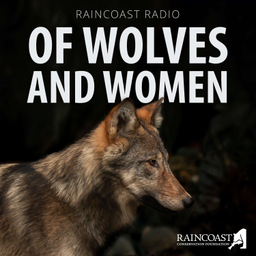
From the epic journeys of individual wolves to legendary exploits of pack leaders, the stories of mother wolves have not only captured the hearts and minds of conservationists and wildlife enthusiasts, but also sparked important conversations about coexistence, ecology, and the delicate balance between wilderness and humanity. Equally captivating and impactful are the stories of the women who studied these wolves. In this series, Raincoast's Wolf Conservation Program Director Chelsea Greer (https://www.raincoast.org/team/chelsea-greer/) will be talking to some amazing female scientists whose dedication and groundbreaking research have not only deepened our understanding of these remarkable creatures, but have also played a pivotal role in raising awareness and inspiring global conversations about the importance of wolves and wolf conservation. A big thank you to all our Raincoast supporters — your generosity makes content like this possible. Your donations also support our scientific research and help protect the lands, waters and wildlife of coastal British Columbia. Learn more and donate at raincoast.org. Raincoast Radio is created by Raincoast Conservation Foundation. It is produced by Sofia Osborne with additional audio editing by Oumar Salifou. Fact checking by the Raincoast team. The wolf photo in the podcast art is by Mark Williams. Music by Crypt-of-Insomnia and Luca Francini.
Who has been a guest on Raincoast Radio
Names identified in recent episode analyses. Showing up to five guests.
- Arielle Koenig
- Jason Hwang
- Jessica Hutchinson
- Tom Rutherford
- Murray Ned
Reach and audience
Public platform figures. Ratings count people who left a rating, not total listeners.
- YouTube views
- 157,261
- Score snapshot 15 Sept 2025
- Apple Podcasts (US)
- 5.0 / 5
- 2 ratings
- Spotify
- 5.0 / 5
- 10 ratings
Podcast Authority Score: 45 / 100
A composite of feed quality, social presence, YouTube performance and engagement. Read the methodology.
- Quality
- 42
- Social presence
- 0
- YouTube
- 86
- Engagement
- 32
Host of Raincoast Radio?
Claim your podcast to manage its listing and keep your show details accurate.
Pod Engine is an independent podcast discovery and analytics service and is not affiliated with or endorsed by this podcast. Artwork and show content belong to their owners. Full legal notice.
Explore this show
Podcast research with Pod Engine