- 22
- Episodes
- 2025
- First episode
About Raise Strong
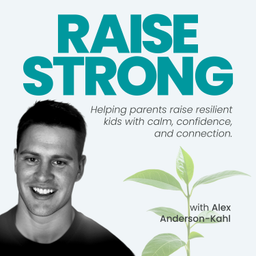
Raise Strong is the podcast that helps you turn parenting chaos into calm and power struggles into connection. Hosted by school psychologist and parent coach Alex Anderson-Kahl, each episode blends child psychology, empathy, and practical tools to help you respond with confidence, teach emotional regulation, and raise resilient, emotionally intelligent kids. Discover reflective discipline, gentle parenting, and mindset shifts that make every day feel more peaceful—because strong kids start with supported parents. This is Raise Strong.
- Publisher
- Alex Anderson-Kahl
- Category
- education · health & fitness · kids & family
- Language
- en
- Explicit
- No
- First episode
- 23 Oct 2025
- Latest episode
- 8 Jun 2026
Latest episodes
22 episodes in the feed.
8 Jun 2026
Episode 21 - Navigating the Complexities of Sibling Conflict
There’s a specific kind of exhaustion that only sibling fighting creates. It’s not just the noise. It’s not just the arguing. It’s not just the fact that they are fighting over a couch cushion, a snack, or who got the bigger half of a banana. It’s the fear underneath it. “Why can’t they just get along?” “Am I doing something wrong?” “Is this normal sibling rivalry… or is something deeper happening here?” In Episode 21 of Raise Strong, we unpack what sibling conflict is really communicating, how to tell the difference between normal rivalry and patterns that need more support, and how to stop seeing every sibling fight as a parenting failure. Because the goal is not to raise children who never fight. The goal is to raise children who know how to disagree, repair, and come back to each other. What You’ll Learn in This Episode In this episode, you’ll discover: Why siblings fight over things that seem small What normal sibling rivalry actually looks like Why fairness, attention, and nervous system overload often drive conflict When sibling conflict needs more adult support How to shift from referee to guide One question that can help you respond with more calm and clarity The Core Shift Sibling conflict is not automatically a sign that something is wrong. A lot of sibling rivalry is developmental. Your children are practicing some of the hardest relationship skills humans ever learn: Sharing space. Waiting. Negotiating. Handling jealousy. Repairing after hurt. Managing unfairness. Asking for attention without attacking someone else. That does not mean the behavior is okay. It means the behavior is information. Instead of thinking, “My kids are terrible to each other,” try shifting toward, “My kids are showing me the relationship skills they still need help building.” That shift helps you move from panic into guidance. What’s Normal in Sibling Rivalry It is normal for siblings to argue over fairness. Who got more? Who went first? Who sat closer? Who got the bigger piece? It is also normal for siblings to compete for attention, clash because of different temperaments, and struggle more during predictable stress points like after school, before dinner, bedtime, weekends, holidays, or family transitions. Normal does not mean harmless. Normal does not mean you ignore it. It simply means sibling conflict often reflects developing skills, tired nervous systems, and children still learning how to share space, attention, and family life. When Sibling Conflict Needs More Support Some sibling conflict needs closer attention. Notice patterns like: One child is always the target One child seems afraid of the other Conflict becomes physically unsafe or emotionally cruel One child constantly gives in to keep the peace Belongings, bodies, or emotional safety are repeatedly violated There is little or no repair after conflict The sibling dynamic is taking over your home Needing more support does not mean you have failed. It means the relationship system needs more structure, more guidance, and possibly more help than it is getting right now. You are allowed to take sibling conflict seriously without catastrophizing it. Your Role Is Not Referee. It’s Guide. Most parents get pulled into referee mode. Who started it? Who had it first? Who is telling the truth? Who deserves the consequence? But if your main role becomes referee, your kids learn to build stronger cases instead of stronger skills. The bigger goal is to become a guide. A referee decides who wins. A guide helps children learn how to handle conflict differently next time. Instead of only asking, “Who started it?” Start asking, “What skill is missing here?” That question changes the way you enter the moment. Your One Action Step This Week This week, when your kids fight, pause before you investigate. Take one breath. And ask: “What skill is missing here?” Maybe your children need help with space. Maybe they need help with turn-taking. Maybe they need help handling disappointment. Maybe they need help repairing after they hurt each other. You do not have to solve every sibling conflict perfectly. You just have to start seeing the fight differently. Sibling rivalry is not automatically a sign that your children do not love each other. Often, it is a sign that your children are still learning how to share space, handle big feelings, and come back together after conflict. That is not failure. That is development. Resources: The Meltdown Map: 5 Steps to Handle your Child's Big Emotions (https://www.weraisestrong.com/meltdown-map-page) - AlexAndersonKahl.com/meltdown-map 7 Simple Phrases to Help Your Child Calm Down Without Power Struggles (https://www.weraisestrong.com/7-simple-phrases) - Download your FREE guide now! - AlexAndersonKahl.com/7-simple-phrases Visit Our Website (https://www.weraisestrong.com/) - AlexAndersonKahl.com Calm Down Corner Essentials (https://bit.ly/48WbUUh) - https://bit.ly/48WbUUh If this episode helped you feel less alone in the middle of sibling conflict, make sure you’re subscribed to Raise Strong so you don’t miss what’s coming next. And share this episode with another parent who needs the reminder that sibling rivalry is not always a sign of failure. Because raising siblings who care about each other does not start with perfect peace. It starts with steady guidance. You’ve got this.
1 Jun 2026
Episode 20 - From Threats to Teaching: A New Approach to Parenting
Most parents don’t threaten because they’re trying to scare their child. They threaten because they feel out of options. You’ve asked nicely. You’ve explained. You’ve repeated yourself. You’ve tried to stay calm. And then your child keeps pushing. So finally, you hear yourself say: “If you don’t stop right now…” In Episode 20 of Raise Strong, we explore why threats may stop behavior in the moment, but often fail to build the skill your child needs for next time. Because your child doesn’t just need to stop the behavior. They need help building the self-control underneath it. What You’ll Learn in This Episode In this episode, you’ll discover: Why threats can create compliance without building self-control How pressure affects your child’s nervous system Why some kids escalate when threatened How to identify the missing skill underneath behavior What to say instead of “If you don’t stop…” How to use consequences that teach instead of punish A simple framework for building self-control over time This episode helps you move from threat-based discipline to calm leadership, clear limits, and skill-building support. The Core Shift Threats focus on stopping behavior. Teaching focuses on building the skill underneath it. When your child refuses, melts down, argues, hits, or pushes a limit, the deeper question is not: “How do I make this stop?” The better question is: “What skill is my child missing right now?” Maybe they need help with transitions. Maybe they need practice tolerating frustration. Maybe they need a better way to ask for help. Maybe they need support calming their body. Once you can name the missing skill, you can start teaching it. Why Threats Backfire Threats can work in the moment. Your child may move faster. They may stop talking back. They may hand over the toy. They may get in the car. But threats often teach your child how to respond to pressure, not how to regulate themselves. Over time, this can create a loop: Threat. Compliance. Resistance. Repeat. The child waits until the adult gets intense before acting. The parent feels like escalation is the only thing that works. And the relationship starts revolving around pressure. Self-control grows differently. It grows through calm limits, practice, support, and repeated moments where your child learns: “I can pause.” “I can handle this feeling.” “I know what to do next.” What to Do Instead Instead of threatening, start teaching. Try looking underneath the behavior and asking: Is this a transition problem? Is this an impulse-control problem? Is this a frustration-tolerance problem? Is this a communication problem? Is this a regulation problem? Then teach the replacement behavior. Instead of: “If you don’t turn off the screen, you lose it tomorrow.” Try: “Screen time is done. You can turn it off, or I can help.” Instead of: “If you hit your brother again, you’re done.” Try: “I won’t let you hit. We’re going to separate bodies and calm down.” Instead of: “If you don’t get your shoes on, no tablet.” Try: “Shoes are next. Do you want to do the first one, or should I help you get started?” Clear limits still matter. But the goal is not fear. The goal is learning. Consequences That Teach Consequences still matter. Boundaries still matter. Follow-through still matters. But a consequence should help your child understand what happened, take responsibility, and practice the skill they need next. A teaching consequence is: Connected Respectful Skill-building If a toy is thrown, the toy is put away for now. If screen transitions are hard, you practice stopping with a timer. If someone gets hurt, bodies separate, everyone calms, and repair happens. The strongest consequences are not the ones that scare children into compliance. They are the ones that help children build the skills they need for next time. RESOURCES: Stop Saying “Hurry Up.”Say This Instead. (https://www.weraisestrong.com/say-this-not-hurry-up) - https://alexandersonkahl.com/hurry-up/ The Meltdown Map: 5 Steps to Handle your Child's Big Emotions (https://www.weraisestrong.com/meltdown-map-page) - AlexAndersonKahl.com/meltdown-map 7 Simple Phrases to Help Your Child Calm Down Without Power Struggles (https://www.weraisestrong.com/7-simple-phrases) - Download your FREE guide now! - AlexAndersonKahl.com/7-simple-phrases Visit Our Website (https://www.weraisestrong.com/) - AlexAndersonKahl.com 3 Mistakes That Make Sibling Fights Worse... (And What to Do Instead) (https://alexandersonkahl.com/3-mistakes/) - https://alexandersonkahl.com/3-mistakes/ Calm Down Corner Essentials (https://bit.ly/48WbUUh) - https://bit.ly/48WbUUh Your One Action Step This Week The next time you feel a threat coming, pause and ask yourself: What skill is my child missing right now? Not: “How do I make them stop?” But: “What do they need to learn?” Then try one small shift from threat to teaching. You don’t have to change every hard moment this week. Just notice one moment where you would normally threaten, and ask: What skill can I teach here? That is where self-control begins to grow.
11 May 2026
Episode 19 - Unlocking Emotional Safety in Parenting: Three Conversations You Need
A parent once told me something that has stayed with me. She said, “I feel like I only talk to my child when I’m correcting them or asking them questions.” And honestly? That is more common than you think. In the middle of busy days, most parents naturally default to logistics. Did you brush your teeth? Where are your shoes? Did you finish your homework? Please stop touching your brother. We’re going to be late. None of those things are wrong. They are part of parenting. But when most conversations become reminders, corrections, and questions, something subtle can happen over time. Your child may start to experience your voice as pressure. In this episode of Raise Strong, we explore three small, repeatable conversations that help your child feel safe, seen, and emotionally connected at any age. Because emotional safety is not built in one big dramatic moment. It is built in small, steady moments your child learns to trust. What You’ll Learn in This Episode In this episode, you’ll discover: Why emotional safety is built through repeated conversations How daily logistics can unintentionally crowd out connection What to ask instead of “How was your day?” How repair strengthens trust after hard parenting moments Why support conversations help children name what they need How to build openness without forcing deep talks This episode gives you three practical conversations you can start using this week to strengthen trust, connection, and emotional safety in your home. The Core Shift Most parents are talking to their children all day. But not every conversation builds connection. Some conversations manage behavior. Some move the routine forward. Some keep the day from falling apart. Those conversations matter. But children also need conversations that communicate: “I want to know you.” “We can come back together after hard moments.” “You do not have to carry hard things alone.” That is where emotional safety begins. The Three Conversations 1. The Inner World Conversation This conversation helps your child feel known beyond their behavior, tasks, and responsibilities. Instead of asking, “How was your day?” try: “Tell me one thing from today I wouldn’t know unless you told me.” This opens the door to your child’s thoughts, feelings, worries, and small moments. It tells them: “I am interested in your inner world.” 2. The Repair Conversation Every family has hard moments. You lose your patience. Your child yells. A boundary turns into a power struggle. Someone says something they wish they hadn’t said. Repair teaches your child that connection can survive conflict. You might say: “I want to come back to what happened earlier. I didn’t handle that the way I wanted to.” Repair does not mean removing boundaries. It means reconnecting before reteaching. 3. The Support Conversation This conversation teaches your child how to name what they need. You might ask: “What is one thing coming up this week that you want support with?” Or: “Do you want me to listen, help solve it, or just be nearby?” This helps your child learn that support can look different in different moments. Sometimes they need advice. Sometimes they need space. Sometimes they need comfort. Sometimes they just need you to stay close without fixing anything. Your One Action Step This Week Choose one of the three conversations and try it once this week. You do not need to do all three perfectly. Start small. One conversation. One moment. One opening. Try saying: “Tell me one thing from today I wouldn’t know unless you told me.” Or: “I want to come back to what happened earlier.” Or: “What is one thing coming up this week that you want support with?” Emotional safety is not built through perfect parenting. It is built through small, steady moments your child learns to trust. Why This Matters Your child does not need every conversation to be deep. They just need to know there are safe places to be honest. When you create those places consistently, you teach your child: “You can come to me.” “We can repair hard moments.” “You do not have to carry everything alone.” That is the foundation of trust. And trust is what helps children open up over time. RESOURES: 3 Mistakes That Make Sibling Fights Worse... (And What to Do Instead) (https://alexandersonkahl.com/3-mistakes/) - https://alexandersonkahl.com/3-mistakes/ Stop Saying “Hurry Up.”Say This Instead. (https://alexandersonkahl.com/hurry-up/) - https://alexandersonkahl.com/hurry-up/ Calm Down Corner Essentials (https://bit.ly/48WbUUh) - https://bit.ly/48WbUUh 7 Simple Phrases to Help Your Child Calm Down Without Power Struggles (https://alexandersonkahl.com/7-simple-phrases/) - Download your FREE guide now! - AlexAndersonKahl.com/7-simple-phrases Visit Our Website (https://alexandersonkahl.com/) - AlexAndersonKahl.com The Meltdown Map: 5 Steps to Handle your Child's Big Emotions (https://alexandersonkahl.com/meltdown-map/) - AlexAndersonKahl.com/meltdown-map Next Week on Raise Strong Episode 20 – Stop Threatening. Start Teaching: What Actually Builds Self-Control Next week, we’re talking about a pattern many parents fall into when they feel overwhelmed: Threats. We’ll explore why threats may stop behavior in the moment, but often backfire over time. You’ll learn how to shift from pressure and punishment toward teaching real self-regulation. If you’ve ever said, “If you don’t stop right now…” and then wondered why it didn’t actually help, this next episode is for you. If this episode helped you, make sure you’re subscribed to Raise Strong so you don’t miss what’s coming next. And if you know a parent who wants more trust, openness, and emotional safety at home, share this episode with them. Raising strong kids doesn’t start with perfect parenting. It starts with steady connection. You’ve got this.
Contact Raise Strong
- Guest appearances
- Does not typically book guests
Based on episode analysis; this does not confirm that the show is currently accepting guests.
Host of Raise Strong?
Claim your podcast to manage its listing and keep your show details accurate.
Pod Engine is an independent podcast discovery and analytics service and is not affiliated with or endorsed by this podcast. Artwork and show content belong to their owners. Full legal notice.
Explore this show
Podcast research with Pod Engine