Stories from the days when rock was young – told by musicians from my hometown of Winnipeg (a.k.a. the rock and roll centre of Canada). Based on the book, featuring interview excerpts, out-takes and other delights <br/><br/><a href="https://larryhicock.substack.com/s/raised-on-rock-and-roll?utm_medium=podcast">larryhicock.substack.com</a>
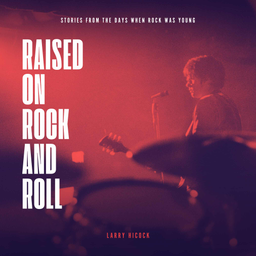
Raised on Rock and Roll Podcast
Claim This Podcastby Larry Hicock
7 episodes
Updated Daily
Accepts GuestsHas SponsorsLocation 🇨🇦
1
Podcast Authority
BetaPoorBased on show quality, social media presence, reviews, charts, and more

Quality2
Social0
YouTube0
Engagement0
Podcast Overview
Stories from the days when rock was young – told by musicians from my hometown of Winnipeg (a.k.a. the rock and roll centre of Canada). Based on the book, featuring interview excerpts, out-takes and other delights <br/><br/><a href="https://larryhicock.substack.com/s/raised-on-rock-and-roll?utm_medium=podcast">larryhicock.substack.com</a>
Language
🇺🇲
Publishing Since
1/5/2025
Unlock The Full Podcast Authority Score Report
See how your podcast performs across key metrics
1
Podcast Authority
BetaPoorBased on show quality, social media presence, reviews, charts, and more
Quality2
Social0
YouTube0
Engagement0
4
Excellent Areas
2
Good Performance
13
Growth Opportunities
excellent
Episode Length
25 minutes
Performing excellently!
good
Show Notes Quality
3.0/5
Recommendations available
Unlock the full report to see detailed tips
poor
Publishing Consistency
Every 49 days
Recommendations available
Unlock the full report to see detailed tips
+16 More Metrics
Unlock comprehensive insights including:
- • YouTube presence analysis
- • Social media reach metrics
- • RSS compliance scoring
- • Podcast 2.0 features
- • Technical standards
What's Included in Your Full Report
Detailed Analytics
- Complete breakdown of all 19 authority metrics
- Personalized recommendations for each metric
- Industry benchmarks and comparisons
- Technical RSS feed analysis and compliance scoring
Growth Strategies
- Step-by-step action plans for improvement
- Quick wins to boost your score immediately
- Pro tips from successful podcasters
Get your free podcast insights report
See how your show performs across every key metric
Instant delivery
No spam
Attract Better Guests
High authority scores make your podcast more attractive to industry leaders and influencers who want to appear on credible shows.
Secure Sponsorships
Sponsors look for podcasts with proven authority and engagement. Your score demonstrates your podcast's value to potential partners.
Grow Your Audience
Understanding your strengths and weaknesses helps you make data-driven decisions to expand your listener base effectively.
1 verified contact email on file for Raised on Rock and Roll Podcast
Pitch yourself as a guest, propose sponsorships, or reach out directly to the host.
Recent Episodes
November 20, 2025
Mover. Shaker. Rocker.
<p>I recently posted a story about <a target="_blank" href="https://larryhicock.substack.com/p/a-little-sugar-a-little-spice-5b9">the making of Sugar ‘n’ Spice</a>, and Michael Gillespie’s instrumental role (no pun intended) in that band’s remarkable journey. This podcast features the man himself, in his own words.</p><p><strong>Raised on Rock and Roll – stories from the days when rock was young, and my hometown Winnipeg was the rock and roll centre of Canada…</strong></p><p><strong>I’m Larry Hicock, author of Raised on Rock and Roll, the book. In today’s podcast, one of Winnipeg’s preeminent behind-the-scenes movers and shakers, Michael Gillespie…</strong></p><p>Gillespie: I was working at an electronic shop. I was hanging out at this radio station. I was managing the band. And I was designing and building things. My attendance through junior high and high school was spotty, because I was taking university courses at the same time. With some support from a couple of good teachers – they allowed me to do that. So I was actually taking Fortran computer programming at the University of Manitoba when I was in grade nine….</p><p><strong>Electronics, design and engineering, computer programming (in the early </strong><strong>sixties</strong><strong> no less). Put all this together and you have the makings of a true super geek, a dyed-in-the-wool propeller head. But then there’s that clue in Michael Gillespie’s remarks that gives lie to the stereotype. What’s this about managing a </strong><strong>band</strong><strong>?</strong></p><p><strong>Micheal’s technical and entrepreneurial chops brought him industry-wide acclaim and a thriving international business. The audio components and systems he designed and manufactured are found in the studios and control rooms of broadcasters all over the world. His recording equipment has been used by such major artists as the BeeGees, Fleetwood Mac, Tom Petty, Barbara Streisand, Neil Diamond and countless others.</strong></p><p><strong>And Michael’s great successes might never have happened without his passion for the music, and the radio stations he heard it on, in the heady days of sixties rock and roll…</strong></p><p>My mom used to listen to 40s classics, and symphony, and I just became very attracted to music at that time. I got into listening to the radio. As a kid, I would repair old wooden radios, the types of size of small refrigerators. And some of them had a really good sound. So I would recall when blue suede shoes came on, you know, I would crank it up and and enjoy that.</p><p>But unfortunately, I fall into the same category as every other person I know, that my big epiphany for music was February 1964 on The Ed Sullivan Show. Prior to that I had actually been keen enough and interested enough that I’d been ‘interning’, I’ll say, is a nice way of putting it – at CKY radio. From about the time I was 14. It was in love with the disc jockeys. I was in love with the concept. I became enamoured – I became in lust with broadcasting and music.</p><p>I would go and spend my time after school in the evenings sitting in the control room at the radio station. I go down in the daytime on weekends, I would go out to remotes that they did – I’d sit in the booth at champs Kentucky Fried Chicken with Darryl Birmingham while he spun records to the drive-in crowd at the place. I would ride in his convertible or Chuck Dan’s convertible out to the sock hops or the dances that they hosted.</p><p>And that was at age 15. And as enamoured as I was with that, that was going great, it was the Ed Sullivan Show that just changed my my life. Like everybody else – well, not everybody else I know – but the following Monday morning I went to junior high school with my hair combed forward, you know, simply because the Beatles wore their hair forward. And I start getting sent to the principal’s office from that point until I left school, for being ‘out of sorts.’</p><p>I guess at a certain point during that period, while at university, I became a disc jockey at student radio at U of M. It was not a broadcast, it was actually wired across campus. So it was about as exciting as playing records on the PA system in high school. But I did that too, and did some of my first recording there. So it came from a love of music from my mum, and then just through association with a lot of very influential radio people.</p><p>I’m not a naturally talented musician. It’s real hard work for me and I personally honestly admit I don’t have the discipline to practice and learn properly, but I fell in love with it. With the first real band I got involved with, watching the other guys in the band, I said well this would be a good way to get a girlfriend. And because I couldn’t play anything else, I decided I could probably play bass. I didn’t know how girls viewed bass players at that point. It was a Hofner bass, an original Hofner bass, Beatle bass, and I got really good. I could pick out the bass lines on the records I heard, but I didn’t have the stamina to play them for the entire length or time with the people that I happened to be around.</p><p>So – and this is where I did have a major epiphany – I decided I made a better manager than a bass player. And I took over management of the band. My entrepreneurial skills, which I do admit to having, came to the fore, and I booked the band and we played two or three times a week. Neil Young is correct. There were 200 pounds in Winnipeg at that time, we were the Liverpool of Canada. A community club, a Kiwanis hall, a church basement, a hockey rink – we would play anywhere – but we were playing about three times a week. And I managed to get our rate up. I was the salesman, I had to convince them that we were worth the money. We were getting $75 to $80 a night for a five piece band with a manager. And at that time, I remember clearly, I had a separate part time job doing electronic repair. And at that time I was being paid 50 cents an hour. So, put it into perspective of how many days a week did I have to earn to get the 10% I got off of one gig. Seven and a half bucks. Well, that was a long working day. That was two days…</p><p><strong>That first band, the Griffins, started in 1966. They were still doing well in 1968, but for Michael, things weren’t going well enough. That’s when he had another one of his epiphanies…</strong></p><p>The one thing that I recognized is that our success and every other band success was our enemy. Because we had so many competitors. We couldn’t raise our rates, we couldn’t get more money because the Mongrels would play for the same rate, or the Other Five would show up, you know, for nothing. It got tough. And that the material, the genre that everyone’s playing was generally the same. So you could go to the same community club every week and hear a different band play, and it was the same music, which wasn’t very creative. And so it was difficult for us to stand out. We’re all long-haired, moustached, sideburns like crazy, we had more sideburns than hair… Wearing tweed British jackets and slacks and Beatle boots, you know – but I mean, if you blinked your eyes, it could be the Mongrels. They looked the same…</p><p>I said, you know, the music that’s beginning to become very popular is Motown. And there are a lot of female groups coming from there with female harmony, and there isn’t a single band out of our 200 bands that had a female member let alone a female singer or musician. We should find ourselves a really good quality female singer, and we could begin to take on a different genre and be unique amongst the Winnipeg bands.</p><p><strong>Gillespie put some of the guys from the Griffins together with some new musicians and started a new band. It would have a new carefully designed approach, complete not just with one female singer but three. They called it Sugar and Spice.</strong></p><p><strong>I wrote a full chapter of my book (plus a Substack feature) on the making of this band and just how close they came to breaking out internationally. It’s a story in itself.</strong></p><p><strong>For two years Gillespie navigated Sugar and Spice throughout that band’s roller coaster ride. But starting in 1970, his band-managing days would take a back seat.</strong></p><p>Randy Moffat when he hired me for the job. He says you have two jobs here Michael he says you keep us on the air. Because if we’re not on the air, the 75 people in this building aren’t earning a wage. That was a good point. And he said I want you to make us sound as good as possible. If you can accomplish those two things, your time is your own. You come and go when you want to do what you need to do. You do those two things, you’re doing your job. That gave me the free rein to research. And on CKY’s dime I did a lot of design and fixed, figured out, a lot of things. It was having the opportunity to be there that gave me the ability to research and design a product the way I was trained to design product, and I did it. So I built, installed, designed or renovated 30 AM, FM, TV and recording studios in Canada. That’s my broadcast package.</p><p><strong>That broadcast package took Michael well beyond Winnipeg, soon enough beyond Canada, and soon after that, beyond the broadcasting industry. The same entrepreneurial chops he’d honed during his rock and roll run would now take him, his products, and his new businesses, into the stratosphere.</strong></p><p>I’d go into a station and, ‘We need this’ – well, there is no such products by design, we build it. So at a certain point, I end up with a catalog of products that I built special for these places. But now people are phoning me and saying ‘I need one of those things that you put in CKLW,’ or, you know, CKCK or whatever it is. And so I’d be able to sort of piecemeal start to market them. Well, pretty soon I was hiring people to build product so I’d have some when people asked me for them. I wasn’t actually marketing it. So at some point I decided, you know, these things really do have a market. So I went to the NAB show and I showed it to North America’s broadcasters all at once. And it just – straight up – I was doing stuff for everybody.</p><p>The product I was building to make things sound good on the air – known generally in my terms as audio processors – limiters, compressors, expanders, equalizers, that kind of gear.</p><p>I had taken everything I learned and I built it into a single product, and I took that to NABA, the national radio broadcast association in Atlanta, in about 1975. And I showed these and I sold 14 units on the spot. I was pricing them at about a thousand or fifteen hundred dollars or something but I sold them instantly. These people never seen them. Who do I sell them to? WNBC, WCBS, WPLJ, the biggest stations in North America.</p><p>But then people began to say, Oh, I heard WP LJ is sounding really good. And he says he’s got one of your whatchamacallits, and he says well I want one too. Then I had Bonneville Broadcasting come to me. They have beautiful music stations across North America and they say, Hey, we want a stereo version of that and we have 47 stations. And then Capital Cities Broadcasting comes, and then Voice of America calls, and then Radio Free Europe calls. My stuff became the stock standard product in NHK Japan. I was written up in the Winnipeg Free Press: “Canadian sells electronics to Japan.” They went in all their TV and their national – It was like the CBC of Japan, had my gear in stock standard product throughout all their facilities.</p><p>At one of the shows, Stevie Wonder came by and he had with him a Capitol Records guy and the Capitol – Stevie’s blind but the guy says you gotta see this product, and Stevie, he’s putting his fingers on the dials, and he says this is the device that created the disco sound. Capitol Records are the guys who made the records and they used my product to make those disco records. Middle Ear Studios, owned by the BeeGees had all my stuff. Criteria Recording – Barbra Streisand – had all my stuff. Fleetwood Mac… Every name I can think of, used my stuff…</p><p>I’ve been building electronic stuff forever. In the Griffins, my guitar player said, What’s that song, or what’s that noise, in Satisfaction? How does he make that guitar sound that way? And I did a little research and I said, it’s a little amplifier that’s overloaded and it’s causing spikes and square waves – and I ended up building him one. We didn’t have pedals back in those guitar pedals, so I built it into his Gretsch Country Gentleman guitar with a battery pack and changed the option of this little switch up here, that would switch that effect on. So I built a fuzz tone in 1964 or 65. And I continued to do that wherever I saw… – People have asked me what is it that I do? I do? And in fact, the answer that is closest to the truth is, I’m a new products guy. The new product can be designing and building a fuzz tone. A new product can be designing and delivering a band. In later life, the product can be creating and delivering a Montessori school. Forty, thirty-nine years ago today, I started that project. It continues. For forty years, it’s 60 kids a year go through it. I did that.</p><p>I’ve designed and built products to meet different needs to – form follows function. I’m classically trained as a new product guy. Design management is something that I do. And it’s perhaps the structure behind some of the things I told you – you know, how are you going to deliver it? How are you going to support it? You know, source the parts? What’s the follow on, you know, what’s the distribution structure? These are all questions for any product, whether it’s a band or a school or a loudspeaker. I’m a new products guy. That’s what’s at the core of everything I’ve done.</p><p><strong>Michael Gillespie built a thriving business – several companies actually – serving broadcasters, recording studios and corporate clients across the globe. Then in 2004, at the height of his career, he suffered a stroke that almost killed him. His doctors told him to put his affairs in order. Thanks, he said, but I’ll do things on my </strong><strong>own </strong><strong>timetable.</strong></p><p>My recovery period from my stroke was six years, and it was terribly dark and awful and depressing. And suicide was an option. What saved me was music. I hadn’t thought of this till you asked the question, but music is the reason I’m alive. What calmed my spirit was listening to music.</p><p><strong>Today, more than twenty years after his near-death encounter, he’s going strong. He did step back from his business affairs, but he remains as close to music, and as grateful, as ever.</strong></p><p>Having discovered music, the making of music, the true joy of listening to music, that’s practically a religious experience for me. I enjoy music because it takes me to another place, which I can’t describe where or what that place is, but it elevates my brain. And some of it – Leonard Cohen, You Want It Darker is a tune that I listen to a lot at the moment. But in the same breath, I’d like to hear Sam and Dave. It’s two very different things. And they both do different things to me.</p><p>Sometimes I’ll hear something in the background on the radio. I’ll hear something like Dancing in the Street and I’m teleported to 1965 at the River Heights community club, watching my band come out on the stage – or opening for the Who, or Sonny and Cher or somebody, and the room explodes with that. And I love it all….</p><p><strong>You’ve been listening to the Raised on Rock and Roll podcast, featuring stories and interviews from my book. Volume One of Raised on Rock and Roll is out now; Volume Two is coming later next year.</strong></p><p><strong>You heard musical excerpts by Sugar n Spice courtesy of Michael Gillespie. Taking us out, our series theme courtesy of Gord Osland and Steve Hegyi. I’m Larry Hicock.</strong></p> <br/><br/>Get full access to Raised on Rock and Roll at <a href="https://larryhicock.substack.com/subscribe?utm_medium=podcast&utm_campaign=CTA_4">larryhicock.substack.com/subscribe</a>
September 28, 2025
From The North End With Love. And Brass Knuckles. And 4-Part Harmonies.
<p><strong>From the North End With Love. And Brass Knuckles. And 4-part Harmonies.</strong></p><p><strong>Raised on Rock and Roll, stories from the days when rock was young – and my hometown Winnipeg was the rock and roll capital of Canada….</strong></p><p>I used to try and force myself – I was working at a day job, too – but I'd come home and I used to try and write four or five songs every day. Just for practice. I was trying to teach myself phrasing and whatnot. I didn't have anybody showing me – like how can you? How could I show you how to write a song – you can't, it's got to come from your own head. So I would just do that, and every once in a while I’d come up with something that I liked..</p><p>So anyway, I had this whole big pile of songs, and I’d put them in a briefcase and I used to go around to there were different groups, like the Jury, that were playing around in the city, like the Jury, and I’d sit down with my guitar and I’d play them song after song after song and see if there was anything they liked. And the last one I sang for the Jury was WhoDat, so they recorded it. So yeah, that worked out okay.</p><p>And then Donnie McDougall, him and I wrote a few tunes one morning, and he ended up going to Vancouver and joining up with a group called Mother Tucker’s Yellow Duck. They were a big band on the west coast. And so they recorded a couple of my songs – Donnie and I wrote two of the songs, yeah.</p><p><strong>Singer, songwriter Bill Iveniuk is a product of the times – in his case, coming of age in the mid-1950s. And he’s a product of his environment. He was born in Point Douglas, a working class neighbourhood right next to Winnipeg’s infamous North End and just as tough. He was raised alongside his seven siblings. His father, known by most as Big Jim, was a tradesman, a mechanic, a some-time fur trapper. Back in the day, an amateur boxer. He did a little time for punching out a cop. As you might imagine, Big Jim was a big influence on young Bill.</strong></p><p>It was like the Bowery boys or something that, you know, we were kids, we did a little stealing, like in gardens and that, like cucumbers and stuff, bring them home for our parents. Like, my dad was a labourer, so I mean he wasn't making a whole lot of money. So he would do his regular job at the city, and then he would fix cars. And so we'd be working, you know, like with my dad, like working on cars and stuff like that, you know, he’d say, you know, pass the half-inch socket, and you’d be daydreaming – like you’re a kid, right? And so what he used to do is, he used to get the metal part of the hammer in his hand and whack you in the forehead with the handle. Wham! Wake up, y’a*****e. Like, I had a lot of welts on my head. And my old man was the kind of guy like – he didn't have time to argue with you, ‘cause there's eight kids and they’re all running around, bouncing off the walls and what-not. So it was, you do this or else it was wham, right? But there was no problem. We had a great childhood, right? Like I didn’t see anything wrong with it…</p><p>When I was about, maybe eight or nine, I got a paper route. Like 75 papers, I was doing the whole neighbourhood with the paper route, in the winter – you know what the winters are like in Winnipeg – and so winter and summer and all that. Then I got a job in the bowling alley setting pins. And a lot of the guys – you had to set pins, you had to sit in the back and set the pins physically, there was no automatic stuff there – and there was a few of the guys who didn't have any front teeth, like from the pins, taking them out, right? Whang, there goes your teeth, right? And sometimes you'd be in the pit, and some arsehole would throw a ball down while you were in there, you know, showing off to his girlfriend or something? So we used to take the ball and come out from behind the screen and whip it overhand back at the arseholes, right?</p><p>And yeah, you’d have all these different kinds of jobs. I got a job in a factory that was making mattresses right. And so I was working away – the first day, right? I was about two hours into the job – and one of the bosses comes up to me and he says, you know how to run a forklift? And I thought I should know, right? I should know how to operate a forklift. I guess I was about 14. He said I want you to get a load of these springs and bring them back to these tables. So I said ok I’ll go get ‘em. On the forklift, the big pedal is the gas and the little pedal is the brake. And I got confused when I was driving. I got ’er going, right, and like somebody came across from a different way, right, like an intersection kind of thing? And I went to step on the brake and I goosed this forklift and went full speed into a pile of springs, and smashed all these springs. So I guess I was on the job for about two and a half, three hours and got fired. And that afternoon, I got another job in a pickle factory. So it was like, you could get a job just like that. And so I had those kinds of jobs.</p><p>Still in school, these are just summer jobs. And then I got a job – my dad got me on at Burns – remember Burns? And the job was like making brine for the hams. What you had to do, you go into this room, and it would be full of salt. And you'd be in there, you'd be shovelling the salt into this big vat on the other side of the wall. You’d have to do that all day…</p><p><strong>When Bill and his best buddies started junior high over in the North End, they found themselves in a whole other world. And it wasn’t because of their new school</strong></p><p>So we were gong to Aberdeen School, and there was a restaurant just around the corner on Selkirk Avenue called Nancy’s. And Nancy's was the hangout, like one of those Happy Days restaurants, you know, 10-cent milkshakes and all that – and all kinds of lunatics, you know, hanging out in the place.</p><p>Like the north end, like on a weekend, like on a Friday night or something, could swell to like almost double the population, because the motorcycle gangs from Transcona would come to Nancy’s – riding their motorcycles up Selkirk, with their arms folded, like no hands, and going like 60 miles an hour, you know, coming up the street, right? Just like in The Wild One, like Marlon Brando, you know, they would emulate those, you know, like what they see in the movies, right. And, you know, with the cigars. And then they’d stand around and some of them would be pushing weights and acting tough and and whatnot. And then, Hey Bill, want to go for a ride on the motorcycle? You jump on the back and you’re going like 80 miles an hour down Selkirk. I’d never been on a motorcycle before, right? And I was like, Oh my God, I mean, I’m gonna die, right? But yeah, and so I mean – but everybody, like once in a blue moon there'd be a gang war, like with chains and all that stuff, right? But that was just, that was rare, that never happened that often. I mean, it was usually one-on-one or a fight in the canteen. Or, you know, and it was usually like one hit – that would usually stop the other guy, right?</p><p><strong>It’s pretty cool to be on the good side of the bikers, but there was another crowd hanging out at Nancy’s too. Bill Iveniuk and company fit right in with this one.</strong></p><p>A cappella vocal groups – groups sort of like the Four Lads but maybe before that; the Diamonds, sha-boom sha-boom, like those songs – and so in Winnipeg, groups were forming and they would sing those songs. And the odd group would write some with their own material, very little of that, but there was all… – like there must have been 35 groups in Winnipeg at the time, really good groups…</p><p>There was a group called the Angels. They were probably one of the best groups in Winnipeg, and the lead singer of that group was called Walter Teske. And Walter Teske, he was sort of like, he was a teacher. he would get the young kids – like he was maybe two or three years older than us – and he would teach us. He would say ok, you sing this part, and he would teach you that part, and you, Bill, you sing this part, and Kody, you sing this part – and so the three or four of us would go and we’d get this harmony – and it was like, wow, we didn't know we could do this. Right. And he would just constantly be teaching us. And then he would go and do his own thing with his own group, right.</p><p>And so he called me up one time and he said, Bill he says, I'm going to come over with a few beers. And he says I got a guitar here for ya. He says, like, it’s about time you learned guitar, right. So my dad was sitting at the dining room table, looking out the window into the lane, and here comes Walter Teske with a garbage bag, a double garbage bag. I have 70 beers in the garbage bag. Well, my old man liked to drink, right? So he ‘C’mon in Walter’– quack quack quack.… So we go downstairs, we're going he's teaching me all day if I didn't have a pic to use the paper from a match book, and you know if we're playing guitar and teaching the chords…</p><p>He was the key for me, to have an interest. like, it's like, once you start once you start playing an instrument, you started seeing the possibilities that could open other doors for you, right? – with girls, and or to make a few bucks, right? So that's, like Walter Teske was a huge important part, you know, like in my life.</p><p>I was a kid, right, and he was an older guy, right? And he wasn't hanging out with me. He was just, he just liked me. He liked the way I sang, he liked my attitude. He liked my family, like, you know, my dad, and the friends that I was hanging around with. It was just that it was a community right, it was like – there was no television. You know, there was like, no video games, nothing, so people – how were they spending their time, right, like what were they doing? They were outside. They were interacting. There was community.</p><p>When I was 17, I wasn't doing well in high school. I didn't give a s**t, right. And so my dad sat me down, my mom was there, and my dad sat me down and said, ‘Okay, you've got three choices. One, you can join the army. Two, you can take a trade. And three, you can get the hell out of the house. Okay… The army? Get the hell out of the house? I’m 17, where the hell am I gonna go, right? Although a lot of people have gone that route. But – so my mom goes, ‘He's gonna take a trade, he's going to be an electrician.’ Okay, so then I started taking my apprenticeship as an electrician.</p><p>And so when I got married in 61, I was taking my apprenticeship, I was making 77 cents an hour, and married, right? I mean, s**t, man. I know it's a long time ago. And I know 77 cents an hour is maybe like a buck fifty now, but it's still no big deal, right? It's still garbage. You're still rolling your own, you can't buy a pack of weeds.</p><p>So yeah, here I am, married, 77 cents an hour, writing these songs, just getting fat. And Billy MacDougall – Donnie MacDougall’s brother, he was a drummer – he phoned me up and he said, there's a girl that's come into town and she's got an acoustic guitar. And she's got a de Armond pickup that goes into the acoustic guitar, but there’s a short in it or something, and she doesn't have an amp, and I had a Rickenbacker guitar. And he said, do you think you could bring your electric guitar over and let her use it?</p><p>Well I was smitten when I saw her. She sang, she was like a Joan Baez kind of thing, you know –hair down to her arse and sang fairly well, I thought, a good singer, and I’m saying, wow, like I wanna spend some time with her. And one thing led to another. And she said to me, Well, okay, Bill, if you want, get yourself a bass, I’ve got a job in Churchill, and you can come with me, I’m playing in the hotel there. So I didn't have any money – and first of all I had to leave my wife…So there was a lot of things that had to happen, right?</p><p>And I was working at the railway and I asked the boss if I could get time off because I had to go to Churchill. And he said, no no, you're too important, we need you here, you know? So I said, Okay, I'll see you later. And I just left my tools and walked out and went to Churchill.</p><p>But I didn't have the bass or the amp. And it was like 800 bucks, right? And so then my dad, who was really strict with me on everything, he just said to my mum, Give him the money, for the bass and the amp. But my dad really loved music, right? And he said, let him go…</p><p><strong>Heading up to Churchill Manitoba with his new bass and amp and his new partner, 26-year-old Bill Iveniuk had ten years of songwriting behind him, but he was about to perform in front of an audience for the first time since elementary school. Over the next fifty-plus years, he would more than made up for lost time…</strong></p><p><strong>Bill’s musical adventures are featured in two chapters in the first volume of my</strong><strong> </strong><strong>book Raised on Rock and Roll – and in another chapter in the forthcoming volume two.</strong></p><p><strong>You’ve been listening to the Raised on Rock and Roll podcast, with stories and a sampling of music by Bill Iveniuk.</strong></p><p><strong>Taking us out, our series theme courtesy of Gord Osland and Steve Hegyi.</strong></p><p><strong>I’m Larry Hicock.</strong></p> <br/><br/>Get full access to Raised on Rock and Roll at <a href="https://larryhicock.substack.com/subscribe?utm_medium=podcast&utm_campaign=CTA_4">larryhicock.substack.com/subscribe</a>
September 7, 2025
Let's Get This Show on the Road
<p><strong>Raised on Rock and Roll – stories from the days when rock was young, and my hometown Winnipeg was the rock and roll centre of Canada.</strong></p><p>Marty Kramer: I was the kind of guy that my parents were old school and they said, Oh, guess what? We've got an instrument for you. We're going to give you lessons – violin. Great. So I said look, Dad, I don't want to play the violin. He said you're gonna play the violin. In those days, you never bought the violin. We rented it. I used to go for lessons at a music store on MacPhilips and Aberdeen or something, in a building. I go there, I hated it. He dropped me off. And then he'd go away and an hour later he comes back. Well, I knew if I didn't go in, I'd be in big trouble. So I went in, I'd sit there, your teacher was very good. They show you how to resin the bow and hold it under your chin and start he and all this and that wasn't for me. I think I lasted… one for sure. maximum two lessons. That was it. No more violin. Then I watched these guys playing guitar. I watched these guys playing drums. And of course, they're honing their skills. I wasn't really looking for, nor were they looking for, somebody to join their band. They were looking for somebody to get them sort of exposed and get out there making money.</p><p><strong>Meet Marty Kramer – ex-violinist and soon to be go-to band manager, tour manager, artist manager – for anybody who’s anybody, or wants to be.</strong></p><p>One thing led to the other, I started talking to guys who were in bands or wanted to be in bands. And I said, Well, look, maybe I can get you into our school. I talked to the social committee, this that, next thing I know, I'm the guy that sort of placing the bands in a two or three mile radius at the schools and everything. Then I found out that the churches had halls and that they could provide the same type of thing. So when you could offer an agenda to the school guys – that on a Friday they could strut their stuff, on a Saturday, maybe even a Sunday afternoon in the park or something – you ended up getting all these phone calls. And hey, what's what.. and I can remember working bands for $5, the band playing for five hours, me getting 10% of $5, which was 50 cents. Now 50 cents in those days when you got $1 on the weekend allowance from your parents 50 cents was good. You were making money.</p><p>So if I worked Friday and Saturday, being around hanging around with these guys doing their thing with them, not playing musical instruments or anything just being there, guess what? I was the big shot. I was the go-to guy, Marty'll do this, Marty'll do that for you. He'll get you a booking. So it unfolded. Before I knew it. I had a small roster of guys that were musicians, I was going to their house for rehearsing and this and that, and you ended up getting a commission. I also had a driver's license, which a lot of these guys didn't. I also had an uncle who owned a rental company in Winnipeg. So thus I could rent a van. This was big, because you'd have to put all your stuff in cars or in trunks of cars and station wagons, and trailers. Well, when I showed up with a panel truck, and we could load everything in there, wow, and I could drive. And two of them could sit with me because they had a bench seat. And the others could go with a father or a parent and drive them to the gig. This was the do-all be-all in those days. And thus, I met my very first encounter with anybody that I thought could cut it, was Burton Cummings.</p><p>As I said earlier, five bucks for a band was a lot of money. With my commission – my commission of 50 cents – after the show we used to go and I could buy a hotdog, chips, a drink, one bubble gum and two licorice, one red, one black, for 50 cents. And that's the God's truth. Now, on a good night, on a good night, Burton Cummings would say – when we were getting our food at the drive-in restaurant – he would order gravy on his fries. That was five cents extra. Well I didn't have that five cents. Remember, it was five bucks. I took 50 cents. There was five guys. Each one of those guys got 90 cents. So they were ahead of me by 40 cents. On a good night, Burton would say – he’d spent 55, he’d say ‘Put gravy on Kramer’s fries too and I'll pay for it. So he ended up paying 60 cents out of his 90 and I ended up getting a gravy on my fries.</p><p>So that was my first introduction. And then, from that point on, I just stuck with Burton. The Deverons evolved. I became the manager of the Deverons. I did the Deverons for as long as it stayed in existence, and then with Burton leaving the Deverons to go to the Guess Who, then I was introduced to a different ballgame with Randy Bachman. Garry Peterson, Jim Kale, Bob Ashley – the original guys minus Chad Allan. So Chad took a backseat, Burton stepped in, and from then on, it's been a ride of a lifetime. 27 years with Burton 27, 20 years with Randy.</p><p><strong>Even before going into the business full-time, Marty was working with Winnipeg’s top booking agents – as a go-fer, chauffeur, or part of the show crew – for virtually every major artist passing through town. From Liberace to Led Zeppelin, from Roy Orbison to the Monkees. Fats Domino to the Rolling Stones. For a lot of these events, he made little or no money. He loved the music, he loved the people, he loved the action. By the time he moved to Vancouver in 1979 – still working with Burton Cummings, now at the height of his solo career – Marty knew everybody – artists and their managers, booking agents, promoters across North America. And more important, everybody knew him. He was still the go-to guy and he knew each and every facet of the trade.</strong></p><p>Here's what I do on any given day – as a tour, band, artist, manager – any of those hats, or all of those hats. So, here's what I do. Contact the artists, the band, once a show or tour is confirmed. That's number one. Number two, hire the band and determine the salaries and the per diems for everybody – salaries meaning what they get paid, per diems meaning cost of living each day for food allowances and so on. Compile the tour budget, which includes all costs, which includes me, sound, lights, buses, transportation, airfare, rooms, you name it. Compile song lists for each performer in the band – with, usually, the lead singer, in this case, Burton. Okay. Confirm a rehearsal date, time and place – because you have to rehearse when you’re going out – I’m talking of touring. Then, establish length of sets and running order of the performance. If there's multiple people on, if you're the headliner, which means you go on last, everybody that precedes you are opening acts. Book airfare, hotels, as well as rental vehicles, book rental gear, sound lights, instruments and technicians. Because we don't usually like to have to bring everything with us and schlep it across the countryside, predominantly. We would bring in the old days – Burton’s piano of course for that sound. The guys would bring their guitars, Garry would bring his drums, but for the most part, all the other amps and necessities, we booked them.</p><p>Make up set lists and tour itineraries for everybody and distribute them, so they know what they're doing. Transport performers to and from the rehearsals in the venues, which was me, I never let anybody else – I never let that band out of my sight. Nobody touched them. If somebody else picked him up and I didn't drive them, I was sitting in the passenger seat and the band was in the back.</p><p>Advance all the shows, with stage props, technical riders and showtimes, which means, I need to know the lighting configuration, I need to know how much power I need. I need to know how many men I have to come in. I need to know all the showtimes. I do all that. Then once we're on the road, contact all the venues we're playing at, and the hotels, to confirm everything. Compile rooming lists and distribute them, and the per diems. Once we're at the venue, assign the dressing rooms, see about the catering, staffing, conduct the soundcheck, which me ans you do a sound check with all your stuff. So there's a line check, which is just the instruments minus the artistry. Soundcheck is full-blown sound, everything is going, making sure it all works. Deal with the press media, guest lists such as yourself, merchandise, who’s coming – radio DJs, interviewers, guys writing books, guys wanting to take pictures, we got to sell shirts, got to do all that. Show time, till the end of show time, I'm in charge, and always there for the performers, band and techs. I'm always there. After the show a meet and greet, which is you, backstage passes, whatever, with performers, and sell merchandise. Then, tear down, take everybody back to the hotel, and do it again the next day. And at the end of the tour, pay everybody, fly or drive everybody home until the next time, and that is what Kramer does. On a daily basis. Every day.</p><p>– Okay. There’s only one thing I’m not hearing here: It was a ball, or, it was a living nightmare…</p><p>It was a living hell, because you never knew what you're up against. Whether it's the elements, whether it's weather, whether it's airport delays, whether it's vehicle breakdowns. The worst thing that can happen, of course, is accident and sickness. If you're on the road, it’s not like COVID where you get taken right out. But if you've got a flu… And fortunately, I can honestly say that in all the years that I worked with Burton – as the Deverons, as the Guess Who, as Burton Cummings – I only had two cancellations because he lost his voice. With the Guess Who reunion tour, we only had one because he lost his voice. And that's it. So that's pretty damn good. And everybody else – I’ve had all sorts of things happen. But like you say, it's not, oh, here's comes that guy, open the door for him. He's got that plush office, sit down, wine, women and song – you have to have your wits about you. If you're fucked up, excuse the language, and you're bent, this ain't gonna happen. It's gonna be a s**t show. I have a meticulous record, I have a flawless record. I have never not started the show on time. I have never been a no-show. Unless the artist wasn’t able to show. I have always been there, even – I've been so far as to be ahead, waiting for the band to arrive on a flight, being at the venue waiting for them, to be driven to the airport to meet them, and getting a phone call from the band saying we missed our flight. We won't be there. And the shows in two hours. And we won't be there for four hours.</p><p>You want to talk about panic… There’s panic. Everything’s set up. Everything's ready to go. You can't let the cat out of the bag to everybody here. For sure you don't want to let the cat out to the media. For sure you don't want the patrons leaving, you've got a sold-out show. What do you do? So you scamper, you scamper like a madman. You try and find everything and anything in the vicinity that can come up on the stage. Because we never had an opening act. It was always just Burton. We never used an opening, for the most part. I’d get a local band and they’d come up and they play oldies for an hour and a half. Bonus! People thought Wow, what a show. Not only did we get Burton Cummings, we got a bonus. They didn't know that the band wasn't there, and that Burton wasn't even in town yet. He wasn't even on an airplane yet. And I got so that's the kind of stuff, that's the frenzy. You get crazy. You're pulling your hair out. I used to smoke cigarettes. It escalated – I stopped when I was 33 years old. I haven't smoked for 40 years. It escalated from, say for the sake of discussion, one to two cigarettes a day to 75 cigarettes a day. One in one ear, one in the other ear, package in my pocket, package on the table, talking to you smoking one after the other. And an ashtray with all the other ones still smouldering, while I'm lighting another one to talk to you. That's what those days used to be.</p><p>– You look back and at some point in there, you got involved with doing these 50 cent gigs. That changed your life, that made your life, everything you've done since then, right? Apart from your jobs, in that early period, that was all about music, I want your take on, your reflection back on, what music has done for you, to you and with you, all all this time.</p><p>Well it’s kept – that’s a good question, Larry. It's kept me in touch with today. It's kept me on the up and up. Following what I love best, with music. Of course as you said, Deverons first, realizing Burton’s potential as a vocalist, transitioning into the Guess Who, all those great songs, all those great concerts, all that time.</p><p>…Getting having the opportunity to write your own ticket, as you would say, no questions asked, to go all over the world, meet people like yourself, other people of prominence, other people of interest – pick and choose. Be able to control who you associated with. And then be able to come off the road and go back to a normal life. Cut your grass, water your plants, eat a home-cooked meal, be a normal Joe. And then tomorrow, get on a plane, land in the middle of nowhere, and start another crazy adventure.</p><p><strong>I interviewed Marty in 2021. I spoke to him recently for an update, and true-to-form he gave me an earful. Sure enough he’s had a never-ending stream of crazy adventures. And the best news he passed on is that he’s sharing a ton of them in a new book. </strong><strong>Road Boss </strong><strong>draws from hundreds of those adventures, featuring some of the biggest name in rock and roll and beyond, each one of them told from Marty Kramer’s own one-of-a-kind perspective. </strong><strong>Road Boss, </strong><strong>co-written with Marty’s longtime friend and associate David Wolinski and published in Canada by Mosaic Press, will be unveiled at this year’s Frankfurt Book Fair, and it hits the bookshelves worldwide this October.</strong></p><p><strong>You’ve been listening to the Raised On Rock And Roll podcast. In this episode you heard musical excerpts from the Deverons, the Guess Who, and Burton Cummings. Taking us out – original music courtesy of Gord Osland and Steve Hegyi. I’m Larry Hicock.</strong></p> <br/><br/>Get full access to Raised on Rock and Roll at <a href="https://larryhicock.substack.com/subscribe?utm_medium=podcast&utm_campaign=CTA_4">larryhicock.substack.com/subscribe</a>
7 total episodes available
Deep-dive analytics for Raised on Rock and Roll Podcast
Frequently asked questions
Have a different question and can't find the answer you're looking for? Reach out to our support team by sending us an email and we'll get back to you as soon as we can.
- What is Raised on Rock and Roll Podcast?
- How often does this podcast release new episodes?
This podcast updates daily.
- Where can I listen to this podcast?
This podcast is available on 4 platforms including Apple Podcasts, Spotify, and more. You can also use the RSS feed directly.
- Does this podcast accept guests?
No, this podcast does not typically feature guests.
Legal Disclaimer
Pod Engine is not affiliated with, endorsed by, or officially connected with any of the podcasts displayed on this platform. We operate independently as a podcast discovery and analytics service.
All podcast artwork, thumbnails, and content displayed on this page are the property of their respective owners and are protected by applicable copyright laws. This includes, but is not limited to, podcast cover art, episode artwork, show descriptions, episode titles, transcripts, audio snippets, and any other content originating from the podcast creators or their licensors.
We display this content under fair use principles and/or implied license for the purpose of podcast discovery, information, and commentary. We make no claim of ownership over any podcast content, artwork, or related materials shown on this platform. All trademarks, service marks, and trade names are the property of their respective owners.
While we strive to ensure all content usage is properly authorized, if you are a rights holder and believe your content is being used inappropriately or without proper authorization, please contact us immediately at hey@podengine.ai for prompt review and appropriate action, which may include content removal or proper attribution.
By accessing and using this platform, you acknowledge and agree to respect all applicable copyright laws and intellectual property rights of content owners. Any unauthorized reproduction, distribution, or commercial use of the content displayed on this platform is strictly prohibited.