- 15
- Episodes
- 1
- Ratings
- Monthly
- Cadence
- 2020
- First episode
- 33K
- YouTube views
About Re-visioning Religion
Conversations at the intersection of religion, mysticism, and politics. | In this fast-paced world, we all need some time for thorough contemplation about the essentials. It simply doesn’t matter how fast we’re going if we’re going in the wrong direction. So, every now and then Jonas Atlas asks an expert in the field of religious studies, theology or political sciences to join him in the belly of the whale for an in-depth dialogue.
- Publisher
- Jonas Atlas
- Category
- society & culture
- Language
- en
- Explicit
- No
- First episode
- 25 Sept 2020
- Latest episode
- 14 Sept 2026
Latest episodes
15 episodes in the feed.

14 Sept 2026
Mind, Life and Language: A Philosophical Deconstruction of AI
I invited author and theologian David Bentley Hart into the belly of the whale for a dialogue about language as a fundamental dimension of existence and as something that constitutes our very being. It’s a theme that he elaborately discussed more in his book All things are full of Gods: the mysteries of life and mind, and one of his most intriguing philosophical and theological arguments concerning. In fact, his considerations about language seem to become more relevant by the day as the hype around LLMs and generative AI increases. So, we took ample time to flesh it all out. We discussed the structure of language; why it cannot be mechanistically explained; how it relates to mind and life; why “emergentism” is a philosophical fallacy; why LLMs, despite their name, are not language at all; how the current cloud capitalism exposes the spiritual pathologies of our day and age; and why generative AI will never produce consciousness. Timestamps 00:00 - Intro 02:20 - A summary of David Bentley Hart in 500 words 08:13 - Part 1: Language 49:08 - Part 2: Generative AI 57:14 - A little excursion on cloud capitalism (and whether or not it's a new form of gnosticism) 01:07:24 - Part 2 continued *** David Bentley Hart can be followed on Substack: https://davidbentleyhart.substack.com/ (https://davidbentleyhart.substack.com/) For those who want to read one of David's books which were mentioned: - All Things Are Full of Gods: https://link.amazon/B0fwYRMaj (https://link.amazon/B0fwYRMaj) - The Experience of God: https://link.amazon/B09JawT1K (https://link.amazon/B09JawT1K) *** In The Belly of The Whale is hosted by Jonas Atlas. - Website: https://jonasatlas.net (https://jonasatlas.net) - Substack: https://jonasatlas.substack.com/ (https://jonasatlas.substack.com/) - YouTube channel: https://www.youtube.com/@jonas-atlas (https://www.youtube.com/channel/UCcmfeqoIcMw8OGXPCcpIwGQ)
7 Sept 2026
A quick announcement
A quick announcement for the loyal listeners of the show: I’m changing the name of the podcast. Sometime next week, Re-visioning Religion will become In the Belly of The Whale — or maybe it already has, if this announcement reaches you later. So why the change? When I started the show, I expected it to be mostly academic conversations about the place of religion in society and the many misunderstandings surrounding that topic. I had in mind to present historical and sociological analyses at the intersection of religion, spirituality, and politics, drawing on current research from religious studies and theology. In a sense, I pictured the podcast as a companion to my book Religion: Reality Behind the Myths (https://jonasatlas.net/books/). But as it turned out, my dialogues ended up focusing much more on metaphysics and philosophy. That certainly wasn’t by design — it just happened, as my own interests shifted and I found myself preoccupied with different questions. So, I think it’s time to acknowledge where the podcast has naturally been heading, and I’ll do so by changing its name. Honestly, not much else is changing. I’ll still be putting out conversations about religion, mysticism, and politics Metaphysical questions will still be tied to contemporary social and ethical issues. The only difference is that now I’m doing it In the Belly of the Whale. That is to say: it’s no longer intended as a podcast about religion, but rather as a podcast that theologically, philosophically and spiritually reflects on the world we’re living in. Hence the title. In this fast-paced world, we all need some time in the belly of the whale. As Mahatma Gandhi put it: “It doesn’t matter how fast we’re going if we’re going in the wrong direction.” So, there’s a dire need to return to the essentials. The whole of society should take a step back and make space for some thorough contemplation about the manner in which we can properly connect the ontological with the practical and the metaphysical with the ethical. Or – to put it in more religious terms – the heavenly with the earthly. Now, if you’ve been with me for a while, you know I don’t put out episodes very often. That’s probably not changing anytime soon — between my job, my personal contemplative life, and other projects (including podcasts and vlogs in Dutch), there just isn’t a lot of extra room. Still, I hope to see you from time to time in the belly of the whale. In fact, I’ve got a new episode coming up soon, and I couldn’t think of anyone better to mark the occasion than the great theologian and author David Bentley Hart. We first discussed his philosophy of mind, life, and language, and then explored how his insights might help us deconstruct the hype around generative AI and the problematic views of consciousness that are spreading as a result. So stay tuned, and subscribed on whatever podcast app you use — or on YouTube (https://www.youtube.com/channel/UCcmfeqoIcMw8OGXPCcpIwGQ). My dialogue with David will be worth your time, if I do say so myself.
2 Sept 2025
Navigating Truth Between Woo-woo and Scientism
A few weeks ago, I paid a visit to the renowned biologist Rupert Sheldrake. He’s been on my show before, but those conversations were all recorded online. So when I found myself in London for a couple of days this summer, I dropped by his place for a cup of tea. Finally meeting in person, we started off just catching up—talking about our lives and some shared interests. After a while the conversation also turned to some of the bigger challenges we face today in humanity’s collective search for truth on the intersection of spirituality and science. That seemed like a topic that might be of interest for a wider public, so I decided to record that part of our conversation. And I’m glad I did. Considering Rupert’s personal history, few people seem more suited to discuss some of the issues that the so called ‘post truth era’ confronts us with. On one hand, he’s spent decades pushing the boundaries of biology, life, and consciousness, despite fierce opposition from hardline skeptics who dismiss anything that challenges the orthodoxy of mechanistic materialism. On the other hand, he’s always remained a scientist at heart. Even as his work gained traction in spiritual circles, he did not start catering to a more woo-woo spirituality that bases itself merely on intuition or personal experience. Even when exploring topics like telepathy or other paranormal phenomena, his approach always remained grounded in research. So, I was wondering: what can we learn from Rupert’s lifelong journey? How did he manage to stay balanced in his pursuit of truth? How might his approach help us navigate these confusing times, in which we are constantly bombarded with competing ideas, theories, and truth claims? It’s not always easy to separate the solid and the genuinely interesting from the flimsy and the nonsensical—but maybe some of Rupert’s strategies can inspire us to do just that. --- For Rupert's website: https://www.sheldrake.org/ (https://www.sheldrake.org/) For his substack page: https://rupertsheldrake.substack.com/ (https://rupertsheldrake.substack.com/) And for his podcast: https://www.sheldrake.org/audios/navigating-consciousness-podcast (https://www.sheldrake.org/audios/navigating-consciousness-podcast)
12 Jun 2025
Christian Monasticism: Past, Present & Future
Addison Hodges Hart discusses Christian monasticism with Jonas, exploring its history, key figures, differences between Eastern and Western traditions, and integration into modern life in this interview.
27 May 2025
Storytelling, myth and the contemporary revival of idealism
Author Kevin P. Keating discusses storytelling's role in contemporary spirituality with Jonas, exploring how humans create stories and whether religions stem from this impulse in this interview.
31 May 2024
Modern Day Idolatry
William T. Cavanaugh is a professor of Catholic studies and political theology at DePaul University. In this conversation, we delve into the arguments he presents in his latest book, The Uses of Idolatry (https://global.oup.com/academic/product/the-uses-of-idolatry-9780197679043). In contemporary religious discussions, idolatry is often overlooked. The prevailing belief is that everyone should live according to their own faith without categorizing religions as true or false. However, in his fascinating new book, Professor Cavanaugh elucidates how idolatry can be a very useful concept for analyzing contemporary society and for challenging the taken-for-granted boundaries between “the religious” and “the secular.” In so doing, he unites many of the themes he has explored in his previous works into a coherent, overarching argument. Together, we discuss how modernity has filled “the God-shaped hole” with the gods of nationalism and consumerism, revealing that we are not disenchanted at all but rather dominated by the gods of our own making. ** For more on prof. Cavanaugh's book: https://global.oup.com/academic/product/the-uses-of-idolatry-9780197679043 (https://global.oup.com/academic/product/the-uses-of-idolatry-9780197679043) For the previous conversation with William Cavanaugh see the episode on Religion, violence, secularism and spirituality (https://podcasters.spotify.com/pod/show/re-visioning-religion/episodes/Religion--violence--secularism--and-spirituality-e1s4b07/a-a91qbc0) Re-visioning Religion is hosted by Jonas Atlas jonasatlas.net (https://jonasatlas.net)
18 Mar 2024
Spontaneous Spiritual Awakenings: insights from psychology
Jessica Corneille is a research psychologist who has recently published the peer-reviewed paper: Spontaneous Spiritual Awakenings: Phenomenology, Altered States, Individual Differences, and Well-Being (https://www.frontiersin.org/journals/psychology/articles/10.3389/fpsyg.2021.720579/full). The main take-aways for Jonas were: 1. In the field of psychology spontaneous spiritual awakenings (SSA's) are still often either pathologized or not taken seriously enough as profound experiences that can have very beneficial effects in the lives of people. 2. Although their might exist a huge variety of SSA’s, it seems like there’s a common substrate to them. 3. SSA’s that are not drug induced seem to have even stronger impacts than ASC’s brought about by psychedelics. In their conversation they unpacked each of these findings and their implications. --- Jessica's article, which was co-authored with David Luke, can be found on the website of the journal Frontiers in Psychology (https://www.frontiersin.org/journals/psychology/articles/10.3389/fpsyg.2021.720579/full). -- Re-visioning Religion is hosted by Jonas Atlas. jonasatlas.net (https://jonasatlas.net/)
9 Jan 2024
The nature of the cosmic mind
Both Rupert Sheldrake and Bernardo Kastrup are outspoken critics of mechanical materialism. In previous episodes, I already had a conversation with Bernardo Kastrup about his philosophical idealism and how that might influence our view of religion. With Rupert I had an in-depth dialogue about the seven secular myths about religion. However, I was surprised to find out that there were no recordings of the two of them discussing one of their core interests together: consciousness and its relation to the formation of reality. So, I reached out to them and proposed to moderate a talk about the overlaps and divergences in their views. In a sense, this led to a logical follow-up to our previous conversations, since we moved our focus from ‘religion’ to ‘God.’ That is to say, we engagaged in a discussion on the divine essence of existence. Casting a new light on age-old philosophical debates, the conversation explored the inherent consciousness underlying all reality in its deepest depths and highest heights. Rupert and Bernardo reinforced as well as nuanced each other’s perspectives, with a thought-provoking dialogue about the nature of the cosmic mind as a result. For a video version of this conversation: https://youtu.be/Wi1U7Cw4XV0?si=fyXxoTP0mDult2Bt (https://youtu.be/Wi1U7Cw4XV0?si=fyXxoTP0mDult2Bt) For the previous episode with Bernardo Kastrup: https://podcasters.spotify.com/pod/show/re-visioning-religion/episodes/An-idealist-perspective-on-God-and-religion-e1k4cs9/a-a84m765 (https://podcasters.spotify.com/pod/show/re-visioning-religion/episodes/An-idealist-perspective-on-God-and-religion-e1k4cs9/a-a84m765) And for Jonas' earlier conversation with Rupert: https://podcasters.spotify.com/pod/show/re-visioning-religion/episodes/Bonus-the-seven-secular-myths-about-religion-e28i54o (https://podcasters.spotify.com/pod/show/re-visioning-religion/episodes/An-idealist-perspective-on-God-and-religion-e1k4cs9/a-a84m765) ----- For more on Bernardo and his work: https://www.bernardokastrup.com/ (https://www.bernardokastrup.com/) https://www.youtube.com/channel/UCeDZCa3VrRQvzBlVR-oVVmA (https://www.youtube.com/channel/UCeDZCa3VrRQvzBlVR-oVVmA) https://www.essentiafoundation.org/ (https://www.essentiafoundation.org/) https://www.youtube.com/@essentiafoundation (https://www.youtube.com/@essentiafoundation) --- For more on Rupert and his work: https://www.sheldrake.org/ (https://www.sheldrake.org/) https://www.youtube.com/@RupertSheldrakePhD (https://www.youtube.com/@RupertSheldrakePhD) https://www.facebook.com/RupertSheldrake (https://www.facebook.com/RupertSheldrake)
26 Aug 2023
Bonus: the seven secular myths about religion
My guest today is Rupert Sheldrake, a well-known biologist and author of groundbreaking books on science and spirituality. But the roles are a bit reversed this time. Instead of focusing on Rupert's ideas, we talked about one of my own books. As you will hear in the introduction of the conversation, when we originally recorded this podcast a couple of years ago, I had just launched a book in Dutch which tackles the seven main myths about religion. I told Rupert that I hoped to one day publish an English translation as well. And that day has come. At the end of June, the translation was published by IFF books under the title Religion: Reality Behind the Myths (https://www.collectiveinkbooks.com/iff-books/our-books/religion-reality-behind-myths). As such, it seemed like a good idea to put this conversation with Rupert Sheldrake on my own Re-visioning Religion podcast channel. If, afterwards, you feel like reading the book, then you’ll find Religion: Reality Behind the Myths in your favorite online bookstore. Needless to say, it offers a more in-depth look at all the topics I discussed with Rupert and much more. Because of time constraints, we could of course only scratch the surface. Those who’d prefer the video version can find the original on Rupert’s YouTube channel (https://www.youtube.com/@RupertSheldrakePhD). But if you prefer the audio podcast, then please enjoy the conversation.
15 May 2023
Religious appropriation
A conversation with Liz Bucar. Elizabeth Bucar is a professor of religion at Northeastern University and a leading expert in religious ethics. Jonas and Liz sat down to talk about her latest book 'Stealing My Religion: Not Just Any Cultural Appropriation', which offers an in-depth reflection about the ethical and political dynamics behind various forms of religious borrowing. _____ Photograph of Liz Bucar: Alyssa Stone More info on 'Stealing My Religion': Harvard University Press website. (https://www.hup.harvard.edu/catalog.php?isbn=9780674987036)
14 Dec 2022
Religion, violence, secularism, and spirituality
Many years ago, when I first read Professor William Cavanaugh’s book The myth of religious violence, it thoroughly shook my views on religion and secularism. Religion is generally thought of as something inherently violent because it is based on irrational beliefs, while secularism is seen as a rational way of organizing difference of opinion. Cavanaugh’s book, however, completely upends such commonplace assumptions. Considering the continuing popularity of the book, I clearly was not the only one who found his arguments intriguing. Even though the book was published in 2009, he was recently invited to the Netherlands to give several lectures on the topic at various universities. We met in Nijmegen, where he ended his tour, and had a long, in-depth conversation about various blind spots in the daily discourses on religion, secularism, and spirituality. We were also joined by my good friend Paul Van der Velde, a professor of Hinduism and Buddhism at the Radboud University. Having Paul with us, allowed us to bring in a more Asian perspective on the topic. Our various expertises eventually combined into a coherent whole. Besides discussing the myth of religious violence, we als discussed violence in historic and contemporary Buddhism, we questioned whether or not words like “religion” and “secularism” should be completely abandoned, wet analysed historic and contemporary elements of the Iranian regime, we delved deeper in professor Cavanaugh’s views the Catholic Church’s relationship with violence, and we wondered whether we could perhaps interpret Donald Trump’s view on life as a form of extremist positive thinking.
2 Sept 2022
Researching the vertical dimension of life
Researching themes like spirituality and religion leads to particular conundrums. One of them is the fact that any discussion about religion is always framed within a particular worldview and thus, inevitably, always also brings along its own religious presuppositions. In this respect, it seems fair to say that the American view of religion started dominating the public debates about religion. For example, a concept like “being spiritual but not religious” is often discussed as if it has universal validity, even though it is strongly connected to the historical dynamics behind Transcendentalism, Theosophy and New Thought. So can we truly apply such concepts when talking about other religious traditions? And should we not be more aware of the history behind them and the specific approach they entail? To discuss such questions I sat down with professor Jeffrey Kripal, who teaches at the department of religion at Rice University in Houston Texas and who is well known for his interesting writings on mysticism, esotericism and the paranormal. We started our conversation with a reflection on Ramakrishna and how he does or does not fit contemporary categories of the study of religion, which led us into a discussion on how the ideas of transcendentalism found their way into academia; why those ideas arose specifically in the US at the end of the 18th century; how the comparative study of religions later on became strongly influenced by the counterculture and ecstatic psychedelic experiences; why it nonetheless remains difficult to seriously discuss the vertical dimension of life within academia; and what the future might hold in this respect considering the current approaches toward spirituality. ** For more on Jeffrey Kripal, see his website: https://kripal.rice.edu (https://kripal.rice.edu/)
20 Jun 2022
An idealist perspective on God and religion
A conversation with Bernardo Kastrup The dominance of the mechanistic-materialist world view seems to be broken. Important findings in the field of quantum mechanics have made scientists and philosophers question the paradigm that was long taken for granted. On top of it, that paradigm turned out to be incapable of solving the hard problem of consciousness. As a result, during the last decades novel ideas about the relation between consciousness and reality have come to the fore. Idealist philosophies, which propose that everything in reality is eventually made up of mental processes, have returned. One of the more vocal defenders of idealism is Bernardo Kastrup. Holding a Phd both in computer sciences and philosophy, this director of the Essentia Foundation (https://www.essentiafoundation.org/) is frequently asked on Podcasts, YouTube videos and television shows to explain why he thinks "materialism is baloney" and why an idealist view of our universe is a much more convincing possibility. He builds his argumentation on scientific facts and analytic philosophy, but I've always felt his ideas resonate extremely well with age old monistic and non-dualist forms of religion and mysticism. So I invited Bernardo on Re-visioning Religion to talk about possible links between his form of idealism and traditional religious concepts. After first clarifying some basic elements of his thinking, we discussed whether he is in fact talking about God; how his views relate to Hinduism, Islam and Christianity; why this helps us to reinterpret Carl Jung; how he disagrees with many "mind over matter" approaches of contemporary spiritualities; and why he thinks an idealist perspective has a lot to say about the meaning of life. ** More info about Bernardo's work can be found on bernardokastrup.com (https://www.bernardokastrup.com/) and essentiafoundation.org (https://www.essentiafoundation.org/). Episode image based on a photograph by Jack Dempsey.
8 Mar 2022
The spiritual journey of individuals and humanity
A conversation with Mark Vernon about spiritual development. Mark's latest book takes a deep dive into Dante's Divine Comedy, a classic masterpiece, which, after many centuries, still provides many helpful insights for those who find themselves on a spiritual journey. We place Dante's work in a longer lineage that can be traced to the philosophers of Ancient Greece. Often, those philosophers are presented as purely 'rational' thinkers who's thinking was repressed by early Christianity because it would conflict with a religious outlook on life. Yet, the historical facts paint a different picture. The ideas of the Greek philosophers were not merely precursors of modern science, but were fully embedded in a general search for spiritual development. Even more so, according to Mark, their personal spiritual journeys were connected to larger spiritual developments of human consciousness, in which the emergence of Christianity also played an important role. This leads us to discuss whether or not the spiritual journey of humankind can truly be seen as a form of 'progression', and how Mark assesses contemporary "New Age" ideas about the spiritual growth of humanity. --- For more info on Mark, his books, and his courses, see www.markvernon.com (https://www.markvernon.com/).
25 Sept 2020
Good anger, bad anger and the potential of prophetic healing
A conversation with Abdal Hakim Murad -- The corona pandemic seems to have somewhat cooled down the media’s obsession with ‘Islamic terrorism’. At least for now. Sadly enough, when life gets back to normal, chances are that the ‘clash of civilisations’ discourse will pick up where it left off. So, while this moment of silence presents itself, perhaps we should try to take a step out of the many circular debates and rethink Islam’s position in Western countries. As such, the publication of Travelling Home: essays on Islam in Europe could not be more timely. It’s the latest book of Abdal Hakim Murad, the dean of the Cambridge Muslim College and one of the most influential Islamic scholars in the world, and it discusses many pressing issues like Islamophobia, the ecological crisis and the place of religion in a supposedly secular world. Professor Murad lays out some unexpected approaches to such matters and offers pathways out of the typical dynamics of pure action-reaction. Since it had been many years since I first interviewed Professor Murad (http://halalmonk.com/abdal-hakim-murad-authority-within-islam), I was more than happy to use the publication of his new book as a good opportunity to have another dialogue. And this time also making a podcast out of it.
Reach and audience
Public platform figures. Ratings count people who left a rating, not total listeners.
- YouTube views
- 33,128
- Score snapshot 15 Sept 2025
- Spotify
- 5.0 / 5
- 1 ratings
Podcast Authority Score: 41 / 100
A composite of feed quality, social presence, YouTube performance and engagement. Read the methodology.
- Quality
- 24
- Social presence
- 0
- YouTube
- 76
- Engagement
- 68
Contact Re-visioning Religion
- Guest appearances
- Does not typically book guests
Based on episode analysis; this does not confirm that the show is currently accepting guests.
Shows with a similar audience




Questions about Re-visioning Religion
Who hosts Re-visioning Religion?
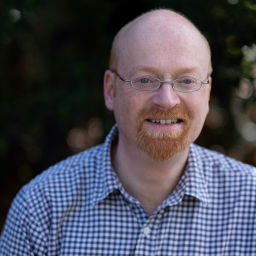
Jonas host the show. Published by Jonas Atlas.
How often do new episodes come out?
The show publishes monthly, based on its RSS feed.
Does Re-visioning Religion take guests?
The show does not typically feature guests, based on episode analyses.
Host of Re-visioning Religion?
Claim your podcast to manage its listing and keep your show details accurate.
Pod Engine is an independent podcast discovery and analytics service and is not affiliated with or endorsed by this podcast. Artwork and show content belong to their owners. Full legal notice.
Explore this show
Podcast research with Pod Engine