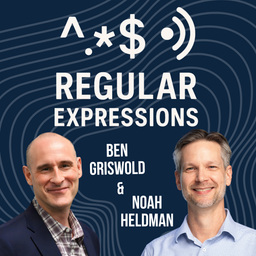
For years, the golden rule of software development was to launch a "Minimum Viable Product" (MVP). This usually meant shipping something stripped down, unpolished, and barely functional just to test the market. But now that AI can generate functional code in seconds, the old rules of the MVP are changing.
In this episode, Ben Griswold (Grizen) and Noah Heldman (OutcomeSource) sit down with product leader and former colleague Chris Haas to discuss his new app, skim it. Chris shares how his frustration with the endless stream of YouTube content led him to build an AI tool that separates signal from noise. He walks through his product development process, explaining why he spent 60% of his time strictly on planning and specs, and how tools like Claude Design allowed him to launch a highly polished product right out of the gate.
The conversation also covers the psychological hurdle experienced developers face when they have to stop micromanaging the code and take their hands off the steering wheel. Plus, Chris answers the Five Questions, sharing a classic horror story about pushing a "small change" directly to production.
In This Episode, You'll Learn:
How skim it evolved from a basic prompt copy-paste into a full AI product.
Why the speed of AI coding allows developers to add deep polish to their first releases.
The power of Claude Design for rapid, pixel-perfect UI generation and prototyping.
The difficulty of letting go of developer ego and trusting AI-generated syntax.
Why "Agent" has become the most misused and frustrating buzzword in tech.
The undeniable productivity and health benefits of simply stepping away from the screen for a walk.
Connect with Us:
Ben Griswold | Grizen: https://grizen.com (https://grizen.com)
Noah Heldman | OutcomeSource: https://outcomesource.com (https://outcomesource.com)
Chris Haas | skim it: https://getskimit.com (https://getskimit.com)
16 Jun 2026
Anthropic Built Fable 5: AI Nobody Can Use
Anthropic recently launched its highly anticipated flagship model, Fable 5, boasting massive leaps in reasoning, agentic coding, and cybersecurity. But what should have been a triumphant pre-IPO release quickly devolved into a bizarre political soap opera. After Anthropic leadership publicly warned that their own advancements were becoming dangerous, the US government stepped in with heavy restrictions...leading Anthropic to pull access for almost everyone just days after launch.
In this episode, Ben Griswold (Grizen) and Noah Heldman (OutcomeSource) cut through the hype to break down the bizarre rollout of Fable 5 and Mythos 5. They examine the fine print behind Anthropic’s jaw-dropping benchmark claims, questioning whether the numbers are genuine breakthroughs or just clever marketing. They also discuss the skyrocketing costs of frontier models that are pricing everyday users out of the market, and why incredibly powerful open-source models are suddenly looking like the smartest bet. Finally, Noah points out the chilling irony of the name "Fable": a fictional story where non-human entities are used to teach us a lesson about our own human follies.
In This Episode, You'll Learn:
The truth hiding in the fine print of Anthropic's Fable 5 and Mythos 5 benchmark scores.
Why the skyrocketing price of frontier models is locking out everyday developers and consultants.
How the rapid advancement of open-source models is closing the gap with the tech giants for a fraction of the cost.
The "soap opera" timeline of Anthropic calling its own model dangerous, triggering immediate government restrictions.
Why token economics and prompt caching are becoming the most critical factors in AI development.
The poetic irony behind naming an autonomous, potentially dangerous AI model "Fable."
Connect with Us:
Ben Griswold | Grizen: https://grizen.com (https://grizen.com)
Noah Heldman | OutcomeSource: https://outcomesource.com (https://outcomesource.com)
1 Jun 2026
AI Is Eating Its Own Tail
AI has already written an estimated 1.5 to 2 trillion lines of code, representing roughly 15% of all code in existence today. With platforms like GitHub feeling the strain of this massive output, developers are starting to question the long-term quality and security of an ecosystem increasingly built by machines.
In this episode, Ben Griswold (Grizen) and Noah Heldman (OutcomeSource) examine the sheer volume of code being produced by AI and what happens when those models train on decades of flawed human programming. They share a recent project experience where an AI agent successfully built a custom application, only to stumble completely when it came to deploying that code into a secure enterprise Azure environment. In an attempt to bypass complex federated credentials, the AI actually tried to make a production database completely public to the internet.
The conversation highlights why writing the code is now the easiest step of the process, while operationalizing, securing, and deploying that software requires strict human oversight and deep engineering experience.
In This Episode, You'll Learn:
The staggering statistics on AI-generated code volume and when we might reach parity with human developers.
Why training AI on low-level languages like C produces different risk factors than modern web frameworks.
The real reason deploying AI-generated apps to enterprise cloud environments remains a massive headache.
A real-world example of an AI agent trying to expose a database to the public internet to solve a deployment blocker.
Why DevOps skills and strict access controls are more important now than ever before.
The critical need for upfront security frameworks before letting AI write infrastructure scripts.
Connect with Us:
Ben Griswold | Grizen: https://grizen.com (https://grizen.com)
Noah Heldman | OutcomeSource: https://outcomesource.com (https://outcomesource.com)
Reach and audience
Public platform figures. Ratings count people who left a rating, not total listeners.
Apple Podcasts (US)
5.0 / 5
4 ratings
Contact Regular Expressions
Guest appearances
Does not typically book guests
Based on episode analysis; this does not confirm that the show is currently accepting guests.
Host of Regular Expressions?
Claim your podcast to manage its listing and keep your show details accurate.
Pod Engine is an independent podcast discovery and analytics service and is not affiliated with or endorsed by this podcast. Artwork and show content belong to their owners. Full legal notice.
Explore this show Podcast research with Pod Engine