- 16
- Episodes
- 2026
- First episode
About Republic of Hate
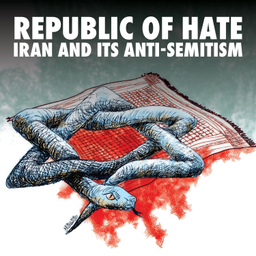
Iran’s deep-seated anti-Semitism has persisted for over four decades. With the rise of the Islamic revolution, hidden anti-Semitic sentiments surged to levels unseen in generations. A long-dormant hatred of Jews resurfaced. After seizing power in 1979, Iran’s new leader, Ayatollah Ruhollah Khomeini, reversed the Shah’s pro-Western policies. The once-prominent museum exhibitions and art-house cinema in Tehran disappeared. Non-Muslim Iranians became suspects in the eyes of the newly formed Iranian intelligence and security services. In the mid-1980s, Iranian state-controlled media outlets began vilifying Jews. Illustrators of children’s cartoons depicted Jews as pigs and apes. Themes in television talk shows and literary coffee klatches include Jewish vampirism and old blood libels. Clergy recycled ancient accusations of Jews persecuting Muhammad. Among politicians and public intellectuals, the word "Jew" is used as a slur in Iranian political discourse. The words "Jew" and "Zionist" are often used interchangeably and generally with disdain. This podcast explores the nature of impact of this hatred.
- Publisher
- republicofhate
- Category
- society & culture
- Language
- en
- Explicit
- No
- First episode
- 27 Mar 2026
- Latest episode
- 14 May 2026
Latest episodes
16 episodes in the feed.
14 May 2026
Republic of Hate - Jews, the Holocaust and War
Hello and welcome to Republic of Hate – Iran, Israel, and Anti-Semitism, in which we explore Iran’s hatred of Israel, Jews, and the West. These are essays by Dr. Mark Silinsky, president of Kensington Security Consulting, which brings education to the field of national security. In podcast 18, we will examine the anti-Semitic themes of Holocaust denial. Theme Seven - Holocaust Denial For years, the Iranian regime has used Holocaust denial to deny the legitimacy of the existence of Israel. Iranian President Mahmoud Ahmadinejad said in January 2009 that "breaking the padlock of the Holocaust and reexamining it will be tantamount to cutting the vital arteries of the Zionist regime." For example, Ali Khamenei linked Israel and the Holocaust by saying that "the Zionists occupied Palestine under the pretext of the Holocaust.” The Holocaust is a sensitive issue in Europe, and several countries criminalize Holocaust denial out of fear that it revives National Socialism and erases Germany's crimes of the Third Reich. Nonetheless, it persists in certain circles. There is a broad-based, right-leaning European Holocaust denial movement that dismisses the uniqueness of the genocide against Jews. Holocaust denial also comes from left-wing intellectuals and is prevalent in the Middle East. Some legal cases involving Holocaust denial have been sensational, such as the libel suit between Holocaust-denying historian David Irving and his critic Deborah Lipstadt. Ultimately, the plaintiff, Mr. Irving, lost the case but gained notoriety within Holocaust-denial circles, especially in Iran. His books are periodically displayed in glass cases at exhibitions in Iran, and he is cited by Iranian public intellectuals. Anne Frank is often targeted by Iranian-backed Holocaust deniers, like Robert Faurisson, who claimed her diary is fake. Iranian media frequently promote Holocaust denial, and TV hosts regularly interview well-known figures on the topic. Political analysts such as Hosein Rouyvaran argued that the crematoria and gas chambers were used for "hygienic, not political, purposes." Ali Khamenei stated, "The supposed massacre of six million Jews in Germany, after imposing hard labor against them, in concentration camps, known as the Holocaust, is a sheer historic lie." Ahmadinejad repeatedly called the Holocaust a myth. Hossein Shariatmadari, editor of the Iranian daily Kayhan and an associate of Khamenei, said, "The Holocaust, or the slaughter of Jews during World War II by German Nazis, is a myth and a contrived story." Some Iranians and Europeans dismiss highlighting Holocaust atrocities by emphasizing the destruction caused by the Allied strategic bombing of Germany and Japan. One Iranian commentator stated, “We have Nagasaki, Hiroshima, and the city of Larson in Germany. In the city of Larson alone . . . Perhaps this hasn't been addressed extensively . . . In several days of bombing, 135,000 people were killed in this city." Iranian intellectuals have also accused Jews of colluding with Germans to promote their interests. Iranian political analyst Mojtaba Zakerian said that the Zionists had made agreements with Nazi Germany and that "the story" about the murder of the Jews or crematoria was merely a "media tale" intended to prepare global public opinion for the establishment of Israel. Holocaust denial had been widespread for years after the revolution. However, Ahmadinejad further popularized it. He convened several international conferences and promoted Western Holocaust deniers, inviting them to become regular guests on the English-language Iranian television station, Press TV. Theme Eight- Jews Accused of Creating War According to Iranian and Western anti-Semites, Jews incite war, and without Jews, there would be less conflict. On Iranian television, an intellectual claimed that “America’s Jews are driving America’s wars.” Iranian international affairs expert Alireza Meh
7 May 2026
Republic of Hate - Podcast Seventeen - Jews are Less than Human and They Decay Society
Hello and welcome to Republic of Hate – Iran, Israel, and Anti-Semitism, in which we explore Iran’s hatred of Israel, Jews, and the West. These are essays by Dr. Mark Silinsky, president of Kensington Security Consulting, which brings education to the field of national security. And now to podcast seventeen, which examines the themes that Jews are less than human and that they decay society. Theme Five - Jews as Less than Human Racial anti-Semitism emerged as a pseudo-science by distorting elements of Darwinism. According to this belief, there was a genetically predetermined racial hierarchy with Northern Europeans at the top and Jews either at the bottom or outside the spectrum as a harmful agent. In Germany, the Nazis developed theories of racial hygiene and formalized this belief system into law and practice. Racial anti-Semitism started to grow in Europe in the late 1800s and reached its peak in the Third Reich. Rudolf Hess's famous slogan that Nazism was "applied biology" reflected this ideology. Nazi leaders and intellectuals supported mandatory eugenic sterilization, the Nuremberg laws, and the repression of Jews. There are related, but not identical, racial themes in Islam. Biological anti-Semitism is not part of Islam. However, graphic representations of Jews in Iranian political literature, media, and cartoons show distinct and often grotesque racial and animal-like characteristics. Like the magazine graphics of the Nazi era, those of Iran characterize Jews as other than human. Iranians and European anti-Semites sometimes compare Jews to barnyard animals or rodents. Islam has a well-known hadith, or saying of Mohammad, that states Allah turned Jews into apes and pigs for not praying. In modern Iran, Hasan Bolkhari, a cultural advisor to the Iranian Ministry of Education, explained a connection to rodents. “The Jews were degraded and called ‘dirty mice... but mice are very cunning... and dirty.” Khamenei’s official representative in the Iranian city of Birjand described Jews as “predatory, reptilian, and satanic.” In July 2010, then-Iranian President Mahmoud Ahmadinejad stated that Jews who helped establish Israel were “the filthiest, most criminal people, who only appear to be human, from all corners of the world.” Other references to Jews portray them as appearing human but inherently evil. Some Jews pose as Christians to deceive their neighbors. For example, xxx said that "But the point that was not reported by the media networks, which are controlled by Zionism in America . . . is that Adam Lanza was a Jew, and grew up in a Jewish family and in a Jewish environment." In Iran, anti-Semitism can take supernatural themes, such as Jews as evil spirits, ghosts, and devilish fairies. Images of Jews with devil’s horns and other satanic attributes are common in Iranian cartoons. In Islam, jinns are harmful and malicious spirits. They are mentioned in the The Quran depicts supernatural beings that lead men and women astray. In Iranian popular literature, Jews are sometimes portrayed with qualities similar to jinns. One cleric said, “The Jew is very practiced in sorcery. Indeed, most sorcerers are Jews. Zionists deploy jinns to undermine the Islamic Republic.” Another Iranian commentator warned on public television that Jews are part zombie. During the festival of Purim, Jews around the world perform a zombie walk, “in which they dress in costume and drink human blood." Theme Six - Theories that Jews Decay Indigenous Culture The idea of Jews as polluters of culture was a common theme in the nineteenth and twentieth centuries. This perception was fueled by European nationalism. British philosopher Houston Stewart Chamberlain, composer Richard Wagner, and many public intellectuals condemned the inclusion of Jews into their countries’ national art scenes. In the early Third Reich, Minister of Propaganda Joseph Goebbels purged univer
27 Apr 2026
Republic of Hate - Podcast Fourteen - Jews Destroy Nations
Hello and welcome to Republic of Hate – Iran, Israel, and Anti-Semitism, in which we explore Iran’s hatred of Israel, Jews, and the West. These are essays by Dr. Mark Silinsky, president of Kensington Security Consulting, which brings education to the field of national security. “It is the anti-Semite that creates the Jew.” Jean Paul Sartre Recurrent anti-Semitic tropes from around the world are reaching Iran today. European anti-Semitism, which had been suppressed since World War II, has reemerged, though not at the deadly levels of the past. Over the century, the intensity of anti-Semitism across the continent has fluctuated greatly. In both Christian and Islamic worlds, there have been times of widespread indifference toward Jews. Jews lived peacefully, separate from non-Jews. Some stereotypes depicted Jews as a necessary evil—men who charge interest on loans, which is forbidden to Christians and Muslims. However, these periods of relative tolerance were interrupted by outbreaks of mass murder, most notably during the Crusades, the Black Death, and the German persecutions. In Europe and the Greater Middle East, Jewish communities could be expelled from their homes with little warning. Varied Themes and Stereotypes Anti-Semitism adapts and conforms to local cultures. After the revolution, Iran’s leaders promoted anti-Semitic ideas that would have been considered vulgar by educated Iranians earlier in the twentieth century. He belonged to no nation and felt bound to no law. Iranian leaders combined elements of Christian anti-Semitism with Koranic anti-Semitism. Logical inconsistency often does not prevent the spread of hateful ideas. Jews could be simultaneously radical and reactionary, communist and capitalist, cosmopolitan and clannish. Jean Paul Sartre argued that the anti-Semite does not feel compelled to act logically consistent in painting the Jew. A common, centuries-old image in Europe and the Middle East is that of the wandering Jew, symbolizing stateless, parasitic vagabonds. He belonged to no nation and was bound by no law. In both Europe and the broader Middle East, Jewish criminality was used to explain unresolved mysteries or disasters, such as children vanishing or the sudden outbreak of pandemics. Some anti-Semitism is grandiose. Nazi leader Otto Dietrich declared in 1944 "that the Jewish question is the key to world history.” In this view, Jews are not only the most influential players in history, but are unique in their ability to control major events. This belief is often echoed in Iran today. Historical European anti-Semitic themes that are currently prominent in Iran today can be summarized into eight main ideas. These include the belief that Jews destroy civilizations, control the world’s political decisions and international finance, murder non-Jews to use their blood for ritual purposes, lie about the Holocaust to enrich themselves and Israel, pollute indigenous culture, exist as a less-than-human animal, and start wars for their own financial gain. Theme One – Jews as Destroyers of Nations Some Iranian and European theologians and public intellectuals have accused Jews of destroying nations. In Europe, this belief became more widespread during the age of nationalism in the nineteenth century, particularly with German unification. European anti-Semites argued that Jews undermine social hierarchy, order, authority, and tradition. Richard Wagner, in Judaism in Music, claimed that Jews corrupt German art. Today, Iranian commentators echo similar accusations. One asserts that Oliver Cromwell was “the dictatorial prime minister of England placed England entirely at the service of the Jews in the seventeenth century." They claim that the Jews who returned to England started the slave trade from Africa, calling it "part of their evil plan to eradicate Islam in Africa," a plan supposedly entirely guided
16 Apr 2026
Republic of Hate - Podcast Thirteen - Trial, Death and Exodus
Hello and welcome to Republic of Hate – Iran, Israel, and Anti-Semitism, in which we explore Iran’s hatred of Israel, Jews, and the West. These are essays by Dr. Mark Silinsky, president of Kensington Security Consulting, which brings education to the field of national security. And now to podcast two, which continues with an overview of Iranian anti-Semitism. Jews were a primary religious target. The treatment of Jews in Iran was inconsistent for centuries. But, until the 1980s, Iranian Jews were part of the national culture and made significant contributions to the country's economic, cultural, and political development. This changed after 1979. Anti-Semitism, which had long been dormant, resurfaced. Jews who could not emigrate often faced harassment from young Guards. Anti-Semitic slurs that would have been dismissed as ignorant and low-class during the Shah's time became widespread under the mullahs. Old myths, like blood libel, were revived as facts. Zoroastrians also grew fearful. The Zoroastrian religion is named after its founder, the prophet Zarathustra, also known as Zoroaster, who preached sometime between 1800 and 1000 B.C.E. Iranians of all faiths celebrate Zoroastrian traditions and festivals. But after the revolution, Iranian leaders condemned Zoroastrians as "sinful animals who roam the earth and engage in corruption.” Revolutionary Guard commanders ordered Zoroastrians to carry out suicidal missions against Iraq. In solidarity, some free spirits who are not Zoroastrian dance at the Fire Festival, with social protest and the risk of being beaten by the Guards. In his first public statements, Ayatollah Khomeini promised that Iran's 75,000 Jews would be respected and protected. The revolution alarmed the Shah’s associates and acquaintances, causing many to flee to the United States, Europe, and Israel. Desperate and nearly destitute liberals, civil servants, Jews, and Baha'i formed a caravan of emigrants. The exodus expanded significantly in the early 1980s. Refugees reported that Islamic committees in Iran have taken control of Jewish schools, abolished Hebrew instruction, violently tried to force young Jews to convert to Islam, confiscated Jewish property, banned Jews from official positions, and routinely arrested, beat, and tortured Jews, using repeated imprisonments to extort money from them. The Trial and Death of an Everyday Woman Alongside the high-profile executions of prominent Jews mentioned in chapter two, ordinary Iranian authorities harassed, imprisoned, and murdered Jews from the middle and working classes. One case involved Nosrat Goel (Koel) Tali’i, a Jewish resident of Shiraz who worked at a women’s hair salon. She was married with four children and was expecting her fifth when she was arrested. According to her family, Mrs. Goel Tali’i has “spent all her life laboring hard to help her family make ends meet.” Mrs. Goel Tali’i’s case was linked to sexual and drug offenses in 1979 in Shiraz. Determined to highlight this trial, the commander of the Shiraz IRGC unit recruited Ayatollah Khalkhali. The commander allegedly wrote, ‘No one has been given a revolutionary execution in Shiraz, and this is a disgrace in Shiraz.” Her trial, sentence, and execution all took place within a single day. According to witnesses, no evidence was presented against her. However, a guard told Khalkhali that she used her hair salon as a base and recruitment center for prostitutes. This satisfied the judge, who declared her guilty of sin and sentenced her to death. She and 13 other prisoners were executed by firing squad on July 3, 1980, and their killings were publicized in the Iranian media. The Islamic Republic executed hundreds of Jews in the early years after the revolution, including a 13-year-old boy who wrote to relatives in Israel. Vienna served as a gateway for Iranian Jews heading to Israel, the United States, and other destinations. Austria's controversial Pre
3 Apr 2026
Republic of Hate - Podcast Eleven - Three Jewish Women in Revolutionary Iran
Hello and welcome to Republic of Hate – Iran, Israel, and Anti-Semitism, in which we explore Iran’s hatred of Israel, Jews, and the West. These are essays by Dr. Mark Silinsky, president of Kensington Security Consulting, which brings education to the field of national security. In podcast 11 we look at some Jewish women who fear the future under the Ayatollah’s rule. What will become of them? Jews and Zionism Soon after the revolution, Ayatollah Khomeini declared that “Jews are different from Zionists.” Khomeini’s disdain for Jews and Israel was deep, often repeated, and widely known. In 1970, he wrote: “Since its inception, the Islamic movement has been afflicted with the Jews, for it was they who first established anti-Islamic propaganda and joined its various stratagems, and as you can see, this activity continues down to our present day.” He told Iranians to “leave Jews alone,” but there was no indication that he softened his stance on Jews and Islamic law.30 Jews were not left in peace. A new constitution combined Koranic ideas with concepts of Islam-based socialism—both of which alienated the country’s Jews. The constitution placed crucial aspects of the nation’s economy under government control, undoing years of entrepreneurial progress. Elements of non-Muslim history were being erased, but there were no organized mass murder sprees or vandalism that could be compared to the German rampages of the Night of Broken Glass in November 1938. By mid-1979, Jews doubted whether they could live safely as Jews in Iran. Jewish families started to flee if they could. Sometimes, Jewish children were taken away without their parents, which was hauntingly similar to the Kindertransport of Jewish children from the young Nazi state. In spring 1979, 40 Jewish girls received student visas and were transported to the United States. By Passover 1979, there were 1,000 Iranian Jewish children in Crown Heights, living with families, in dorms, and attending schools and classes set up especially for them in the neighborhood. Jacqueline, Roya, and Sima – Three Jewish Women in Revolutionary Iran Most Iranian women lacked the option to leave, and many felt trapped in a country that was no longer their home. The world for Iranian women and girls changed. The 1970s was a decade of social liberalism, Farsi films, Western fashion, and mini-skirts. Gagoosh, the bubbly Iranian singer, set fashion with high ponytails and go-go boots. Women wore pencil skirts, chiffon shirts, and high heels. A popular hairstyle was Queen Farah’s beehive. With the revolution, these fashions were switched to drab, dark, loose-fitting Islamic garb. For the Iranian smart-set, the chador had become an anachronistic garment and relic of another century. However, religiously inclined parents began dressing their daughters in the chador as the revolution drew near. It was a statement of religious piety and political solidarity. After the revolution, some Jews viewed the chador and headscarf as useful garments for their own safety and protection. Jewish parents need to cover their daughter’s hair. Jacqueline Saper wrote about her six-year-old daughter who, in 1986, turned six and started attending an all-girls elementary school. She became a hijabi. Ms. Saper described the long lines of young girls dressed exactly alike, pouring into classrooms that looked equally colorless and somber. Inside the class, children were taught to recite passages from the Koran, sometimes in Arabic. They were also instructed to report their parents' use of alcohol. Additionally, school children of all religions were required to kiss posters of the leading ayatollahs, wave fists, and chant “Death to America” and “Death to Israel.” Roya Hakakian, like Jacqueline Saper, remembered her youth in Tehran as a Jew. She sensed anti-Semitism woven into Iranian life, which was inflamed by the revolutionary mullahs. “Next to “Down
28 Mar 2026
Republic of Hate - Podcast Sixteen - Masters of Gold and Blood Libel
Hello and welcome to Republic of Hate – Iran, Israel, and Anti-Semitism, in which we explore Iran’s hatred of Israel, Jews, and the West. These are essays by Dr. Mark Silinsky, president of Kensington Security Consulting, which brings education to the field of national security. And now to podcast sixteen, which focuses on charges of Jews controlling international finance and the blood libel. Theme Three – “Masters of Gold” –Jewish Control of International Finance “ A common accusation against Jews is that they hold significant control over international finance. The Western stereotype of the money-driven Jew is longstanding. In European fiction, notable Jewish characters include Fagin, who led a criminal ring of child pickpockets, and Shylock, a well-known usurer. Jewish aristocrats financed Columbus's voyage to find the Promised Land. Iranian international affairs expert Alireza Mehrabi stated on Iranian television that the "headmasters" of Wall Street are a few Zionist Jews descended from the Rothschild family. The Rothschilds were the most hated and mocked European family. Conservative anti-Semites believed they threatened Christian values and true royalty, while progressives accused them of exploiting workers. The Nazis produced a movie, The Rothschilds, which became a commercial hit. Although the Rothschilds are no longer the richest family in the world, they still face disdain in Iran and Europe. Iranian university lecturer Ali-Reza Karimi stated, "The Rothschilds ... hoarded the wealth plundered by the Europeans in their colonialist attacks, this international network became an unrivaled economic force and situated itself in the center of the global nobility." According to Karimi, the Rothschilds used this wealth to lay the groundwork for a Jewish state in Palestine. Iranian researcher Zahra Sattarian claimed that the Rothschild family would have indebted countries to gain control over their key banks. In 2019, another commentator on Iran’s Ofogh TV argued that the Russian Revolution and Marxism were part of a Jewish conspiracy led by the Rothschild family to control the world's wealth. As president, Donald Trump, who is not Jewish, was repeatedly criticized for his associations with wealthy Jews, especially those he welcomed into his family and worked with in business. Casino magnate and Israel supporter Sheldon Adelson often faced criticism. Closer to the president is his Jewish son-in-law, Jared Kushner. Kushner, by the way, has connections to a family real estate business in the Occupied Palestinian Territories, which has received $30 million in investments from Menora Mivtachim, one of Israel’s largest financial institutions. Today, many Iranians claim that Jews control the world’s resources. Iranian university lecturer Ali-Reza Karimi stated that wealthy Jews controlled the Persian nobility and helped install the Pahlavi dynasty in Iran. According to another historian, Dr. Sayyid Hamid Rouhani, he warned that "They (Jews) decided that they would have their own ruler in Iran.” In 2020, Iranian filmmaker Nader Talebzadeh argued that Zionist Jews control the finances of the United States through their dominance of six corporations. This concludes this episode of Republic of Hate – Iran, Israel, and Anti-Semitism. We look forward to reading your comments. Dr. Silinsky’s latest book, Cauldron of Terror – Israel, Hamas, and the World, will be available for purchase in summer 2026. Nothing in this podcast or any of Dr. Silinsky’s other podcasts reflects the official position of the United States Department of War, the United States Intelligence Community, or any other U.S. government agency. On behalf of Kensington Security Consulting, thank you for listening, and goodbye until our next podcast.
27 Mar 2026
Republic of Hate - Podcast Ten - The Ayatollah Returns Home
Hello and welcome to Republic of Hate – Iran, Israel, and Anti-Semitism, in which we explore Iran’s hatred of Israel, Jews, and the West. These are essays by Dr. Mark Silinsky, president of Kensington Security Consulting, which brings education to the field of national security. And now to podcast The Ayatollah Returns and History is Erased Iran's economy grew during the 1950s and 1960s, especially after oil revenues surged following 1973. However, wealth was not shared equally, which widened social divisions and class gaps. The shah’s support declined as former allies turned against him. In the 1950s and 1960s, most Iranian clerics remained silent on political matters. But the shah’s Westernization efforts alarmed the devout and aging mullahs. Students and workers were unhappy about wage gaps and the display of sudden wealth in Tehran. This led to organizing across different social groups and generations, from shaggy-haired university students to bazaaris whose social standing and influence had waned. As the shah’s allies abandoned him, Khomeini’s well-organized followers filled the growing power vacuum. The growing frenzy to overthrow the shah was relentless, organized, and loud. Jews were well aware that social support had shifted away from the shah. Some evidence was visual, including placards and defacement of symbols of the Pahlavi regime. As instructed by the Ayatollah, every evening at 8:55 p.m., supporters turned off their lights and went to their open, flat rooftops or balconies. Then, at nine o'clock sharp, the city erupted in a roar. Loud and forceful, hundreds of thousands of people stood in the cold and shouted, “Allahu-akbar. Allahu-akbar. Allahu-akbar.” The rallying cry of revolution echoed throughout the city. Several left-wing Western celebrity professors and activists traveled to Iran to observe the unrest. In January 1979, three prominent leftists went on a fact-finding trip to Iran. Professor of international law at Princeton Richard Falk, former U.S. attorney general Ramsey Clark, and Christian activist Don Luce stopped in France to meet Ayatollah Khomeini, who was still in exile. Khomeini gained Falk’s trust, and the Princeton professor stated in the New York Times that, “The depiction of him (Khomeini) as fanatical, reactionary, and the bearer of crude prejudices seems certainly and happily false." Falk was inspired by Shia Islam, citing "its concern with resisting oppression and promoting social justice." He concluded, "Having created a new model of popular revolution ... Iran may provide us with a desperately needed example of humane governance for a third-world country." Other observers were less optimistic. Regarding Khomeini’s view of Jews, Dr. Falk explained, “He expressed the opinion that Judaism was ‘a genuine religion’ and if Jews do not get too involved in support for Israel, they would be fine in Iran ... it would be a tragedy for us if they left.” But most Jews would leave. In 1979, the Pahlavi era finally fell apart amid widespread street protests, strong opposition groups, and a loss of support for the regime. Ayatollah Khomeini came to power in Iran, replacing the secular, modernizing monarchy of Shah Mohammad Reza Pahlavi with a theocratic republic. The cancer-afflicted shah fled abroad, where he eventually died. Immediately after the revolution, there was a surge of state-ordered destruction of symbols and totems of the old regime. Khomeini ordered Reza Shah’s tomb demolished, which surprised few Iranians. Soon, however, the wreckers turned to Baha’i tombs; any tombstones and crosses had been broken in the Armenian graveyard in Isfahan, along with other non-Muslim religious sites. Ancient Persian sites such as Persepolis and Cyrus the Great’s tomb were temporarily spared. Earlier, Ayatollah Khomeini told Richard Falk that he planned to hold a trial similar to the ‘Nuremberg Trials,’ which prosecuted Naz
27 Mar 2026
Republic of Hate - Podcast Nine - The End of the Shah of Shah
The British Replace the Shah of Shahs Reza Shah’s friendship with leading Nazis earned him disdain from the British and caused concern in the Soviet Union after German armies invaded it. In a joint operation, the British and Soviets ousted Reza and housed him in South Africa. The invasion of Iran, Operation Countenance, was mostly uncontested and resulted in very few casualties. One contemporary called it a “military stroll.” Iran became known as the Persian Corridor, providing a crucial supply route into the Soviet Union. Matthias Kuntzel suggested that without the Allied-Iranian connection, Hitler probably would have taken Stalingrad. Reza returned after death to be buried in Tehran. His son built a tomb for him. But after the 1979 revolution, the new Islamic authorities did their best to erase any memory of the Pahlavi dynasty they overthrew. Revolutionaries destroyed his tomb and turned it into a public toilet. When Reza Shah's son, Mohammad Reza Shah, took over, the economy flourished, and the Jews, who had mostly lived as peddlers and moneylenders before, gained significantly. Between 1948 and 1953, over one-third of Iran's Jews emigrated. Most of the emigrants were poor, while wealthier Jews, mostly residing in Tehran, stayed. In 1950, the shah granted Israel de facto recognition, which upset Iran’s religious leaders and Iranian religious exiles living in Arab countries. "During the Shah's 25-year reign, key industries like banking, insurance, pharmaceuticals, textiles, plastics, paper, aluminum production, shipping, imports, tile manufacturing, and liquor distillery and distribution were either established and owned by Jews or financed and run by them. The historian Habib Levy has called these years the golden age of Iranian Jewry.” There were social stigmas and conventions that the shah could not eliminate. The longstanding stereotype of Jewish uncleanliness persisted strongly. One Jew explained that Jews fought against this prejudice by openly showing their faith to non-Jewish neighbors. “It was a time for our neighbors . . . to witness our diligence in cleaning . . . Muslims still called Jews najes or dirty. This was the season to prove our cleanliness to our neighbors . . . Under the relatively secular Pahlavi dynasty, Jews and other non-Muslims enjoyed rights and protections similar to Muslims, especially in the mid-20th century. This caused envy—relative deprivation. During the Qajar era, Muslims were not significantly poorer than Jews, but they held higher legal and social status. The legal trend was moving toward liberalism, and Iranian culture became more inclusive. The emphasis on nationalism worried the clergy. The End of the Golden Era and anti-Shah Jews Jewish life thrived more than ever during the Pahlavi regime. Some became high-ranking bureaucrats, industrialists, and merchants, accumulated wealth, and moved up the social ladder. Jewish communities built and expanded social institutions such as schools, synagogues, newspapers, and hospitals. While some Jews remained poor, the middle class, especially the upper-middle class, grew in size. Like earlier generations in the United States, poor but ambitious Jews moved through social classes to become successful and often influential. They were well represented in universities and professional organizations and could openly practice their faith. Jewish scholarship in the sciences flourished. During the 1979 revolution, 2 of the 18 members of the Royal Academy of Sciences, 80 of the 4,000 university lecturers, and 600 of the 10,000 physicians in Iran were Jews. Most Jews belonged to the middle class; about 10% were wealthy, and another 10% were poor. Despite the new prosperity, young Jews disproportionately joined the ranks of the anti-Shah left. Perhaps they were motivated by the sense of justice that inspired the European and American left of the 1960s. Many Iranian youths v
27 Mar 2026
Republic of Hate - Podcast Eight - Golden Years Turn Dark
Hello and welcome to Republic of Hate – Iran, Israel, and Anti-Semitism, in which we explore Iran’s hatred of Israel, Jews, and the West. These are essays by Dr. Mark Silinsky, president of Kensington Security Consulting, which brings education to the field of national security. And now, to podcast eight: the exciting and optimistic Pahlavi years. The Golden Pahlavi Years If there was a second golden age for Iranian Jews, it probably occurred during the father-and-son Pahlavi dynasty, 1925-1979. There were friendships, quarrels, business dealings, and a full range of social interactions. Some Jewish liberals saw the shah push forward social reforms, especially regarding women's rights. Many Jews thrived. According to envoys of the Alliance Israelite Universelle, Jews in Iran were living in poverty and despair in the early twentieth century. This poverty and hopelessness changed when Reza Shah took the throne in 1925. The six-foot-five-inch Persian Cossack, known as Machinegun Reza, aimed to modernize his country. Reza Shah abolished the Jizya, dress codes, housing restrictions, and other limitations that stigmatized non-Shia. For the first time, Jewish children and young adults could attend public schools and universities. Reza Shah, reducing the influence of the Shia clergy, sought support from non-Shia religious groups. He found allies among ambitious Jews, rabbis, youth, and women. When he issued the decree for the mandatory unveiling of women, some Jewish women easily removed their chadors. After Reza Shah established the Pahlavi Dynasty in 1925, he launched a modernization drive in which Jews participated. He was inspired by Ataturk, the president of Turkey, who abolished veils and established a non-clerical government. In this spirit, Reza Shah issued a royal decree banning women from wearing chadors and headscarves in public, which he considered outdated. For such women, veiling symbolized respect and modesty. When the Allies forced Reza Shah to abdicate in 1941, traditional and religious Muslim and Jewish women resumed veiling. According to an estimate from the early 19th century, their numbers had increased to about 50,000 by the end of the century. This modernization, continued by his son Mohammed Reza Shah through force, was swept away by the Islamic Revolution. Muhammad Reza Shah continued his father's policies of supporting religious traditions minorities. Life Improves for Jews in Iran Persia, which was called Iran in 1935, underwent a cultural and spiritual change inspired by the reforms of Kemal Ataturk of Turkey. Reza Shah weakened the power of the Shia clergy, which had for centuries hindered progress and restricted religious freedom. In Iran, Jews could aim to hold roles in society similar to those of their coreligionists in the Ottoman Empire, such as bankers, court-treasurers, and tax collectors. They could be scientists, businessmen, lawyers, and statesmen. Under Reza Shah, for the first time, a Jew served as a member of parliament representing the Jewish minority. He was Solomon Chayyim of Kermanshah, a champion for religious rights. He supported Zionism and published a Jewish-Persian newspaper. Zionism became widespread after 1912, with Hamadan serving as its Iranian center. The revival of Jewish life in Persia found literary expression in 1917 with the establishment of a Judeo-Persian and Hebrew printing press in Tehran. It produced Hebrew textbooks modeled after those used in Palestine. The Mixed Rule of Reza Shah Reza Shah was both authoritarian and tolerant. The shah esteemed elements of Hitler’s National Socialism and strengthened Iranian ties with Nazi Germany. In turn, Germany courted Persians, lauding them as "Persian Aryans." Germany broadcast in Persian, advocating anti-Jewish violence in retaliation for Esther's triumph during Purim millennia earlier. Germany published a magazine titl
27 Mar 2026
Republic of Hate - Podcast Seven - Qajar Rule and Blood Libel
Hello and welcome to Republic of Hate – Iran, Israel, and Anti-Semitism, in which we explore Iran’s hatred of Israel, Jews, and the West. These are essays by Dr. Mark Silinsky, president of Kensington Security Consulting, which brings education to the field of national security. And now to podcast seven, which begins with the late Qajar rule and a blood libel that terrified the Jewish community. The Late Qajar Rule European Jewry was flourishing in the mid to late nineteenth century. Most of the social and economic restrictions that kept Jewish life confined in Persia were lifted from European life, even if only temporarily. Wealthy and influential European Jews and the organizations they supported aimed to assist fellow Jews in the broader Middle East. The most notable organization was Alliance Israelite Universelle. In response to diplomatic pressure from Britain and its Jewish community, authorities took measures to protect Jews. In Isfahan province, Nasir al-Din Shah's son, Zill al-Sultan, threatened to punish any Muslim who harmed a Jew. Still, persecution and forced conversion of Jews continued. Toward the end of the 19th century, European popular presses, progressives, and statesmen condemned the edict requiring Jews to wear yellow badges and other stigmatizing clothing. These degrading restrictions, long removed from European life, were reintroduced by law in the early 1940s. For centuries, Jews had little support outside Persia and were often powerless to improve their living conditions. However, by the mid-1800s, European Jewish leaders used their influence and wealth to support the Persian Jewish community. British Jewish leader Sir Moses Montefiore, from the London Committee of the British Jews, along with leaders from the Paris Alliance Israelite Universelle, spearheaded efforts to prevent the forced conversion and confiscation of Jewish property. While Christian minorities in Persia found allies among missionaries and Christian activists in Europe and the U.S., and Zoroastrians secured patrons in parts of India, Jews mainly stood alone until a group of British and French Jews stepped in to provide help. In 1865, Nasr ad-Din Shah issued a letter expressing concern about the plight of Persian Jews, and in 1874, he declared all his subjects equal before the law. However, Nasr ad-Din and his advisors and supporters still viewed Jews with contempt. Much of this disdain was rooted in Shia anti-Semitism, which emphasized ritual uncleanliness. He held Jews collectively responsible for the crimes of individuals. The court system did not trust the oath of a Jew. In many towns, Jews were barred from keeping shops in bazaars. Besides special taxes on non-Jews, wealthy Jews paid arbitrary and sometimes immediate taxes. Persian Jews lacked the political power or legal standing to contest or refuse these taxes. Laws also offered no protection for Jewish lives. In 1898, as part of a campaign by European Jews, the first Alliance Israelite school opened in Tehran. By fifty years later, there were thirty-four Alliance schools along with thirty-eight other Jewish schools. Under the Pahlavi dynasty in the twentieth century, the political and social conditions of Jews changed significantly. Reza Shah banned mass conversions of Jews and also accused Jews of being ritually unclean. The Constitutional Revolution of 1906 aimed to ensure that Iranians of all religions and ethnicities had equal rights. In 1908, the constitution granted equal rights to the three recognized minority religions in Iran: Christianity, Judaism, and Zoroastrianism. All three communities had the right to elect one delegate to parliament, although they could not participate in the election of other delegates. For many Jews and liberals, it seemed as though the twentieth century would bring about an irreversible change for the better. They were mistaken. The Blood Libel that Shocked the World Th
27 Mar 2026
Republic of Hate - Podcast Six - Dirty Jews and Forced Conversions
Hello and welcome to Republic of Hate – Iran, Israel, and Anti-Semitism, in which we explore Iran’s hatred of Israel, Jews, and the West. These are essays by Dr. Mark Silinsky, president of Kensington Security Consulting, which brings education to the field of national security. And now to podcast six, which moves to the 16th century to look at Jewish-Iranian relations and the forced conversion of the Jews of Mashad in the mid-19th century. The plight of the Jews worsened further in 1501 with the rise of the Safavid dynasty. The new regime established the Shia sect as the dominant faith in Iran. Shia clergy declared all non-Shia, including Sunni Muslims, to be ritually unclean. The Safavid rulers imposed a broader range of humiliating and dehumanizing restrictions on Jews: they could not leave their houses on rainy days, build homes with walls taller than those of their Muslim neighbors, paint their houses white, buy property from Muslims, or sell food to them. In public, to set themselves apart from Muslims, Jewish men had to wear unusually large turbans, and women were required to attach bells to their clothing along with the yellow patch. Many Jews were forced to convert to Islam. As with Spanish Jews of the late fifteenth century, many Persian Jews became nominally Islamic but secretly practiced Judaism. This continued until 1661, when they were allowed to practice Judaism openly. In 1588, under the Safavid Shah Abbas I, restrictive ordinances against Jews were enacted, known as the "Jam Abbasi Laws," which severely limited Jewish property rights and the professions Jews could pursue. Sometimes, restrained anti-Jewish outbursts occurred in the often-deadly Yud Bazi, or Jew Game, involving spontaneous, unprovoked attacks on Jews. Najes Jews; Dirty Jews - Jews as Dhimmi Tailors, moneylenders, glass polishers, money-changers, engravers, salt and ammoniac producers, fortune-tellers, midwives, prostitutes, and small business owners. These occupations were common among Iranian Jews in the late nineteenth century. Just like in other parts of the Islamic and European worlds, Jews earned income as peddlers, brokers, shopkeepers, and small entrepreneurs dealing in spices, drugs, antiques, jewelry, cloth, and luxury goods. They also worked as millers, tailors, weavers, and dyers. Jews held a monopoly on wine and alcohol production. Additionally, Jews served as entertainers, including dancing boys, acrobats, flutists, and singers—roles considered beneath the dignity of Muslims. Jewish minstrels were quite popular. Although most were confined to lower-status jobs, some Jews achieved prosperity. In Hamadan and Tehran, some Jews worked as physicians. These were jobs considered unworthy of Muslims. This image of the dishonest Jew was embedded in the dominant culture. Hafiz, Iran's greatest poet, wrote about Jews, "In the morning, I asked the old wine seller about . . . drinking of wine. He said, "It must be kept secret even though you are trustworthy. Keep your mouth shut, keep it secret, and drink." This is the image of the Jew as corruptor. The Qajar dynasty began in 1789. Under Nasr ad-Din Shah, a notable Qajar ruler who reigned from 1848 to 96, he occasionally voiced intentions to improve the lives of Jews and Christians. However, few of these promises were fulfilled. Sometimes, he displayed progressiveness toward European diplomatic delegations and advised provincial governors and officials to protect Jews from mob violence and extortion. Iran was weaker than the European powers expanding their empires in Asia and Africa. To boost its image in Western eyes, Iran tried to demonstrate strength. The brief Anglo-Iranian war of 1856–57 revealed the military weaknesses of the Qajars. The Forced Conversion of the Jews of Mashad – The Allahdadi Event of 1839 “Outwardly we are all Muslims; in our hearts we’re Jews.” A Mashadi Jew The most infamous act o
27 Mar 2026
Republic of Hate - Podcast Five - Singing the Lord's Song
Hello and welcome to Republic of Hate – Iran, Israel, and Anti-Semitism, in which we explore Iran’s hatred of Israel, Jews, and the West. These are essays by Dr. Mark Silinsky, president of Kensington Security Consulting, which brings education to the field of national security. And now to podcast five, which is a deeper look at early Jewish history in Iran. It also explores how the Islamic Republic erased Jews from the country’s national memory. ''This is my country, my Iran. 'When the mullahs made their revolution 20 years ago, I could have left, like many Jews, but I decided not to go. And why? Because my family came here 2,500 years ago.'' An Iranian Jew, 1999 “Singing the Lord’s Song in Strange Land” King Cyrus established the ancient Persian Empire in the sixth century. He also freed the enslaved Jewish community that had been marched into exile by the Babylonian conquerors in 587-586. Several Psalms mourn the captivity, especially Psalm 137, and describe weeping “by the rivers of Babylon” and the mocking of their captors. The tragedy of exile echoes throughout the Bible in books like Jeremiah, Ezekiel, Daniel, Lamentations, and Isaiah. European musical masters have set it to music, such as in Verdi’s Nabucco. Cyrus is the only non-Jew called the “messiah” in the Bible for having freed the Jews from their Babylonian exile: “Thus says the LORD to his anointed, to Cyrus, whose right hand I have grasped.” President Harry Truman, perhaps overstating his importance, said, “I am Cyrus,” after acknowledging Israel in 1948. Similarly, Prime Minister Benjamin Netanyahu linked President Trump to Cyrus after the U.S. moved its embassy to Jerusalem. Today, many young Iranians honor Cyrus's memory. In the early 2000s, Iranians established "Cyrus the Great Day" to celebrate Iranian nationalism and pre-Islamic history. Threatened by Cyrus’s legacy, the Islamic Republic bans celebrations at Cyrus’s tomb and arrests visitors. Despite this, Iranians still visit the ancient leader’s burial site and chant, “Iran is our homeland; Cyrus is our father.” The Cyrus Declaration permitted Jews to return to Judea, and some chose to do so. However, others remained in Persia because it had become their home. Warrior-king Cyrus was killed in battle, and his son Cambyses II cared less about the Jews' well-being. But his son Xerxes, also called Ahasuerus, was enchanted by Esther, a legendary and charming Jewish beauty. Both are central figures in the long-lasting festival of Purim. According to religious tradition, Esther and her uncle Mordechai saved the Jews from slaughter by warning Ahasuerus about Haman’s threat, a sinister advisor. Today, Haman is still hated, and Cyrus remains highly respected among Jews. Over the centuries, prosperous and patriotic Jews have named hospitals, vocational and religious schools, and civic centers after Cyrus. Today, there is no Xerxes to defend Jewish memory, but monuments still stand, even though they are under threat. Historically, Muslims protected the Tomb of Esther and Mordechai, which a Persian-Jewish architect restored under the shah. The structure features a Star of David, visible in aerial photos. After the revolution, this tomb became a site for anti-Israel protests. It was vandalized in 2011 and again in 2020. After Cyrus Overall, life was good for the Jewish community under the early Persian kings. But, like all golden ages, this period of tolerance ended. "Jews had relatively warm relations with leaders of the Achaemenid dynasty, but Alexander the Great destroyed it, sending back the quality of Jewish life. During the Sassanid dynasty, the Jewish population of Iran grew considerably. When Zoroastrianism was declared the official state religion during the Sassanid Dynasty, from 224 to 651 CE, the situation for Iran's Jews worsened. The once rich religious culture of the Achaemenid period became more authoritarian. Poli
27 Mar 2026
Republic of Hate - Podcast Four - Contemporary Anti-Semitism in Iranian Culture
Hello and welcome to Republic of Hate – Iran, Israel, and Anti-Semitism, in which we explore Iran’s hatred of Israel, Jews, and the West. These are essays by Dr. Mark Silinsky, president of Kensington Security Consulting, which brings education to the field of national security. And now to podcast four, which looks at the infusion of anti-Semitism into Iranian society. It also explores how the Islamic Republic erased Jews from the country’s national memory. Contemporary Antisemitism in Iranian Culture Anti-Semitism remains in Iranian popular and religious culture, with some content aimed at younger audiences to ensure the hatred is passed down through generations. Similar to Nazi Germany, schools use graphic, grotesque caricatures of Jews to create derogatory images. University professors, who are often featured on Iranian television channels, distort Jewish culture and recycle Western anti-Semitic themes. The Iranian Ministry of Culture and Islamic Guidance sponsored the film The Antisemite by French comedian M'bala M'bala, who is briefly mentioned in a future podcast. Although some themes are familiar, others are updated to reflect current social concerns. Vice President Mohammad-Reza Rahimi accused Jews of distributing illegal drugs worldwide, killing Black babies, creating Soviet communism, and causing many other problems. Drawing international attention, Iran-hosted New Horizons conferences attract Holocaust deniers, far-left activists, anti-Israel, and anti-American demonstrators from around the world. Iranian leaders also reach out to international civil rights activists. Today, Jewish Iranians face accusations of disloyalty. Iranian intelligence and security personnel closely monitor Jewish religious associations. Iranian authorities have arrested Jews and some Muslims on charges that they worked for Israel. Millennia of Jewish scholarship, philanthropy, sacrifice, and patriotism were ignored by the new rulers of Tehran. No longer did a Muslim need to justify accusations that an Iranian Jew was unpatriotic; instead, the burden shifted to the Jews to prove their innocence. The history of Jewish love for their Iranian homeland was overlooked or met with suspicion. The contributions of proud and patriotic Jewish-Iranians faded from national memory. Mowlana Shahin of the fourteenth century shone in Persian literary arts. Dr. Rouhollah Sapir was a dedicated doctor and humanitarian committed to healing and saving Iranians from all backgrounds. Morteza-Khan Nay-Davoud celebrated Iranian culture through music, composing songs based on the poetry of both contemporary and ancient Iranian poets. Professor Samuel Rahbar, the diligent physician and researcher, discovered glycated hemoglobin. Solaiman Haiim was a renowned scholar. In the late 1920s, he dedicated years to creating Iran’s first modern Farsi-English and English-Farsi dictionaries. For nearly fifty years, Haiim was recognized as the primary author of these dictionaries. Iranian mullahs likely used this resource. However, Haiim’s name was removed from the manuscript following the 1979 Islamic Revolution. To this day, his name does not appear on the dictionaries published in Iran. The work of all these men and many other Jewish Iranians was dismissed by revolutionaries determined to eliminate Iran's cultural irrelevancies or contaminants and to rid the nascent republic of anything that did not conform to their interpretation of Islam. Some members of the remaining Jewish population have been highlighted by Islamic leaders. Homayoun Sameyah, the head of the Tehran Jewish Association and a parliamentarian, participated in the annual Al-Quds Day event that calls for destroying Israel. The festivities are the legacy of Imam Khomeini, who officially declared the last Friday of Ramadan to always be a day of solidarity with Palestinians and a symbol of homicidal hatred toward Israel. He is not
27 Mar 2026
Republic of Hate - Podcast Three - The Green-Red Alliance and Middle Eastern Anti-Semitism
Hello and welcome to Republic of Hate – Iran, Israel, and Anti-Semitism, in which we explore Iran’s hatred of Israel, Jews, and the West. These are essays by Dr. Mark Silinsky, president of Kensington Security Consulting, which brings education to the field of national security. Podcast three looks at an alliance between Islamists and Western left-wing elites. Hmm, very strange bedfellows, indeed. It then moves to Middle Eastern anti-Semitism. The Green-Red Alliance and Iran Growing left-wing anti-Semitism spreads across Europe. It surged in autumn 2007 with the Israel-Hamas conflict. Jewish men often take off their skull caps when leaving their homes to avoid being assaulted or harassed. In France, roughly 7,000 began leaving by 2015. French Prime Minister Valls stated that “if 100,000 Jews leave, France will no longer be France. The French Republic will be judged a failure.” Some of this stems from traditional, nationalist anti-Semitism, but some is driven by a newer phenomenon of intersectionality. There is a surprising and often confusing alliance between Iranian leaders and Western social justice advocates, which is the focus of chapter seven. Disagreements over religion, women’s rights, gay rights, dress codes, alcohol consumption, and other social issues might seem to prevent effective political cooperation. Yet, they find common ground in anti-Americanism, anti-Zionism, a broad hostility toward Western norms and values, and a resurgence of European nationalism anti-Semitism. Left-leaning Western intellectuals view traditional anti-Semitism as crude and outdated but are intensely anti-Israel, holding the country to unique political, social, and military standards. Many Western leftists and Islamists frequently use the term "social justice" in their speeches and writings. Iranian media outlets have adopted the language of social justice to promote their political goals. For example, an Iranian media producer claimed that American authorities incited violence against protesters of George Floyd's killing in a manner similar to how Israelis harm Palestinians. The prospect of revolutionary change and the overthrow of the pro-American Shah excited many men and women on the European and American left. Several well-known professors, such as Richard Falk, United Nations High Commissioner for Human Rights, recalled, “I became rather uncomfortable after the first hour or so. I was very impressed by Ayatollah Khomeini’s demeanor, his dark, bright eyes, his softly spoken, confident words.” Middle East Anti-Semitism Over the centuries, the fortunes of Middle Eastern Jews have changed. Many Muslim tribal and national leaders accepted Jews as long as they accepted their second-class, or dhimmi, status. However, widespread anger sometimes led to coordinated attacks on Jewish communities. Jews arrived in Palestine in large numbers as the Ottoman Empire was falling apart. Arabs and Iranians grew increasingly uneasy with the shifting demographics. Muslim power declined to its lowest point in political, technological, military, and scientific strength compared to the West. This caused a revival of Islam and resentment toward the heavy Western influence in the Middle East. Some Sunni and Shia leaders found common ground in anti-imperialism and anti-Semitism, which is discussed in chapter eight. Today, Iran, although estranged from many Sunni Middle Eastern governments, uses the Palestinian cause to rally global and domestic support. Many Sunni and Shia share a hatred of Israel, which will be the focus of future podcasts. Projecting Anti-Semitism Abroad Along with spreading hateful rhetoric, Iranian intelligence and security services plan and support terror operations targeting Jews worldwide, from Israel to Argentina. The Iranian regime has formed a coalition of militia leaders across the Middle East to help achieve its ideological and strategic g
27 Mar 2026
Republic of Hate Podcast Two - The Koran and the New Satan
Hello and welcome to Republic of Hate – Iran, Israel, and Anti-Semitism, in which we explore Iran’s hatred of Israel, Jews, and the West. These are essays by Dr. Mark Silinsky, president of Kensington Security Consulting, which brings education to the field of national security. And now to podcast two, which continues with an overview of Iranian anti-Semitism. Koranic and European Anti-Semitic Themes in Iranian Culture Some Iranian anti-Semitic themes are based on Koranic passages, while others stem from native Persian/Iranian culture. Koranic anti-Semitic themes, discussed in chapter three, reemerged with the revolution. Mullahs revisited motifs that involved Mohammad’s accusations against Jews in Medina and Mecca. Mohammad described Jews as deceitful and treacherous, scheming with enemies of Islam and attempting to kill Muslims. Khomeini stated, “They are a nation of traitors and liars, contrivers of plots, a people born for deeds of treachery.” Regime officials criticize Jews as a nationality and cite the Koran to support their claims. They accuse Jews of tampering with sacred texts, rejecting Allah’s divine message, and persecuting both Jesus and Mohammad. Early Muslim anti-Semitism differed from European anti-Semitism. It did not accuse Jews of widespread conspiracies or ritual murders. The Muslim world, including Iran, did not make claims of Jewish conspiracy and control until the 20th century. Historically, Mohammed expelled, enslaved, or killed Jewish tribes in Arabia. While Muslims viewed Jews as treacherous, dirty, and dishonest, they did not see them as particularly threatening. There are also European and Christian tropes, discussed in chapter five, that still persist in Iran today. Iranian leaders portray Jews as swindlers, rapists, thieves, charlatans, and parasites, similar to how Europeans once did until the defeat of National Socialism. With the echo of traditional European anti-Semitism, Iranian government-controlled television depicts Jews as villains. Much like medieval and 20th-century European imagery, Jews are dehumanized and portrayed as pigs and apes. Iranian intellectuals blame Jews for impoverishing the developing world and hoarding the globe’s wealth. Anti-Semitic stereotypes often include accusations of murdering non-Jews for blood and body parts. After the Islamic Revolution, Iranian leaders distorted this theme to blame Israelis for killing Palestinian children for profit and ritual. Blood libel remains a common belief even among scholars and intellectuals. Another ongoing trope is the idea of a Jewish global conspiracy, such as that presented in the Russian fabrication The Protocols of the Elders of Zion. During the 1920s and 1930s, the Protocols became essential reading in certain European, Middle Eastern, and American circles. Its first publication in Iran was in 1978, after the revolution. Another widespread claim is that Jewish control Wall Street and major parts of Western economies. This claim relies on traditional European anti-Semitic stories of Jewish control over the world’s wealth. Holocaust denial is common and outspoken in Iran. It seeks to remove Jews' victim status and weaken Israel's legitimacy. Holocaust denial distorts history by depicting Jews as oppressors. An example is a daily newspaper editor’s claim that the real Holocaust was the Jewish massacre of Christians. According to this claim, the Jewish king of Yemen allied with rabbis and ordered that Christians be thrown into a deep, fiery pit. Some Americans join in this chorus of conspiracy accusations. A regular commentator on Iranian media, Dr. Kevin Barrett, accused British banker Jacob Rothschild of complicity in the disappearance of a Malaysia Airlines flight that vanished forever in mystery. He also speculated that the coronavirus was unleashed by the United States as an act of biological warfare against China and Iran. This convert to Islam acc
27 Mar 2026
Empire of Hate - Podcast One - An Overview of Iranian Hatred
Hello and welcome to Republic of Hate – Iran, Israel, and Anti-Semitism, in which we explore Iran’s hatred of Israel, Jews, and the West. These are essays by Dr. Mark Silinsky, president of Kensington Security Consulting, which brings education to the field of national security. And now to podcast one – An Overview of Hate "So this Daniel prospered in the reign of Darius and the reign of Cyrus the Persian." Christian Bible, King James Version, 6, 28. In 2020, world leaders gathered at Israel’s national Holocaust Memorial to mark the seventy-fifth anniversary of the Soviet liberation of Auschwitz, one of history’s most deadly death camps. During the event, Israeli Prime Minister Benjamin Netanyahu and U.S. Vice President Mike Pence highlighted Iran’s goal to destroy Israel. Both leaders criticized what they saw as the weak international efforts to curb Iran's power and global influence. Referring to the Islamic Republic, Netanyahu said, "We have yet to see a unified and resolute stance against the most anti-Semitic regime on the planet.” Six years later, Israel and America united to confront that threat. But why? What are the roots of this anger and hatred? Why did both states, particularly Israel, see Iran as an existential threat? Let’s explore the background with an eye to Iran’s leadership's hatred of Jews. We will begin this series of podcasts with a broad overview. Iran’s deep-seated anti-Semitism has persisted for over four decades. With the rise of the Islamic revolution, hidden anti-Semitic sentiments surged to levels unseen in generations. A long-dormant hatred of Jews resurfaced. After seizing power in 1979, Iran’s new leader, Ayatollah Ruhollah Khomeini, reversed the Shah’s pro-Western policies. The once-prominent museum exhibitions and art-house cinema in Tehran disappeared. Non-Muslim Iranians became suspects in the eyes of the newly formed Iranian intelligence and security services. In many ways, Iran's Islamic revolution was a upheaval as globally significant as the French, Russian, and Chinese revolutions. All three were highly authoritarian, intolerant of dissent, and determined to dismantle all remnants of existing governments. The ruling elites created by the revolutionaries held power completely. The new government developed security and intelligence agencies to uncover and eliminate enemies. In Iran’s new demonology, Zionists and Jews held a prominent position. In the mid-1980s, Iranian state-controlled media outlets began vilifying Jews. Illustrators of children’s cartoons depicted Jews as pigs and apes. Themes in television talk shows and literary coffee klatches include Jewish vampirism and old blood libels. Clergy recycled ancient accusations of Jews persecuting Muhammad. Among politicians and public intellectuals, the word "Jew" is used as a slur in Iranian political discourse. The words "Jew" and "Zionist" are often used interchangeably and generally with disdain. Christians are somewhat better off than Jews, but they often pray quietly, sometimes secretly, and frequently out of fear. Like Jews and practicing Christians, Baha’i await a late-night knock on the door, followed by arrest and imprisonment on charges ranging from insulting Islam to espionage, both of which can be capital crimes. Ancient History and Modern Times – The Past is a Foreign Country Iran was not always a place of Jew-hatred. Jews have lived in Persia/Iran for 2,700 years, arriving more than a thousand years before Muslims. The Jewish holiday of Purim is filled with Persian heroes and villains. Jews considered Persian King Cyrus the world’s first Zionist because he allowed them to return to Jerusalem and rebuild the Temple. When given the chance, many Jews returned to Israel, but many also stayed in Persia. There were friendships, conflicts, and a wide range of social interactions. Court Jews and prominent artists mingled with the Persian elite, and the Jewish poo
Contact Republic of Hate
- Guest appearances
- Does not typically book guests
Based on episode analysis; this does not confirm that the show is currently accepting guests.
Host of Republic of Hate?
Claim your podcast to manage its listing and keep your show details accurate.
Pod Engine is an independent podcast discovery and analytics service and is not affiliated with or endorsed by this podcast. Artwork and show content belong to their owners. Full legal notice.
Explore this show
Podcast research with Pod Engine