





RetinUp is a podcast exploring the latest in retina science and ophthalmology. Hosted by John Kitchens, MD, and Scott Krzywonos, each episode features expert insights, research breakthroughs, and practical discussions designed for ophthalmologists, retina specialists, and vision science researchers.
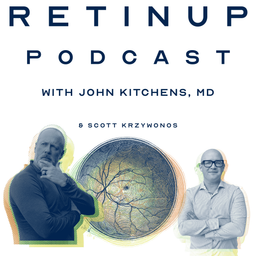
RetinUp Podcast
Claim This Podcastby RetinUp Podcast, LLC
20 episodes
Updated Daily
Accepts GuestsHas SponsorsLocation 🇺🇸
Podcast Overview
RetinUp is a podcast exploring the latest in retina science and ophthalmology. Hosted by John Kitchens, MD, and Scott Krzywonos, each episode features expert insights, research breakthroughs, and practical discussions designed for ophthalmologists, retina specialists, and vision science researchers.
Language
🇺🇲
Publishing Since
10/28/2025
Reach the team behind RetinUp Podcast
Verified contact details for this show aren't on file yet — sign up to get notified when they land.
Recent Episodes
June 11, 2026
The Future of Bevacizumab | Plus John Miller, MD, on the Mass Eye and Ear Vitrectomy Course | Encelto for MacTel2
<p><strong>Guests:</strong> John B. Miller, MD – Associate Professor of Ophthalmology, Harvard Medical School; Director of Retinal Imaging; Associate Fellowship Director, Vitreoretinal Surgery, Mass Eye and Ear</p><p><strong>Show Summary</strong></p><p>John Kitchens, MD, opens with a recap of the inaugural Kiawah Eye Retina meeting, which used a case-based, panel-driven format and drew 80 retina specialists. It left him hoping for an invitation back next year.</p><p>John and Scott then turn to two news stories. First: Outlook Therapeutics won its formal dispute resolution appeal with the FDA and resubmitted its BLA for ONS-5010 in June. John and Scott unpack what an FDA-approved ophthalmic bevacizumab would mean for practices, patients, and the future of compounded bevacizumab — and why everything hinges on how Outlook chooses to price it.</p><p>John B. Miller, MD, joins to preview the 16th Annual Mass Eye and Ear Vitrectomy Course (July 10-11, 2026), a boot camp-style introduction to vitreoretinal surgery for first-year fellows that takes place in the actual Mass Eye and Ear ORs.</p><p>The Vitreoretinal View closes with a deep dive into Encelto (Neurotech Pharmaceuticals), the first FDA-approved treatment for MacTel2, covering patient selection, the reimbursement landscape, how AI may help identify disease earlier, and why 200 implants in the first year of launch represents a genuine milestone for a rare disease therapy.</p><p><strong>Hosts:</strong> John Kitchens, MD; Scott Krzywonos</p><p><strong>Topics Covered</strong></p><p><strong>Kiawah Eye Retina Meeting Recap</strong></p><ul><li>First-ever retina track at Kiawah Eye; co-chaired by John Kitchens, MD, and LejlaVajzovic, MD; organized by Rishi Singh, MD</li><li>Entirely case-based format with panels, audience participation, and fellow/resident presentations</li><li>~80 attendees, strong industry presence; John anticipates the meeting doubles in size next year</li></ul><br/><p><strong>Outlook Therapeutics </strong></p><ul><li>Outlook won its formal dispute resolution appeal May 26, 2026; FDA concluded substantial evidence of effectiveness for nAMD; BLA resubmitted June 1, 2026 as a Class 1 review (60-day PDUFA decision window)</li><li>If approved, ONS-5010 would be the first FDA-approved ophthalmic formulation of bevacizumab </li><li>The double-edged sword: approval validates the need for a reliably manufactured, ocular-grade bevacizumab; published data documents significant variability in compounded Avastin concentration</li><li>Risk to access: once an approved drug exists, FDA may restrict compounding; if priced too high, patients without insurance could lose access to their most affordable option</li></ul><br/><p><strong>Mass Eye and Ear Vitrectomy Course with John B. Miller, MD</strong></p><ul><li>16th annual course; July 10-11, 2026; free of charge; held at Mass Eye and Ear</li><li>Designed for first-year retina fellows; ~60 first-year fellows typically attend out of ~85 nationwide — effectively the entire incoming class</li><li>Day 1: lectures and case panels featuring faculty including Harry Flynn, MD; Stanley Chang, MD; and Steve Charles, MD</li><li>Day 2: wet lab in the actual Mass Eye and Ear ORs; fellows rotate through three one-hour stations covering scleral buckling, vitrectomy, and membrane peeling; near 1:1 faculty-to-fellow ratio; injection technique stations also incorporated</li><li>Registration: course page hosted by MCPI; late registrations accepted</li><li>Register at this link: <a href="https://mcpi.cventevents.com/event/mee2026/summary" rel="noopener noreferrer" target="_blank">https://mcpi.cventevents.com/event/mee2026/summary</a></li></ul><br/><p><strong>Vitreoretinal View: Encelto for MacTel2</strong></p><ul><li>MacTel2: now understood as a neurodegenerative, not primarily vascular, condition; bilateral; often presents in the 30s-50s; affects reading speed and juxtafoveal vision even when distance acuity is preserved</li><li>Encelto (Neurotech Pharmaceuticals): CNTF-producing cell implant sutured inferotemporally via pars plana; FDA-approved March 2025; potentially lifelong — viable CNTF-producing cells confirmed 14 years post-implantation</li><li>200 implants in first year of launch: hosts characterize this as a strong result given the $250,000 price, limited patient population, and modest per-procedure margin for surgeons</li><li>Reimbursement pathways: buy-and-bill (high risk of clawback) vs. specialty pharmacy route (no drug margin, but surgical fee intact); insurance approvals still maturing</li><li>Patient selection: John identifies two groups — those stable and needing reassurance vs. those with meaningful functional decline who are the most motivated candidates</li><li>AI and early detection: John describes uploading de-identified OCTs that appeared normal to Claude AI, which flagged subtle early MacTel characteristics — raising the possibility that AI-assisted screening could identify subclinical disease earlier and improve treatment timing</li></ul><br/><p><strong>Key Takeaways</strong></p><ul><li>The path to approval for ONS-1050 is now clearer than ever — but its impact on patients will be determined by pricing, not the science.</li><li>The Mass Eye and Ear Vitrectomy Course remains one of the most hands-on, surgically focused fellowships boot camps in the country; first-year fellows should register early.</li><li>Encelto's first year in the real world reflects genuine surgeon commitment to a therapy that offers modest financial incentive but meaningful patient benefit.</li><li>AI-assisted OCT interpretation may play a future role in identifying subclinical MacTel earlier — improving the window for intervention.</li></ul><br/><p><strong>Sponsor Notes</strong></p><p><a href="https://www.vabysmo-hcp.com/efficacy/media.html" rel="noopener noreferrer" target="_blank">Watch the Purple Chair series at Vabysmo-HCP.com</a></p><p></p><p><strong>Credits</strong> Production & Marketing: Laura Brown | Business Operations: Liz Hogan</p><p> Listen at RetinUp.com | Apple Podcasts | Spotify | YouTube</p>
May 28, 2026
GLOBE Project & FDA Uncertainty | Arshad Khanani, MD, MA, on Clinical Trials at the Summit | Plus MacTel Image of the Month
<p>John Kitchens, MD, joins from Kiawah Island for the inaugural Kiawah Eye Retina meeting as he and Scott Krzywonos break down two pressing policy stories: what the GLOBE Project actually means for retina practices, and what the FDA's ongoing leadership vacuum could mean for drug approvals and smaller companies with limited runway. Arshad M. Khanani, MD, MA, then previews Clinical Trials at the Summit (CTS), the invite-only meeting he founded to bring physicians, industry, and sponsors into open conversation. The episode closes with Image of the Month: Roger A. Goldberg, MD, MBA, walks through a MacTel Type 2 case using Optos Silverstone RGB ultra-widefield imaging, autofluorescence, and fluorescein angiography — including a post-operative image of an Encelto implant in situ.</p><p><strong>Hosts:</strong> John Kitchens, MD, Scott Krzywonos</p><p><strong>Guests:</strong> Arshad M. Khanani, MD, MA – Managing Partner, Director of Clinical Research & Director of Fellowship, Sierra Eye Associates; Clinical Professor, University of Nevada, Reno School of Medicine; Founder & Co-Chair, Clinical Trials at the Summit Roger A. Goldberg, MD, MBA – Bay Area Retina Associates</p><p><strong>Topics Covered</strong></p><p><strong>The GLOBE Project</strong></p><ul><li>CMS Medicare drug pricing demonstration affecting ~25% of practices, selected geographically at random; launching September or October 2026</li><li>Mechanism: pharma companies owe a rebate to the government based on lowest prices paid in comparable countries — but after ASP is established; practice-level reimbursement is not expected to change</li><li>All details subject to change under the current policy environment</li></ul><br/><p><strong>FDA Leadership Void</strong></p><ul><li>Commissioner Marty Makary departed May 12, 2026; Kyle Diamantis appointed acting leader; all three top FDA positions now filled by acting officials (210-day limit under federal law)</li><li>Broader HHS gaps: no Senate-confirmed surgeon general, NIH head doubling as acting CDC director</li><li>Phase 3 programs already underway are relatively insulated; early-stage companies face the greatest risk from delays and unpredictability</li><li>Replimune precedent: FDA approved a trial design, then denied approval after positive data — a cautionary example for industry</li><li>Hosts forecast 2027 as a difficult year for FDA approvals</li></ul><br/><p><strong>Clinical Trials at the Summit (Arshad M. Khanani, MD, MA)</strong></p><ul><li>Founded 2021; first live meeting 2022; now in its sixth year; held June 13, 2026 in Las Vegas</li><li>Bridges sponsors, sites, CROs, and physicians in a format where industry and academic physicians can speak openly — unlike traditional CME meetings</li><li>Small and invite-only by design; global faculty across career stages; practicing physicians involved in trials may request an invitation at <a href="https://www.ctsretina.org" rel="noopener noreferrer" target="_blank">ctsretina.org</a></li><li>2026 highlights: fireside chats with Wiley Chambers (former FDA ophthalmology head) and Pravin Dugel, MD; first-time Phase 3 late-breaking data; Wall Street and CEO panels; video competition</li></ul><br/><p><strong>Image of the Month: MacTel Type 2 & Encelto (Roger A. Goldberg, MD, MBA)</strong></p><ul><li>Multimodal imaging case using Optos Silverstone RGB: ultra-widefield color, autofluorescence, and fluorescein angiography demonstrate classic MacTel findings — luteal pigment disruption, right-angle vessel branching, and parafoveal temporal leakage</li><li>SLO technology enables quality imaging through media opacities and small pupils</li><li>Second case: post-op ultra-widefield image of Encelto (revakinagene taroretcel-lwey, Neurotech Pharmaceuticals) CNTF implant positioned inferotemporally; SLO extended depth of field keeps both implant and posterior pole in focus</li><li>Clinical pearl: ultra-widefield imaging contextualizes disease extent for patients — only 2% of the retina affected, but in the wrong location</li></ul><br/><p><strong>Key Takeaways</strong></p><ul><li>The GLOBE Project is not expected to affect practice-level reimbursement; the financial adjustment falls on manufacturers.</li><li>FDA instability poses the greatest risk to early-stage companies; 2027 may be a difficult year for the retina pipeline.</li><li>CTS is a must-attend for anyone involved in clinical trials — intimate format, global faculty, and first-time data every year.</li><li>Encelto is the first approved therapy to slow MacTel progression; ultra-widefield imaging is a key tool for diagnosis, monitoring, and patient education.</li></ul><br/><p><strong>Sponsors</strong></p><p>RetinUp is an editorially independent podcast supported with advertising.</p><p>This episode is sponsored by <strong>Astellas</strong>. Learn more at <a href="https://www.astellas.com" rel="noopener noreferrer" target="_blank">Astellas.com</a>. This episode is sponsored by <strong>Genentech</strong>, maker of <strong>Vabysmo® (faricimab-svoa)</strong>. Watch the Purple Chair series at <a href="https://www.vabysmo-hcp.com" rel="noopener noreferrer" target="_blank">Vabysmo-HCP.com</a>. The images in this episode were captured using the <strong>Optos Silverstone RGB</strong>. Learn more at <a href="https://www.optos.com/products/silverstone" rel="noopener noreferrer" target="_blank">Optos.com/products/silverstone</a>.</p><p><strong>Credits</strong> Production & Marketing: Laura Brown | Business Operations: Liz Hogan</p><p>🎧 Listen at RetinUp.com | Apple Podcasts | Spotify | YouTube</p>
May 14, 2026
ASP7317 for Geographic Atrophy | Plus, Moo Adam, MD, on IV-Free Surgery
<p><strong>Guests:</strong> Marci English, MPH – Senior Vice President, Biopharma and Ophthalmology Development, Astellas Pharma | Erin Kimbrel, PhD – President, Astellas Institute for Regenerative Medicine (AIRM); Head of Cell and Gene Therapy Research, Astellas Pharma | Murtaza Adam, MD – Chair of Clinical Research, Colorado Retina Associates</p><p><strong>Hosts:</strong> John Kitchens, MD, Scott Krzywonos</p><p><strong>Show Summary</strong></p><p>Recorded on the final day of ARVO 2026 in Denver, John Kitchens, MD, invites Marci English, MPH, and Erin Kimbrel, PhD, from Astellas to review some of the most significant cell therapy data to emerge in retina in recent years: the phase 1b interim results for ASP7317, an investigational RPE cell therapy that showed functional visual acuity gains in patients with advanced GA. The conversation covers what made earlier cell therapies fail, what's different now, the path to a registration trial, and two additional pipeline programs: ASP2767 (a gene therapy for glaucoma) and ASP2020 (an immune-evasive RPE cell therapy for Stargardt disease).</p><p>The Vitreoretinal View segment features Moo Adam, MD, who has been performing IV-free vitreoretinal surgery since 2018, now accounting for roughly 70% of his cases. He breaks down patient selection, practical logistics, and why the approach could serve as a bridge to office-based surgery. John and Scott then cover the realities of office-based surgery and speculate what needs to change for retina surgeons to embrace office-based surgery.</p><p><strong>Hosts:</strong> John Kitchens, MD, Scott Krzywonos</p><p><strong>Topics Covered</strong></p><p><strong>ASP7317 Phase 1b Interim Results</strong></p><ul><li>ASP7317: investigational RPE cell therapy derived from human embryonic stem cells, delivered via subretinal transplantation in advanced GA secondary to AMD</li><li>Three dose cohorts with severity stratification; BCVA improvements observed in multiple patients, including gains of 2 lines</li><li>GA lesion area stabilized in treated eyes; only 1 month of immunosuppression required</li><li>Mechanism: likely a combination of cell replacement, phagocytic debris clearance, and trophic factor secretion</li><li>Why earlier RPE transplantation attempts failed: engraftment and immune rejection; advances in differentiation technique and surgical delivery have changed the picture</li></ul><br/><p><strong>Pipeline & Path Forward</strong></p><ul><li>Astellas plans to engage regulators in the coming months with the goal of moving directly to Phase 3; functional BCVA endpoints expected to be central to the registrational design</li><li>Complement inhibitors and ASP7317 seen as complementary across the GA spectrum: slowing progression in early disease, potentially restoring function in advanced disease</li><li>ASP2020: iPS-derived RPE cell therapy for Stargardt disease, Phase 1 expected in 2026; EVOLVE natural history study ongoing</li><li>ASP2767: AAV gene therapy for neuroprotection of retinal ganglion cells in glaucoma; IND filing anticipated shortly</li></ul><br/><p><strong>Vitreoretinal View: IV-Free Surgery (Moo Adam, MD)</strong></p><ul><li>Oral sedation plus sub-Tenon's block replaces IV anesthesia in approximately 70% of Dr. Adam's cases; in practice since 2018 with published safety data</li><li>Patient benefits: no fasting, no anesthesiologist copay, no GLP-1 or anticoagulation concerns; appropriate patients can drive themselves home</li><li>Patient selection is key, and active patient communication during surgery is essential</li></ul><br/><p><strong>Office-based Surgery in 2026</strong></p><ul><li>Office-based surgery context: the financial model isn't there yet; no facility fee reimbursement in the office setting, and organized ophthalmology advocacy has stalled</li></ul><br/><p><strong>Key Takeaways</strong></p><ul><li>ASP7317 Phase 1b data showed cell-based therapy led to functional BCVA gains in advanced GA.</li><li>Astellas views complement inhibitors and ASP7317 as complementary tools, not competitors, across the GA disease spectrum.</li><li>IV-free vitreoretinal surgery is practical, patient-friendly, and already in routine use — but the path to office-based surgery still requires a reimbursement solution.</li></ul><br/><p><strong>Credits</strong> Production & Marketing: Laura Brown | Business Operations: Liz Hogan</p><p>Listen at RetinUp.com | Apple Podcasts | Spotify | YouTube</p>
20 total episodes available
Similar Podcasts
Discover related shows you might enjoy
Deep-dive analytics for RetinUp Podcast
Frequently asked questions
Have a different question and can't find the answer you're looking for? Reach out to our support team by sending us an email and we'll get back to you as soon as we can.
- What is RetinUp Podcast?
- How often does this podcast release new episodes?
This podcast updates daily.
- Where can I listen to this podcast?
This podcast is available on 4 platforms including Apple Podcasts, Spotify, and more. You can also use the RSS feed directly.
- Does this podcast accept guests?
Yes, this podcast regularly features guests.
Legal Disclaimer
Pod Engine is not affiliated with, endorsed by, or officially connected with any of the podcasts displayed on this platform. We operate independently as a podcast discovery and analytics service.
All podcast artwork, thumbnails, and content displayed on this page are the property of their respective owners and are protected by applicable copyright laws. This includes, but is not limited to, podcast cover art, episode artwork, show descriptions, episode titles, transcripts, audio snippets, and any other content originating from the podcast creators or their licensors.
We display this content under fair use principles and/or implied license for the purpose of podcast discovery, information, and commentary. We make no claim of ownership over any podcast content, artwork, or related materials shown on this platform. All trademarks, service marks, and trade names are the property of their respective owners.
While we strive to ensure all content usage is properly authorized, if you are a rights holder and believe your content is being used inappropriately or without proper authorization, please contact us immediately at hey@podengine.ai for prompt review and appropriate action, which may include content removal or proper attribution.
By accessing and using this platform, you acknowledge and agree to respect all applicable copyright laws and intellectual property rights of content owners. Any unauthorized reproduction, distribution, or commercial use of the content displayed on this platform is strictly prohibited.