- 14
- Episodes
- 5
- Ratings
- Monthly
- Cadence
- 2025
- First episode
About Rogue Wealth
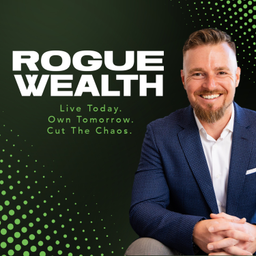
Rogue Wealth is a podcast built for the business owner who refuses to play the “average amateur game.” If you’re leading a family business, building wealth, or simply trying to cut through the noise in a world moving exponentially faster, this show is your edge. Hosted by a wealth strategist who has “seen it all”—from messy partnerships to generational transitions—Rogue Wealth slows everything down so you can focus on what truly moves the needle. Each episode combines storytelling, tactical empathy, and a comprehensive approach to help you navigate the unique challenges of building, protecting, and passing on wealth. We cover it all: Family Business Essentials — governance, succession, family constitutions, and the founders’ code. Wealth Management Strategies — cash management, tax, risk, and legacy planning. Business Owner Realities — leadership, operations, decision-making, and crisis management. Lifestyle and Mindset — how to block out distractions and stay focused on the long game. What sets Rogue Wealth apart is accountability: you’ll hear not only from me, but also from the A-team of wealth professionals I bring to the table, all focused on one thing—your success. Because wealth isn’t built in chaos. It’s built in the quiet spaces, with discipline, clarity, and the courage to do things differently.
- Publisher
- Kris Garlewicz
- Category
- business · education · news
- Language
- en
- Explicit
- No
- First episode
- 29 Sept 2025
- Latest episode
- 27 Oct 2026
Latest episodes
14 episodes in the feed.
27 Oct 2026
Politics Don't Matter: But What You Do With Your Money Does
Every election cycle brings a familiar question: What should I do with my money if my candidate wins or loses? That's the wrong question. In this episode of Rogue Wealth, Kris challenges the idea that political predictions should drive investment decisions. While elections, regulations, tax policy and government spending can influence financial markets, allowing political headlines to dictate your portfolio can introduce unnecessary risk into your long-term financial strategy. Kris examines why the next 30 years may look dramatically different from the last 30, exploring the implications of changing interest rates, inflation, globalization, artificial intelligence and evolving market dynamics. He also discusses why traditional approaches to diversification may deserve a closer look and how investors can better distinguish between the circumstances they can control and those they cannot. From building a growth strategy and making bonds work with intention to managing liquidity, concentration risk and tax exposure, Kris shares a practical framework for navigating uncertainty without letting emotion take the wheel. Because building lasting wealth isn't about predicting the next election. It's about creating a financial strategy that can withstand the unexpected. In this episode: Why politics and emotional investing can be a dangerous combination How the next 30 years could challenge traditional investment assumptions What investors can and cannot control Five considerations for building a more resilient portfolio The importance of liquidity, diversification and tax-aware planning Why financial decisions should follow a process, not a headline To learn more about Kris Garlewicz and ProsperiFi, visit https://prosperifi.com (https://prosperifi.com). For educational purposes only. Not individualized investment, tax or legal advice. Investing involves risk, including loss of principal. Chapters: 00:00 Politics Don't Matter: What You Do With Your Money Does 01:00 Why Elections Aren't Financial Plans 03:26 Politics, Valuations and Investor Behavior 05:07 The Six Risks of Election-Based Investing 07:00 Why the Next 30 Years Will Look Different 08:36 AI, China and a Changing Global Economy 10:28 Deficits, Demographics and Economic Pressures 12:05 Market Valuations and the Lessons of 2022 15:18 Passive Investing and the Limits of Control 19:00 Separating What You Can and Cannot Control 20:00 Building a More Resilient Investment Strategy 23:14 Making Bonds Defensive Again 26:03 Diversification, Complexity and Risk 27:03 Why Your Financial Plan Needs Rules 29:36 Liquidity, Cash Flow and Financial Preparedness 31:10 Concentration Risk and Stress Testing 34:24 Avoiding False Certainty and Financial Fear 35:00 Final Thoughts and the Wealth Defense 360
22 Sept 2026
Winners, Not Dependents
What if the biggest risk to your family's wealth isn't the market? What if it's the person receiving it? In this episode of Rogue Wealth, Kris Garlewicz tackles the uncomfortable truth behind multigenerational wealth: families can spend decades preparing their assets for their children without adequately preparing their children for the assets. Drawing from more than 20 years working with family businesses and his own experience raising six kids, Kris breaks down the principles he believes help create capable next-generation stewards. Inside the episode: • Why generational wealth can fail long before the transfer • Raising winners instead of dependents • Why comfort can become a liability • Teaching kids to earn before they receive • Why consistency matters more than intensity • Connection before correction • Teaching responsibility through the household economy • Why family business successors should learn the business from the ground up • Respect as the price of admission • Intentionally building grit • Kris's five-book "family syllabus" • Why your children may be your largest multigenerational asset You can create the estate plan. You can fund the trust. You can transfer the business. But you cannot wire character. Build winners. Not dependents. Subscribe to Rogue Wealth for more conversations about family business, wealth, leadership, legacy, and making decisions differently. Chapters: 00:00 – Winners, Not Dependents 01:28 – Why Generational Wealth Really Fails 03:42 – Comfort Is a Liability 05:03 – Axiom #1: Raise Winners, Not Dependents 08:33 – Axiom #2: Don't Raise the Bar. Hold It. 11:33 – Axiom #3: Connection Before Correction 14:59 – 5 Ingredients for Building Future Stewards 17:00 – The Household as the First Free Market 18:14 – Preparing Kids for the Family Business 20:37 – Building Grit on Purpose 24:42 – Kris' Family Syllabus 30:34 – You Can Wire Money. You Can't Wire Character.
20 Aug 2026
The Seven Words That Saved My Life. Literally.
What if taking responsibility doesn't mean accepting blame? In this deeply personal episode of Rogue Wealth, Kris Garlewicz shares the seven words that changed how he shows up as a father, husband, business owner and advisor: “It’s not my fault, but my responsibility.” Kris explores the difference between fault and responsibility, how misplaced guilt can create paralysis, and why family businesses are particularly vulnerable to these patterns. A personal story with implications for leadership, succession, family wealth and legacy. Chapters: 0:00 — 7 Words That Saved My Life 2:00 — When Extreme Ownership Goes Too Far 2:55 — Fault vs. Responsibility 4:28 — Why “Why?” Can Keep You Stuck 4:53 — The Research Behind the Idea 8:00 — The Leadership Trap 8:54 — Extreme Ownership ≠ Extreme Fault 9:31 — How Fault Shows Up in Family Businesses 14:47 — The 4-Step Responsibility Protocol 16:05 — Responsibility vs. Authority 17:20 — Say It Out Loud 17:44 — The Legacy at Stake 18:36 — The 7 Words That Changed Everything 19:25 — Viktor Frankl: A Final Recommendation
20 Jul 2026
Growth Investing: Ride Your Winners Like You Actually Mean It
Everyone dreams about finding the next NVIDIA, Amazon, or Tesla. Very few investors know what to do after they find one. In this episode of Rogue Wealth, Kris Garlewicz, Founder of ProsperiFi and your Financial Bodyguard, breaks down one of the biggest misconceptions in investing: growth investing isn't about chasing hot stocks. It's about creating a repeatable framework for identifying long-term opportunities, managing risk, and protecting your wealth once those investments begin to compound. Kris walks through the four pillars every investor should understand: • Why growth investing deserves a place inside a diversified portfolio • The different ways to execute a growth strategy without falling victim to FOMO • How sophisticated investors manage risk while allowing winners to continue compounding • Tax strategies that can help preserve life-changing gains instead of letting the IRS become your largest investment partner Along the way, Kris shares why most business owners are exceptional capital allocators inside their businesses but often neglect the same discipline inside their personal portfolios. If you've ever wondered what to do after an investment doubles... or grows 3,000%... this episode gives you a practical framework for thinking beyond the next trade and toward generational wealth. Because growth investing isn't reckless. It's systematic. Chapters: 0:00 - Everybody Wants the 3,000% Winner. Now What? 2:15 - Why Growth Investing Belongs in a Diversified Portfolio 5:48 - Growth Investing vs. Value Investing 10:26 - Spotting Structural Trends Before Everyone Else 15:42 - DIY Investing vs. Hiring a Growth Manager 21:18 - Why Business Owners Struggle With Their Own Portfolios 26:54 - Managing Risk Without Killing Returns 31:40 - How to Know When to Trim Your Winners 36:25 - Covered Calls, Income Strategies & Portfolio Management 41:12 - The Tax Mistakes Investors Make on Big Gains 47:10 - Don't Let Taxes Dictate Your Investment Decisions 51:45 - Rogue Wealth Rule #11: Momentum Is Your Friend 54:10 - Final Takeaways & Building a Repeatable Investment Framework
11 Jun 2026
Deal Fatigue is a Weapon: How Sophisticated Buyers Engineer Your Surrender
Nobody warns you that deal fatigue is a weapon. After eight months of due diligence, document requests, management presentations, and timeline extensions — the buyer comes back with adjustments. The headline number is down. The earnout expanded. The working capital peg moved against you. Most founders take it. Not because they're weak — because they're exhausted. And that exhaustion was engineered. In Episode 10 of Rogue Wealth, Kris Garlewicz walks through the full playbook: the four phases of a deal where leverage accumulates, six specific tactics used to grind down sellers, why family businesses are uniquely vulnerable, and the pre-engagement discipline that keeps you in control from day one. If you're within five years of a business sale, this is the most important conversation you haven't had yet. Chapters: 0:00 Introduction & the scenario 0:18 Imagine this: 8 months into selling your business 2:03 Deal fatigue is not a side effect — it's a strategy 3:18 Rogue Wealth Rule #3: This is a contact sport 4:21 Part 1: The wave nobody is talking about 5:28 The counterparty: $3.7 trillion in PE dry powder 6:39 The imbalance of sophistication has never been greater 7:43 Part 2: The anatomy of the trap — 4 phases 8:42 Phase 1: The seduction (the IOI) 9:45 Phase 2: The letter of intent 10:44 Phase 3: Due diligence 11:44 Phase 4: The kill zone — the adjustments 14:38 Part 3: The six tactics 15:00 Tactic 1 — Timeline extension 15:35 Tactic 2 — Scope creep 16:02 Tactic 3 — IOI anchoring 16:32 Tactic 4 — Escalation of commitment 17:22 Tactic 5 — Using your own people against you 18:09 Tactic 6 — The re-trade 19:06 Part 4: Why family businesses bleed more 19:22 Layer 1 — The founder's identity is the business 20:17 Layer 2 — The family creates internal pressure 21:31 Layer 3 — The business suffers and buyers use it 22:16 Part 5: The defense 23:18 Defense 1 — Define success in writing before you engage 25:01 Defense 2 — Get your financial house in order 25:54 Defense 3 — Build your advisory team before you engage 26:52 The uncomfortable truth about banker incentives 27:48 Defense 4 — Align the family 29:09 The test for founders in the middle of a deal right now 31:19 The closing: generational wealth vs. a one-time event 33:29 Get Deal Ready: ProsperiFi.com
12 May 2026
Forget WHY. Family Businesses Win on WHAT.
Most family businesses don’t have a purpose problem. They have an execution problem. In this episode of Rogue Wealth, Kris Garlewicz takes aim at one of the most celebrated ideas in modern business culture: Start With Why. Because in family businesses, the “WHY” is rarely the issue. Legacy, pride, stewardship, generational impact — most founders already know exactly why they do what they do. What actually destroys culture is the gap between what leadership says… and what leadership allows. What happens when high performers quietly carry underperforming relatives? What happens when accountability changes based on last names? What happens when everyone in the company knows the rules aren’t applied equally? That’s where culture is revealed. Kris breaks down why Apex family businesses operate differently, how clarity is built through observable behavior, and why “everyone knows the deal” may be the most powerful culture strategy in business today. You’ll also learn: Why culture theater is destroying trust inside family businesses The hidden danger of double standards in leadership How top performers silently disengage before they leave The “Rogue WHAT Stack” framework for auditing your culture Why purpose without practice is just poetry What separates Apex businesses from those trapped in mediocrity This is a direct, unapologetic conversation about leadership, accountability, and the operational reality of family business culture. Because culture isn’t what you say you stand for. It’s what you let happen. Chapters: 0:00 - Introduction 1:36 - The WHY is a performance 3:15 - The family business twist 7:00 - The Observability, Consistency, and Conflict Tests 11:05 - The high performer vs. low performer truth 13:56 - The Simon Sinek counter 16:08 - A recent client meeting on culture 21:00 - Rogue Wealth Rule #9
18 Mar 2026
Exit to Greatness: The 75% Misery Statistic Nobody Talks About
75% of business owners regret selling their company — and it’s not because of the money. In the latest installment of Rogue Wealth, Kris breaks down why exits often lead to identity loss, purpose vacuum, and family disruption — and what the 25% who thrive do differently. Know what you're running toward before you run from what you've built. If you’re thinking about selling, this episode is required listening! Chapters: 0:00 - Introduction 1:05 - There's a 75% chance of misery in a year 3:45 - You're just the guy that used to run a company 7:30 - The "Exit to Greatness" Roadmap 13:30 - The job of a Financial Bodyguard 17:09 - Helping a client define their "next love" 19:15 - Actions you can do right now! 20:45 - Closing remarks
24 Feb 2026
Clarity is Overrated: Why Execution Creates the Answers You're Waiting For (Feat: Paul Rosenthal)
Most entrepreneurs believe clarity comes first. It doesn’t. In this episode of Rogue Wealth, Kris sits down with Paul Rosenthal, Managing Partner at IHC, to unpack one of the most dangerous myths in business: the belief that you need perfect clarity before you act. Paul’s story doesn’t start in a boardroom. It starts in a garage 15 years ago. What followed wasn’t a perfectly mapped blueprint — it was execution. Decisions. Iteration. Expansion. While others were dividing a shrinking pie, Paul and his team focused on making the pie bigger — even in a commercial real estate market many had written off. Together, they explore: Why clarity is a byproduct of action — not a prerequisite The pressure of leading a family-run business without an operating manual The entitlement vs. imposter syndrome tension that few talk about openly How ego quietly becomes the greatest liability in growing organizations Why comfort is often the most expensive phase of a business lifecycle The financial value of time — and how to actually prioritize it This conversation challenges the instinct to wait for certainty and instead makes the case for decisive movement. Because in business — and in legacy — execution creates the answers you’re waiting for. Rogue Wealth Rule #7: Ego is the liability. If you’re leading a family enterprise, building something from scratch, or navigating growth in uncertain markets, this episode is a reminder: momentum beats perfection. Chapters: 0:00 - Introduction 1:58 - "Don't dismiss the good energy when you know it" 7:10 - Working without a user guide 17:38 - Intuition and experience are what matter most 28:40 - The imposter syndrome 37:37 - Capturing operational systems properly 47:10 - Advice to your former self 54:53 - Stop looking for clarity. Decide and do! 59:20 - Closing remarks
2 Feb 2026
Seeing Around Corners: How Smart Legal and Tax Strategy Creates Enterprise Value (Feat: Emily Stubbs)
Most business owners focus on revenue, growth, and operations. Very few focus on the paper. And that’s where enterprise value is either protected… or quietly destroyed. In Episode 6 of Rogue Wealth, Kris Garlewicz sits down with Emily Stubbs, Director of Legal Solutions at Visibility CFO & Tax Advisors, to explore how legal precision and tax strategy work together to build real, durable enterprise value. They revisit the philosophy behind “Visibility” — why clarity inside your numbers, agreements, and structure creates optionality long before a sale ever happens. This conversation dives into: Why 100% bonus depreciation being permanent changes capital planning strategy The real risks and leverage behind taking equity in lieu of payment What private equity firms actually look for in founder-led businesses Why noncompete language after a sale can define (or restrict) your next chapter The power of multidisciplinary collaboration between legal, tax, and advisory professionals Kris reinforces Rogue Wealth Rule #6: “If you don’t understand the paper, the paper owns you.” This episode is about thinking ahead. About having the occasional conversations more often. About ensuring your advisors stay strategic — not just friendly. Because enterprise value isn’t built at closing. It’s built in preparation. Learn more about Emily Stubbs and her team at Visibility CFO and Tax Advisors: https://www.visibilitycpa.com/ Chapters: 0:00 - Introduction 1:20 - The common roadblocks hitting business owners 4:22 - Private equity is looking for this 10:40 - Rogue Wealth Rule #6 16:23 - Taking equity in lieu of payment 21:22 - Non-competes and post-sale realities 27:15 - The emotionally misjudged moments 30:20 - Closing remarks
7 Jan 2026
Fire Drill: The Disaster Plan Your Team Never Mentioned
Most families believe they’re prepared for a crisis. They’ve signed the documents. Checked the boxes. Completed the estate plan. And yet, almost none of them are ready for the disaster that actually comes first. In this episode of Rogue Wealth, Kris dismantles the dangerous myth that death is the real emergency. The true crisis is the three to seven year marathon before it — cognitive decline, long-term care, caregiver burnout, family conflict, and financial hemorrhaging — all unfolding while the person you love is still alive and decisions still have to be made. This is the episode your advisory team never mentioned. We explore why families don’t “rise to the occasion” in emergencies, why the government’s default plan creates chaos, and why most estate documents fail when incapacity lasts years instead of weeks. From the hidden toll of caregiving to the devastating impact on family businesses, this conversation reframes preparedness as protection — not pessimism. This is about running the fire drill before the smoke fills the room. Because communication isn’t just advice. It’s lubrication. And the hardest conversations are where the breakthroughs are hiding. Chapters: 0:00 - Introduction 1:47 - Communication is lubrication 6:30 - Don't let your kids lose both parents 11:00 - Define your plan and identify these key concerns 17:18 - A client's life is turned upside down 24:10 - Do your fire drill so you're prepared when something happens 26:00 - Things you can do right now! 28:15 - The critical choice you need to make
15 Dec 2025
Embrace the Tax Code and Stop Complaining
In this hard-hitting episode of Rogue Wealth, Kris Garlewicz tears apart one of the biggest myths in family business: “The tax code is designed to take your money.” Wrong. It’s designed to reward specific behaviors — and family businesses are the single most advantaged group in the entire system. Kris breaks down how the tax code actually works, why your CPA is probably costing you more than they’re saving, and how even simple, legal, IRS-approved strategies can unlock six to seven figures in wealth every year. From the Augusta Rule, to hiring your kids, to the power of corporate structure, advanced retirement plans, cost segregation, and energy credits — this episode is a masterclass in turning taxes from a burden into a business accelerator. If you are a family business owner, founder, or entrepreneur, the government has already written a 70,000-page playbook directing you toward tax-free wealth. The only question is whether you’re going to use it. Chapters: 0:00 - Introduction 2:05 - The Tax Code is a set of instructions on how to play the game 3:45 - The Tax Code is actually your business plan 6:38 - The Family Business Advantage 9:30 - Advanced strategies your CPA forgot to mention 12:30 - Rogue Wealth Rule #4 16:20 - Key takeaways 19:50 - Closing remarks
17 Nov 2025
Your Business is Mediocre by Choice, Not by Circumstance
A struggling family business isn’t always a product of circumstance—it’s often a reflection of choice. In this episode, Kris Garlewicz breaks down The Family Business Performance Hierarchy—a five-tier framework that helps you diagnose exactly where your organization stands today… and what it takes to climb higher. From “Obsolete” operations to “Apex” performance, Kris explores the mindset, leadership, and systems that separate legacy-building businesses from those treading water. This episode delivers clarity, challenge, and a call to action for any family-owned business ready to move from mediocrity to mastery. Chapters: 0:00 - Introduction 2:18 - The Family Business Performance Hierarchy 5:38 - What it means to be a "struggling" business 9:11 - Who are truly "Game Changers" in their industry? 12:09 - The Apex Family Business 16:39 - Rethinking core business models to reduce distraction 19:41 - Growth solves all problems 22:01 - Closing remarks
27 Oct 2025
The Plague in Plain Sight
In this episode of Rogue Wealth, host Kris Garlewicz tackles one of the most destructive—and least discussed—forces in family business: emotional friction. Building on Episode 1’s theme of Blocking Out the Noise, this conversation exposes the emotional tax that quietly drains productivity, clarity, and growth. The toughest consultant your business will ever face isn’t a Wall Street analyst—it’s often sitting across from you at the dinner table. Kris breaks down the frameworks used by successful family enterprises to transform dysfunction into discipline, and emotion into clarity. You’ll learn: How to define your family charter and core values — the unbreakable commandments guiding every decision. Why everyone is watching — how your behavior sets the standard for every generation that follows. What professional governance really looks like — and how to enforce systems that transcend last names. How to identify your “bodyguards and sounding boards” — the people who keep you accountable when decisions get emotional. Through powerful stories and real-world lessons—including the fallout of a $400 million family business collapse—Kris reveals how even the most successful families can lose everything when emotion overrides structure.
29 Sept 2025
Blocking Out The Noise
Welcome to the inaugural episode of Rogue Wealth, the podcast built for leaders, entrepreneurs, and family business owners who are serious about building and protecting real wealth. In this first conversation, we’re diving into one of the single biggest wealth killers of our time: noise. From market updates, social feeds, and endless “productivity hacks,” the constant barrage of information is designed to distract, not empower. The truth? Even accurate information can derail your focus and become a hidden tax on your decision-making. In this episode, we’ll unpack: The Signal-to-Noise Tax — why not all inputs are equal. How to Build Your Personal Filter — the decision framework that protects your focus. Silence as a Skill — guarding your brain real estate from distractions. Why Today’s Rate of Change Demands Preparation — and how ignoring it puts your future at risk. Along the way, I’ll share real stories — from navigating messy partnerships to making bold investments when panic ruled the market — to show how discipline, focus, and silence create the space where wealth is built. If you’re ready to filter out the noise, stop reacting, and start moving the needle on what matters most, this episode will give you the tools to do it. Learn more at ProsperiFi.com, or schedule a Power-Up session to get your family business on track to excellence. Chapters: 0:00 - Introduction 1:00 - Noise paralyzes you from making decisions 4:17 - Signal to Noise Tax 6:28 - Rogue Wealth Rule #1 10:32 - Silence is a tough skill to utilize 17:19 - Noise impacting a business partnership 21:02 - Key takeaways 23:11 - Closing remarks
Reach and audience
Public platform figures. Ratings count people who left a rating, not total listeners.
- Apple Podcasts (US)
- 5.0 / 5
- 2 ratings
- Spotify
- 5.0 / 5
- 3 ratings
Contact Rogue Wealth
- Guest appearances
- Books guests
Based on episode analysis; this does not confirm that the show is currently accepting guests.
Host of Rogue Wealth?
Claim your podcast to manage its listing and keep your show details accurate.
Pod Engine is an independent podcast discovery and analytics service and is not affiliated with or endorsed by this podcast. Artwork and show content belong to their owners. Full legal notice.
Explore this show
Podcast research with Pod Engine