- 13
- Episodes
- 2026
- First episode
About Running the Devils
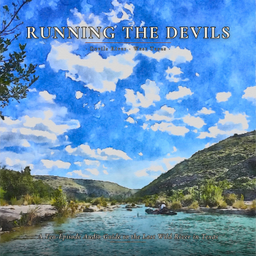
A ten-episode audio field guide to paddling the Devils River — the last wild river in Texas. Ninety-four miles of spring-fed, turquoise, remote canyon water. No cell service. Almost no public land. TPWD caps overnight permits at twelve per day for the entire river. Built for the person actually going: history, honest self-assessment, permits, flow, gradient boundary law, a mile-by-mile walkthrough of the classic three-day trip, Dolan Falls, gear, and what to do when something goes wrong. Companion checklist and TPWD call script included.
- Publisher
- Dink Murphey
- Category
- sports
- Language
- en
- Explicit
- No
- First episode
- 14 Jul 2026
- Latest episode
- 17 Jul 2026
Latest episodes
13 episodes in the feed.
17 Jul 2026
BONUS: A Historical Account of the River - mile by mile.
A bonus episode of Running the Devils, for the paddler who wants to know what they're floating past. You are moving through one of the most historically layered corridors in Texas. Most people paddle the whole ninety-four miles without seeing any of it — because you don't see history on the Devils. You paddle past it. You have to know where to look. This is the mile-by-mile guide, in roughly five-mile segments from Baker's Crossing at mile zero to the Dan A. Hughes Unit take-out around mile thirty-three, then the lost lower river down to the mouth. We cover Jack Hays and the 1848 expedition that renamed the Spanish San Pedro to Devils River. Camp Hudson, the 1857 Battle of Devils River, and the Great Comanche War Trail crossings. The Pecos River Style pictographs in more than two hundred rock shelters — Skyline, Halo, Quintero — three to six thousand years of continuous human occupation on these cliff walls. Dolan Falls and Captain Pat Dolan's Ranger patrols in the 1870s. E.K. Fawcett's July 24, 1883 cave inscription and the sheep and goat ranching era that followed. Beaver Lake and the stagecoach outpost above Juno. The June 28, 1954 flood that peaked at 122,000 cubic feet per second at Baker's Crossing. The lost town of Devils River, drowned when Amistad Reservoir filled in 1969. How to spot cliff shelters, tributary springs, and ranching-era artifacts from your boat. What you're floating over. And who came before you.
17 Jul 2026
BONUS: Water - Pack Less, Treat More.
A bonus episode of Running the Devils on the one piece of gear that determines the weight of your entire boat — water. Three days of drinking water is thirty-plus pounds. Most experienced Devils paddlers don't carry it. They launch with one gallon and treat the rest as they go. This episode is how to do that safely, with every treatment method covered in order of what actually works on this river. Chemical: Aquatabs and Katadyn Micropur chlorine dioxide tablets. Dosing, contact time (fifteen minutes for bacteria, thirty for giardia, four hours for cryptosporidium in cold water), the bottle-rotation trick veterans use, and taste management. Filters: Sawyer Squeeze as the workhorse, LifeStraw as a backup, gravity systems for groups. Failure modes — freezing, clogging, dropping — and the daily backflush routine that keeps your filter honest. UV pens like the SteriPEN, and why they belong in the backup slot rather than the primary. Boiling, and why fuel weight makes it your fourth line of defense. Iodine, and why it's obsolete for this application. Then the two-method belt-and-suspenders philosophy that keeps you drinking clean water even if one system fails — plus the full camp routine of dirty bag, clean bag, timer, and rotation. The Devils looks clean. It is not sterile. Every drop you drink from this river goes through a treatment step. Every drop. Pack less. Treat more. Drink often.
17 Jul 2026
BONUS: Sidearms on the Devils
A bonus episode of Running the Devils, written for the Texas License to Carry holder or the reciprocal-state carrier who's already decided to bring a sidearm on the river. This is not about whether to carry — it's about how to do it legally, competently, and responsibly on a multi-day paddling trip. We cover the Texas legal framework: HB 1927 permitless carry, why the LTC still matters for reciprocity and prohibited-place access, and the misdemeanor carve-outs non-LTC carriers need to know. Firearms are legal in Texas state natural areas — but federal rules apply the moment you touch Amistad or other National Park Service land. Practical carry on a wet, multi-day trip: retention holsters, waterproofing your setup, sealed-primer defensive ammunition, and the three body-carry positions that actually work seated in a boat. Why most serious river carriers end up on a chest rig. Then the hard part — discharge. Texas Penal Code Chapter 9 on justified force and deadly force. Stand-your-ground and castle doctrine as they apply to a tent, a canoe, and a gravel bar. Animal discharge rules for feral hogs, mountain lions, and rattlesnakes. And the exact post-incident protocol: satellite SOS, Val Verde County Sheriff dispatch, the four things to say, and the four things to say nothing more about until you have a Texas criminal defense attorney on the line. Carry legally. Carry competently. Hope you never need it.
14 Jul 2026
10. If Something Goes Wrong
The one I hope you never have to use. If you've done everything the last nine episodes cover — wilderness experience, physical readiness, permits, flow check, gradient boundary, WAG bags, gear — you've massively lowered your risk. You have not eliminated it. On a remote river, the difference between "this is inconvenient" and "this is a serious problem" can be very thin. We cover the categories of what can go wrong and the exact protocol for each: • Minor injuries — cuts, blisters, sprains — handled with your first-aid kit • Moderate injuries — bad sprains, fractures — the decision tree for whether to paddle out or call for help • Serious injuries — unconscious paddler, compound fracture, head trauma, venomous snakebite — the immediate satellite SOS • Heat emergencies — the top cause of Devils River paddler emergencies • Lost or damaged gear — repair kit essentials, spare paddle protocol • Flash flood — the immediate off-the-water protocol • Group conflict — the veto rule and how to use it We also cover the emergency contact chain: satellite communicator SOS, Val Verde County Sheriff at 830-774-7513, and what to expect from a rescue in this terrain. This is the series capstone. Listen once before your trip. Reference the checklist on the water.
14 Jul 2026
9. Gear, Food, and the Pack List
Everything you need to bring. Some of what you shouldn't. And the tricks paddlers who've done this river ten or twenty times have figured out — that you and I are going to steal. Category by category: PFDs (worn, zipped, every minute on the water), primary and spare paddles, WAG bags (one to two per person per day — this is non-negotiable), water strategy (bring it all versus treat river water, and why you carry two different treatment methods), food that holds up to heat and repacking, shelter and sleep system, sun and clothing, safety and first aid, and the dry-bag protocol that keeps your emergency kit accessible if you swim. We also cover what not to bring, what to leave in the shuttle vehicle, and how to pack a board or boat so the center of gravity stays where it belongs when you hit moving water. This episode pairs with the printable pre-trip checklist so you can pack against a real list — not against your memory the night before departure. Print the checklist. Lay everything on the garage floor. Check items off one category at a time.
14 Jul 2026
8. The Lower Miles — Mile 20 to Take-Out
You survived Day 2. Game Warden Rock, Dolan Falls, and the Three-Tier Waterfall are behind you. Today is your last day on the river — and it's the day people underestimate in the other direction. Day 3 is when paddlers relax. The hard parts are done. They stop scouting. They get complacent. And they get hurt. This episode reminds you that the river deserves your attention until your boat is on the trailer. We walk through the classic take-out options at the Dan A. Hughes Unit — Devils Back Campground at river mile 30, and Pafford's Crossing Day-Use Area at river mile 33 — and how the choice depends on your permit, your shuttle, and the 5:00 PM Monday vehicle removal deadline. The lower miles are, in many paddlers' opinion, the prettiest of the river. Tall canyon walls. Long, deep, turquoise pools. Schools of bass. Herons on the banks. We cover the pace to hold, the last places to check your gear, and the take-out sequence. We also cover the longer variant — continuing to Rough Canyon Marina at Lake Amistad — and why most three-day trips skip it.
14 Jul 2026
7. Dolan Falls and the Portage That Matters
If this whole series were a book, this is the chapter I most want you to actually read. More injuries, more lost gear, and more genuinely bad days on the Devils happen in the eight miles you paddle today than anywhere else on the river. Day 2. Mile Twelve to Mile Twenty. Two named hazards. Both mandatory to deal with. Both frequently underestimated. At approximately river mile 13.3, you approach Game Warden Rock, also called Sycamore Chute — a car-sized boulder with a four-foot drop below it. TPWD's own words: "boats are often damaged beyond repair here." We walk through how to scout it, how to run it, and when to portage. At river mile 16.4, you reach Dolan Falls — a ten-foot Class IV waterfall. This is a mandatory portage. Not a "you can run it if you're strong" — mandatory. We walk through the takeout, the portage route, the timing, and why lingering is not an option. At mile 20.4, the Three-Tier Waterfall — Class II-III — closes the day. We cover the scouting line and the SUP protocol. This is the safety-critical episode. Listen twice. Then listen again the morning of Day 2.
14 Jul 2026
6. Day 1 — Baker's Crossing to Mile Twelve
For the next three episodes, we go down the river — not talking about it, walking through it. Mile by mile. What you'll see. What to watch for. Where the good camping is. Where the hazards are. Today: Day 1. Baker's Crossing to Mile Twelve. Twelve river miles. Your first day on the Devils. We start the night before — the primitive paddler camp south of the Baker's Crossing bridge, meeting your shuttle service, packing boats, and the pre-launch checklist. Then we walk the day itself: the sunrise launch, the character of the first few miles, the transitions between still pools and moving riffles, the pace to hold, and the way to read the wind that comes up mid-morning. We cover what a good Mile Twelve camp looks like, how to set up so tomorrow's launch is faster, and the mental model to be in on Day 1: build the rhythm, protect the group, don't push. Day 2 is where the hazards live. Day 1 is where you earn the right to face them.
14 Jul 2026
5. Gradient Boundary Law and Camping Legally
This is the episode most paddling podcasts skip. It's also the one that keeps you out of trouble on the Devils. The Devils runs 94 miles through West Texas. Along the way, it passes through three publicly accessible zones: the Baker's Crossing bridge area, the two units of the Devils River State Natural Area (Del Norte and Dan A. Hughes), and Lake Amistad National Recreation Area at the mouth. Everything else — every foot of riverbank in between — is private property. Watched. Sometimes patrolled. So how are you allowed to paddle it? Because in Texas, navigable rivers are public. The land next to them isn't. And the line between the two is a Texas legal concept called the gradient boundary. We break down what the gradient boundary actually is, how to identify it visually in the field, where you can legally stand and step, why "the river is public, the shore is not" isn't quite the whole story, and what happens when paddlers get it wrong — trespassing charges, landowner encounters, and Val Verde County deputies. This is the keep-you-out-of-trouble episode. It's dense on purpose. Listen twice.
14 Jul 2026
4. Reading the River — Timing, Flow, and Weather
The Devils River is spring-fed, but it's still a West Texas river. That combination makes it fickle in specific ways — mostly steady, occasionally violent, sometimes stubbornly low. This episode teaches you how to pick your window and read the river before you launch. We cover the seasonal calendar (spring and fall are the sweet spots; summer is dangerous; winter has its own risks), the two target windows for a good trip, and the CFS gauge at Pafford Crossing that tells you whether the river is ready. Numbers to remember: ~200 CFS is ideal. 140-199 CFS is very enjoyable. Below 75 CFS, you're dragging. Above 500 CFS is technical, experienced paddlers only. Above 1,000 CFS, do not launch. The historic peak was 122,000 CFS in a flash flood. We also cover flash flood detection — rising water, clouding water, and distant rumble upstream — and the immediate protocol if it happens. By the end of this episode, you'll know how to check the gauge the night before your launch and again the morning of, and how to make the call to go, wait, or reschedule.
14 Jul 2026
3. The Permit Puzzle — Booking the DRAP
The permit trips up more Devils River trips than the rapids do. This episode walks you through the Devils River Access Permit — the DRAP — step by step, in the right order. We cover: what the DRAP actually is, why it costs $10 per paddler plus $5 per person per night for camping, the daily quota (twelve overnight permits for the entire river), the five-month booking window, the 72-hour refund cutoff, and the exact phone workflow for calling TPWD at 512-389-8901. We also cover the order-of-operations mistake almost every first-timer makes: booking the permit before booking the shuttle. The shuttle is the bottleneck on the Devils, not the permit. Lock the shuttle first, then call TPWD — and this episode explains why. A companion printable TPWD call script is available so you have the exact words and confirmations in front of you when you dial. The permit is the gate. This episode gets you through it correctly the first time.
14 Jul 2026
2. Before You Book — Is This Trip for You?
Before you spend a dollar on a permit or a shuttle, this episode asks you to answer some honest questions. Texas Parks and Wildlife is explicit: do not attempt the Devils River unless you're an experienced paddler in good physical condition with wilderness paddling experience. Not lake paddling. Not a two-hour rental at a state park. Multi-day, self-supported, remote wilderness paddling. We walk through a real self-assessment: how much wilderness paddling you've actually done, what kind of shape you're in, how you handle heat and dehydration, how comfortable you are being genuinely off-grid for three days, and how your group handles disagreement under stress. The goal here isn't to talk you out of the trip. It's to help you decide clearly — and if you're not ready, to tell you what to do first (spoiler: the Rio Grande through Big Bend, the lower Guadalupe, or the Colorado below Austin are all better first wilderness trips than the Devils). If your honest answer to the questions in this episode is "yes, I'm ready" — keep listening. The next eight episodes get you to the water.
14 Jul 2026
1. The Last Wild River in Texas
The Devils River doesn't look like the rest of Texas. Ninety-four miles of turquoise, spring-fed water cutting through West Texas canyon country — remote, guarded, and unlike anywhere else in the state. In this opening episode, we set the scene. A Texas Ranger named John Coffee Hays looked down at this river in 1848 and, so the story goes, said "this must be the Devils River." The name stuck. What Hays saw is largely still there — endangered minnows in the pools, pictographs on the cliff walls, and a river the state has fought for decades to keep intact. We cover: where the river runs, how it was formed, why the water is that impossible color, what "spring-fed" actually means for a desert river, and the tension between paddlers who want access and ranchers who've held the land for generations. If you're planning to paddle it — or if you're just curious what it is — start here. The next nine episodes get progressively more tactical. This one is the "why." Companion checklist and TPWD call script referenced throughout the series.
Contact Running the Devils
- Guest appearances
- Does not typically book guests
Based on episode analysis; this does not confirm that the show is currently accepting guests.
Host of Running the Devils?
Claim your podcast to manage its listing and keep your show details accurate.
Pod Engine is an independent podcast discovery and analytics service and is not affiliated with or endorsed by this podcast. Artwork and show content belong to their owners. Full legal notice.
Explore this show
Podcast research with Pod Engine