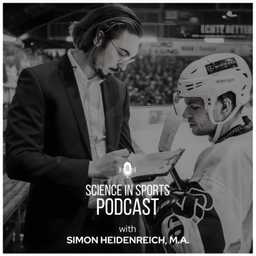
Hosted by sports scientist and former professional hockey player Simon Heidenreich, this sports science podcast explores strength training, athletic performance, recovery science, injury prevention, and applied research in sport.
Featuring conversations with strength & conditioning coaches, sport scientists, athletes, and medical professionals, the show translates research into practical insights for coaches, athletes, and anyone interested in performance.
🇩🇪 #98 Langzeitverletzungen: Warum Return to Play nicht reicht mit Nathalie Klingebiel
Was passiert mental nach einer Langzeitverletzung – und warum reicht Return to Play allein nicht aus? In dieser Folge sprechen wir mit Sportpsychologin Nathalie Klingebiel über Sportpsychologie, Verletzungsmanagement, Rehabilitation und den mentalen Weg zurück in den Leistungssport.
Nathalie Klingebiel arbeitet aktuell als Sportpsychologin bei Werder Bremen und bringt Erfahrungen aus verschiedenen Nachwuchsleistungszentren und dem Profifußball mit. Im zweiten Science in Sports Gespräch sprechen wir darüber, wie sich ihre Arbeit im Profifußball verändert hat und warum Sportpsychologie im Frauenfußball teilweise anders angenommen wird.
Der Schwerpunkt liegt jedoch auf Langzeitverletzungen.
Was passiert mit der sportlichen Identität, wenn Training und Wettkampf plötzlich wegfallen? Warum verlieren Athleten während einer langen Reha manchmal das Vertrauen in ihren eigenen Körper? Und wie kann sich Angst vor einer erneuten Verletzung im Training zeigen?
Wir sprechen über den Unterschied zwischen Return to Play und Return to Performance, die Rolle von Stress, Re-Injury-Angst, Motivation und Körpervertrauen sowie über Nathalies Erfahrungen mit einer Langzeitverletztengruppe.
Außerdem geht es um eine Frage, die für jedes Medical Team entscheidend ist: Wie können Sportpsychologie, Athletiktraining, Physiotherapie, Medizin, Trainer und Athleten besser zusammenarbeiten?
Eine praxisnahe Folge für Athleten, Trainer, Sportwissenschaftler, Athletiktrainer, Physiotherapeuten und alle, die verstehen möchten, was eine ganzheitliche Rehabilitation wirklich bedeutet.
Folge Science in Sports für weitere evidenzbasierte Gespräche.
28 Sept 2026
🇺🇸 #97 Basketball S&C: Julia Wedman on Data, Youth Development & Coaching
Basketball strength and conditioning, athlete development, training load and coaching philosophy are at the center of this episode of Science in Sports with Julia Wedman.
Julia is an assistant strength and conditioning coach at EWE Baskets Oldenburg and also works with the Swedish senior women's national team. Her coaching background spans multiple sports, including basketball, handball, volleyball, football and ice hockey — giving her a particularly broad perspective on performance training.
In this conversation, Julia explains how working across different sports has shaped her coaching philosophy, why she doesn't see specialization and broad experience as mutually exclusive, and how she adapts strength and conditioning to athletes at very different stages of development.
We also take a behind-the-scenes look at her work in Oldenburg, from individualized training for professional athletes to structured weight-room development for youth players. Julia explains how younger athletes are taught not only how to lift, but also how to become increasingly independent in the weight room.
The conversation then moves into the Swedish national team environment, where the challenge is very different: athletes arrive from different clubs with different training loads and levels of fatigue, while the staff has only a short window to prepare for important games. Julia discusses how she uses session RPE, readiness questionnaires, Firstbeat data and conversations with athletes to build a more complete picture of training load and fatigue.
We also discuss transferring training ideas between sports, keeping strength and conditioning simple, evaluating social-media trends critically, and why mentorship and experimentation are essential for developing your own coaching philosophy.
The episode closes with Julia's philosophy on athlete development: the goal is ultimately to give athletes the tools to become independent.
Follow Science in Sports for more evidence-based conversations.
21 Sept 2026
🇺🇸 #96 Sports Performance, Coaching & Community with Dan Perlmutter
What does elite sports performance look like inside a university supporting hundreds of student-athletes across multiple sports? In this episode of Science in Sports, Simon Heidenreich speaks with Dan Perlmutter, Director of Athletic Performance at Duke University, about strength and conditioning, sports science, coaching, technology, and the importance of community in athletic development.
Dan shares insights from nearly 25 years in the field and reflects on how his role has evolved from being directly involved in many different tasks to helping coaches, specialists, and departments perform at their best. He explains how Duke supports a large number of teams through collaboration, sport-specific expertise, and a flexible approach to programming.
The conversation explores the relationship between data and the coach’s eye, including why advanced technology should support—not replace—human observation and communication. Dan discusses how teams can individualize training without creating a completely separate program for every athlete, using information to organize athletes into different training groups and adjust workloads.
Simon and Dan also discuss trust, athlete education, self-awareness, and the importance of helping athletes identify their blind spots. Dan explains why communication skills are essential for young strength and conditioning coaches and why athletes need to take responsibility for their own recovery and development.
From sport-specific strength training to building a collaborative performance culture, this episode offers practical insights for coaches, sport scientists, strength and conditioning professionals, and ambitious athletes.
Follow Science in Sports for more evidence-based conversations.
Who has been a guest on Science in Sports
Names identified in recent episode analyses. Showing up to five guests.
Glenn Penlington
Zoe Penlington
Wolfgang Ruf
Anthony Allegrino
Dominik Theodorou
Reach and audience
Public platform figures. Ratings count people who left a rating, not total listeners.
Spotify
4.8 / 5
38 ratings
Podcast Authority Score: 25 / 100
A composite of feed quality, social presence, YouTube performance and engagement. Read the methodology.
Pod Engine is an independent podcast discovery and analytics service and is not affiliated with or endorsed by this podcast. Artwork and show content belong to their owners. Full legal notice.
Explore this show Podcast research with Pod Engine