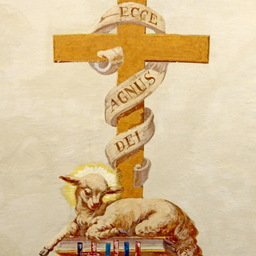
Dive deep into the sacred and the suppressed. Scripture & Shadows unearths Christianity’s most influential, mystical, and controversial texts one book at a time. From the majesty of the King James Bible to the fire of The Great Controversy, the spiritual ascent of St. John of the Cross, and the raw voices of the Ante-Nicene Fathers, this podcast journeys through the pages that shaped faith, fractured doctrine, and forged saints. Each episode unveils the historical context, theological weight, and spiritual power of texts that continue to shape Christian thought across centuries.

Scripture and Shadows: Christianity’s Hidden Canon
Claim This Podcastby Falcon Millenium
Podcast Overview
Dive deep into the sacred and the suppressed. Scripture & Shadows unearths Christianity’s most influential, mystical, and controversial texts one book at a time. From the majesty of the King James Bible to the fire of The Great Controversy, the spiritual ascent of St. John of the Cross, and the raw voices of the Ante-Nicene Fathers, this podcast journeys through the pages that shaped faith, fractured doctrine, and forged saints. Each episode unveils the historical context, theological weight, and spiritual power of texts that continue to shape Christian thought across centuries.
Language
🇺🇲
Publishing Since
4/5/2025
1 verified contact email on file for Scripture and Shadows: Christianity’s Hidden Canon
Pitch yourself as a guest, propose sponsorships, or reach out directly to the host.
Recent Episodes

June 30, 2025
The Body of God: Aquinas and the Divine Logic of the Incarnation
<p>In this episode, we venture into one of the most intellectually rigorous and spiritually profound texts of Christian thought — Summa Theologica: Part III (Tertia Pars) by St. Thomas Aquinas. This final section of Aquinas’s magnum opus deals with the most central mystery of Christianity: the Incarnation of God in the person of Jesus Christ. Far from being abstract theology for scholars alone, this is the structured heartbeat of Christian faith — a meticulous unfolding of why God became man, how the sacraments flow from His humanity, and what that means for the soul’s salvation.</p><p>Aquinas writes not with poetic mysticism but with crystalline logic — laying out every argument, objection, and counterpoint in an architecture of reason. The questions he tackles in this volume are among the most daring: Could God have saved us another way? Why was the Virgin Birth necessary? What does it mean for Christ to have two wills, two natures, and yet remain one Person? How does Christ's death satisfy divine justice? And what is truly present in the sacraments — symbol, or substance?</p><p>At the heart of Tertia Pars is the idea that God’s love is not abstract or distant, but physical and historical. The Incarnation is not merely a theological fact; it is the Divine condescension — God stepping into matter, into time, into suffering. The humanity of Christ becomes the meeting point of heaven and earth, the axis where the eternal and the mortal kiss. In Aquinas’s vision, every drop of blood, every act of Christ, every sacrament instituted by Him is an outpouring of infinite grace precisely because it is both human and divine.</p><p>We follow Aquinas as he lays out the seven sacraments — Baptism, Confirmation, the Eucharist, Penance, Extreme Unction, Holy Orders, and Matrimony — not as rituals, but as divine instruments engineered to shape the soul toward eternal life. These are not symbolic gestures; they are sacred technologies of transformation, flowing from the pierced heart of Christ into the life of the Church. Particularly compelling is Aquinas’s Eucharistic theology, where the bread and wine are not just reminders of Christ, but become Christ Himself — body, blood, soul, and divinity — through the mystery of transubstantiation.</p><p>This episode is not simply an academic exploration. It is a journey into a framework where logic serves love, and reason bows before mystery without surrendering clarity. Aquinas doesn't ask us to choose between faith and intellect; he demands that both work in harmony — because the truth of God can withstand the sharpest scrutiny.</p><p>In a time when theology is often reduced to vague inspiration or partisan dogma, Aquinas calls us back to rigor, depth, and reverence. His Summa is not just about answers — it’s about asking the right questions in the right order, until the soul stands in awe before the Incarnate Word.</p><p>Join us as we explore the mind of the Angelic Doctor, whose intellectual scaffolding still holds up the edifice of Catholic theology to this day. Whether you’re a philosopher, a seeker, or someone wrestling with the idea of God made flesh, this episode offers a clear, rich, and challenging invitation: come and reason through the mystery, because the Word was made flesh — and dwelt among us.</p><p></p>

June 30, 2025
Cross and Crescent: The Silent Struggle for Spain’s Soul (756–1031 A.D.)
<p>In this episode, we uncover a rarely discussed yet critical chapter in the making of Western civilization — the centuries-long cultural, spiritual, and political encounter between Christianity and Islam in medieval Spain. Based on the powerful and meticulously researched work of Charles Reginald Haines, Christianity and Islam in Spain, A.D. 756–1031, this narrative transports us to a land torn between two worlds, where the sword and the scripture, the cathedral and the mosque, the priest and the caliph, all vied for the soul of a singular territory: al-Andalus.</p><p>This was not merely a clash of faiths but an entangled coexistence, a hybrid civilization caught between violent conquest and fragile tolerance. As the Umayyad Caliphate rose in Córdoba, Islamic rule ushered in a flourishing of science, philosophy, and art — while at the same time enforcing a system in which Christians, now under Muslim dominion, became the dhimmi: protected, taxed, tolerated, and yet distinctly second-class. Amid this complex reality, a quiet form of resistance emerged — not through rebellion, but through martyrdom, language, and hidden worship.</p><p>Haines documents the stories of Christian martyrs in Córdoba, who, rather than adapting to the Islamic social order, openly defied it — challenging the Prophet Muhammad, denouncing Sharia, and embracing public execution. But he also reveals a more nuanced truth: not all Christians resisted. Many became Arabized in language, culture, and dress. Churches fell into ruin, Latin was forgotten, and Islam gradually seeped into the very veins of Iberian identity. The real battle, then, was not fought with swords alone — but within the hearts of those caught between survival and spiritual integrity.</p><p>This episode delves into the theological debates, legal tensions, and psychological tolls experienced by Christians living under Islamic rule. It also examines the intellectual ferment of the time, when interreligious dialogues and mutual borrowings shaped the future of both faiths. Philosophy, astronomy, and medicine flourished — yet under a shadow of imperial dominance and theological tension. What emerged was not a pure Islamic empire or a defiant Christian resistance, but a fractured mirror reflecting both tolerance and trauma.</p><p>As we explore the decline of Christian influence, the rise of the Spanish martyrs, and the early seeds of the Reconquista, we begin to grasp the long-term stakes of this era. It was a time when faith was tested not just by swords, but by compromise. When the Gospel and the Quran echoed from neighboring towers. And when identity, once anchored in belief, began to dissolve into politics, culture, and language.</p><p>The story of medieval Spain between 756 and 1031 is not just a local episode — it is a global lesson in how religions contend, adapt, assimilate, and resist. It challenges modern assumptions about “clashes of civilization” and reminds us that history is rarely black and white. Instead, it is lived in the gray — where human beings, torn between two divine worlds, must choose who they are.</p><p></p>

June 30, 2025
Mysticism: Where Christian Silence Meets Buddhist Emptiness
<p>In this episode, we journey into the profound intersection of Eastern and Western mysticism through the lens of D.T. Suzuki’s groundbreaking comparative study, Mysticism: Christian and Buddhist. With unparalleled clarity, Suzuki illuminates the deep undercurrents shared between the Zen experience of satori and the Christian mysticism of Meister Eckhart—two traditions often perceived as oceans apart. Yet when stripped of cultural form, ritual, and theological vocabulary, both reveal a radical path toward the same ineffable truth: a direct, wordless, and overwhelming encounter with the Divine—or the Absolute.</p><p>What emerges is not a simple comparison of doctrines but a confrontation with the limits of language and thought itself. Eckhart speaks of the “desert of the Godhead,” a space beyond God-as-person where even divinity is transcended. In parallel, Zen Buddhism cuts through all dualities with the sword of emptiness, Śūnyatā, inviting the practitioner into a void that is paradoxically full—pregnant with truth, beyond birth and death. For both, the journey is not intellectual but existential. It is not about knowing more, but about becoming less—until there is nothing left but the raw awareness of Being.</p><p>As Suzuki leads us deeper, we begin to see how detachment, silence, and inward renunciation form the bedrock of both mystic paths. Meister Eckhart’s call to “let God be God in you” echoes the Zen master’s urging to “see your original face before your parents were born.” Both demand the same surrender: the ego must dissolve, the clinging mind must be stilled, and the self must pass through the crucible of unknowing. Only then can one awaken to what has always been present—beyond theology, beyond dogma, beyond the veil of appearances.</p><p>This episode unpacks these profound insights with care, inviting the listener into a contemplative space where neither Christianity nor Buddhism is superior, but where both offer keys to a deeper reality. It's not about blending traditions but witnessing how mystics from vastly different worlds arrived at near-identical thresholds of truth. Suzuki does not argue for syncretism but for resonance—for a shared human capacity to break through illusion and touch the eternal.</p><p>In today’s age of spiritual noise, quick-fix enlightenment, and dogmatic division, this dialogue between Eckhart and Zen serves as a sacred bridge. It reminds us that true mysticism isn’t about belief—it’s about transformation. It doesn’t seek to convert but to awaken. And in that awakening, we find a silence so deep it hums, and an emptiness so full it bursts with light.</p><p>Whether you walk the path of prayer or meditation, chant or koan, you are invited to stand at this edge—where Christian silence meets Buddhist emptiness. And in that still point, beyond all opposites, something ancient stirs. Something holy. Something beyond name.</p><p></p>
28 total episodes available
Deep-dive analytics for Scripture and Shadows: Christianity’s Hidden Canon
Frequently asked questions
Have a different question and can't find the answer you're looking for? Reach out to our support team by sending us an email and we'll get back to you as soon as we can.
- What is Scripture and Shadows: Christianity’s Hidden Canon?
- How often does this podcast release new episodes?
This podcast updates daily.
- Where can I listen to this podcast?
This podcast is available on 4 platforms including Apple Podcasts, Spotify, and more. You can also use the RSS feed directly.
- Does this podcast accept guests?
Yes, this podcast regularly features guests.
Legal Disclaimer
Pod Engine is not affiliated with, endorsed by, or officially connected with any of the podcasts displayed on this platform. We operate independently as a podcast discovery and analytics service.
All podcast artwork, thumbnails, and content displayed on this page are the property of their respective owners and are protected by applicable copyright laws. This includes, but is not limited to, podcast cover art, episode artwork, show descriptions, episode titles, transcripts, audio snippets, and any other content originating from the podcast creators or their licensors.
We display this content under fair use principles and/or implied license for the purpose of podcast discovery, information, and commentary. We make no claim of ownership over any podcast content, artwork, or related materials shown on this platform. All trademarks, service marks, and trade names are the property of their respective owners.
While we strive to ensure all content usage is properly authorized, if you are a rights holder and believe your content is being used inappropriately or without proper authorization, please contact us immediately at hey@podengine.ai for prompt review and appropriate action, which may include content removal or proper attribution.
By accessing and using this platform, you acknowledge and agree to respect all applicable copyright laws and intellectual property rights of content owners. Any unauthorized reproduction, distribution, or commercial use of the content displayed on this platform is strictly prohibited.
