- 76
- Episodes
- Daily
- Cadence
- 2025
- First episode
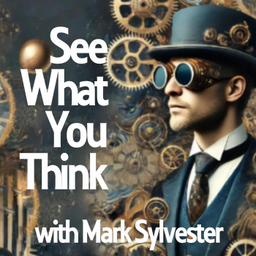
About See What You Think Podcast
The podcast that flips conventional wisdom upside down. Where hidden truths become competitive advantages. marksylvester.substack.com (https://marksylvester.substack.com?utm_medium=podcast)
- Publisher
- Mark Sylvester
- Category
- business · technology
- Language
- en
- Explicit
- No
- First episode
- 18 Mar 2025
- Latest episode
- 4 Oct 2026
Latest episodes
76 episodes in the feed.
4 Oct 2026
What I Tell TEDx Organizers Before They Pick a Speaker
A note before you start. This one comes with a song called “The Empty Shelf.” I had the list in my hand so I could glance down at it. It’s called Ten Things To Know, eight years of coaching TEDx organizers boiled down to one page, and I know all ten by heart. I hold the page anyway so I don’t sound like I memorized it. Nobody who watches a TEDx talk online sees the room where the show gets planned. TEDx is the independently run, local version of TED, and the people who organize it are often doing it for the first time. This room was Laguna Blanca School in Santa Barbara, twenty students and two teachers getting ready for their 2027 show. Half of them had produced the last event and half were new, and I ask a lot of questions in these rooms because I like to get them talking about the individual pieces of the show. I’ve worked with high school students for a long time, in a lot of different ways, and the one constant is that I challenge them to think bigger. It’s the right age for it, and it’s why I keep coming back. Libraries had been on my mind. I’m working on a digital one, and in August I’d produced a show in Columbiana, a small town in Ohio, where the first job in any planning room is finding the ideas. When I lead that conversation I like to start with a picture, and the picture I’d carried for two months was a library, and I had never said it out loud to anyone who would use it. Through Another Lens is a reader-supported publication. To receive new posts and support my work, consider becoming a free or paid subscriber. The speaker item Then we got to the item about speakers. Most organizers start there, because speakers are visible and ideas are abstract. You know someone impressive, and you build the show backward from the person. I’ve done it myself. I looked down at the page and didn’t read it. Eight years of work sat in my hand and the library had never been tried on anyone, and I said, “Imagine you have this library,” and I felt very connected to that room. It’s a circular room and you’re standing at the center, with shelves curving away in every direction. On them sits every TED and TEDx talk ever given, sorted by category, then subcategory, then subcategory again. Which shelves are crowded, and which are almost empty? One shelf is packed, resilience and mindset and getting through the hard thing, stacked three deep. A story of struggle and recovery is easy to pitch to a committee and it fills seats, and a local event rewards what the audience already recognizes, so in the planning room it’s the quiet default. It also fills the shelf that’s already overflowing. The main TED stage, which one curation team builds for the whole world, leans toward technology and science, while local events lean toward personal growth. Read them as one pile and the local talks bury the main stage, so read them apart and each shows you what it misses. The empty shelves Other shelves have gaps nobody has noticed, and the gaps follow a pattern. Engineering, agriculture, and the work of keeping things running barely register, and when they show up at all they arrive dressed as something else, like gene editing in crops or drones over forests. Say a researcher has spent fifteen years studying how the sound of a city shapes a child’s thinking, and she has never been on a stage. Say a logistics engineer knows how to rebuild a supply chain after a flood, and nobody has asked him to explain it in eighteen minutes to the people who could use it. Those talks belong in the library, and they don’t exist yet. Before we talk about speakers, I ask organizers three questions, in this order: why this idea, why right now, why this person. Put the idea first and you end up standing in front of an empty shelf. The pause The show will happen in the school gymnasium, in front of a few hundred kids and adults, and that matters. Then I told them the real audience is the world, and I stopped talking. A kid in Bangalore, I said, a kid in Frankfurt, hears one talk from a show like theirs and something shifts for that kid. I let it sit. Twenty-two people looked back at me and nobody said a word, and I knew they were with me because I make a point of looking at every one of them, and at twenty-two that’s easy, and I’ve stood close enough to enough of these talks to say it plainly: ideas change everything, and these twenty are about to go find one. Here’s the number behind that pause. One talk from one of the school’s own shows has been watched more than four million times. Every talk you’ve ever watched started in a room like that one, with somebody deciding it was worth a shelf. I don’t know which shelf these twenty will choose. If you’ve ever thought about giving a talk, don’t start with the story you know will get applause. Go stand in the middle of that library and find the shelf that’s almost empty. See if there’s a gap you could fill. Listen to “The Empty Shelf” on Suno (https://suno.com/s/W5cspBAiBNYMmMXf). Through Another Lens is also a podcast. Listen on Apple Podcasts (https://podcasts.apple.com/us/podcast/through-another-lens-podcast/id1791446850) Thanks for reading Through Another Lens! This post is public so feel free to share it. Get full access to Through Another Lens at marksylvester.substack.com/subscribe (https://marksylvester.substack.com/subscribe?utm_medium=podcast&utm_campaign=CTA_4)
27 Sept 2026
Show Me You Want It
A note before you start. This one comes with a song called “Come Back Up.” I sent William back to his seat. He’d walked up to pitch a movie. Six kids, one long butcher-block table in a junior high maker lab, a bundle of orange pencils in the middle nobody had touched. I’d asked each of them the same thing before they started. How bad do you want this movie made? William said very badly. I asked if he wanted it more than the three kids who’d gone before him. He thought about it and said, I wouldn’t say so. So I said okay, go sit down, and called the next kid. Then I watched his face. That’s the moment I drove home thinking about, and it’s the reason I’m writing this instead of a tidy lesson on story structure. I’ll get to the structure. It took seventy-five minutes and it worked. But the thing that happened to William’s face took about four seconds, and it’s the part that matters. Through Another Lens is a reader-supported publication. To receive new posts and support my work, consider becoming a free or paid subscriber. The room The class is the Santa Barbara International Film Festival’s youth film program. Claire Waterhouse runs it. Over twenty-four sessions these six kids will make short films and screen them for their parents in a real auditorium in December, and my job on the second Tuesday was to get them from nothing to a story they could say out loud in one sentence. I did a version of this at the festival’s summer camp and wrote about it then. This is the junior high edition. Same idea, a room with less patience for anything that isn’t a game. The games So we played games. Zip, zap, zop around the circle, eyes on the person you’re passing to, because on a set a light can fall on you if your head isn’t on a swivel. The name game, where everybody picks a word that starts with their first letter. Magical Mark. Intelligent Isaac. Kindly Kenneth. Wonderful William. Zany Zephers. Calm Claire. You have to step into the middle and say it with some volume, and the first kid who tried gave it about a two out of ten, so we tried again at a three. Then the Pixar spine, taped to the cubbies in Sharpie. Once upon a time. Every day. Until one day. Because of that. Because of that. Until finally. Ever since then. We went around the table and built a story one line at a time, and the first thing this group did with a hero was kill him. Second story, a girl gets expelled and her mom takes her phone, and she dies too. Junior high has a strong sense of how things end. The writers room I put the expelled girl back on the table and ran a writers room on her. Why’d she get expelled. Fourth fight. Why four fights. Cyberbullying. Then somebody added a dad, and somebody added a brother who died, then didn’t die, he ran away, he lied about his age and joined the army at seventeen. The story got darker with every hand that went up and I kept asking the only question a producer gets to ask, which is who’s buying a ticket to this. Don’t kill the son. Show the happy scenes at school. School’s her escape. Maybe she writes and someone discovers what’s going on at home. Maybe the story is that she’s strong and nobody gets to knock her down. One kid said, I would watch that. Then I stopped it and said what I was seeing. Too many threads. Was there a dead brother or not. Were the parents abusive or just fighting. What happened to the online bullying, which is where this whole thing started. That’s the job of the room too, somebody has to hold the core idea while everyone else piles on, and for one afternoon that somebody was me. Then I needed three story ideas from each of them. Five minutes, three real things from your own life. Something that happened to you, something that bugs you, something you’re curious about. Pairs. Pick your partner’s best one. Then the pitch, four parts, hook, want, stakes, and why you’re the one telling it. And here’s where the TED part of my life showed up, because the first question I ask anyone who wants the TED stage is the one I asked these kids. What’s the idea the world needs to hear, and why now, and what gives you permission to say it. The pitches Jose went first because I made him. A true story about a teacher, told with a straight face, and the ending hasn’t happened yet. Zephers pitched the e-bike he wants and his parents won’t buy, the friends who ride off without him, the crash you can see coming. Kenneth, after I made him say nine out of ten, pitched a mean, lonely guy who pays a shady stranger for a perfect friend, and what shows up at the door is an exact copy of himself, and then the accidents start. Isaac closed with a company called Engenetics and Tech Biology, a 1979 training tape, and a corporation that turned its own workers into machines, found out, and kept going. Four seconds And in the middle of all that, William. He came back up before I asked him to. That’s what I saw on his face while Isaac was walking to the front, the thing that happens when a kid decides. The mouth sets. The shoulders come off the wall. I said okay, then show me you want it, and he stood up straight and gave me a ten-year-old who finds his lost cat, brings it home, and walks in on his fifteen-year-old brother eating raw steak and raw fish at the kitchen table, and the brother looks up, says oh, hello, and jumps out the window. Fade to black. It’s a strange little movie and I’d watch every second of it, and the reason it exists is that for four seconds William sat in his chair and felt what it was like to have his story passed over, and decided he didn’t like that, and did something about it out loud in front of six people who’d just watched him get sent down. The part I can’t teach is the moment a person decides the story is worth wanting in public, where it can be turned down. That’s the whole class. I could teach want, obstacle, change to anyone in twenty minutes. The part I can’t teach is the moment a person decides the story is worth wanting in public, where it can be turned down. Most adults never get there. They pitch from the chair, hedged, ready to shrug if it doesn’t land, and then they wonder why the room didn’t lean in. William got there in junior high because I gave him a reason to, and the reason was a small, honest no. WAIT and WAIST We ended with one sentence each. Then two words I made them write down. WAIT, Why am I talking? WAIST, Why am I still talking? Learn the first one and people will let you keep going. Learn the second and they’ll ask you back. Somebody asked which of the five I’d fund. Kenneth’s clone and Isaac’s corporation, I said, and I’d put both in front of an audience and see. The core idea in Isaac’s is a company that knew years ago and didn’t fix it, and if that’s true, what else is true? Where do those people eat, who do they trust, what do they love. That’s the next twenty-two sessions. I’ll be in the auditorium in December. Five films. I already know which one I’m watching for the kid who came back up. Listen to “Come Back Up” (https://suno.com/s/f7LfKfwQRJDCu59k)on Suno: Through Another Lens is also a podcast. Every Sunday Story gets read aloud. Listen on Apple Podcasts (https://podcasts.apple.com/us/podcast/through-another-lens-podcast/id1791446850) Get full access to Through Another Lens at marksylvester.substack.com/subscribe (https://marksylvester.substack.com/subscribe?utm_medium=podcast&utm_campaign=CTA_4)
20 Sept 2026
Catching Noah's Light
A note before you start. This one comes with a song called “Small Bursts of Light.” I filmed my own laptop screen with my phone. That’s the part that still makes me laugh. I was sitting in my studio, phone held up to my monitor, recording a video call I was already on, so I could play it back to the man on the other end of it. Noah benShea is eighty one. A poet, a philosopher, the kind of man who has a serious composure until he doesn’t. We’d been talking for months over Zoom, working on forty years of his writing, and there was this one small problem neither of us could fix with words. He’d forget the camera was above his screen. His eyes would drift down to my face on his laptop instead, and on my end, it looked like he was reading something off a page. It broke the one thing I didn’t want broken. The connection. The Eye Line So I found a camera that clips onto the top of a laptop, with a little arm that swings down so the lens sits right where his eyes naturally land. No studio, no crew, no budget. Just a small piece of hardware and his own Mac laptop. He wasn’t sure it would work. I wasn’t completely sure either. Then I played it back for him. And I watched his face change. That’s when the smile came, the one that breaks through the composure. He was tickled. Genuinely tickled, like a kid who’d just seen a magic trick land. He thanked me afterward. Not for the technology. For the fact that, for a few seconds on a screen, it looked like he was looking someone in the eye again. Through Another Lens is a reader-supported publication. To receive new posts and support my work, consider becoming a free or paid subscriber. Coffee With Noah We’ve known each other for about thirty years. Noah’s a fixture in this town, the kind of person everybody in Santa Barbara seems to have a story about. A few months ago we were having coffee and he was telling me about Jacob the Baker, a series of books he wrote years ago that got turned into a film and still sits on Amazon today. People had been asking him for a prequel, and he was doing the math out loud, how many years a book like that takes to write, how many years he actually has left to write it. It wasn’t self-pity. It was just arithmetic, the kind you start doing at eighty-one. I made a joke. I told him I’d written a book the weekend before. He laughed, then he stopped laughing and asked how that was even possible. I’d used my own platform, the one I built for myself long before anyone else touched it, to write something called A Moment in Time, a six-hundred-page illustrated book that looks at history sideways, tracking eight different countries at once from a thousand years before Christ to twenty years from now, so you can see what else was happening in the world the moment something famous happened somewhere else. He’d heard vaguely that AI could write things. He’d never sat across from someone who’d actually used it to finish something real. He asked if I could help him. That was it. That was the whole beginning. One offhand joke over coffee, and a few months later we have a website, a Substack, a strategy for Facebook and Instagram, a mailing list, songs written from his own words, and a business built entirely out of forty years of one man’s writing and philosophy. He’s spent his whole life trying to get his words out into the world. He just never had anyone who could move as fast as the thoughts arrived. That camera arm cost less than dinner for two. It solved something money alone never would have. And it’s a small example of the same pattern that started at that coffee table, technology doing the moving so his voice doesn’t have to slow down to fit it. The Fear of Missing One He didn’t have a name for the thoughts that kept arriving. They just showed up without warning, while he made coffee, while he sat with his wife, and he’d text them straight to me, asking me to add them to our notebook. For a while that meant watching my phone for his messages and copying them over by hand, and it was the fear of missing one, of some thought slipping past me and disappearing for good, that finally pushed me to build something better. First Light was already the name of the whole project, so light was already the language we were living in. Fireflies just showed up as the obvious next word. Small bursts, there and gone, unless you catch them. The Same Jar Twice So I built him a jar. Not a real one. An app, simple enough that an eighty one year old who has never called himself technical can open it and just talk, or just type, the moment a thought arrives. It wasn’t until later that I remembered he’d already written about a jar himself, decades ago, a short parable called The Pickle Jar about the kind of solitude that sneaks up on a person in the middle of a crowded room. I hadn’t borrowed the idea on purpose. It had been sitting in his own forty years of work the whole time, waiting for someone to notice the two jars were really the same jar. Every firefly he catches goes somewhere now. Into the work. Into the website. Into the strategy we’ve been building together for four months, all of it drawn from forty years of writing that already exists, never invented, never put in his mouth. If it sounds like him, it’s because it is him. I made a rule early on, nothing gets conjured. Every word traces back to something he actually said or wrote. What He Handed Me I’ve wondered what it feels like to have your phone buzz with your own thought before you’ve finished thinking it. Noah didn’t really answer that when I brought it up. He handed me something he’d already written years earlier, in a collection he calls Small Truths, small enough to read in a minute, sturdy enough to carry a lifetime. “Sometimes you hear something at just the right moment to answer something for which you very much needed an answer. You can think this is a coincidence but the word coincidence at its root means ‘things falling together.’ And in a world which so often feels like things are falling apart, sometimes the unexpected arrival of an idea or thought appearing unexpectedly is a sign that things are falling together for you. And that is a sacred sign both for who sent and who received.” That’s Fireflies, four years before Fireflies existed. What I Actually Built I didn’t set out to build technology. I set out to solve one problem for one friend, how do you get a lifetime of wisdom out of a man’s head and into the world before it’s too late to ask him what he meant. The eye line camera and the firefly jar are the same idea wearing different clothes. Both exist so something true can travel the short distance between one person and another without losing anything on the way. I’ve spent two years building a platform around that idea. This week, we’re four weeks from putting it into other people’s hands. But if you asked me what I actually built, I’d tell you about a smile on a screen before I’d tell you about the software. Listen to “Small Bursts of Light” (https://suno.com/s/U7oHT6l6KkYZwzGb)on Suno Through Another Lens is also a podcast. Every Sunday Story gets read aloud. Listen on Apple Podcasts (https://podcasts.apple.com/us/podcast/through-another-lens-podcast/id1791446850) You can read Noah’s words on the Substack (https://NoahbenShea.substack.com) I’ve built for him. Get full access to Through Another Lens at marksylvester.substack.com/subscribe (https://marksylvester.substack.com/subscribe?utm_medium=podcast&utm_campaign=CTA_4)
Contact See What You Think Podcast
- Guest appearances
- Does not typically book guests
Based on episode analysis; this does not confirm that the show is currently accepting guests.
Host of See What You Think Podcast?
Claim your podcast to manage its listing and keep your show details accurate.
Pod Engine is an independent podcast discovery and analytics service and is not affiliated with or endorsed by this podcast. Artwork and show content belong to their owners. Full legal notice.
Explore this show
Podcast research with Pod Engine