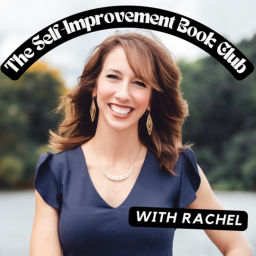
Become a Paid Subscriber: <a href="https://podcasters.spotify.com/pod/show/rachel-meditation/subscribe" target="_blank">https://podcasters.spotify.com/pod/show/rachel-meditation/subscribe</a>
I review self-help books in a fun & entertaining way!

by Rachel Collins

Become a Paid Subscriber: <a href="https://podcasters.spotify.com/pod/show/rachel-meditation/subscribe" target="_blank">https://podcasters.spotify.com/pod/show/rachel-meditation/subscribe</a> I review self-help books in a fun & entertaining way!
Language
🇺🇲
Publishing Since
9/21/2022
See how your podcast performs across key metrics

Recommendations available
Unlock the full report to see detailed tips
Recommendations available
Unlock the full report to see detailed tips
Unlock comprehensive insights including:
See how your show performs across every key metric
High authority scores make your podcast more attractive to industry leaders and influencers who want to appear on credible shows.
Sponsors look for podcasts with proven authority and engagement. Your score demonstrates your podcast's value to potential partners.
Understanding your strengths and weaknesses helps you make data-driven decisions to expand your listener base effectively.
Pitch yourself as a guest, propose sponsorships, or reach out directly to the host.

August 25, 2025
<p>we're diving into a summary of Chapter 2 from Terri Cole's incredible new book, Too Much: A Guide to Breaking the Cycle of High-Functioning Codependency. If you've ever felt that relentless push to do more, give more, and be more, often leaving you feeling drained and unseen, then this is for you.</p><p><br></p><p>Chapter 2 is a real game-changer, laying out the subtle ways we might be sacrificing our own peace, even when we think we're just being "good" or "helpful." We'll be looking at what high-functioning codependency truly means, how to tell the difference between healthy caring and codependent patterns, and a really insightful concept</p><p><br></p><p>So, let's get into the highlights of Chapter 2 and uncover some powerful truths that can genuinely shift how you relate to yourself and others.</p><p><br></p><p>Segment 1: What is High-Functioning Codependency?</p><p><br></p><p>Host: In the book, Terri Cole makes it clear that high-functioning codependency, or HFC, isn't what most people think of when they hear "codependent." It's not about being helpless or unable to function. Quite the opposite! HFCs are often the most capable, reliable, and successful individuals – they're the ones everyone turns to.</p><p><br></p><p>But the core of HFC, as explained in Chapter 2, is an over-investment in the external world. This means being overly focused on the feelings, situations, and circumstances of others, usually to the detriment of your own internal peace. This constant outward focus uses up immense time, energy, and emotional bandwidth. It's often an unconscious drive to manage, fix, or please others, even if it's disguised as genuine care.</p><p><br></p><p>Segment 2: Caring vs. Codependent – The Key Difference</p><p><br></p><p>Host: This chapter also draws a really crucial line between healthy caring and codependent behavior. We're all wired to care, and that's a beautiful thing. But Terri suggests the biggest differentiator lies in your motivation and your boundaries.</p><p><br></p><p>Healthy caring comes from a place of genuine desire to support, with respect for the other person's autonomy. You give from a place of abundance, you maintain your boundaries, and you don't expect a specific outcome.</p><p><br></p><p>Codependent "caring," conversely, often springs from fear, obligation, or a deep need to be needed. You might be "helping" to avoid conflict, to get approval, or out of a fear of what might happen if you don't step in. This often leads to over-investment in another's outcomes, blurring your personal boundaries.</p><p><br></p><p>Terri encourages us to ask ourselves: "Why am I doing this? How do I truly feel after? Am I expecting something in return? Did they even ask for my help?" These questions help reveal the true driver behind our actions.</p><p><br></p><p>Need a therapist? Check us out at www.strideforwardcounseling.com</p>

May 6, 2025
<p>Episode Summary:</p><p><br></p><p>In this 100th episode, the podcast delves into the book "Too Much: A Guide to Breaking the Cycle of High-Functioning Codependency" by Terri Cole, specifically focusing on Chapters 1 and 2. The host explores Cole's redefinition of codependency, moving beyond the traditional association with addiction to the concept of High-Functioning Codependency (HFC). The episode examines the characteristics of HFC, including over-functioning, auto-advice giving, difficulty receiving, poor boundaries, people-pleasing, a strong need for external validation, high empathy, being out of touch with one's own feelings, and conflict avoidance. The podcast further discusses how HFCs can fall into patterns of burnout, exhaustion, and resentment. Finally, the role of societal, familial, and peer messaging in the development of codependent behaviors is explored, using the example of a successful lawyer.</p><p><br></p><p>Show Notes:</p><p><br></p><p>Episode: Episode 100 - Book Review: "Too Much" by Terri Cole (Chapters 1 & 2)</p><p>Key Topics:</p><p>Terri Cole's book, "Too Much: A Guide to Breaking the Cycle of High-Functioning Codependency"</p><p>Traditional vs. new definitions of codependency</p><p>Characteristics of High-Functioning Codependency (HFC)</p><p>Over-functioning, auto-advice giving, difficulty receiving</p><p>Poor boundaries, people-pleasing, need for external validation</p><p>High empathy, out of touch with own feelings, conflict avoidance</p><p>The path to burnout, exhaustion, and resentment for HFCs</p><p>Influence of societal, familial, and peer messaging on codependency</p><p>Breaking free from codependent cycles</p><p>Call to Action:</p><p>Read "Too Much: A Guide to Breaking the Cycle of High-Functioning Codependency" by Terri Cole</p><p>Reflect on personal patterns of over-giving and self-sacrifice</p><p>Tune in to the next episode for more insights on reclaiming personal power and creating healthy boundaries.</p><p><br></p><p>--</p><p>Rachel Collins LCPC (she/her)</p><p>https://strideforwardcounseling.com</p>

March 7, 2025
<p>Podcast Summary: Exploring "Stumbling Into Happiness" by Daniel Gilbert**</p><p><br></p><p>In this episode, we delve into the intriguing insights found in Daniel Gilbert's bestselling book, "Stumbling Into Happiness." Gilbert, a renowned psychologist, takes us on a journey through the science of happiness, exploring the common misconceptions and surprising truths about what makes us feel fulfilled.</p><p><br></p><p>We discuss the concept of "affective forecasting," where Gilbert highlights our often inaccurate ability to predict what will make us happy in the future. He explains how our minds tend to overestimate emotional responses to future events, leading us to make decisions based on faulty predictions.</p><p><br></p><p>Key points of the episode include:</p><p><br></p><p>- The difference between synthetic happiness (the contentment we create when we don't get what we want) and natural happiness (the joy we feel when we achieve our desires).</p><p>- The role of memory and storytelling in shaping our happiness, and how our past experiences can sometimes mislead our expectations.</p><p>- The idea that happiness is not a constant state but rather a fluctuating emotional landscape influenced by our circumstances and mindset.</p><p>- Practical tips on how to embrace the uncertainty of life, recognize the value of experiences over material possessions, and ultimately, learn to "stumble" into happiness.</p><p><br></p><p>Join us as we unpack these fascinating ideas and reflect on how Gilbert's research can help us better understand our pursuit of happiness. Whether you're seeking ways to enhance your own happiness or just curious about human psychology, this episode offers valuable insights and engaging discussions to inspire your journey. Tune in for a thoughtful exploration of what it truly means to be happy!</p><p><br></p><p>Visit us at:</p><p>https://strideforwardcounseling.com</p>
Guests from recent episodes — sign up to see every guest that has ever appeared on this show.
Carolyn Karoll, LCSW-C, CEDS-C
Guest
Adina Silverman, MS, RD, LDN
Guest
Raffi Bilek
Guest
Have a different question and can't find the answer you're looking for? Reach out to our support team by sending us an email and we'll get back to you as soon as we can.
Become a Paid Subscriber: <a href="https://podcasters.spotify.com/pod/show/rachel-meditation/subscribe" target="_blank">https://podcasters.spotify.com/pod/show/rachel-meditation/subscribe</a>
I review self-help books in a fun & entertaining way!
This podcast updates bi-weekly.
This podcast is available on 7 platforms including Apple Podcasts, Spotify, and more. You can also use the RSS feed directly.
Information about guest appearances is not available.
Pod Engine is not affiliated with, endorsed by, or officially connected with any of the podcasts displayed on this platform. We operate independently as a podcast discovery and analytics service.
All podcast artwork, thumbnails, and content displayed on this page are the property of their respective owners and are protected by applicable copyright laws. This includes, but is not limited to, podcast cover art, episode artwork, show descriptions, episode titles, transcripts, audio snippets, and any other content originating from the podcast creators or their licensors.
We display this content under fair use principles and/or implied license for the purpose of podcast discovery, information, and commentary. We make no claim of ownership over any podcast content, artwork, or related materials shown on this platform. All trademarks, service marks, and trade names are the property of their respective owners.
While we strive to ensure all content usage is properly authorized, if you are a rights holder and believe your content is being used inappropriately or without proper authorization, please contact us immediately at hey@podengine.ai for prompt review and appropriate action, which may include content removal or proper attribution.
By accessing and using this platform, you acknowledge and agree to respect all applicable copyright laws and intellectual property rights of content owners. Any unauthorized reproduction, distribution, or commercial use of the content displayed on this platform is strictly prohibited.