- 11
- Episodes
- Monthly
- Cadence
- 2025
- First episode
- 191
- YouTube views
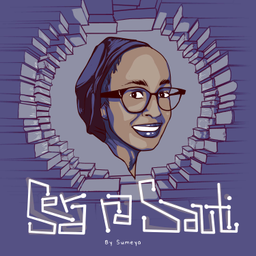
About Sera na Sauti
Sera na Sauti is about making sense of the world—through books, dialogue, and the stories that define us. seranasauti.substack.com (https://seranasauti.substack.com?utm_medium=podcast)
- Publisher
- Sera Na Sauti
- Category
- society & culture · society & culture
- Language
- en
- Explicit
- No
- First episode
- 20 Feb 2025
- Latest episode
- 23 Aug 2026
Latest episodes
11 episodes in the feed.
23 Aug 2026
Visiting Ngara: Capital, Memory and the Right to the City with April Zhu
If you live in Nairobi and are part of the creative scene, you have probably heard the hype around Ngara. A neighbourhood long known for its mix of working-class families and small traders, its Indian spice and textile shops, is now being talked about as one of the city’s new creative destinations, with galleries, studios and plans to turn Ngara into an arts and cultural district. In Visiting Ngara, April Zhu goes into the neighbourhood to understand this change: why Ngara has become attractive to a new group of people, what is driving that interest, and what happens to the people and businesses who have been there all along. She asks whether a place like Ngara was ever really “dead” and in need of reviving, and what it means to push out the very people who make a city work. At the centre of it is a bigger question, one about the right to the city: who gets to decide how a city is built, and for whom? Not those with the most contracts and capital, but the people who clean it, teach its children, feed it, and hold it together. Through the story of Mathare, April asks what it would look like to build a city that belongs to the people. In this episode of Sera na Sauti, host Mwangi Mwaura, a Kenyan Rhodes Scholar and PhD candidate in Geography and the Environment at the University of Oxford, speaks with April Zhu, a freelance journalist who spent about a decade reporting from Nairobi and is now pursuing an MFA in nonfiction writing at the University of Iowa. Together they trace how Ngara got here, who is behind the redevelopment, and what the neighbourhood’s long history can tell us about the city Nairobi is becoming. At the centre of the story is a real estate developer buying up building after building along Ngara Road, restoring the old Indian storefronts into cafés, galleries and event spaces. The pitch is that they are reviving a forgotten part of town and honouring its history. But the more time April spends in Ngara, the more that story frays. She meets an Indian Kenyan family whose spice shop shutters after their rent is raised, and hears the developer insist that no one is being evicted, even as the map in their pitch deck marks out block after block for future acquisition. To understand the present, April goes back to the founding moment of Ngara, a neighbourhood born in 1917, when a Somali village was demolished to make way for an Asian settlement in a city the colonial administration deliberately zoned by race. The old buildings being restored today still carry the datestones of that founding, while the village that stood there first has been lost to memory. This is the through-line of the episode: Nairobi has always been shaped by capital deciding which places and people count as valuable, and which can be cleared away, and the current wave in Ngara is the newest chapter of a very old story. Against all of this, April holds up Mathare, where after the 2024 floods and the demolitions that followed, residents turned a cleared riverbank into a community park rather than surrender it back to landlords, an act she reads as an answer to the question of who a city is for. It is a different vision of renewal, one led by the people who build and sustain the city rather than those who profit from it. 📌 Key themes from the conversation: ✅ How Ngara went from a mixed, working neighbourhood to one of Nairobi’s talked-about creative districts, and who is really driving that shift ✅ What happens to longtime residents and small businesses, like the Indian Kenyan traders, when rents rise and buildings change hands ✅ The difference between reviving a place and quietly pushing people out of it, and why “no one was evicted” can still mean displacement ✅ Ngara’s colonial origins, from the 1917 demolition of a Somali village to a city zoned by race, and how that history still shapes the present ✅ The idea that capital decides what parts of a city are “dead” or “alive,” and who gets to make that call ✅ The right to the city: who gets to shape how a city is built and for whom ✅ Mathare’s community park as a different model of renewal, led by the people who make the city work The point is not that Ngara should be frozen in place; it has never stopped changing. The question the episode sits with is who gets to shape what comes next, and whether the people who have made Ngara what it is will still have a place in it. 📚 Reading Materials and Other Resources: Visiting Ngara by April Zhu, Africa Is a Country, February 2026 (https://africasacountry.com/2026/02/visiting-ngara (https://africasacountry.com/2026/02/visiting-ngara)) Demolition Colonialism in Nairobi by Mwangi Mwaura, ROAPE, 2022 (https://roape.net/2022/11/01/demolition-colonialism-in-nairobi/ (https://roape.net/2022/11/01/demolition-colonialism-in-nairobi/)) Le Droit à la ville (The Right to the City) by Henri Lefebvre, 1968, the text where the idea of the right to the city begins. The Right to the City by David Harvey, New Left Review, 2008, which builds on Lefebvre and frames the question the episode turns on. Get full access to Sera na Sauti at seranasauti.substack.com/subscribe (https://seranasauti.substack.com/subscribe?utm_medium=podcast&utm_campaign=CTA_4)
8 Apr 2026
Forty Years After Gukurahundi Massacre: One Man's Journey to Bury His Father with Nyasha Kadandara
In this episode of Sera na Sauti, Koko Sanginga, writer and editor, sits down with Nyasha Kadandara, the Zimbabwean filmmaker whose debut feature documentary Matabeleland spent seven years tracing the weight of unresolved grief in a family shaped by state violence. Nyasha is a filmmaker and cinematographer based in Nairobi. Matabeleland premiered at CPH:DOX Copenhagen in March 2025 and screened at the NBO Film Festival in Nairobi later that year. It is produced by LBx Africa, the Kenyan production house that has made a practice of backing African stories the rest of the world had not yet thought to look for. The film follows Chris Nyathi, a 65-year-old Zimbabwean immigrant in Botswana who believes his family is cursed. His father was killed during the Gukurahundi massacres, when Robert Mugabe’s North Korean-trained Fifth Brigade was deployed into Matabeleland between 1983 and 1987. An estimated 20,000 people were killed. No senior official has been held accountable. Chris’s father remains in an unmarked grave. As the oldest son, this is a weight he has carried for decades, across borders, alongside the ordinary business of staying alive. His girlfriend Dumi wants marriage. Chris wants, first, to lay his father to rest. Nyasha made a deliberate choice not to lead with the violence. She leads with Chris, with his hustle and his humour, with the specific texture of a man holding several obligations at once. The politics arrive as context, because that is how they arrive in his life. This choice is part of a larger argument Nyasha is making about documentary form. She wanted to show an African man being vulnerable in front of his partner, show Dumi as a full subject with her own demands and limits, show the mundane and the tender alongside the political. A generation of African filmmakers is pushing against the pressure to educate and testify first. Nyasha is one of them. Seven years is a long time to carry someone else’s story. Nyasha reflects on what that commitment asks of a filmmaker, the patience it requires, the ethical weight of sitting with a family’s pain without resolving it prematurely, and the responsibility of representing a wound that an entire country has been asked to forget. The conversation also moves into the present: Zimbabwe has launched a community engagement programme around Gukurahundi, framed as healing and reconciliation. Survivor communities are sceptical, and the scepticism is earned. Reconciliation requires acknowledgement. Acknowledgement requires naming what happened and who ordered it. The form of accountability matters as much as its existence. 📌 Key themes from the conversation: ✅ The history of Gukurahundi, what the Fifth Brigade did in Matabeleland between 1983 and 1987, why the wound has not closed, and what accountability would actually require ✅ The deliberate storytelling choice to lead with character rather than chronology, and what that makes possible ✅ African masculinity on screen, what it means to show vulnerability and tenderness, and why that representation still registers as something new ✅ Dumi Ndaba as a full subject in her own right, and why Nyasha insisted her story not be collapsed into Chris’s ✅ The burden of instruction in African documentary, what a generation of filmmakers is choosing to put down, and what they are reaching for instead ✅ Zimbabwe’s community engagement programme on Gukurahundi, survivor scepticism, and why the form of acknowledgement matters as much as the fact of it ✅ Seven years of filming and the ethics of sitting with someone else’s grief without resolving it prematurely 📚 Reading and Watching Materials: * Matabeleland via LBx Africa (https://lbxafrica.com/news/introducing-matabeleland-a-story-of-love-spirits-and-the-weight-of-manhood) * Nyasha Kadandara on (https://www.sinemafocus.com/nyasha-kadandara-matabeleland-african-documentary/)Matabeleland (https://www.sinemafocus.com/nyasha-kadandara-matabeleland-african-documentary/) and the Evolution of the African Documentary, Sinema Focus (https://www.sinemafocus.com/nyasha-kadandara-matabeleland-african-documentary/) * The Noisy Silence of Gukurahundi: Truth, Recognition and Belonging (https://www.tandfonline.com/doi/full/10.1080/03057070.2021.1954356) * Nyasha Kadandara Unpacks the Historical and National Trauma in (https://culturecustodian.com/nyasha-kadandara-unpacks-the-historical-and-national-trauma-in-matebeleland/)Matabeleland (https://culturecustodian.com/nyasha-kadandara-unpacks-the-historical-and-national-trauma-in-matebeleland/), Culture Custodian (https://culturecustodian.com/nyasha-kadandara-unpacks-the-historical-and-national-trauma-in-matebeleland/) * Will survivors of Zimbabwe’s Gukurahundi massacre finally get justice? Al Jazeera (https://www.aljazeera.com/news/2024/7/22/will-survivors-of-zimbabwes-gukurahundi-massacre-finally-get-justice) * Nyasha Kadandara’s website (https://www.nyashakadandara.com/about) This is a public episode. If you would like to discuss this with other subscribers or get access to bonus episodes, visit seranasauti.substack.com (https://seranasauti.substack.com?utm_medium=podcast&utm_campaign=CTA_1)
5 Nov 2025
Gikomba's Informal Economy: Livelihoods and Environmental Costs of Secondhand Clothing with Mwangi Mwaura
How did a market built through dispossession become central to the everyday livelihoods of millions of East Africans, yet remain one of the country’s most precarious and contested urban spaces? In this episode of Sera na Sauti, Ruth Nyakerario, a researcher and writer whose work centers on urban marginality, displacement, and informal systems, speaks with Mwangi Mwaura, a PhD candidate in Geography and the Environment at the University of Oxford. Mwangi’s research traces the journey of secondhand clothes from UK sorting warehouses to Nairobi’s Gikomba Market. But this is not just about the clothing trade. It is about disposability as a system, about how value is assigned and stripped away from garments, from spaces, from people. His work combines ethnography, mapping, and audio-visual storytelling to trace how secondhand clothes navigate global and local systems, and how those systems mirror the logics that decide which urban spaces are protected and which are left to burn. He lived in Gikomba during his university days, and his research foregrounds the lived realities of the traders and communities who make the market what it is. Gikomba’s history is inseparable from displacement: born in the 1930s-1940s as a settlement for civil servants, it became a refuge for traders repeatedly pushed out of Nairobi’s streets. Today, it anchors the livelihoods of thousands. Yet it has burned down over and over again, through the 1952 colonial Emergency, through independence, into the present. These fires are not accidents. They are governance. They are the state’s answer to spaces it cannot control, markets it refuses to formalise, and communities it would rather not see. Mwangi’s research follows the global secondhand clothing trade and exposes its racialized architecture. High-quality donated clothes are sorted and sent to Japan. Medium-quality items go to Latin America. Africa gets what remains. This is not coincidence. It is racial capitalism: a system that requires inequality, particularly racial inequality, to function. The same logic that grades clothes in UK warehouses also grades urban spaces in Nairobi, deciding which neighborhoods receive infrastructure and protection, and which are left exposed to fire, eviction, and state violence. The conversation confronts the paradox at the centre of the trade: secondhand clothes sustain millions of livelihoods, yet they also make African markets the dumping ground for the Global North’s overproduction. Mwangi does not call for bans. He calls for accountability. Extended producer responsibility would shift the burden back to fast fashion companies, making them responsible for the waste they generate rather than offloading it onto precarious economies. The problem is not individual consumers. It is the system that treats disposal as inevitable and Africa as the place where things, and people, are discarded. Drawing on Southern urbanism, Mwangi reframes how we understand African cities. Gikomba is not chaos. It is not marginal. It is a space produced through survival, strategy, and resistance. Yet it is constantly treated as disposable. His research insists on centering the traders’ knowledge, their networks, their agency. He also reflects on the ethics of his work: how to conduct research that does not extract, that does not feed into policies of erasure, and that represents Gikomba’s reality without reducing it to data or tragedy. 📌 Key themes from the conversation: ✅ How Gikomba’s recurring fires since the 1940s reveal governance through erasure, and why informal markets are treated as spaces the state can destroy with impunity ✅ The racialized structure of the global secondhand clothing trade, where Africa receives the lowest-grade items while higher-quality clothes are sorted to Japan and Latin America ✅ Racial capitalism as the framework that structures both the clothing trade and urban governance, relying on inequality to sustain itself ✅ The grading systems for secondhand clothes and how the same logics of value and disposability are applied to neighborhoods, markets, and lives ✅ Extended producer responsibility as a way to hold fast fashion accountable for waste, rather than making African markets absorb the consequences ✅ Southern urbanism and why informal markets like Gikomba disrupt dominant ideas about planning, infrastructure, and what counts as a legitimate city ✅ The lives, strategies, and agency of Gikomba’s traders, who build systems of value and survival in the face of constant precarity ✅ The ethics of research in informal spaces: how to engage without extracting, and how to ensure the work does not contribute to policies of displacement or harm ✅ Why consumerism is systemic, not individual, and how the lifecycle of clothing reveals deeper structures of inequality and waste Gikomba survives because it has to. Because the people who depend on it have no other choice, and because the state has never offered an alternative. But survival is not the same as security. This episode asks what it would mean to recognize informal markets not as problems to be managed or erased, but as economies that sustain millions, and to build policy, infrastructure, and urban planning around that recognition. 📚Reading Materials and Other Resources: * People as Infrastructure: Intersecting Fragments in Johannesburg (http://abdoumaliqsimone.com/files/45662107.pdf) by Abdoumaliq Simone * Salaula: The World of Secondhand Clothing and Zambia (https://press.uchicago.edu/ucp/books/author/H/K/au5618518.html) by Karen Tranberg Hansen (Book on Second-hand clothes in Zambia) * Professor Ruth Wilson Gilmore (The amazing Abolition Geographer, a nice profile of her and her work, https://www.nytimes.com/2019/04/17/magazine/prison-abolition-ruth-wilson-gilmore.html (https://www.nytimes.com/2019/04/17/magazine/prison-abolition-ruth-wilson-gilmore.html)) * Whose crime? Arson, class warfare and traders in Nairobi, 1940-2000 (http://whose%20crime/?%20Arson,%20class%20warfare%20and%20traders%20in%20Nairobi,%201940-2000%20https://journals.openedition.org/chs/109) by Claire C. Robertson (the brilliant article that documents cases of arson across Nairobi between 1940-2000, capturing how these cases of fires are part of the story of the violent birth of Nairobi) * Janet Chemitei (https://www.instagram.com/chemiteijanet/?hl=en) (the lovely Slow Fashion educator Mwangi quoted as we he was speaking of her activism) * Africa Collect Textiles, ACT (https://africacollecttextiles.com/) (the organisation that does Up-cycling and is envisioning and working on what sustainable fashion can look like. They also receive clothes discarded at different points across Nairobi. This is a public episode. If you would like to discuss this with other subscribers or get access to bonus episodes, visit seranasauti.substack.com (https://seranasauti.substack.com?utm_medium=podcast&utm_campaign=CTA_1)
22 Sept 2025
Kenya's Digital Rights: Privacy, Constitution and Politics of Data with Dr Mugambi Laibuta
In this episode of Sera na Sauti, we speak with Dr. Mugambi Laibuta, legal scholar and chair of the Data, Privacy and Governance Society of Kenya, whose work has shaped national debates on privacy, data protection, and civil liberties. He traces the long history of privacy in Kenya’s constitutional text and unpacks how it led to the 2019 Data Protection Act, while also examining the tensions between state security, corporate power, and free expression in a digital era. Mugambi reminds us that privacy has been in Kenya’s constitutional DNA since independence. The 1963 constitution barred unconstitutional searches and seizures, protecting the privacy of individuals, homes, and property. Even as the text was amended over decades, this provision endured. Courts often sided with citizens in cases of illegal police searches, insisting on compliance with the Police Standing Orders and Criminal Procedure Code. From the CKRC draft to Bomas to the 2005 draft, privacy was consistently present in constitutional debates, and in 2010 it was firmly enshrined alongside dignity, freedom of expression, and access to information. Yet constitutional principle was not enough. Civil society pushed for a data protection bill as early as 2009, but it stalled. The turning point came with Huduma Namba in 2018 and 2019. Petitions to the High Court argued that a national digital ID could not exist without comprehensive data protection laws. At the same time, Senator Gideon Moi’s Senate bill was sidelined in favor of a Ministry of ICT draft, which Parliament passed. Kenya thus enacted the Data Protection Act in 2019, providing clear principles for how personal data should be collected, stored, and shared, creating rights for data subjects, and establishing the Office of the Data Protection Commissioner to enforce compliance and provide recourse through fines and compensation. The conversation moves through questions of enforcement and accountability. While the Data Commissioner has fined private companies, critics note limited action against government misuse of data. Mugambi highlights recent data breaches, such as leaks of eCitizen records, and emphasizes that the institutions with custody of data such as KRA, immigration, or ministries bear ultimate responsibility. He outlines how citizens can file complaints directly to the Data Commissioner through a simple online portal, with decisions required within 90 days. We also delve into Kenya’s security laws. Since the passage of the Private Security Regulations Act, guards at buildings can legally demand IDs and record them, though the protection of this information remains weak. Surveillance powers for agencies like DCI and NIS are legal but require warrants, safeguards often ignored in practice. Mugambi cites cases like Albert Ojwang’s abduction and recalls concerns over spyware such as Pegasus. In reality, he says, government combines data from telcos, CCTV, social media, and even utility payments, making it nearly impossible for citizens to fully evade surveillance. The real question becomes whether evidence was obtained lawfully, and courts have occasionally thrown out improperly gathered phone data, though exceptions like in the Dusit terror trial show how public interest can override privacy. Mugambi then turns to the privatized public square of social media. Platforms like Facebook, X, and TikTok both enable free expression and facilitate censorship, sometimes at the behest of states. He notes how during Covid-19, dissenting views were removed, raising questions about whether we are pro-speech or not. In Kenya, debates about misinformation risk being weaponized to suppress legitimate political speech. He insists that all speech must be allowed unless it is harmful, such as incitement to violence, genocide, or defamation, because truth ultimately surfaces when ideas are contested openly. This tension played out during the 2024 Finance Bill protests. The #Msalimie campaign, where youth shared politicians’ phone numbers, was arguably legal for public officials but not for their relatives, who retain privacy rights. Around the same time, the Communications Authority attempted to halt live protest broadcasts, a directive Mugambi calls unconstitutional and in defiance of court rulings that broadcasting oversight lies with the Media Council of Kenya. Petitions by Katiba Institute and the Law Society restored live coverage, underscoring the role of courts in defending media freedom. The episode also explores whistleblowing, where Kenya lacks strong laws beyond the Witness Protection Act and journalists’ rights to protect sources. Past cases, like the Goldenberg scandal, show how whistleblowers often suffer personally, even to the point of exile or poverty. On innovation, Mugambi stresses that data protection is not a barrier but a safeguard. Companies must secure informed consent, especially in sensitive sectors like health. The controversy over Worldcoin illustrates how transparency, not prohibition, should guide innovation. Finally, he reflects on the broader landscape. The Data Commissioner has opened regional offices and engaged in public education, but resources remain thin and fines may not be deterrent enough. Citizens, meanwhile, can take practical steps such as strong passwords, two-factor authentication, careful posting habits, and awareness of what personal information they expose online. 📌 Key themes from the conversation: ✅ Huduma Namba and court petitions as the catalyst for the 2019 Data Protection Act✅ Principles of the Act: handling of personal data, rights for data subjects, and recourse through the Data Commissioner✅ Persistent gaps in holding government accountable for data misuse, despite action against private firms✅ Security laws and surveillance, what is legal on paper versus what happens in practice✅ The reach of telcos, CCTV, social media, and utility data in building an almost inescapable surveillance net✅ Social media as a privatized public square, and the risks of censorship justified as fighting “misinformation”✅ Protest, accountability, and privacy: from #Msalimie campaigns to unconstitutional broadcast bans✅ Weak whistleblower protections and reliance on journalists to shield sources✅ Innovation and data protection: why transparency and informed consent matter more than speed or scale This is a conversation about how privacy, dignity, and free expression survive, or erode, in a digital Kenya. It is about the gap between constitutional text and lived reality, the risks of drifting into a surveillance state, and the possibility of building a culture where rights are not only written down but actively defended. 📚Reading Materials: * Dr Mugambi Laibuta's Website (https://www.laibuta.com/) * State surveillance: Kenyans have a right to privacy – does the government respect it? (https://theconversation.com/state-surveillance-kenyans-have-a-right-to-privacy-does-the-government-respect-it-244660) * Data Privacy and Governance Society (https://www.dataprivacyke.africa/members/dr-mugambi-laibuta/) This is a public episode. If you would like to discuss this with other subscribers or get access to bonus episodes, visit seranasauti.substack.com (https://seranasauti.substack.com?utm_medium=podcast&utm_campaign=CTA_1)
5 Aug 2025
Kenya’s Hollow Politics: Its Origins, What We’ve Lost, Who Bears the Risk with Mumbi Kanyogo
What if the reason nothing seems to change, even when we protest, is because the very language we use has already narrowed what we’re allowed to imagine? In this episode of Sera na Sauti, we speak with Kenyan feminist writer and scholar Mumbi Kanyogo about the hollowing out of Kenyan politics and how the vocabulary of “good governance,” accountability, and reform has quietly replaced more radical demands for justice, solidarity, and economic transformation. Mumbi traces the architecture of depoliticisation: from the colonial banning of political parties in 1953, to Sessional Paper No. 10, to the NGO-isation of resistance following structural adjustment. Across each of these moments, she argues, there was a steady erosion of ideology and its replacement with frameworks of reform, accountability, and technical improvement. This shift has not only narrowed what movements demand but often made even radical organising sound like a policy memo. The conversation moves through Kenya’s post-independence history, the IMF and World Bank’s role in shaping African governance discourse, and how donor-funded civil society helped institutionalise managerial thinking within activist spaces. We speak about how protest demands are often pre-interpreted through frameworks that make systemic injustice sound like an implementation failure. Mumbi also reflects on the June 2024 protests, how risk was distributed unevenly across class lines, with low-income youth bearing the brunt of police violence while more privileged protesters could exit the moment with little consequence. She speaks to the limits of symbolic care, the temptation to romanticise protest, and the urgent need to pair solidarity with strategy. Drawing from political theorist Joy James, she reflects on how movements often rely on low-income earners to carry out unending acts of care, protection, and logistical support, what James refers to as the captive maternal function. Without collective strategy, even this politicised care can become a substitute for confronting power, rather than a tool to disrupt it. 📌 Key themes from the conversation: ✅ How the language of “good governance” replaced radical political demands, and how it shapes what movements today are allowed to ask for✅ The deliberate depoliticisation of Kenyan public life, from colonial bans to donor influence, and how ideology was systematically erased✅ Structural adjustment, blame-shifting, and how global institutions avoided responsibility by turning failure into an issue of local leadership✅ The unequal risks of protest, how police repression targets the precarious, and what true solidarity might look like in that context✅ The NGO-isation of resistance, and what was lost when mass movements gave way to technocratic solutions✅ The politicisation of care, and how acts of mutual aid, without strategy, can end up reinforcing the very systems they aim to resist✅ Joy James’ concept of the captive maternal, and how movements rely on low-income earners to absorb risk and sustain struggle through care, without addressing the systems that exploit them✅ The paradox of strategy, why movements fear it, how that fear can lead to co-optation, and why strategic thinking must return to the centre of resistance This is not just a conversation about protest. It is about the frameworks we’ve inherited and how they shape what we fight for, how we show up, and what becomes thinkable. It is about reclaiming language, reintroducing ideology, and refusing to settle for better management of broken systems. It is about what comes after the slogans and whether we are ready to ask for, and risk, something more. 📚Reading Materials: * How “good governance” came to dominate our discourses and demands by Mumbi Kanyogo (https://mumbikanyogo.substack.com/p/how-good-governance-came-to-dominate) * Without strategy, solidarity is an illusion by Mumbi Kanyogo (https://mumbikanyogo.substack.com/p/without-strategy-solidarity-is-an) * A note on time – there is no tomorrow, no 2027, only today by Mumbi Kanyogo (https://mumbikanyogo.substack.com/p/a-note-on-time-there-is-no-tomorrow) * The Captive Maternal: Anti-Fascists in Search of the Beloved by Joy James (https://www.amazon.com/Captive-Maternal-Anti-Fascist-Renegades-Runaways-ebook/dp/B0CZ7XCBYX) This is a public episode. If you would like to discuss this with other subscribers or get access to bonus episodes, visit seranasauti.substack.com (https://seranasauti.substack.com?utm_medium=podcast&utm_campaign=CTA_1)
19 Jul 2025
Three Days with Ngugi wa Thiongo: Literary Memory and the Craft of Writing with Carey Baraka
Note: this episode was recorded before the passing of Ngũgĩ wa Thiong’o. What happens when you spend three days living with one of the most recognisable names in African literature, and the story you tell after doesn’t fit the public script? In this episode of Sera na Sauti, we sit down with Kenyan writer Carey Baraka to talk about writing, literary memory, and the questions that followed his profile of Ngũgĩ wa Thiong’o for The Guardian. We speak about what Carey expected going in, and what actually unfolded over the three days he spent at Ngũgĩ’s home in California. From conversations about class politics in Ngũgĩ’s children’s books to the missing Kampala section that never made it into the final draft, the experience raised questions that stretched beyond the piece itself. The conversation moves into Carey’s own relationship with writing; the slow, deliberate process of shaping a piece, the challenge of finding the right voice, and the quiet satisfaction when it finally comes together. We talk about his obsession with forgotten African writers, the literary memory of 1960s Kampala, and his frustration with how African literature often gets framed, either through the lens of global prizes or reduced to political shorthand. Carey also reflects on the place of gossip and quiet observation in writing, the small details that shape a story, and the lines writers constantly navigate between storytelling and intrusion. And he speaks about writing as literary preoccupation, the influence of other writers, the contradictions that sit alongside the work, and the simple, personal conviction that “I am a writer before anything else, and any sort of death that ended with me remembered as a brave protester rather than a writer would be a betrayal to myself.” 📌 Key themes from the conversation: ✅ Profiling Ngũgĩ wa Thiong’o, how three days in California led to a piece that sparked backlash, and what it revealed about public expectations and private lives✅ The literary memory of 1960s Kampala, and how that moment shaped a generation of East African writers, lingering quietly in Carey’s own work✅ Forgotten African writers, the personal work of tracking down names that history left behind, and what it says about how African literature is remembered✅ The Nobel Prize and literary politics, what global recognition means for African writers, and the tension between aesthetics, politics, and expectation✅ Carey’s writing process, how a piece can take months to settle, what gets cut in editing, and the search for the right tone across different publications✅ The place of gossip in writing, how quiet details, overheard moments, and ambiguity shape good storytelling, and where writers draw the line between intimacy and intrusion✅ Writing as literary preoccupation, grounded in a deep commitment to the craft, and driven by the freedom to explore ideas beyond national duty or political expectation✅ The economics of writing, from side gigs to disappearing magazines, and what it takes to keep going in an industry that rarely pays This is not just a conversation about Ngũgĩ wa Thiong’o. It is about the quieter, messier questions behind writing itself: who gets remembered, what gets published, and how stories are shaped in the hands of editors, institutions, and time. It is about the writers who came before, the ones we forget, and the ones still trying to make it work, balancing rent, rewrites, and a deep love for the craft. 📚Reading Materials: * Ngũgĩ wa Thiong’o: three days with a giant of African literature by Carey Baraka (https://www.theguardian.com/books/2023/jun/13/ngugi-wa-thiongo-kenyan-novelist-profile-giant-of-africa-literature) * Reading The Most Secret Memory of Men in Venice by Carey Baraka (https://alonghouse.com/reading-the-most-secret-memory-of-men-in-venice/) * The Many Faces of Binyavanga Wainaina by Carey Baraka (https://rpublc.com/october-november-2023/the-many-faces-of-binyavanga-wainaina/) * Remembering Kampala by Carey Baraka (https://rpublc.com/april-may-2024/remembering-kampala-literary-history/) * ‘Gossip Is at the Heart of Any Good Story’ by Carey Baraka (https://rpublc.com/august-september-2024/first-draft-carey-baraka/) * Inside the Kenyan cult that starved itself to death (https://www.economist.com/1843/2024/04/19/inside-the-kenyan-cult-that-starved-itself-to-death by Carey Baraka) * Nairobi to New York and back: the loneliness of the internationally educated elite by Carey Baraka (https://www.theguardian.com/world/article/2024/may/21/nairobi-to-new-york-and-back-the-loneliness-of-the-internationally-educated-elite) * Carey Baraka’s Website (https://careybaraka.com/home/) This is a public episode. If you would like to discuss this with other subscribers or get access to bonus episodes, visit seranasauti.substack.com (https://seranasauti.substack.com?utm_medium=podcast&utm_campaign=CTA_1)
1 Jul 2025
A Republic in Debt: Kenya's Constitution and Economic Governance with Kwame Owino
Economist Kwame Owino discusses Kenya's debt crisis, exploring how political choices and weak oversight undermined constitutional safeguards, leading to strained public services and rising costs of living in an interview with Cheptum Toroitich.
24 Apr 2025
Who Killed Tom Mboya? Resistance, Legacy, and Theatre with Ngartia Muruthi
Writer and performer Ngartia Muruthi discusses the life, assassination, and legacy of Tom Mboya through the lens of theatre, specifically the play *Mboya*, and how it challenges official narratives in this interview episode.
17 Apr 2025
The Missing Conscript: Untold African Stories from World War 1 with Lutivini Majanja
Writer Lutivini Majanja discusses the forgotten stories of African conscripts in World War I, specifically her great-grandfather Odanga, and how storytelling preserves erased histories in this interview episode.
19 Mar 2025
Northern Kenya: Identity, Governance and Belonging with Dalle Abraham
Writer Dalle Abraham examines how pastoralism, traditional governance, and national borders impact identity and governance in Northern Kenya, revealing the resilience of traditional systems and the artificiality of colonial borders in this interview.
20 Feb 2025
Kampala's Violent Birth: History and Urbanization with A.K. Kaiza
A.K. Kaiza, Ugandan writer and journalist, explores Kampala's violent colonial origins and its lasting impact on urban design, power dynamics, and identity in an interview.
Who has been a guest on Sera na Sauti
Names identified in recent episode analyses. Showing up to five guests.
- Kwame Owino
- Ngartia Muruthi
- Lutivini Majanja
- Dalle Abraham
- AK Kaiza
Reach and audience
Public platform figures. Ratings count people who left a rating, not total listeners.
- YouTube views
- 191
- Score snapshot 15 Sept 2025
Podcast Authority Score: 18 / 100
A composite of feed quality, social presence, YouTube performance and engagement. Read the methodology.
- Quality
- 10
- Social presence
- 0
- YouTube
- 66
- Engagement
- 0
Contact Sera na Sauti
- Guest appearances
- Books guests
Based on episode analysis; this does not confirm that the show is currently accepting guests.
Host of Sera na Sauti?
Claim your podcast to manage its listing and keep your show details accurate.
Pod Engine is an independent podcast discovery and analytics service and is not affiliated with or endorsed by this podcast. Artwork and show content belong to their owners. Full legal notice.
Explore this show
Podcast research with Pod Engine