- 24
- Episodes
- 1
- Ratings
- Weekly
- Cadence
- 2026
- First episode
About Shine Online Show
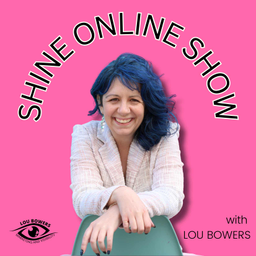
Welcome to the Shine Online Show with Lou Bowers. This is the show where we talk about visibility without gimmicks, marketing without burnout, and showing up online in a way that actually works. If you’re building a business, a brand, or a reputation, you’re in the right place. I’m here to remind you that social media isn’t dead and that you can shine online. loubowersmarketing.substack.com (https://loubowersmarketing.substack.com?utm_medium=podcast)
- Publisher
- Lou Bowers
- Category
- business · business
- Language
- en
- Explicit
- No
- First episode
- 2 Mar 2026
- Latest episode
- 14 Oct 2026
Latest episodes
24 episodes in the feed.
14 Oct 2026
Is Your Business Running on Coffee and Sandwich Crusts?
Have you ever hit that mid-afternoon slump where your brain decides it’s finished working for the day, even though your to-do list has other plans? You know the feeling. Everything seems to require a little more effort, your creativity has gone on vacation, and another cup of coffee starts looking like a pretty good idea. Well, apparently, the answer might be a sandwich. I recently invited my longtime friend and nutritionist Amanda McKean onto the Shine Online Show to talk about something that deserves a lot more attention in the business community: how the food we eat affects our energy, focus, and ability to show up for the work we do. Amanda runs Inspired Eats With Amanda here in Kamloops, and she’s also someone I’ve worked with personally to improve my own eating habits. I love how she approaches nutrition because she makes it feel manageable. She’s interested in helping people build habits that work for their actual lives, which is a pretty refreshing approach when we’re all juggling approximately a million things. One of the things Amanda said during our conversation really stuck with me. Calories are a measure of energy. I know. Groundbreaking stuff, right? Except think about how we’ve been taught to look at calories. For so many of us, they’re something to count, restrict, avoid, or feel guilty over. Meanwhile, we’re expecting our brains to produce brilliant ideas, solve problems, manage clients, remember approximately 700 things, and keep our businesses moving forward. Amanda explained that when we haven’t given our bodies enough energy throughout the day, that afternoon crash can be a very predictable response. We’re asking our brains to do all this work, and we need to make sure we’re supplying the fuel they need. One of her recommendations is to plan a snack around two or three in the afternoon, especially if that’s when your energy tends to dip. She suggested pairing a protein with a carbohydrate, fruit, or vegetable. Something like a hard-boiled egg and crackers, or another combination that gives you some energy and helps you feel satisfied until dinner. I particularly enjoyed the part of our conversation where Amanda admitted that sometimes she wants chips in the afternoon, and she eats the chips. She’ll often add some protein alongside them. Imagine that. Eating something you enjoy and thinking about how to make it work for your body instead of turning it into a moral dilemma. We also talked about hydration, because apparently we’re all complicated houseplants who need considerably more attention than we’re giving ourselves. Amanda drinks herbal tea throughout the day because she doesn’t enjoy cold water on her sensitive teeth. She pointed out that hydration can come from a variety of places, including the foods we eat. Oatmeal, soups, fruits, vegetables, all those things contribute. And here’s some news that I was particularly delighted to hear: your morning coffee counts toward your hydration. According to Amanda, coffee’s reputation for being terribly dehydrating is overblown, particularly for people who drink it regularly. I feel like that information alone made the entire podcast episode worthwhile. Of course, drinking coffee at six in the evening might still interfere with your sleep, so don’t go using me as your excuse for that. Another part of our conversation really resonated with me because it goes beyond food and into something I talk about all the time in business: building habits that actually fit into your life. We talked about that dreaded five o’clock moment when you’re exhausted, everyone wants dinner, and the drive-through starts looking incredibly appealing. Amanda explained that our brains love familiar routines. If picking up takeout has solved the dinner problem before, our brains are going to keep suggesting it because they already know it works. Cooking at home might take less time than driving somewhere, ordering, waiting, and bringing everything back, but if it isn’t part of your routine, it can feel like an enormous amount of extra effort. Her suggestion was to start ridiculously small. Maybe you buy one meal kit during your Sunday grocery shopping and cook at home one evening a week. You do that until it starts feeling normal, and then you add another evening or try preparing something from scratch. I love this approach because it makes room for being an actual person with a business, a family, relationships, responsibilities, and the occasional day when everything goes sideways. We spend so much time setting these enormous goals for ourselves, whether they’re around nutrition, exercise, marketing, or growing a business, and then we get frustrated when we can’t maintain the whole elaborate plan. Amanda talked about how even a seemingly small change can bring up unexpected emotions. That reminded me of when my son was a baby. He had some pretty serious food allergies, and while I was nursing him, I had to eliminate certain foods from my diet, including dairy. I remember being in Scotland with family and seeing someone order this gorgeous, cheesy, gooey pizza. I wanted that pizza so badly that I actually went into the bathroom and cried. It sounds funny now, but I was genuinely upset. Food is tied to our memories, our relationships, our routines, and the things that bring us comfort. Changing those routines can be emotional, even when we understand why we’re doing it. Amanda sees that with her clients all the time, especially when people arrive wanting to lose weight and she starts by encouraging them to eat more consistently throughout the day. She explained that people sometimes spend the whole day under-fueling themselves and then feel completely out of control around food in the evening. There can be a biological reason for that overwhelming hunger, rather than the lack of willpower people often blame themselves for. And that brings me to one of my favourite things Amanda said during our conversation. Her goal for clients is often simply to do something more often than not. More often than not. I LOVE that. At my house, I have these adorable little jars with lids, and occasionally I get myself beautifully organized and prepare a few servings of chia pudding or what we call faux cheesecake. It’s cottage cheese, yogurt, and fruit blended together, with a little granola on top. It’s delicious, and when I’ve made it ahead of time, breakfast is incredibly easy. But sometimes I do it for two days and then completely lose interest. In my head, that’s usually the moment when I decide I’ve failed at meal prepping. Amanda’s perspective is that if I managed two days last week and three days this week, I’m making progress. If I can eventually do it four days out of seven, that’s pretty fantastic. There doesn’t need to be a dramatic declaration that from this day forward I shall eat a perfectly balanced breakfast every single morning until the end of time. Thank goodness, because that sounds exhausting. The more we talked, the more I started thinking about how much of this applies to the way we run our businesses. We want to be creative and productive. We want to have enough patience for our clients, enough mental energy to make good decisions, and enough enthusiasm left at the end of the day to enjoy the people we love. And yet, how often do we treat taking care of ourselves as something we’ll get around to when the work is finished? I eat at my desk far more often than I’d like to admit. Amanda challenged me to take even five minutes to sit and eat without checking emails, listening to a podcast, or doing something else at the same time. Five minutes to let my brain have a little break. I can already tell that one is going to take some practice. The conversation also made me think about how easily we separate our personal wellbeing from our business goals, as though they’re competing priorities. There’s our work, our families, our relationships, our health, and all the things we’re trying to balance. Sometimes it feels like every one of those things is standing in line demanding to be first. But if I’m taking better care of myself, I’m also putting myself in a better position to show up for my business. I can think more clearly, be more present, and have the energy to create the things I’m excited to share with the world. That’s a pretty compelling reason to pay attention to how we’re fueling ourselves. What I appreciate most about Amanda is how completely free of shame her approach feels. I’ve had moments while working with her when I’ve gone down a little spiral over my own eating habits. Instead of making me feel worse, she’ll check in, ask how things are going, and help me figure out what might make things easier. Within ten minutes, I usually feel like I can approach the whole thing again. She also makes the practical side of feeding yourself much easier. Through Inspired Eats With Amanda, she offers nutrition coaching, workshops, and freezer meal prep gatherings where she does the shopping, supplies the containers, and helps you prepare meals to take home. She also has a growing collection of over 100 freezer meal recipes, which feels like a pretty wonderful resource for those of us who would like dinner to stop being such a production every evening. You can find her at inspiredeats.ca (https://inspiredeats.ca), where she shares her workshops and ways to work with her. And if you’ve been finding yourself staring at your computer at three in the afternoon, wondering why your brain has stopped cooperating, I really encourage you to listen to our full conversation on the Shine Online Show. You might discover that your next great business idea begins with a snack. And possibly a little less time eating lunch over your keyboard. I’ll be working on that one too. This is a public episode. If you would like to discuss this with other subscribers or get access to bonus episodes, visit loubowersmarketing.substack.com (https://loubowersmarketing.substack.com?utm_medium=podcast&utm_campaign=CTA_1)
7 Oct 2026
What If Your Budget Worked With Your Brain Instead of Against It?
I went into this conversation expecting to talk about money, but I did not expect to feel personally attacked by the unfinished online course sitting in the back of my brain. Sherry Andrew was explaining how ADHD can affect the way we manage money, especially as entrepreneurs, and she mentioned the very specific experience of buying a course because you are convinced it is going to solve something for you, only to barely make it through the lessons. At that point I had to stop her because I currently have a course with something like 80 lessons in it and I have completed three, so apparently we were diagnosing me live on the podcast. That part made me laugh, but it also opened the door to a much bigger conversation about how often we blame ourselves when the systems we are trying to use were never designed for the way our brains work in the first place. Sherry launched Money Mindset Financial Coaching after losing the career she had been in for almost 17 years. At the time, getting fired was a shock, but looking back she sees it as what she calls her “two by four moment.” There had been signs that the job was no longer right for her, but she kept pushing through because that was what work looked like to her. You went to the job, collected the paycheque and eventually retired, while loving what you did was never really part of the equation. Losing that job forced her onto another path, and eventually her own ADHD diagnosis changed the direction of her business again. She started looking at the financial systems that worked for her and realizing there were reasons they worked. Some helped with out-of-sight, out-of-mind thinking, while others helped with time blindness or follow-through. That eventually became the focus of her work: helping people with ADHD manage money in a way that fits how their brains operate. This is where our conversation got really interesting for me, because so much traditional financial advice is built around rules about how much you should save, what percentage you should spend on housing, what you should never spend money on and what you should always be doing. Sherry pointed out that telling someone with ADHD they should always or never do something can be one of the fastest ways to make their brain rebel against the whole thing. On top of that, the standard percentages and formulas do not necessarily line up with the life somebody actually wants to live. You might care deeply about travel and be perfectly happy driving an older car so you can spend money on experiences instead, and I can relate to that one because I drive a 2014 Hyundai. On one of my recent vacations I spent hours sitting on a beach picking through rocks looking for sea glass, which is basically garbage hunting and somehow turned out to be incredibly soothing for my nervous system. Someone else might want the water parks, the amusement parks and the big shiny experiences, while I am very happy sitting on a beach looking for tiny pieces of old glass. Neither one is wrong. The point Sherry kept coming back to was that your money should support the life you actually want. Her core rule is pretty simple: find a system that helps you spend less than you make, then decide where the money goes based on your own priorities. That felt so much better to me than building your life around somebody else’s idea of what a “good” budget is supposed to look like. We also got into the financial advice that Sherry really does not agree with, especially the extreme restriction that shows up in some popular debt-payoff approaches. One example she brought up was the idea that if you have high-interest debt, you should avoid restaurants entirely until the debt is gone. That sounds tidy on paper, but it becomes a different story when paying off that debt could take years or when you have ADHD and there are days when you are so overstimulated or overwhelmed that ordering food is the only realistic way you are going to eat. Sherry’s point was not that you should ignore your debt or spend with zero intention. Her point was that a plan has to be sustainable enough that you can live with it. That brought us to what may be my favourite analogy from the entire conversation. If you really want a cheeseburger but you have decided you absolutely cannot have one, you might start by eating the carrots, then add some yogurt and crackers, trying to convince yourself that one of those things will scratch the itch, only to end up eating the cheeseburger anyway. At that point, you have eaten everything else and the cheeseburger. Money can work the same way. When you build a plan around absolute restriction, you may keep trying to find little workarounds until eventually you spend the money on the thing you wanted in the first place. Sherry would rather see people create some room in the budget for impulse spending or less intentional purchases so one decision does not make the entire plan feel ruined. That idea became even clearer when we started talking about the perfect-budget cycle. You sit down, make a beautiful plan and feel wildly responsible and organized for a minute, then your car makes a weird noise and suddenly there is a $500 repair that was nowhere in the plan. Now the whole budget feels broken, so you abandon it, go back to winging things for a while, feel bad about that, hyperfocus on fixing it and eventually create another perfect plan until something unexpected happens again. Sherry sees that cycle all the time, and one of the biggest shifts she encourages is planning for the expenses that feel unexpected even though we know they are eventually coming. Cars need repairs, homes need maintenance, holidays happen, people buy gifts and vacations cost money, so when those things are completely missing from the plan, they have the power to derail everything. When you put aside a little bit over time, the experience is completely different. One of Sherry’s clients recently had a $500 car repair and already had $700 sitting in the account they had been building for exactly that kind of expense. Instead of panic, there was excitement because the system had worked. Sherry talked about how important that win can be, especially for an ADHD brain, because you get the dopamine hit of seeing that something you set up actually helped you, which makes it easier to keep going. Another client had variable income and loved to travel, so Sherry helped create a simple rule. There was a baseline amount the client needed to live, and whenever income came in above that number, the difference went toward travel. One week, that amount was $79.26, and her client was thrilled to put that exact amount into the vacation fund because the extra money had somewhere to go before it could disappear into everything else. I loved that because we tend to think a financial plan has to feel restrictive to be responsible, but so much of what Sherry talked about was creating clarity around what your money is there to do. Some of it keeps the lights on, some of it protects you when your car starts making that suspicious little noise, some of it helps you pay down debt, and some of it can absolutely be there so you can go somewhere wonderful, sit on a beach and spend three hours hunting for sea glass if that is your idea of a fabulous vacation. By the end of our conversation, I told Sherry that talking to her had made my whole nervous system feel more regulated around money, and that is probably the biggest thing I took away from this episode. A good financial system should make your life feel steadier. It should give you enough structure to know what is happening with your money while leaving enough room for you to still be a human being. Sherry has free resources for entrepreneurs and people with ADHD, including a budgeting tool that does the math for you and helps you think through some of the expenses that are easy to forget when you are making a plan. She also works one-on-one with clients through Money Mindset Financial Coaching (https://www.moneymindsetfc.com/). I have a feeling this will not be the last time she is on The Shine Online Show because I could have kept talking to her for another hour. This is a public episode. If you would like to discuss this with other subscribers or get access to bonus episodes, visit loubowersmarketing.substack.com (https://loubowersmarketing.substack.com?utm_medium=podcast&utm_campaign=CTA_1)
23 Sept 2026
Thinking About Starting a Podcast? Start With These Two Questions
I am still very new to podcasting, and I absolutely love hosting the Shine Online Show. That said, there are definitely moments when I look at people who have been doing this for years and think, “Oh wow. I am an amateur.” That came up in my conversation with Shannon Warner, podcast strategist, producer, founder of Resonant Collective, and host of Speak Mother. Before we even started recording, I had mentioned that I still feel like I am figuring things out, and she immediately reminded me that this is exactly how she started too. No big podcasting boot camp. No perfectly mapped-out plan. She had an idea, followed it, and let it grow into something much bigger over time. That was reassuring on its own, but then she said something that shifted the way I was thinking about the whole thing. Let it be fun. It sounds almost too simple, especially in business, where we are constantly being told to optimize, strategize, track, plan, and make every single thing pull its weight. The second we decide to start something new, we tend to jump straight into logistics. What microphone should I buy? How often should I publish? Should I interview guests? How long should the episodes be? Which platform should I use? Meanwhile, we may not have stopped to think about what would make us actually want to keep doing it. Shannon’s advice was to start there. What would make podcasting enjoyable for you? Maybe it gives you an excuse to talk to fascinating people you would love to know better. Maybe you like the idea of sitting behind a microphone and talking the way you would send a long voice note to a friend. Maybe you want somewhere to share what you are learning while you build your business. Once you know what feels good, you can build from there. Of course, if your podcast is connected to your business, fun is only one piece of the equation. Shannon also said something else that really stayed with me: give your podcast a job. That does not mean squeezing every ounce of joy out of it and turning it into one giant sales funnel. It means understanding why you are putting your time and energy into it in the first place. Your Podcast Does Not Need a Million Downloads When people talk about making money from podcasts, the conversation often goes straight to sponsorships. We imagine getting a huge audience, racking up millions of downloads, landing sponsors, and somehow turning the show into a little money machine. For most business owners, though, the value of a podcast is probably going to show up somewhere else. It might help people discover your services, deepen trust with potential clients, or give your audience a better understanding of how you think and work. It can support a workshop, program, membership, consulting business, speaking career, or whatever else you are building. Once you look at it that way, the measurement changes too. Instead of obsessing over how many downloads an episode got, you can look at whether the show is doing the job you created it to do. That feels much more useful to me. If part of the Shine Online Show’s job is to help business owners see me as a trusted marketing resource, then that naturally affects the guests I invite on, the topics I talk about, the questions I ask, and the stories I choose to share. It gives the podcast direction without making it rigid. And that part matters too, because Shannon was very clear that we are allowed to change our minds. Your podcast can evolve as you do. You can change the tagline, play with the format, introduce solo episodes, stop doing solo episodes, or shift the direction altogether if the show starts feeling like it needs something different. We have a funny habit in business of treating every decision like it has been carved into stone forever, when a lot of the time the only way to find out what works is to start and pay attention. Podcasting Creates Space for Thought Leadership Thought leadership is a big part of the work I do with clients because I want people to see your content and understand that you know what you are talking about. Podcasting gives you a really interesting way to build that because you have room to think out loud. On social media, you might have a reel, a carousel, or a caption. A podcast gives you 20, 30, or 60 minutes to explore an idea in a way that is harder to do in a short post. You can explain how you got to an opinion, tell the story behind a lesson, or bring someone else into the conversation who adds another perspective. During our conversation, Shannon talked about the idea of building a body of work, and I loved that phrase. A body of work feels very different from constantly trying to feed the social media machine. It gives your ideas somewhere to live. Podcast episodes can keep being discovered months or years after you publish them, and Shannon sees that happening in her own work. She shared that older episodes still get found because the topic happens to be exactly what somebody needs in that moment. She also talked about one of her clients who had barely published this year and still saw her downloads triple. Something she had already created was continuing to work. As a marketer, that gets my attention because we put so much energy into content that disappears from people’s feeds almost immediately. There is something very appealing about creating work with a longer shelf life. Then There Are the Relationships This might be the part of podcasting I am becoming most obsessed with. The relationships. While Shannon and I were talking, we realized that we had both interviewed Bianca Sprague. Immediately there was another connection between us and another shared point in our networks. That happens naturally with podcasting. Someone might listen because they already know your guest, then end up discovering you. You might appear on someone else’s show and get introduced to an entirely new group of people. A conversation that starts as a podcast interview could eventually become a collaboration, referral, friendship, speaking opportunity, or something neither person had planned. I joked during our interview that there is almost a little Mean Girls energy to it. “You had WHO on your podcast?” But underneath that joke is something I believe pretty strongly about business. Relationships create opportunity, and podcasting gives you a very natural reason to build them. You get to sit down with someone interesting, ask good questions, learn from them, and share that conversation with other people. That is a pretty great way to spend half an hour. You Do Not Need to Feel Completely Ready At one point I asked Shannon what she would tell someone who wants to start a podcast but is still stuck at the “What do I even do first?” stage. Her answer came back to starting before you have everything figured out. Pick a topic and record something. If you want guests, begin with interesting people already in your world. If you want to start solo, talk about something you know well and see what comes out. You do not need four people reviewing your script or a voice that sounds like it belongs on national radio. You need enough room to play with it and learn. That felt very familiar to me because I say a version of the same thing to social media clients all the time. People get so worried that a video might be awkward or that someone might judge them, and I have to remind them that one reel does not define their entire business. If the reel flops, you can make another one. The same is true with podcasting. Your first episode does not have to represent the final version of your show. Your tenth probably will not either because your voice gets stronger as you use it. You figure out what works because you keep showing up long enough to notice. We Are Also Much Harder on Ourselves Than Anyone Else Is One of my favourite parts of the conversation was hearing Shannon talk about producing podcasts for other women. She told me that incredibly smart, magnetic women will record something and then immediately tell her, “I don’t know why I said that. You can cut that part out.” Meanwhile, Shannon is sitting there thinking that was the best part. That was the thing worth keeping. I loved that because we do this to ourselves all the time. We say something naturally, without rehearsing it or polishing it for three hours, and then assume it could not possibly be valuable because it came out too easily. Meanwhile, someone else hears it and thinks, “I needed that.” I have gone back through old content of my own and had moments where I thought, “Damn, past Lou. That was actually really good.” Sometimes we are standing too close to our own knowledge to recognize that something we consider ordinary could be incredibly useful to somebody else. Podcasting gives those thoughts somewhere to live, and one of them might land in front of exactly the right person months from now. Strategy and Intuition Can Work Together Another thing Shannon said that I keep coming back to is that strategy and intuition do not have to fight with each other. I obviously love strategy. I want content to have a purpose, and I want a podcast to have a job. It helps to understand where your audience is going and what role your content plays in your business. At the same time, I also want people to enjoy the businesses they are building. If somebody hands you a strategy that makes you want to crawl under your desk and never create anything again, there is probably another way to get where you are trying to go. There are so many ways to build visibility, authority, and trust. You can listen to experts, learn from what has worked for other people, and still decide that one particular tactic does not fit you. Then, if you change your mind later, you are allowed to do that too. None of us need to be trapped by a decision we made six months ago because we thought it was the “right” way to do business. There is a lot more room to experiment than we give ourselves credit for. I think that is one of the biggest things I took away from my conversation with Shannon. Your podcast can have strategy behind it and still be fun. It can support your business while giving you room to play, connect, and figure things out as you go. And if there is a podcast, YouTube channel, newsletter, workshop, event, offer, or some other idea that has been hanging around in your head because you think you need to perfectly plan it before you begin, maybe the first move is simpler than that. Figure out what would make you want to keep doing it. Decide what job you want it to do in your business, then start creating from there. You can learn your way into the next version.Shannon is hosting an online webinar called Build a Podcast That Actually Works For You (https://portal.rcollectivepodcasts.com/podcastthatworksworkshop) September 30h. Grab your spot! (https://portal.rcollectivepodcasts.com/podcastthatworksworkshop) This is a public episode. If you would like to discuss this with other subscribers or get access to bonus episodes, visit loubowersmarketing.substack.com (https://loubowersmarketing.substack.com?utm_medium=podcast&utm_campaign=CTA_1)
Reach and audience
Public platform figures. Ratings count people who left a rating, not total listeners.
- Spotify
- 5.0 / 5
- 1 ratings
Contact Shine Online Show
- Guest appearances
- Books guests
Based on episode analysis; this does not confirm that the show is currently accepting guests.
Host of Shine Online Show?
Claim your podcast to manage its listing and keep your show details accurate.
Pod Engine is an independent podcast discovery and analytics service and is not affiliated with or endorsed by this podcast. Artwork and show content belong to their owners. Full legal notice.
Explore this show
Podcast research with Pod Engine