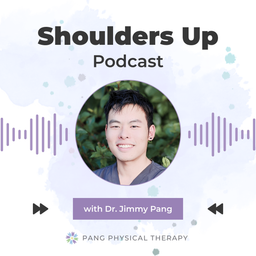
Shoulders Up is a podcast focused on complex headaches and dizziness, especially cases where diagnostic lines start to blur. Care is often siloed into different specialities when a true bird's eye view is actually needed for better outcomes.
Hosted by Dr. Jimmy Pang, a physical therapist who both treats and lives with complex conditions, the show explores often overlooked intersections of head & neck systems, offering a more integrated framework for recovery.
Dr. Lauren Ziaks, a doctor of physical therapy, discusses autonomic disorders, dysautonomia, and the Utah Adapt Protocol. She emphasizes the importance of understanding and treating dysautonomia as a secondary condition triggered by an inflammatory event. Dr. Ziaks also highlights the need for a wide lens approach in treating dysautonomia and the challenges of reconditioning patients after treating the condition.
Takeaways
Dysautonomia is a secondary condition triggered by an inflammatory event, and it's important to treat the underlying cause as well as the dysautonomia itself.
Reconditioning patients after treating dysautonomia is a lengthy process that requires a wide lens approach and careful consideration of the patient's readiness for physical activity.
Chapters
00:00 Understanding Autonomic Disorders and Dysautonomia
06:07 Overlap of Vestibular, Vision, and Autonomic Rehab
12:14 The Utah Adapt Protocol and Its Impact
17:27 Common Mistakes and Patient Success Story
26:36 Promotion of Potts and Beyond Conference
instagram.com/lziaks (http://instagram.com/lziaks)
https://medicine.utah.edu/neurology/conferences/pots-and-beyond (https://medicine.utah.edu/neurology/conferences/pots-and-beyond)
www.pangphysicaltherapy.com (http://www.pangphysicaltherapy.com)
instagram.com/pangphysicaltherapy (http://instagram.com/pangphysicaltherapy)
4 Sept 2026
Status Migrainosus Explained: The DHE Protocol for Chronic Migraine
The Shoulders Up Podcast discusses status migranosis, the difference between headache and migraine, and the DHE admission process. Annika Ehrlich, a headache specialist, shares insights on the DHE admission protocol and the importance of headache advocacy.
Takeaways
Status migranosis is a prolonged migraine attack lasting more than 72 hours.
The DHE admission process involves a hospital stay and multiple infusions to manage severe and chronic migraine symptoms.
Chapters
00:00 Introduction to Status Migranosis
02:10 Differentiating Headache and Migraine
04:37 Understanding Status Migranosis
10:10 DHE Admission Process
22:11 Pediatric DHE Admissions
30:31 Success Stories and Advocacy
https://allianceforheadacheadvocacy.org/ (https://allianceforheadacheadvocacy.org/)
www.pangphysicaltherapy.com (http://www.pangphysicaltherapy.com)
instagram.com/pangphysicaltherapy (http://instagram.com/pangphysicaltherapy)
5 Aug 2026
Post-Stroke Dizziness & Vestibular Rehab | A Neuro PTs Guide
In this episode, Dr. Lauren Young joins Jimmy Pang to discuss post-stroke dizziness, neuroanatomy, vestibular disorders, and spasticity management. They explore the brain regions involved in post-stroke dizziness, the complexity of the vestibular system, and the unique challenges of managing post-stroke dizziness compared to traditional vestibular disorders. Additionally, they delve into the misconceptions and therapeutic approaches for spasticity management, highlighting the need for a comprehensive and multi-faceted treatment approach. The conversation covers early positioning and prescription, challenges in spasticity management, a case study on post-stroke dizziness, vestibular evaluation and treatment, patient management and breaks, a complex spasticity case, treatment limitations and patient selection, and professional development and side hustles in healthcare.
Takeaways
Post-stroke dizziness requires screening and management, even in the absence of overt symptoms.
Spasticity management involves a multi-faceted approach, including conservative techniques and medical interventions. Early positioning and prescription are crucial in acute care and inpatient rehab.
Understanding treatment limitations and patient selection is essential for successful outcomes.
Chapters
00:00 Introduction and Guest Introduction
01:56 Post-Stroke Dizziness and Brain Regions
05:17 Neuroanatomy and Vestibular System
12:16 Vestibular Disorders and Post-Stroke Dizziness
17:44 Spasticity Management and Therapeutic Approaches
24:43 Early Positioning and Prescription
26:07 Challenges in Spasticity Management
27:31 Case Study: Post-Stroke Dizziness
28:02 Vestibular Evaluation and Treatment
29:14 Patient Management and Breaks
34:46 Complex Spasticity Case
40:19 Treatment Limitations and Patient Selection
43:37 Professional Development and Side Hustles
Dr. Jimmy Pang
www.pangphysicaltherapy.com (http://www.pangphysicaltherapy.com)
instagram.com/pangphysicaltherapy (http://instagram.com/pangphysicaltherapy)
Dr. Lauren Young
https://neuroelitept.com/ (https://neuroelitept.com/)
The Rehab Remix (https://open.spotify.com/show/17Cv8CNaoQiWHR9RvC3bNW)
instagram.com/neuroelitept (http://instagram.com/neuroelitept)
Reach and audience
Public platform figures. Ratings count people who left a rating, not total listeners.
Apple Podcasts (US)
5.0 / 5
3 ratings
Spotify
5.0 / 5
8 ratings
Contact Shoulders Up
Guest appearances
Books guests
Based on episode analysis; this does not confirm that the show is currently accepting guests.
Host of Shoulders Up?
Claim your podcast to manage its listing and keep your show details accurate.
Pod Engine is an independent podcast discovery and analytics service and is not affiliated with or endorsed by this podcast. Artwork and show content belong to their owners. Full legal notice.
Explore this show Podcast research with Pod Engine