- 19
- Episodes
- Monthly
- Cadence
- 2020
- First episode
About Speaking Body (via Substack)
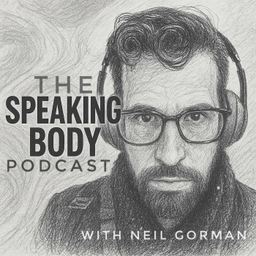
Speaking Body is a podcast hosted by Neil Gorman that approaches culture, relationships, and everyday life through the lens of Lacanian psychoanalysis, treating it not as a closed theory but as a living clinical practice. It explores how subjectivity speaks through the body—through symptoms, desire, impasses, and enjoyment—while engaging art, politics, and contemporary life with rigor, openness, and a touch of irony. speakingbody.substack.com (https://speakingbody.substack.com?utm_medium=podcast)
- Publisher
- Neil Gorman
- Category
- education · society & culture
- Language
- en
- Explicit
- Yes
- First episode
- 26 May 2020
- Latest episode
- 29 Jul 2026
Latest episodes
19 episodes in the feed.
29 Jul 2026
Metaphysics, Ontology, & Ethics
The Lead In the time between my last dispatch and this one, summer has moved along. There have been more long days, tons of sun, lots of heat; my garden has produced massive zucchinis (pictured above), and I’ve continued to indulge in my summertime ritual of moving and thinking more slowly than I do at other times of the year. I’ve also been immersing myself in the work of Stephen Batchelor (https://stephenbatchelor.org), reading his writings, watching YouTube videos of him giving talks, and listening to podcasts in which various people have interviewed him. At this moment, I’m sitting in a cafe drinking an iced Americano. I don’t have anyone with me, so I’ve chosen to sit at the counter. My laptop is open in front of me, and the screen shows the Safari web browser with several tabs open. One of those tabs is the Substack editor where I’m typing these words. The tab immediately to the right displays the prior dispatch I sent out and (re)read before starting to type these words. As I read what I sent two weeks back, something that really stood out to me was this: Batchelor formulates a secular form of Buddhism stripped of metaphysics and ontology. Another way to state what I was driving at there would be to say, Batchelor reformulates Buddhism as an ethical practice rather than a metaphysical or ontological system. This continues to feel very important to me as I delve further into Batchelor’s formulation of an ethics informed by secular Buddhism. However, I also realized that in the prior dispatch, I did not elaborate on this point enough. * What does it mean to use Buddhist ideas and principles as an ethic? * How might an ethic informed by secular Buddhism compare to one informed by psychoanalysis? * Why should we consider stripping Buddhism or psychoanalysis of metaphysics and ontology? These (and other questions along these lines) are the questions I did not spend enough time grappling with in my prior dispatch, and they are the questions I’d like to spend time thinking and writing about today. The Nut Graft Let’s start by thinking through three things and how they relate to psychoanalysis and secular Buddhism. Metaphysics: Two Lacanian aphorisms that I associate with the concept of metaphysics come from the Écrits, where Lacan writes “There is no metalanguage that can be spoken, or, more aphoristically, that there is no Other of the Other.” What each of these suggests to me is that there is no universal authority that can provide subjects with a way of life guaranteed to work. There is no final Truth (with a capital T) that a person can use as a north star to ensure they arrive at the place they are meant to reach. All of this feeds into another Lacanian idea: “There is no truth that, in passing through awareness, does not lie. But one runs after it all the same.” I see this as relating to metaphysics because (I think) metaphysical systems typically claim to describe reality from a standpoint outside the conditions they describe. The Lacanian position, as I understand it, is that it is not possible to take up a position outside of the conditions of our own experience. I’ve spoken about this with other non-Lacanian people, sometimes with philosophy graduate students who are particularly interested in metaphysics. They will sometimes say something along the lines of, “Even if we only have a subjective experience, you have to admit that there is an objective reality (a metaphysical Truth) outside of that subjective experience!” Whether there is an objective reality isn’t something I claim to know. My point is simply that whatever reality may be, I never encounter it objectively. I only ever encounter it through my own (subjective) experience. I think Batchelor argues that many people understand Buddhism as a metaphysical system capable of revealing the ultimate nature of reality that they can access through intense meditation, contemplation of Zen koans, or other spiritual practices. Still, he does not want to see Buddhism that way. Instead, Batchelor sees Buddhism as an ethics. This is fascinating to me because I think some people can see psychoanalysis (psychoanalytic theory/ortodoxy) as a kind of metalanguage, an Other of the Other, as something that can offer access to a metaphysical Truth. However, this is not how I see psychoanalysis! I see psychoanalysis the way Batchelor sees Buddhism, as a set of ethical practices —practices available to ordinary people— that can change people’s relationships to what Buddhists call suffering (dukkha) and what I’d call their mode of jouissance, symptomatic repetition, and fantasy structures. To be clear: Whether there is ultimately a metaphysical Truth is an interesting philosophical question! I don’t think that thinking about this or attempting to answer this question is a waste of time, and I don’t think Lacan or Batchelor would see it as a waste of time either. (Lacan would probably be interested in what kind of jouissance a subject derives from trying to answer this question.) What strikes me is that both Lacan and Batchelor are saying someting remarkably similar about their respective practices —in both instances, what matters is not fidelity to a metaphysical belief or truth claim, but cultivating a different way of responding to the reality one actually experiences. Ontology: I see ontology as a subset of metaphysics, which is concerned with asking the question of what exists. Does the self exist? Does God exist? Does the unconscious exist? Does the Dharma exist? Does the Phallus exist? Does time exist? Does the signifier exist? Do dreams exist? Is emptiness something that exists? Does the Other exist? Does human nature exist? Does karma exist? Does marriage exist? Does the Name-of-the-Father exist? So on and so forth. I realize the list above is long, probably unnecessarily long, because you got the point after two or three examples. While editing this, I almost made it shorter, but decided to keep it long because I thought it was actually a good way to demonstrate the endless, repetitive metonymic questioning that ontology opens the door to. It is that kind of questioning that can go on forever. While I don’t believe there is anything evil or fundamentally wrong with asking questions about what does and does not exist, what it means for something to exist, how X exists if it does exist, or with pondering one question like this, then the next, on and on, forever and ever. What I’m interested in doing is revealing something about what happens in this questioning and changing the way people relate to that process. To do this, I’m going to rely on something I read in Batchelor’s book After Buddhism: Rethinking the Dharma for the Secular Age, where Batchelor talks about the Buddhist parable of the poisoned arrow (https://en.wikipedia.org/wiki/Parable_of_the_Poisoned_Arrow). The Buddha tells the story of a man who has been struck by a poisoned arrow and lies bleeding to death on the ground. Before allowing his friends to bring a doctor to remove the arrow, the man insists on knowing the name of the person who shot it, the place where he lives, the complexion of his skin, and so forth, down to such absurd details as the kind of feathers on the arrow shaft: “whether those of a vulture or a crow or a hawk or a peacock or a stork. My reading of what Batchelor is doing here is that he is trying to show how, when someone is suffering, they can become overly interested in theoretical questions about suffering and its causes. Again, there is nothing inherently wrong with these questions, but pondering them can become a problem if it prevents a person from actually doing things (i.e., engaging in practices) that could help them by changing their relationship to their symptomatic ways of living their lives. During my time as a practicing Lacanian psychoanalyst, I’ve had several people come to me for psychoanalysis who have spent a lot of time reading and thinking about Lacan’s teaching. I’ve witnessed some of these people spend a lot of time talking about what they are doing symptomatically in very theoretical terms, by which I mean they use their experience to demonstrate and understand the theory they have been reading. They ponder what they are going through by pairing it with a psychoanalytic concept, and then the next time I see them, they have moved on to another concept. They ask questions like, “Is this my mode of jouissance?” or “Is this the sinthome, the symptomatic remainder that I need to learn how to enjoy?” There is nothing wrong with those questions, but I believe they are usually a defense against encountering the real of the symptom. When this happens, I will think that a kind of ontological thinking, in and of itself, has become symptomatic. I consider the possibility that there is a kind of jouissance (ironic satisfaction) in this kind of endless theorizing. In general, one thing I will do is ask a question along the lines of, “I can see you know the theory; that’s abundantly clear to me. But what I’d like to hear more about is what is happening to you when you…” This is my attempt to try to privilege subjective experience over demonstrations of theoretical mastery. Sometimes, I might be more direct and say something like, “I’m not going to discuss theory with you. Please say more about why you bothered to come here today.” Or perhaps, “I think you might be using theory as a defense so that you don’t need to talk about your symptom.” Regardless of the style of the intervention I use, I am generally trying to get past metaphysical and ontological modes and move more toward what I would consider the radical and ethical aspect of psychoanalysis. Ethics: In After Buddhism and the other writings of Batchelor that I’ve been reading, he consistently proposes that one way to think about suffering is to see it as a kind of reaction to our conditions. I’d go so far as to say that he often describes this reactivity as a repetitive reaction, which has obvious parallels to symptomatic repetition compulsions. Another point in Batchlor’s work is that we can’t completely free ourselves from reactivity. This strikes me as similar to the Lacanian idea that we will always be symptomatic. However, I think it is interesting to consider the idea that an experience of practices—doing something consistently—might change how a person relates to the suffering they experience, relative to their symptomatic representations. In After Buddhism, shortly after the section I quoted above, Batchelor says this explicitly when he writes, The purpose of the Buddha’s teaching is not to resolve doubts about the nature of “reality” by providing answers to such conundrums but to offer a practice that will remove the “arrow” of reactivity, thereby restoring practitioners’ health and enabling them to flourish here on earth. It seems to me that what Batchelor says about Buddhism could also be said of psychoanalysis. Perhaps the most succinct way to formulate what Batchelor is doing here is to pose it as a few questions: * What if we use Buddhism as a set of principles that shape how people live their day-to-day lives, rather than as a system that explains what reality ultimately is? * What happens if we don’t approach Buddhism in a scholastic/adademic way that is available only to those who can dedicate an enormous amount of time and energy to studying it, and see it as a set of ideas that normal people can make use of in their normal lives? Incidentally, these are the kinds of questions I often ponder about psychoanalysis as a body of knowledge and as an embodied practice. The Kicker As I wrap up this dispatch, I find myself thinking of something that Freud wrote at the very end of Studies in Hysteria. When I have promised my patients help or improvement by means of a cathartic treatment I have often been faced by this objection: ‘Why, you tell me yourself that my illness is probably connected with my circumstances and the events of my life. You cannot alter these in any way. How do you propose to help me, then?’ And I have been able to make this reply: ‘No doubt fate would find it easier than I do to relieve you of your illness. But you will be able to convince yourself that much will be gained if we succeed in transforming your hysterical misery into common unhappiness. With a mental life that has been restored to health you will be better armed against that unhappiness.’ When I read Freud’s words right now, I sense a huge similarity between what he is expressing and what I’m discovering in the writing of Batchelor: There is no cure for being human, for being what Lacanians call a divided subject or speaking body. Batchelor frequently remarks that Buddhism grew out of an encounter with the fact that all human beings are subject to birth, sickness, and death, and experience the diminishment of their bodies and minds as they age. While I could be wrong about this, I believe that even though we can’t escape pain and suffering, we can engage in practices that can change the way we relate to our conditions and the suffering inherent within those conditions. This is a public episode. If you'd like to discuss this with other subscribers or get access to bonus episodes, visit speakingbody.substack.com/subscribe (https://speakingbody.substack.com/subscribe?utm_medium=podcast&utm_campaign=CTA_2)
14 Jul 2026
Audio Version of my last email dispatch
Hello, This is an audio version of the prior dispatch I sent out yesterday. (https://speakingbody.substack.com/p/the-intersection-of-psychoanalysis) (I thought I wasn't going to make this into a podcast, but today I realized I wanted to…So… Yeah… Here it is.) If you think I should keep making both written and audio versions of this stuff, please let me know! -N This is a public episode. If you'd like to discuss this with other subscribers or get access to bonus episodes, visit speakingbody.substack.com/subscribe (https://speakingbody.substack.com/subscribe?utm_medium=podcast&utm_campaign=CTA_2)
27 May 2026
Hello New People, 20% Discount, Bonus Things & Stuff
Hello, Since publishing my recent interview with Sam McCormick (https://speakingbody.substack.com/p/interview-with-samuel-mccormick-phd), quite a few new people have subscribed to Speaking Body. I want to take a moment to say thank you! I’m genuinely grateful that you’re here, whether you’ve been following for a while or only recently found your way to this work. There are many things asking for your time and attention, and I don’t take it lightly that you’re giving some of yours to Speaking Body. Alongside this note, I’m also releasing a bonus video/podcast for paid subscribers (https://open.substack.com/pub/speakingbody/p/sam-mccormick-b-side?r=5gvlvd&utm_campaign=post&utm_medium=web&showWelcomeOnShare=true). It comes from one of the tangents Sam and I went on during our longer conversation, where each of us says a bit more about our own experiences as analysands. I took this section out of the main interview because, while I found it interesting, it didn’t quite fit the overall arc of the conversation. But it felt worth sharing, and it will now be available as paid-subscriber content on Speaking Body. As a small gesture of thanks — especially to those who have recently joined — I’m offering a 20% discount on annual paid subscriptions. This brings the price down from $50/year to $40/year for the first year. A few details: The discount applies to annual subscriptions only, not monthly subscriptions. It is good for the first year only. After that, the subscription renews at the regular annual rate, though you’re of course free to cancel before then. Substack will also send a reminder before your renewal date. The offer is available through this link: This discount will be available until Friday, June 5, 2026. Paid subscriptions help support the time and labor that go into Speaking Body: the interviews, essays, editing, conversations, and the ongoing attempt to make a space for psychoanalytic thinking that can move between the clinic, culture, politics, art, and everyday life. Thank you again for reading, listening, and being here. Warmly,Neil This is a public episode. If you'd like to discuss this with other subscribers or get access to bonus episodes, visit speakingbody.substack.com/subscribe (https://speakingbody.substack.com/subscribe?utm_medium=podcast&utm_campaign=CTA_2)
19 May 2026
Interview with Samuel McCormick, Ph.D
Hello folks, I’ve been working on mixing and editing this for a few weeks, and I’m very pleased to release it to you. I hope you like listening to it as much as I liked making it! Show Notes:In this episode of The Speaking Body, Neil speaks with Sam McCormick (https://lecturesonlacan.substack.com/about), professor of communication studies at San Francisco State University and host of Lectures on Lacan (https://lecturesonlacan.substack.com/). What begins as an interview quickly becomes a wide-ranging conversation about Lacan, teaching, fatherhood, clinical practice, and psychoanalysis as a lived experience. Neil and Sam discuss what it means to read Lacan seriously without turning Lacanian language into empty jargon; the difference between knowing how to do something and knowing how to deal with what cannot be mastered; the place of the real, the end of analysis, the role of the analyst, and the importance of uncertainty in clinical work. They also touch on the question of making psychoanalysis more accessible, the meaning of payment and the body in analytic treatment, and the possibility of bringing Lacanian work into broader conversations beyond the clinic and the classroom. Table of Contents: 00:00 Welcome and Setup 01:02 Why Sam McCormick 01:57 Scheduling and Ditching the Plan 04:25 Neil Leaves Academia 07:42 Live vs Asynchronous Teaching 10:51 Fatherhood Leads to Lacan 16:25 Knowing How to Deal 18:57 Sam Introduces Lectures 21:37 Building a Global Community 28:13 Seeing Suffering Everywhere 31:45 Psychoanalysis as Experience 33:39 Certainty and Repetition Loops 36:19 Discourse Theory and Mastery 42:45 Neurosis Psychosis and Not Knowing 46:33 Analyst as Little a 48:13 Trash and Sainthood 49:52 When Analysis Ends 50:45 Draining Jouissance 52:57 From Knowing to Desire 55:43 Hysteric Trap of Insight 57:50 Threshold of the Real 01:03:20 Why Teach Lacan 01:05:19 Access and Affordability 01:07:17 Psychoanalysis in Streets 01:09:00 Why the Fee Matters 01:14:56 Teleanalysis and the Body 01:19:37 Being Versus Having 01:22:31 Miller on Existence 01:29:22 Littoral Zone and Borders 01:32:20 Closing and Next Steps This is a public episode. If you'd like to discuss this with other subscribers or get access to bonus episodes, visit speakingbody.substack.com/subscribe (https://speakingbody.substack.com/subscribe?utm_medium=podcast&utm_campaign=CTA_2)
23 Apr 2026
Noticing Without Knowing
In this short solo episode, I continue my exploration of what distinguishes psychoanalysis from other therapeutic practices. Building on earlier discussions about an “ethic of not knowing,” I introduce a key clinical distinction: the difference between judging and noticing. Rather than positioning the analyst as someone who knows and interprets, this episode argues for a different stance—one that privileges observation without certainty, and intervention without a predetermined aim. Through simple clinical examples, I try to show how shifting from judgment to noticing changes the structure of the analytic encounter. Instead of trying to produce insight, the analyst proposes something and remains open to what unfolds. This episode is an invitation to rethink what it means to listen, to intervene, and to practice psychoanalysis. The Episode Summarized Psychoanalysis is not about applying what the analyst knows. It is about noticing something without knowing what it means—and without knowing what effect it will have. An Example from the Episode A patient repeatedly says they want to stop procrastinating but continues to do so. * A judgmental intervention might assert:“You don’t actually want to stop procrastinating.” * A noticing intervention might say:“You’ve been saying this for a long time, and yet nothing seems to change. That’s interesting.” The difference is not just in tone—it’s in structure.One tries to produce insight; the other opens a space to see what emerges. Key Topics * Psychoanalysis as a practice oriented by not knowing * The role of lack and desire in analytic work * A contrast between psychoanalysis and knowledge-driven therapies * Connections between psychoanalysis, science, and ethnography * The clinical distinction between judging vs. noticing * Why trying to make something happen can interrupt the analytic process * Noticing as a way of proposing rather than asserting * How uncertainty functions as a clinical tool Fin I hope you find this episode interesting and useful. If you’d like to support the podcast, you can leave a star rating or review wherever you listen, or tell a friend about the show. And, of course, you become a paid subscriber. Till next time, take care. -N This is a public episode. If you'd like to discuss this with other subscribers or get access to bonus episodes, visit speakingbody.substack.com/subscribe (https://speakingbody.substack.com/subscribe?utm_medium=podcast&utm_campaign=CTA_2)
7 Apr 2026
Psychoanalysis & Ethnography
Intro Hello and welcome to the Speaking Body Podcast (https://speakingbody.substack.com). I’m your host, Neil Gorman (https://speakingbody.substack.com/p/about-neil). This is another short, solo episode—just me talking directly to you. I want to start off today with a short recap of what I presented in the last episode (https://speakingbody.substack.com/p/psychoanalytic-curiosity), where I tried to lay out what I see as a really essential aspect of how psychoanalysis is practiced. Recap & Review When you last heard from me on this podcast, I made the claim that a psychoanalyst does not take up the knowledge that is supposed to them, which also means a psychoanalyst does not take up the authority that comes with the knowledge an analysand provides them via transference by assuming that the analyst knows something that the analysand does not know. So all of this is a description of what a psychoanalyst does not do. So what do they do? What does an analyst offer an analysand? * My claim is that a psychoanalyst offers something like curiosity. * Which is another way of saying the psychoanalyst gives what they don’t have. * Or, the psychoanalyst does not give what they have; they give what they lack, which is a weird idea. * And what makes echo analysis unique in the therapeutic marketplace Set up this episode What I want to do in today’s episode is build up the argument from the last episode by doing something that I think is different, because I haven’t seen anybody else do it. This way of operating—this position of not knowing, this refusal to rush into understanding— might be unique to psychoanalysis in what I call the psychotherapeutic marketplace (the sorts of therapeutic experiences people can buy), BUT it’s not unique to psychoanalysis. There’s another practice, where something very similar shows up. And that field is ethnography. Science: Another unlikely companion Before I get to ethnography, I want to start with something that might seem a little unexpected: science. Now, I want to be clear upfront — I’m not a trained scientist. So take what I’m about to say with that in mind. But here’s how I think about what scientists actually do when they run experiments. Scientists know a lot. They’ve studied. They’ve read. They’ve trained. But when they sit down to design an experiment, they’re not doing it to prove what they already know. They’re doing it because there is a question they genuinely don’t have the answer to. Take a simple example: a scientist wants to know what happens when a particular substance is given to mice before they run through a maze. They don’t know if it will make the mice faster, slower, or have no effect at all. So they run the experiment. They observe. They learn something. And then another scientist, somewhere else, runs the same experiment. It might look like they’re trying to prove the first result — but they’re not. They’re actually asking a new question: Is this replicatable? Was the first result a fluke? And sometimes, the third run of the same experiment produces a totally different result. Suddenly, a whole new set of questions opens up. Why did it work differently this time? What does that mean? This is actually very similar to how psychoanalysis works. When an analyst offers an interpretation to a patient, it’s not meant to be a final answer that unlocks everything. It’s more like running an experiment. You offer something, and then you see what happens. And if it lands — if it creates a new connection, opens something up — that new knowledge doesn’t close things down. It opens up more questions. In this respect, I think science and clinical psychoanalysis share a similar ethic. Moving on to Ethnography Now, before I go any further, I want to keep this simple. I’m not going to get into a technical definition of ethnography or anything like that. Instead, I want you to imagine something. Imagine a person leaving their home base, where most things make sense relatively easily, and traveling into another place (another culture, location, or community) where what is natural and normal is, to some degree, different than what is natural and normal in the traveler’s home. And imagine that this traveler’s goal is to understand: * How do people in that place live? * How do they organize their lives? * What’s natural and normal for them? * What’s polite vs whats rude? * What matters to them? * Etc. This is, in a very simple way, what an ethnographer does. What an ethnographer does not do is assume that they already understand, because they know that assuming that you understand tends to lead to the mistake of projecting what you already know onto something new, and that is a good way to misunderstand. Additionally, when someone assumes they know all about something, they tend to pay less attention to it, making them more likely that they will miss something interesting. An ethnographer wants to learn, and to learn, they have to start from the belief that they don’t know about what they are witnessing. So what does a good ethnographer do instead? * They slow down * They listen. * They observe. * They do their best to resist the urge to jump to a conclusion. * They allow themselves to not understand. * They let things be confusing for a while. In short, they use their lack of knowledge productively by taking their time and letting important connections and insights unfold slowly. A shared ethic If that sounds familiar, it should. Because it’s another way of describing what I believe is the ethic that orients the practice of psychoanalysis. In both cases, there’s an encounter with something. * For the ethnographer, it’s another culture, another group of people, a different place, another way of life. * For the psychoanalyst, it’s another person’s unconscious. Another person’s way of speaking, desiring, suffering, and enjoying. And in both cases, there’s a temptation. * The temptation to assume we already know and understand what we are witnessing. * And in both cases, the practice depends on resisting that temptation. Not because knowing is bad! But because knowing too much or arriving at understanding too quickly can actually get in the way of the emergence of: * What psychoanalyst would call “formations of the unconscious” or just “the unconscious.” * and what the pop-ethnographer Chris Arnade (https://walkingtheworld.substack.com/p/what-holds-america-together)has described as “thick culture” as opposed to the more visible “thin culture.” I’ll quote Arnade here: Thick culture is the plot we follow, while thin culture is the stage settings. And I’ll rephrase that into psychoanalytic language by saying The unconscious is the plot we follow, while the way we consciously go about it is the stage setting. Another way to say this might be that both ethnography and psychoanalysis are practices that require a certain degree of respect for the patient for what is at the core of the subjectivity of what is Other to them. They understand that what lies in the depths is shrouded in layers of opacity. And instead of trying to eliminate that opacity right away, both practices, at their best, make room for it. * They allow it to be there. * They don’t get overly frustrated by it. * They work through it slowly. They are not exactly the same Now, I also want to be clear—these two practices are not the same. An ethnographer, at the end of the day, is usually trying to produce some kind of knowledge. They might write something. They might describe what they’ve learned. They might try to make sense of a shared way of life, then take that understanding and turn it into a book, a presentation, or something along those lines. A psychoanalyst is doing something different. The goal is not to produce a description of the person sitting in front of them, which will then be shared with others. What happens in psychoanalysis is the production of an experience that has more to do with the patient/analysand coming into contact with their unconscious and learning something from that encounter. And in psychoanalysis, all of this remains private. What happens in the session stays there; it is not shared with others outside that session. Conclusion But even though the aims are different, I think the ethical practices of ethnography and psychoanalysis have a lot in common. * Both practices depend on a kind of restraint. * A willingness to not know. * A refusal to reduce the other person to what is already known or understood. And I would go even a step further: I think that when this ethical position is lost, something goes wrong in both practices. So what I’m trying to lay out across these episodes is something pretty simple. Psychoanalysis is not defined by what the analyst knows. It’s defined, at least in part, by how the analyst relates to what they don’t know. And what I’m proposing today is that this way of relating—to not knowing, to the other, to meaning—is not unique to psychoanalysis. It shows up in other places, too. Ethnography is one of the clearest examples of it. I’m going to leave it there for today. Wrap up As always, I want to say thank you for your time and attention. I really do appreciate it. If you want to learn more about the podcast, you can head over to speakingbody.substack.com (https://speakingbody.substack.com). You’ll find episodes, writing, and ways to support the work if that’s something you’re interested in. And until next time, I’m in your ears. Take care. -N This is a public episode. If you'd like to discuss this with other subscribers or get access to bonus episodes, visit speakingbody.substack.com/subscribe (https://speakingbody.substack.com/subscribe?utm_medium=podcast&utm_campaign=CTA_2)
23 Mar 2026
Psychoanalytic Curiosity
In this short solo episode of The Speaking Body Podcast, I (Neil Gorman) try a new format and invite listeners to email feedback about whether they like it. I explain a key difference between how psychoanalysis is practiced versus many forms of psychotherapy, coaching, or other helping relationships: when someone seeks help, they often engage in transference by supposing the helper has knowledge, authority, and power. In many cases, the helper accepts this supposition and provides advice, tools, or a treatment plan, which can be helpful. By contrast, I argue that psychoanalysts do not take up this supposition of knowledge; instead, they adopt a position of not knowing and respond with curiosity, offering hypotheses and questions rather than prescriptions. I close by noting this stance is essential to psychoanalytic work and share where to learn more at speakingbody.substack.com.---Table of contents 00:00 Welcome and Format 00:37 Big Idea Setup 02:02 Psychotherapy Side Explained 03:34 Transference and Authority 05:32 Helper Model Benefits 06:46 Switch to Psychoanalysis 07:58 Not Taking Transference 09:19 Curiosity Over Knowing 11:41 Interpretations as Hypotheses 13:02 Continuum Not Binary 13:54 Key Takeaway and Wrap 15:17 Thanks and Where to Find This is a public episode. If you'd like to discuss this with other subscribers or get access to bonus episodes, visit speakingbody.substack.com/subscribe (https://speakingbody.substack.com/subscribe?utm_medium=podcast&utm_campaign=CTA_2)
21 Feb 2026
Intro Music
The intro music I use for the Speaking Body Podcast is something I threw together in Logic Pro. If anyone would like to listen to the track in its entirety, here it is. This is a public episode. If you'd like to discuss this with other subscribers or get access to bonus episodes, visit speakingbody.substack.com/subscribe (https://speakingbody.substack.com/subscribe?utm_medium=podcast&utm_campaign=CTA_2)
20 Feb 2026
Episode 001: Hello!
Introducing Speaking Body: A Relaunch of Neil Gorman’s Psychoanalysis Podcast I announce a relaunch and rebrand of my podcast, formerly The Informed Podcast, explaining that my views and relationships to psychoanalysis, theory, practice, and institutions have changed over the years. He renames the show Speaking Body and expands it into a broader project, including a website (speakingbody.com) that will archive my writing, offer a newsletter, and sometimes include video episodes on YouTube while keeping the same RSS feed for existing subscribers. Going forward, the podcast will focus less on applying psychoanalytic theory to topics like film or literature and more on psychoanalysis as lived practice: (1) the clinical perspective from my work with patients, (2) the experience of being an analysand as essential to practicing psychoanalysis, and (3) how psychoanalytic work extends beyond the consulting room into everyday life and subjectivity. I will sometimes use specialized Lacanian terminology, but aim to restate ideas in more everyday language.00:00 (https://www.youtube.com/watch?v=VvFXnRPZ5NU) Welcome + Why the Podcast Needed to Change01:11 (https://www.youtube.com/watch?v=VvFXnRPZ5NU&t=71s) Outgrowing the Old Format: How Neil’s Relationship to Psychoanalysis Shifted02:50 (https://www.youtube.com/watch?v=VvFXnRPZ5NU&t=170s) Should I End It? The Decision to Rebrand Instead03:31 (https://www.youtube.com/watch?v=VvFXnRPZ5NU&t=211s) Introducing the New Name: Speaking Body (Podcast, Site, Newsletter)04:24 (https://www.youtube.com/watch?v=VvFXnRPZ5NU&t=264s) Audio to Video: Expanding to YouTube05:06 (https://www.youtube.com/watch?v=VvFXnRPZ5NU&t=306s) What to Expect: A Practice-Focused Psychoanalysis Podcast06:47 (https://www.youtube.com/watch?v=VvFXnRPZ5NU&t=407s) Three Angles, Part 1: Clinical Work in the Consulting Room07:24 (https://www.youtube.com/watch?v=VvFXnRPZ5NU&t=444s) Three Angles, Part 2: The Analysand Experience (Why It’s Essential)08:39 (https://www.youtube.com/watch?v=VvFXnRPZ5NU&t=519s) Three Angles, Part 3: Taking Psychoanalysis Out Into Everyday Life09:54 (https://www.youtube.com/watch?v=VvFXnRPZ5NU&t=594s) Keeping Lacanian Terms Accessible: Less Jargon, More Plain Language11:29 (https://www.youtube.com/watch?v=VvFXnRPZ5NU&t=689s) Wrap-Up: Thanks for Listening + Welcome to Speaking Body This is a public episode. If you'd like to discuss this with other subscribers or get access to bonus episodes, visit speakingbody.substack.com/subscribe (https://speakingbody.substack.com/subscribe?utm_medium=podcast&utm_campaign=CTA_2)
18 Feb 2026
Relaunch: InForm is now Speaking Body
In this episode, I announce that I’m rebranding and relaunching my podcast, previously called the Informed Podcast, as Speaking Body. I explain that Speaking Body will be both a podcast and a website (speakingbody.com (http://speakingbody.com)) that will archive my writing, offer a newsletter, and sometimes include video episodes on YouTube, while keeping the same RSS feed for subscribers. Going forward, I will focus less on applying psychoanalytic theory and focus more on psychoanalysis and on how psychoanalytic work leaves the consulting room and affects everyday life and subjectivity. While I will sometimes use specialized Lacanian terms (e.g., jouissance, discourse of the master, object a, imaginary/symbolic/real, drive), I aim to restate key ideas in more commonplace language whenever possible. This is a public episode. If you'd like to discuss this with other subscribers or get access to bonus episodes, visit speakingbody.substack.com/subscribe (https://speakingbody.substack.com/subscribe?utm_medium=podcast&utm_campaign=CTA_2)
7 Mar 2024
Peter Rollins on Psychoanalysis, Theology, Community, and the Work He Does
In this episode of the InForm: Podcast, I speak with Peter Rollins (https://peterrollins.com/), the man behind pyro-theology, the Wake festival, the Spark retreat, Atheism for Lent, and many more things that can provoke all sorts of interesting experiences and elaborations. I first became aware of Pete's work many years back as I was attempting to build up my own understanding of Lacan. I don't remember exactly how it happened, but I found a video of him discussing Lacanian ideas, in which he explained them in ways I found intelligible and useful. This led me to watch more of his videos, listen to his podcast, and then read his books. Today, what interests me about Pete's work is the way that he goes about building engaged communities that work and struggle together to acknowledge, experience, and communicate about the lacks and antagonisms that are at the center of human subjectivity (or the human condition if you prefer that language), which is the main thing I speak with him about in this informal but hopefully informative conversation.We do, of course, go in other directions as well; we even tell a few jokes, which I hope you all find amusing. One last thing: near the end of the interview. REFERENCED: 1. Pete's Patreon (https://www.patreon.com/join/peterrollins) & his Website (https://peterrollins.com/)2. Todd McGowan's YouTube (https://www.youtube.com/channel/UCOMku8U1zFKsBudd3BcgSAw)3. Analysis Laid Bear (https://www.amazon.com/Analysis-World-Association-Psychoanalysis-Libretto/dp/B0C9RYVY2D/ref=sr_1_1?crid=2BBR8OMLGJKMQ&dib=eyJ2IjoiMSJ9.5qQZSUbP0VOLC7komK_m5_qj8cMsrCYsyVhdstnruIeFRD3fIZlyJirsl_Iirh8Ix7uqT_QVseUF9jviMRNilm2A_llWwMs0O_CoMQkrp0RvfTL33PmE67utImOn9dQsn11aq4XONgi-mC3_R_Y2JL6TLA2TiCQ1vONqYgvcO9vRVuAEjYIWowjPDLKade1Fz_661SiHZHtfFsdGREzGUg40Qn2qrIyuv5kDS-p95Mo.fGuAXOu7HuaHj3SE1RIpLKZNKwGvkv9fyZYfvijs80g&dib_tag=se&keywords=analysis+laid+bare&qid=1709758788&sprefix=analysis+laid+%2Caps%2C122&sr=8-1) 3. The Aims of Analysis (https://www.amazon.com/Aims-Analysis-Miami-Seminar-Lacan/dp/B08P1CFCQQ/ref=sr_1_1?crid=9V9Z1FLCG47A&dib=eyJ2IjoiMSJ9.nI4aVIDkHMfLLLoJoqHSQw.7rWy-ibqQo3Yv5Ecidmayc2LTrW5NgMazKYl7-8R8qI&dib_tag=se&keywords=the+aims+of+analysis+thomas+svolos&qid=1709758812&sprefix=the+aims+of+analysis+thomas+svolos%2Caps%2C97&sr=8-1) This is a public episode. If you'd like to discuss this with other subscribers or get access to bonus episodes, visit speakingbody.substack.com/subscribe (https://speakingbody.substack.com/subscribe?utm_medium=podcast&utm_campaign=CTA_2)
31 Jan 2024
InForm: Isolda Alverez Talks about the Psychoanalytic Clinic of Freud, Lacan & Today
On this episode of InForm:Podcast, I speak with practicing Lacanian psychoanalyst Isolda Alverez about the way the aims of the psychoanalytic clinic have changed from Freud's time through Lacans and into the present day. Recommendations: 1. Band: Yo La Tango (Spotify (https://open.spotify.com/artist/5hAhrnb0Ch4ODwWu4tsbpi), Apple Music (https://music.apple.com/us/artist/yo-la-tengo/2959228)) Album: "And Then Nothing Turned Itself Inside Out" (Spotify (https://open.spotify.com/album/5egsoXU4SPbj38cP9sBlXk), Apple Music (https://music.apple.com/us/album/and-then-nothing-turned-itself-inside-out/1589242414)) 2. Lucifer (TV Show on Netflix (https://www.netflix.com/title/80057918), Comic (https://en.wikipedia.org/wiki/Lucifer_(DC_Comics))) 3. The Unbearable Lightness of Being (Amazon (https://www.amazon.com/Unbearable-Lightness-Being-Perennial-Classics/dp/0061148520/ref=sr_1_1?crid=1U48R7LO9N0NV&keywords=The+Unbearable+Lightness+of+Being&qid=1706646682&sprefix=the+unbearable+lightness+of+being%2Caps%2C224&sr=8-1)) This is a public episode. If you'd like to discuss this with other subscribers or get access to bonus episodes, visit speakingbody.substack.com/subscribe (https://speakingbody.substack.com/subscribe?utm_medium=podcast&utm_campaign=CTA_2)
14 Jun 2023
InForm: Nathan Gorelick on psychoanalysis, psychedelics, psychosis, delusions, science, & mysticism
On this episode of InForm: Podcast, Neil talks with Nathan Gorelick about psychoanalysis, psychedelics, psychosis, delusions, science, & mysticism. The result is a long, hopefully informative conversation. Nathan is Term Assistant Professor of English at Barnard College in New York. He holds a Ph.D. in Comparative Literature from the State University of New York at Buffalo, and he has completed the six-year cycle of the Training Seminar in Lacanian Psychoanalysis with Gifric in Quebec City, Canada. He has published widely on the theoretical and historical intersections of psychoanalysis with diverse topics including ecocide and catastrophe fetishism, psychedelic drugs, Continental philosophy, the Haitian Revolution, Islam and Islamophobia, and the theory of the novel. His first book, The Unwritten Enlightenment, sets out a new theory of the relation between literature, ideology, and the unconscious, and is forthcoming early in 2024 from Northwestern University Press. REFERENCED DURING THE EPISODE: 1. Žizek video on ideology (https://www.youtube.com/watch?v=TVwKjGbz60k) 2. Freud's -- Future of an Illisuion (https://en.wikipedia.org/wiki/The_Future_of_an_Illusion), Civilization & its Discontents (https://www.stephenhicks.org/wp-content/uploads/2015/10/FreudS-CIVILIZATION-AND-ITS-DISCONTENTS-text-final.pdf), Moses & Monotheism (https://en.wikipedia.org/wiki/Moses_and_Monotheism), Analysis Terminable & Interminable. (https://ia802907.us.archive.org/17/items/SigmundFreud/Sigmund%20Freud%20%5B1937%5D%20Analysis%20Terminable%20and%20Interminable%20%28James%20Strachey%20translation%2C%201961%29.pdf) 3. Otto Rank -- The Trauma of Birth (https://en.wikipedia.org/wiki/The_Trauma_of_Birth) 4. Éric Laurent -- Guiding Principles for Any Psychoanalytic Act (https://lacancircle.com.au/wp-content/uploads/2017/11/Guiding_Principles_for_any_Psychoanalytic_Act.pdf) 5. The Lacanian Review #7 "Get Real" (https://www.amazon.com/Lacanian-Review-Get-Real/dp/1658773225/ref=sr_1_1?crid=2QHU79YZ76GU4&keywords=the+lacanian+review+7+get+real&qid=1686770284&s=books&sprefix=the+lacanian+review+7+get+real+%2Cstripbooks%2C109&sr=1-1) This is a public episode. If you'd like to discuss this with other subscribers or get access to bonus episodes, visit speakingbody.substack.com/subscribe (https://speakingbody.substack.com/subscribe?utm_medium=podcast&utm_campaign=CTA_2)
22 Mar 2022
InForm: Psychoanalysis in the Classroom with Ryan Engley
In this episode of Inform: Podcast I interview Why Theory's Ryan Engley (https://www.pomona.edu/directory/people/ryan-engley) about psychoanalysis in the classroom. (Tod McGowan, the other half of Why theory was interviewed about this same topic on an earlier episode of InForm (https://inform.transistor.fm/episodes/inform-045-todd-mcgowan-psychoanalysis-in-the-classroom).) Our conversation ranges all over the place, but one of the consistent themes is the idea of sustaining the analysand's/student's desire/curiosity. Some of our references include: Lacan's Seminar 17 (https://www.amazon.com/Seminar-Jacques-Lacan-Other-Psychoanalysis/dp/0393062635/ref=sr_1_1?crid=2RFYEQMZ4RBLB&keywords=lacan+seminar+17&qid=1647983873&sprefix=lacan+seminar+17%2Caps%2C109&sr=8-1) T.R. Johnson's book The Other Side of Pedagogy (https://www.amazon.com/Other-Side-Pedagogy-Transforming-Psychoanalysis/dp/1438453191/ref=sr_1_1?crid=24ULZLHC1C4H5&keywords=tr+johnson+four+discourses&qid=1647983926&sprefix=tr+johnson+four+discourses%2Caps%2C159&sr=8-1) The Pedagogy of the Oppressed (https://www.amazon.com/Pedagogy-Oppressed-Paulo-Freire/dp/0241301114/ref=sr_1_3?crid=1XI5C5TBETJ47&keywords=pedagogy+of+the+oppressed&qid=1647983976&sprefix=pedagogy+of+the+oppressed%2Caps%2C114&sr=8-3) The TV Show: Peep Show (https://en.wikipedia.org/wiki/Peep_Show_(British_TV_series)), and (of course) Mad Men (https://en.wikipedia.org/wiki/Mad_Men) This is a public episode. If you'd like to discuss this with other subscribers or get access to bonus episodes, visit speakingbody.substack.com/subscribe (https://speakingbody.substack.com/subscribe?utm_medium=podcast&utm_campaign=CTA_2)
21 Dec 2021
InForm: Interview with Peter Rollins
InForm Podcast: 052 The episode you're about to listen to is a conversation with Peter Rollins, a thinker, writer, podcaster, and community organizer who works at the intersections of psychoanalysis, theology, and philosophy. Before getting started I'd like to say the following: Getting to do this was something that was very exciting for me because I've been reading Pete's books, listening to his podcast, and watching his YouTube videos for many years, and his work has had a significant influence on me. The conversation was long and we talked about lots of different things including, Pete's own analysis Attempts to hysteriasize liturgical structures Productively mal-adaptive symptoms (or sinthomes) The importance of lack or absence The impact of Hegel on philosophy, religion, and psychoanalysis Community organizing Psychoanalytic schools The pass And much more This is a public episode. If you'd like to discuss this with other subscribers or get access to bonus episodes, visit speakingbody.substack.com/subscribe (https://speakingbody.substack.com/subscribe?utm_medium=podcast&utm_campaign=CTA_2)
27 Apr 2021
InForm: Todd McGowan & Psychoanalysis in the Classroom
Intro: Psychoanalytic superstar Todd McGowan (https://www.amazon.com/Todd-McGowan/e/B001IU0F3I?ref=sr_ntt_srch_lnk_1&qid=1619567603&sr=1-1) makes his second appearance on the InForm: Podcast. In this episode (after Neil makes an error), we talk about psychoanalysis in the classroom. Longer Show Notes: At the top of the show, you hear Neil realizing he has forgotten to hit record after we have all been talking for 25 min. But after that, you can hear Neil, Jared, and Todd discuss: How Todd started to get interested in psychoanalysis as a graduate student and the impact of reading Žizek's The Sublime Object of Ideology (https://www.amazon.com/Sublime-Object-Ideology-Essential-Zizek/dp/1844673006) had on his formation as a psychoanalytic thinker and teacher. Does psychoanalysis need to be marginal in the classroom? Staying with the 99 & letting the one go. What it is like to motivate students, and one's own children... or not motivate them. Trying to teach from the discourse of the analyst. Teaching fro the discourse of the hysteric (or perhaps the obsessional). Grading practices. D&G's Anti-Oedipus (https://www.amazon.com/Anti-Oedipus-Capitalism-Schizophrenia-Penguin-Classics/dp/0143105825) as a text that might be more in line with Lacan than people think. Transference to institutions. And other stuff that I can't remember. This is a public episode. If you'd like to discuss this with other subscribers or get access to bonus episodes, visit speakingbody.substack.com/subscribe (https://speakingbody.substack.com/subscribe?utm_medium=podcast&utm_campaign=CTA_2)
13 Nov 2020
InForm: Autism & Psychoanalysis w/ Dr. Leon Brenner
Intro: On this episode of InForm:Podcast we talk with Dr. Leon Brenner about his forthcoming book The Autistic Subject: On the Threshold of Language, which is part of the Palgrave Lacan Series edited by Calum Neil and Derek Hook. Dr. Leon Brenner is a research fellow at the University of Potsdam and lecturer at the International Psychoanalytic University, Berlin. He is a training analyst, studying member of the APPI and a founder of Lacanian Affinities Berlin (laLAB). His latest book on the subject of the psychoanalysis of autism is called The Autistic Subject: On the Threshold of Language, where he presents a novel account of autistic subjectivity from a Lacanian psychoanalytic perspective. About Leon and his experience as an analyst About why he did the work to write the book The argument (i.e. the point) of the book The history of autism as a psychosis & as a way of being-in-the-world Neurosis, psychosis, autism, & the Name-of-the-Father Who the book is written for Extras: For those who are interested in hearing Leon talk more about psychoanalysis and autism, you can do so by watching this video (https://www.youtube.com/watch?v=1cKaLM403Yg&feature=youtu.be), or this one (https://www.youtube.com/watch?v=shWuEQwuao4). You can buy Leon's book here (https://www.amazon.com/Autistic-Subject-Threshold-Language-Palgrave/dp/3030507149/ref=sr_1_1?dchild=1&keywords=leon+brenner&qid=1603992846&sr=8-1). ---- These are the links that can be added to the info: Dr. Brenner's personal blog and website: leonbrenner.com (http://leonbrenner.com) Instagram: https://www.instagram.com/leonbrennercom/ (https://www.instagram.com/leonbrennercom/) Twitter: https://twitter.com/leonbrennercom (https://twitter.com/leonbrennercom) Lacanian Affinities Berlin website: lacanberlin.com (http://lacanberlin.com) The Autistic Subject: On the Threshold of Language: https://www.palgrave.com/gp/book/9783030507145 (https://www.palgrave.com/gp/book/9783030507145) Recommended works by autistic writers and artists: Baggs, A. [silentmiaow] (2007, January 15). In my language. [Video File]. Retrieved from https://youtu.be/JnylM1hI2jc (https://youtu.be/JnylM1hI2jc) Grandin, T. (2006). Thinking in Pictures, Expanded Edition: My Life with Autism. New-York: Vintage. Sinclair, J. (1993). Don’t Mourn for us. Our Voice. Autism Network International. Retrieved from http://www.autreat.com/dont_mourn.html (http://www.autreat.com/dont_mourn.html) Tammet, D. (2007). Born on a Blue Day: Inside the Extraordinary Mind of an Autistic Savant. London: Hodder & Stoughton. Williams, D. (2015). Somebody Somewhere: Breaking Free from the World of Autism. Portland: Broadway Books. This is a public episode. If you'd like to discuss this with other subscribers or get access to bonus episodes, visit speakingbody.substack.com/subscribe (https://speakingbody.substack.com/subscribe?utm_medium=podcast&utm_campaign=CTA_2)
25 Sept 2020
InForm: Ryan Engley of Why Theory
INTRO: On this episode of InForm:Podcast Neil & Jared sit down and talk with Ryan Engley from the Why Theory Podcast about ordinary psychosis and the classroom as a psychoanalytic space. REFERENCES: T.R. Johnson's book "The Other Side of Pedagogy" (Amazon (https://www.amazon.com/Other-Side-Pedagogy-Transforming-Psychoanalysis-ebook/dp/B00OJMQMTS/ref=sr_1_1?dchild=1&keywords=lacan+pedagogy&qid=1601058242&sr=8-1)) Some info on Ordinary Psychosis (Text 1 (https://congresoamp2018.com/en/textos-del-tema/tiempo-la-psicosis-ordinaria/), Text 2 (https://www.ncbi.nlm.nih.gov/pmc/articles/PMC3695380/), Text 3 (https://www.lacan.com/symptom10a/ordinary-psychosis.html), Text 4 (https://melbournelacanian.wordpress.com/2015/01/04/ordinary-psychosis/), Text 5 (http://uqbarwapol.com/ordinary-psychosis-a-creation-of-language-for-our-times-veronique-vouruz-nls/)) Bruce Fink's book "A Clinical Introduction to Lacanain Psychoanalysis: Theory & Technique" (Amazon (https://www.amazon.com/Clinical-Introduction-Lacanian-Psychoanalysis-Technique/dp/0674135369/ref=sr_1_1?dchild=1&keywords=bruce+fink&qid=1601059000&sr=8-1)) Heathers (IMDB (https://www.imdb.com/title/tt0097493/?ref_=fn_al_tt_1)) 1408 (IMDB (https://www.imdb.com/title/tt0450385/)) Jacob's Ladder (IMDB (https://www.imdb.com/title/tt0099871/?ref_=fn_al_tt_1)) Intimate Strangers (IMDB (https://www.imdb.com/title/tt0363532/?ref_=fn_al_tt_2), Prime Video (https://www.amazon.com/Intimate-Strangers-Fabrice-Luchini/dp/B07KKLMGCK/ref=sr_1_2?dchild=1&keywords=intimate+strangers&qid=1601058445&s=movies-tv&sr=1-2)) This is a public episode. If you'd like to discuss this with other subscribers or get access to bonus episodes, visit speakingbody.substack.com/subscribe (https://speakingbody.substack.com/subscribe?utm_medium=podcast&utm_campaign=CTA_2)
26 May 2020
InForm: Why Theory's Todd McGowan
Intro: Today on InForm:Podcast we are lucky enough to talk with super-theorist Todd McGowan. Content: We reached out to Todd McGowan and asked if he would be willing to talk about how his experience in analysis (as an analysand) influenced the ways that he thinks, works, and lives. Todd responded to our request and was very generous with his time. (He talked with us for over 90 min!) In addition to talking about the effects of analysis on Todd's life we also talk about politics, Dashiell Hammett (https://en.wikipedia.org/wiki/Dashiell_Hammett) & Raymond Chandler (https://en.wikipedia.org/wiki/Raymond_Chandler), and a few other fun things. Links: Why Theory Podcast (Apple Podcasts (https://podcasts.apple.com/us/podcast/why-theory/id1299863834), SoundCloud (https://soundcloud.com/whytheory)) Todd's books on Amazon (US (https://www.amazon.com/Todd-McGowan/e/B001IU0F3I/ref=dp_byline_cont_ebooks_1), UK (https://www.amazon.co.uk/s?i=stripbooks&rh=p_27%3ATodd+Mcgowan&s=relevancerank&text=Todd+Mcgowan&ref=dp_byline_sr_book_1), CA (https://www.amazon.ca/s?i=stripbooks&rh=p_27%3ATodd+McGowan&s=relevancerank&text=Todd+McGowan&ref=dp_byline_sr_book_1)) Todd's writing on Academia.edu (https://www.academia.edu/Documents/in/Todd_McGowan) This is a public episode. If you'd like to discuss this with other subscribers or get access to bonus episodes, visit speakingbody.substack.com/subscribe (https://speakingbody.substack.com/subscribe?utm_medium=podcast&utm_campaign=CTA_2)
Contact Speaking Body (via Substack)
- Guest appearances
- Books guests
Based on episode analysis; this does not confirm that the show is currently accepting guests.
Host of Speaking Body (via Substack)?
Claim your podcast to manage its listing and keep your show details accurate.
Pod Engine is an independent podcast discovery and analytics service and is not affiliated with or endorsed by this podcast. Artwork and show content belong to their owners. Full legal notice.
Explore this show
Podcast research with Pod Engine