140 Episodes
Daily Cadence
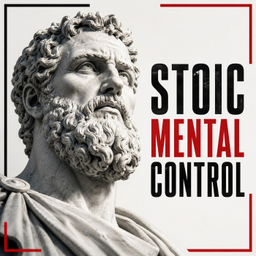
2026 First episode About Stoic Mental Control Master your emotions and cultivate inner peace with Stoic Mental Control. Discover practical wisdom from ancient Stoic philosophy to navigate modern challenges and build unshakeable resilience in your daily life.
Stoic Mental Control offers daily insights and actionable strategies to help you achieve profound self-mastery. We delve into core Stoic principles like virtue, reason, and acceptance, translating timeless teachings into practical exercises for emotional regulation and improved decision-making. This podcast empowers you to develop a robust mental framework, fostering tranquility and purpose.
New episodes arrive every day, Monday through Sunday, at 8:00 AM. Each short, impactful session provides a focused reflection or a powerful technique to integrate Stoicism into your routine, making ancient wisdom accessible and relevant. Expect clear, concise guidance to strengthen your character and mental fortitude.
This podcast is for anyone seeking to overcome anxiety, manage stress, and live a more deliberate, fulfilling life through the power of Stoic philosophy. If you're ready to take charge of your inner world and find serenity amidst chaos, you've found your daily guide. Subscribe now to Stoic Mental Control and begin your journey to a more composed and purposeful existence.
Publisher Creator at Obomedia
Category education
Language en
Explicit No
First episode 9 Jul 2026
Latest episode 16 Oct 2026 Latest episodes 140 episodes in the feed.
16 Oct 2026
When Life Feels Like a Verdict: Stoic Ways to Stay Whole What Epictetus Knew That Makes Your Anxiety Irrelevant
When a layoff, betrayal, or diagnosis feels like the universe aimed at you, Stoic practice offers a surprising alternative: treat the event like rain-an external fact, not a verdict on your worth. What if the only thing you actually own in those moments is how you respond?
In this episode, we trace Stoicism from Zeno’s shipwreck to Epictetus’s teachings and Marcus Aurelius’s private reflections, showing concrete habits for staying whole inside difficulty. How can the Stoic question "which part of this is mine to control?" change what you do next?
Person: Zeno of Citium
Person: Epictetus
Person: Marcus Aurelius
Period: around 300 BCE
Location: Stoa Poikile, Athens
- Zeno lost his cargo when his ship sank and arrived in Athens with nothing but his mind.
- Zeno began teaching in the Stoa Poikile, giving his followers the name "Stoics."
- Epictetus was born a slave and owned by Nero’s secretary Epaphroditus.
- Marcus Aurelius governed roughly eighty million people while a plague was killing millions.
- Epictetus’s name in Greek means something close to "acquired," reflecting his status as someone who had been owned.
To listen to this podcast ad-free and access premium episodes, try our subscription with a 30-day free trial at obomedia.com (https://obomedia.com/en/podcast/stoic-mental-control).
© 2026 OBOMEDIA. All rights reserved.
This episode and its content (audio, text, and related materials) are the exclusive property of OBOMEDIA and are protected by applicable copyright laws. Reproduction, distribution, editing, or commercial use, in whole or in part, without prior written permission from OBOMEDIA is prohibited. For permissions, licensing, and business inquiries: business@obomedia.com.
15 Oct 2026
What Epictetus Knew That Makes Your Anxiety Irrelevant How Seneca's Fire Makes You Unbreakable (Not Miserable)
If a man in chains could claim complete freedom, what does that mean for your anxious morning loop and the opinions that feel like shackles? This episode lays out surprising, concrete Stoic practices that treat anxiety as a correctable error in perception - and asks how much of your suffering is self-made.
In this episode, you will hear eight lessons drawn from Epictetus and two thousand years of Stoic practice, a connection to modern cognitive behavioral therapy, and a practical technique you can use the next time your nervous system hijacks your judgment. How much of your distress is fixed by circumstance, and how much is changed by the story you tell?
Person: Epictetus
Person: Marcus Aurelius
Topic: Dichotomy of control
Topic: Negative Vision
Period: First-century Rome
- Epictetus was born a slave and physically disabled from injuries sustained in captivity.
- The Stoic claim: problems are caused by interpretation of events, not the events themselves.
- The episode outlines eight lessons from Stoicism and one neuroscience-backed technique to use immediately.
- Marcus Aurelius used morning journaling to imagine loss as a practice to activate gratitude.
- The Stoic practice called Negative Vision asks you to imagine a specific ending of a close relationship to heighten present appreciation.
To listen to this podcast ad-free and access premium episodes, try our subscription with a 30-day free trial at obomedia.com (https://obomedia.com/en/podcast/stoic-mental-control).
© 2026 OBOMEDIA. All rights reserved.
This episode and its content (audio, text, and related materials) are the exclusive property of OBOMEDIA and are protected by applicable copyright laws. Reproduction, distribution, editing, or commercial use, in whole or in part, without prior written permission from OBOMEDIA is prohibited. For permissions, licensing, and business inquiries: business@obomedia.com.
14 Oct 2026
How Seneca's Fire Makes You Unbreakable (Not Miserable) Stop the 2AM Spiral: Stoic Steps to End Overthinking Now
The thought that hardship is the proving ground for strength can feel brutal-and freeing-at the same time. Seneca, born in four BC, wrote 124 personal letters to Lucilius arguing that fire does not destroy gold; it reveals what it’s made of. Will you step into the fire or keep spending your life avoiding it?
In this episode, we present the core lessons from Seneca’s letters and how his words about time, fear, wealth, and adversity apply to modern crisis moments. You’ll hear why Seneca calls wasted time the true tragedy and why intentional urgency matters more than panic.
Person: Seneca
Date: born in 4 BC
Correspondence: 124 letters to Lucilius
Setting: served under Nero, politically exposed and wealthy
Quote: "we are not given too little time. We waste too much of it."
- Seneca wrote exactly 124 letters addressed to his friend Lucilius.
- Seneca was born in 4 BC and served under the emperor Nero.
- Seneca argues that the man who never faces adversity is the most unhappy.
- One sentence from the letters states: "we are not given too little time. We waste too much of it."
- Seneca distinguishes panic from urgency, advocating intentional action inside chaos.
To listen to this podcast ad-free and access premium episodes, try our subscription with a 30-day free trial at obomedia.com (https://obomedia.com/en/podcast/stoic-mental-control).
© 2026 OBOMEDIA. All rights reserved.
This episode and its content (audio, text, and related materials) are the exclusive property of OBOMEDIA and are protected by applicable copyright laws. Reproduction, distribution, editing, or commercial use, in whole or in part, without prior written permission from OBOMEDIA is prohibited. For permissions, licensing, and business inquiries: business@obomedia.com.
Research this show Explore Pod Engine's podcast research tools and transcript access.
See plans Is this your podcast? Claim your show to manage its details on Pod Engine.
Claim Stoic Mental Control Where this data comes from Each source has its own observation date. These dates do not mean all data was checked at once.
RSS feed Last successful check: 9 Nov 2026 .
Apple Podcasts ratings (US) Snapshot recorded: 24 Oct 2026 .
Spotify ratings Snapshot recorded: Date unavailable. Host of Stoic Mental Control? Claim your podcast to manage its listing and keep your show details accurate.
Claim this podcast Pod Engine is an independent podcast discovery and analytics service and is not affiliated with or endorsed by this podcast. Artwork and show content belong to their owners. Full legal notice .
Explore this showPodcast research with Pod Engine
See plans