- 906
- Episodes
- 2005
- First episode
About Sunday Homilies
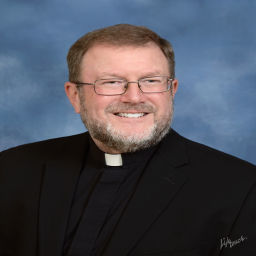
A priest of the Catholic Diocese of Springfield in Illinois offers his thoughts on the Word of God as proclaimed throughout the world, Sunday after Sunday.
- Publisher
- Father Kevin Laughery
- Category
- religion & spirituality · religion & spirituality
- Language
- en
- Explicit
- No
- First episode
- 18 Apr 2005
- Latest episode
- 31 Aug 2025
Latest episodes
906 episodes in the feed.
31 Aug 2025
Twenty-second Sunday in Ordinary Time, August 31, 2025
2025 Aug 31 SUN: TWENTY-SECOND SUNDAY IN ORDINARY TIME Sir 3: 17-18. 20. 28-29/ Ps 68: 4-5. 6-7. 10-11/ Heb 12: 18-19. 22-24a/ Lk 14: 1. 7-14 Wednesday morning, Andy Schwierjohn sent me an email. He had received word of the shooting at the Catholic parish in Minneapolis. He remembered that my sister Kathy is a teacher in a Minneapolis Catholic school. So I turned to the news and it was not my sister's school. In fact, I had spoken with her just a couple days before and I knew that her school was not starting till this week. But Kathy did inform me after this shooting that she has a number of acquaintances and connections with Annunciation Parish and School. And we can repeat the words of many being heartbroken over this very sad event. To orient ourselves with today's Scriptures, we might think about what is described in the Letter to the Hebrews. That writer is making a contrast between the things that were experienced in Old Testament times such as the dark cloud coming over Mount Sinai. He contrasts that with what he describes as the heavenly kingdom whereby we find ourselves in a place of light and peace, a place of joy. And really every time we gather for Mass we are experiencing a preview of heaven itself. And so it is all the more painful that we find such a gathering interrupted in a lethal way. We can also think about our first reading, our Psalm and our Gospel today. And we see that all of these passages are making connections between humility and what we might call solidarity. There is a union with people who are suffering in various ways. And so we don't simply have an etiquette lesson from Jesus. We find ourselves with that concept of humility. And as we reflect on who we are, we realize a number of things. In light of the horror that many parents have felt, they realize that it is difficult, if not impossible, to say to a child, "I will always be able to protect you." We know our limits and we know how great a problem we are facing. And I just read a very thoughtful column by someone who said when something of this nature occurs, our tendency is to want to blame some deficiency in the political positions of those we consider the opposition. But we know that that simple blame does not get at the heart of the matter. It also happened this week that Pope Leo announced the theme of the World Day of Peace coming up this January 1st. The theme is "Peace be with you" -- one of the first things that Jesus himself said once he was risen. We have to consider, and this is another bit of the work of humility, is to consider the aggression to be found in all of us. And we know that an energy toward defending ourselves is, to some extent, needed in all of us. We must, however, consider that we are inclined against actually showing aggression. We don't want to use our fists, for instance, but we can also use words that cut and damage. And in light of Pope Leo's theme for the World Day of Peace, he is speaking of that peace with a memorable phrase. "Peace which is unarmed and disarming." I consider that phrase, and I have said to myself, "That's a striking phrase." And right away you say, "Well, striking, there's aggression even in that word." So we have much work to do in exercising humility, and there is one more thing that we can consider. I seem to have heard this in the news reports, but I can't say that I can confirm it. I do know what the Psalm was on that Wednesday, and it was Psalm 139. It is said that the gunfire began during the Psalm. It happens that Psalm 139 is the great psalm about God's intimate knowledge of each of us, and his love for each of us, and the invitation that we have to grow in self-knowledge by which we can learn to have peaceful hearts, and encourage peace in others.
27 Aug 2025
Twenty-first Sunday in Ordinary Time, August 24, 2025
2025 Aug 24 SUN: TWENTY-FIRST SUNDAY IN ORDINARY TIME Is 66: 18-21/ Ps 117: 1. 2/ Heb 12: 5-7. 11-13/ Lk 13: 22-30 I remember, from about 20 years ago, being at a meeting with a number of non-Catholic Christian pastors and I was explaining to them what the Second Vatican Council had to say about the possible salvation of people who've never heard of Jesus Christ. And Vatican II, in the Constitution on the Church, says that such people, if they are seeking what is true and good, they can be granted entrance into the heavenly kingdom. And I remember one of the pastors objecting to this. He says, "That's universalism." Universalism traditionally has been the idea that everybody is saved. And I suppose that it kind of tore at his idea of religion. I guess he had this idea that there are winners and losers. I don't know. But we have this question posed today. It says that someone asked Jesus, "Lord, will only a few people be saved?" Well, Jesus does not give an answer -- a numerical answer. He does tell us that we need to pay close attention because this is a relationship we are talking about. A relationship into which every one of us has been invited. He says it isn't enough to say yeah we knew you, you taught in our streets, you should know us. That is not sufficient. We are called to cultivate a truly personal relationship with the Son of God who came among us truly human as well as truly God -- in order to bear on our behalf all that we find ourselves having to bear in this often painful mystery of our earthly existence. Saint Teresa of Avila wrote that Jesus is our best friend precisely because he chose to take upon himself what we find ourselves having to suffer in a sinful world. The pastor I remember from 20 years ago could be confronted today with what we hear from just about the very end of the prophet Isaiah. There is universalism being expressed here. You heard all those unfamiliar place names. In fact there's one in there that is so unfamiliar that nobody can identify it with anything. They don't know which nation Isaiah is talking about but they are converging from the east and the west and from the north and the south. And those are Jesus' words today in the Gospel. Yes, there is something universally offered. We have the responsibility of really accepting this gift of the God who became one of us and we hope that, by the way we live our lives, many others will be attracted to this Kingdom of God announced by Jesus. Of course we might talk about these things in ways that do not open themselves to relationships. We've heard it in the news over the past week about people reflecting and worrying, I guess you could say, about whether they would get to heaven. And that's a very American way of putting things. We can find it if we pick up a great American novel, Huckleberry Finn, and discover that Huck is being taught about the "good place" and the "bad place." Well, it's not so much a place; it is a relationship. It is coming to love the God, Father, Son, and Holy Spirit who first of all created us and then recreated us through the sacrifice of Jesus. So Jesus, when he speaks about the narrow way, is talking about what the Letter to the Hebrews is illustrating. Yes, we find ourselves disciplined, but this is so that we may be strong. He refers to our hands and our knees. Hebrews is saying you can keep traveling this path because you are on a path in which you discover that you are being healed.
18 Aug 2025
Twentieth Sunday in Ordinary Time, August 17, 2025
2025 Aug 17 SUN: TWENTIETH SUNDAY IN ORDINARY TIME Jer 38: 4-6. 8-10/ Ps 40: 2. 3. 4. 18 (14b)/ Heb 12: 1-4/ Lk 12: 49-53 We have heard in the book of Jeremiah about the lot of the prophet. People didn't like what Jeremiah was saying, and he was essentially saying, "You had better become more faithful to the Lord, the one God. Otherwise you will be taken captive and carried off to Babylon." People didn't want to hear that -- the princes, it says. So they threw him into a muddy cistern. Well, it is said that the purpose of a prophet is to comfort the afflicted and afflict the comfortable. And there is a prophetic element in preaching. And we must be clear that primarily a prophet is not someone who foretells future events. The prophet speaking on behalf of God might refer to future developments, but they are rooted in what is going on in the here and now. And it is interesting to hear reactions. I've sometimes heard people say, "I have chosen this parish instead of another parish because over there they're too political." I would propose that it is the listener who is being political. The listener hears basic principles that derive from our Christian faith principles of justice. But the listener is being political because that listener is clinging to his or her own certainties, things that they have decided upon, and that no one -- not even a word from God -- must contradict. People are uncomfortable when we say such obvious things as war is a bad idea, and people should not be deliberately starved to death. People are uncomfortable when they are told that from the time of the Holy Family's flight into Egypt, the Church has had a deep regard for people who have to migrate. And there are those who say, "Oh, you can't talk about racism. That's controversial." Racism is perhaps the most obvious thing in the world. Jesus refers to splits among family members, but I think we can go deeper even than that to look within our hearts and to discover the contradictions that we hold within our hearts. We say that we live according to the Word of God. But so often we reject the obvious applications of the Word of God. So we must consider, in accord with the exhortation in the Letter to the Hebrews, that Jesus embraced the cross. He did so out of love for people who are filled with contradictions. We act with love as we receive the Word of God and as we discover how to apply it. We have been given true gifts. The Son of God certainly did not have to become one of us, but he was pleased to do so because he has loved us in our misery and, often, self-imposed misery. So we welcome the love of Jesus Christ, the Son of God, and we pray that his example will move us to act in accord with the Word of God and to live lives reflecting justice.
Contact Sunday Homilies
- Guest appearances
- Books guests
Based on episode analysis; this does not confirm that the show is currently accepting guests.
Host of Sunday Homilies?
Claim your podcast to manage its listing and keep your show details accurate.
Pod Engine is an independent podcast discovery and analytics service and is not affiliated with or endorsed by this podcast. Artwork and show content belong to their owners. Full legal notice.
Explore this show
Podcast research with Pod Engine