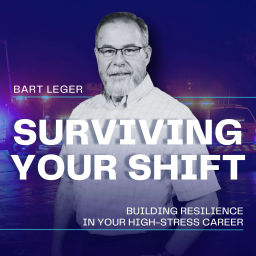
About Surviving Your Shift, Building Responder Wellness
Struggling to support your peers after a tough call, or unsure how to even start a peer support team? You’re not alone. Surviving Your Shift is the podcast for first responders, healthcare workers, and frontline professionals who want to build effective peer support programs, learn peer counseling skills, and bring training to their organizations. I’m Dr. Bart Leger, a retired first responder and board-certified traumatic stress expert with 25+ years of experience training peer supporters. Whether you’re starting a peer support program from scratch or want to be a stronger peer supporter, you’ll learn how to build trust, navigate tough conversations, and bring training to your organization. This is your go-to podcast for peer support training, first responder wellness, and frontline mental health. Hit play, and let’s equip you for success.
The Signs of Compassion Fatigue Every Peer Supporter Needs to Know
Peer supporters carry the weight of other people's worst days, and that caring comes at a cost. This episode walks through the warning signs of compassion fatigue and gives you a reset routine you can use after a draining conversation.
When's the last time someone checked in on you? Not the hallway version. The kind of check-in you give the people you support.If you're a peer supporter, you know this work comes at a cost. You take the calls. You carry pieces of people's worst days. You do it because you care, and that caring is exactly what puts you at risk. Compassion fatigue isn't a character flaw. It's what happens when you absorb emotional weight faster than you can process it.In this episode, Dr. Bart Leger walks through where compassion fatigue comes from, how it's different from burnout, and why peer supporters carry a particular kind of risk that clinical professionals are partly protected from. He names the warning signs to watch for in yourself, gives you a reset routine you can use after a hard week, and covers what to do if you see these signs in someone else on your team.BY THE TIME YOU FINISH LISTENING, YOU'LL LEARN:
The difference between burnout and compassion fatigue, and why the response to each is different
Six warning signs of compassion fatigue to watch for in yourself
A practical reset routine you can use after a draining conversation or a hard week
How to check in on a teammate you're worried about without making it weird
If this episode helped you, share it with someone on your peer support team. Putting the right information in front of someone at the right time is often the most useful thing you can do.
Share this episode: (https://www.survivingyourshift.com/56)https://www.survivingyourshift.com/56 (https://www.survivingyourshift.com/56)
Connect with Bart
LinkedIn: linkedin.com/in/bartleger (https://linkedin.com/in/bartleger)
Facebook Page: facebook.com/survivingyourshift (https://facebook.com/survivingyourshift)
Website: www.survivingyourshift.com (https://www.survivingyourshift.com)
Want to find out how I can help you build a peer support program in your organization or provide training? Schedule a no-obligation call or Zoom meeting with me here (https://stresscaredoc.com/consultation).
29 Jan 2026
How to Support a Peer Who's Struggling with Substance Use
Substance use is real in first responder culture. Learn how to support a struggling peer, without enabling, judging, or ignoring the signs.
What do you do when someone you trust starts spiraling, and you suspect it’s more than just stress?
Substance use in first responder culture is more common than we want to admit. But it’s not always easy to talk about. The signs aren’t always obvious. The conversations can feel awkward. And when you’re close to the person, it’s hard to know what to say—or when to say it.
This episode is a practical, honest look at how to support a peer who may be struggling with substance use.
You’ll learn what to look for, how to approach them without judgment, and when to bring in professional help. And if it’s you who’s quietly struggling, we’ll talk about that too, with zero shame.
BY THE TIME YOU FINISH LISTENING, YOU’LL LEARN:
Signs and symptoms of substance use among first responders
How to start a conversation with a peer without making it worse
When peer support is enough, and when it’s time to refer
What to do if you’re the one struggling
You don’t have to be a counselor to help. You just need to care and know how to step in wisely.
Share This Episode:
https://www.survivingyourshift.com/55 (https://www.survivingyourshift.com/55)
First Responder Treatment Facilities:
Unified Wellness Center: https://unifiedwellnesscenter.com (https://unifiedwellnesscenter.com)
Throttle and Thrive: https://throttleandthrive.com (https://throttleandthrive.com)
First Responder Wellness: https://frhealth.com (https://frhealth.com)
Chateau Health & Wellness: https://www.chateaurecovery.com (https://www.chateaurecovery.com)
After Action: https://afteraction.care (https://afteraction.care)
IAFF Center of Excellence for Behavioral Health Treatment and Recovery: https://www.iaffrecoverycenter.com (https://www.iaffrecoverycenter.com)
Connect with Bart
LinkedIn: linkedin.com/in/bartleger (https://linkedin.com/in/bartleger)
Facebook Page: facebook.com/survivingyourshift (https://facebook.com/survivingyourshift)
Website: www.survivingyourshift.com (https://www.survivingyourshift.com)
Want to find out how I can help you build a peer support program in your organization or provide training? Schedule a no-obligation call or Zoom meeting with me here (https://stresscaredoc.com/consultation).
22 Jan 2026
How to Support a Peer Who's Struggling with Moral Injury
Discover the invisible wounds of moral injury and learn how to support peers struggling with it. This episode of Surviving Your Shift explores the differences between moral injury and PTSD, common scenarios in public safety, and practical steps for listening, validating, and referring.
Are you supporting a peer who's struggling with moral injury, but you're not sure what it is or how to help?
Moral injury is a hidden wound that affects many first responders and healthcare workers. It's different from PTSD, and it requires a unique approach to support.
BY THE TIME YOU FINISH LISTENING, YOU'LL LEARN:
What moral injury is and how it differs from PTSD
Common moral injury scenarios in public safety
How to listen and validate without judgment or fixing
When to suggest professional help or spiritual support
How to support yourself when you're the one struggling with moral injury
Use this episode to enhance your peer support skills, improve your team's well-being, and create a safer, more compassionate work environment. Share it with your colleagues, and start conversations about moral injury in your department.
Share This Episode:
https://www.survivingyourshift.com/54 (https://www.survivingyourshift.com/54)
Connect with Bart
LinkedIn: linkedin.com/in/bartleger (https://linkedin.com/in/bartleger)
Facebook Page: facebook.com/survivingyourshift (https://facebook.com/survivingyourshift)
Website: www.survivingyourshift.com (https://www.survivingyourshift.com)
Want to find out how I can help you build a peer support program in your organization or provide training? Schedule a no-obligation call or Zoom meeting with me here (https://stresscaredoc.com/consultation).
Inside a recent episode
The Signs of Compassion Fatigue Every Peer Supporter Needs to Know
Published 23 Apr 2026 · Transcript excerpt
[…] But here's a way to picture it. If a caregiver becomes consumed by compassion and neglects their own self-care, then compassion fatigue sets in. It gets in the way of your ability to function well, and in some cases, it takes away your ability to help anyone at all. The key word there is consumed. […]
Pod Engine is an independent podcast discovery and analytics service and is not affiliated with or endorsed by this podcast. Artwork and show content belong to their owners. Full legal notice.
Explore this show Podcast research with Pod Engine