- 12
- Episodes
- 3
- Ratings
- Daily
- Cadence
- 2026
- First episode
About Talking Taboos: The Podcast
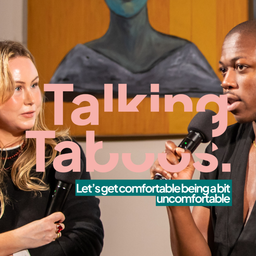
Talking Taboos: The Podcast Through honest discussions with people who have lived through taboo experiences - and those working to open up conversations about them - we explore what helps people speak, what keeps them silent, and what we can learn from both. Each episode looks at how taboos are impacting people and the different ways we can support each other in the things we find hard to talk about. WAIT... ...what is a taboo? Taboos are social norms that prevent people from talking about uncomfortable topics. They create shame, inhibit open conversation, increase isolation and get in the way of the support people need. ...what topics are taboo? Since 2023, our research has unearthed a range of urgent taboo topics that people feel uncomfortable talking about: Unmentionable mental health (Psychosis related symptoms) Shameful sex (STI's) Unruly bowels Silenced suicidal thoughts Surviving child sexual abuse Body-size bias Shamed SEN parenting Feeling addicted to porn Sexual assault by someone you know
- Publisher
- Talking Taboos
- Category
- business · society & culture
- Language
- en
- Explicit
- Yes
- First episode
- 26 May 2026
- Latest episode
- 8 Oct 2026
Latest episodes
12 episodes in the feed.
8 Oct 2026
Talking Taboos x Rape Crisis: Sexual assault by someone you know
You're listening to Talking Taboos: The Podcast… where we deep dive into a range of taboo topics to try and better understand what's going on, why they are taboo, and how taboo and stigma impact people's experiences. Ultimately, we want our work to help people feel seen, understood, and better able to get the support they deserve. Over the next few episodes, we're going to be exploring a taboo that many people believe deserves more attention, sexual assault by someone you know. We’ll be chatting to people with lived experience of sexual assault within a friendship group and also those working to support. In today’s episode, to help us understand what sits behind this topic, I'm joined by Annika Spalding from Rape Crisis England & Wales, our partner charity for this topic. Annika does fantastic work in sexual violence and survivor support, and as Marketing and Communications Coordinator, she manages communications and hosts the charity’s member peer-support spaces. We have wide-ranging and honest conversation with Annika. We talk about how it feels when the person responsible for an assault is someone you trust, and the ripple effects an assault can have across a friendship group. We also talk about what good support looks like, how language shapes whether someone feels believed, and some genuinely hopeful stories of survivors reclaiming their lives through writing, music, fundraising and community. Please note that this episode includes detailed discussion of sexual violence and rape. There are support links in the Show notes. Please listen with care. --- Annika closed our conversation with a wish: for this to stop being a taboo, and to become something we simply talk about — because, as she put it, when we talk about the things that are cloaked in shame and judgement of, we release ourselves from that shame. So if anything in this episode has felt familiar, we hope this conversation is a small step towards that. You are not alone, and you are not to blame, not for what happened, and not for how hard it might be to say out loud. For support after rape or sexual assault, Rape Crisis England & Wales run a free, confidential helpline, open 24 hours a day, on 0808 500 2222 — or you can find your nearest local Rape Crisis centre at rapecrisis.org.uk (http://rapecrisis.org.uk). If you're in Scotland, you can contact Rape Crisis Scotland on 08088 01 03 02. In Northern Ireland, you can reach Nexus NI at nexusni.org. In Wales, support is also available through New Pathways at newpathways.org.uk. For emotional support around any experience of crime, including sexual violence, you can also contact Victim Support on 0808 168 9111. If you're in immediate danger, please call 999 or go to your nearest A&E. As Annika reminded us: there is life after. People write. They sing. They shave their heads and raise money with their best friend by their side. They laugh again, properly, and find their own reasons to. Whatever this experience has been for you, it does not define the whole of who you are. Thank you for listening to Talking Taboos: The Podcast. Links and details for everything mentioned are in the show notes, and we'll be back in 2 weeks with another episode talking about sexual assault by someone you know.
2 Oct 2026
Talking Taboos: Today's Taboos from 2025 (Part 2)
Welcome back to part two of our Today's Taboos launch event from 2025. If you haven't listened to part one yet, that's where we unveil the year's four taboos - silent suicidal thoughts, surviving child sexual abuse, body bias, and shamed SEND parenting - we'd recommend starting there. In this second half, our director Flo and chair of trustees Louise are joined by Benji Kusi, inclusion and wellbeing consultant, author and content creator, for a conversation about what needs to change, followed by a live audience Q&A. Benji reflects on the resurgence of restrictive body ideals online, the specific barriers men - and particularly men navigating multiple intersecting identities - face in talking about suicidal thoughts, and what it means to hold your ground when you're publicly criticised. Flo and Louise pick up threads from part one on gaslighting within the SEND parenting experience and the emotional toll of "helpful" content that quietly reinforces guilt. The conversation then opens out to the audience, who bring some of the hardest questions of the evening: how to balance privacy and openness when supporting survivors of sexual violence, how to reach people who aren't already receptive to these conversations, the power of storytelling and representation, gender identities in taboo experiences, and - in the final question - whether empathy has limits, including for people who cause serious harm. Please note that this episode includes discussion of suicidal thoughts, body image and weight stigma, child sexual abuse, and sexual violence, including reflections on empathy for perpetrators of these harms. There are links to support in the show notes. Please listen with care. Closing Statement / Signposting Thank you for joining us for part two of our Today's Taboos launch. If any of what's been discussed has resonated with you, please know you're not alone, and there is support available. If you want to learn more about the taboos we covered last year there are episodes from our events on Silenced Suicidal Thoughts, Suviving Child Sexual Abuse and SEND parenting available. If you're in immediate danger, please call 999 or go to your nearest A&E. For support around suicidal thoughts, Samaritans are free to call, any time, on 116 123, or you can contact CALM, the Campaign Against Living Miserably, at thecalmzone.net. For support specifically around men's mental health and wellbeing, you can reach Future Men at futuremen.org. For support around surviving child sexual abuse or other sexual violence, you can contact The Survivors Trust at thesurvivorstrust.org, or Rape Crisis at rapecrisis.org.uk. If you're worried about your own thoughts or behaviour towards children, confidential support is available through Stop It Now on 0808 1000 900, or at stopitnow.org.uk. For support around body image, weight stigma, or an eating disorder, you can contact Beat, the UK's eating disorder charity, on 0808 801 0677, or at beateatingdisorders.org.uk. You can also contact Obesity UK at obesityuk.org.uk. And for support around SEND parenting, you can contact the National Autistic Society at autism.org.uk, or IPSEA at ipsea.org.uk for advice on SEND and EHCPs. All of these links and details are in the show notes.
25 Sept 2026
Talking Taboos: Today's Taboos from 2025 (Part 1)
In this episode of Talking Taboos: The Podcast, we're taking you inside our annual Today's Taboos launch event from 2025, where we revealed the four taboos our research identified as needing the most urgent attention for the year. Every year, Talking Taboos sets out to answer a strange question: what are people not talking about? Our directors Flo Nolan, Kat Jennings and chair of trustees Louise take us through the research process behind the year's report - from long-listing and expert interviews to public opinion polling - and reveal the four taboos for that year: silent suicidal thoughts, surviving child sexual abuse, body bias, and shamed SEND parenting. Along the way, they share some of the data behind why these particular topics rose to the top - including the striking gap between how many of us are personally affected by these taboos and how few of us have had a meaningful conversation about them - and reflect on what ties all four together: a lack of language, a lack of empathy, and a culture that's often quicker to judge than to understand. This episode is part one of two from the night. Part two picks up with a panel discussion and audience Q&A, continuing in next week. Please note that this episode includes discussion of suicidal thoughts, child sexual abuse, and body image and weight stigma. Links to support are shared in the show notes. Please listen with care. If any of the topics raised in this episode have resonated with you, please know you're not alone, and there is support available. When life is difficult you can call Samaritans for free, any time, on 116 123, or find support from Campaign Against Living Miserably (CALM) at thecalmzone.net (http://thecalmzone.net). https://www.thecalmzone.net/guides/body-image (https://www.thecalmzone.net/guides/body-image) For support around surviving child sexual abuse, you can contact The Survivors Trust at thesurvivorstrust.org. For support around SEND parenting, you can contact the National Autistic Society at autism.org.uk, or IPSEA at ipsea.org.uk for advice on SEND and EHCPs. Links and details are in the show notes. Part 2 of this episode continues next week.
10 Sept 2026
Talking Taboos: Why silent suicidal thoughts need to be said out loud
In this episode of Talking Taboos: The Podcast, we're taking you inside a live event held the day after World Suicide Prevention Day 2025. We brought together lived experience, mental health expertise and community voices to talk about one of our most silenced taboos: suicidal thoughts. When life is difficult, Samaritans are here, day or night, 365 days a year. You can call them for free on 116 123 or visit www.samaritans.org (http://www.samaritans.org) to find your nearest branch. The conversation is chaired by Dr Yansie Rolston. Yansie is an incredible facilitator and trainer who designs, implements and evaluates actionable strategies on health equality and community cohesion. Her work covers Europe, Africa, the Americas and the Caribbean. Where she co-creates culturally appropriate health and social care projects for marginalised communities. She's joined by Merrick Joseph, a London firefighter and grandfather of one., Merrick shares his own experience and talks about the culture shift happening within the fire service around mental health and stigma. Lynette Charles, CEO of Mind in Haringey, Chair of Mind in London and Black Thrive Haringey Lead, also joins Yansie and Merrick. W Lynette brings both her professional experience and an important personal lens to the conversation. Together Yansie, Lynette and Merrick unpack the difference between having a suicidal thought and having a plan, the role guilt and shame play in keeping people silent, and why so many of us - whether we're firefighters, parents, or just exhausted by daily life - hold these thoughts alone rather than risk saying them out loud. Along the way, they talk about what actually helps: naming the thought, finding ‘your reason,’ noticing behaviour change in the people around you, and building spaces - whether that's a fire station mess table, a barber shop, or a living room - where honesty doesn't feel like a risk. Please note that this episode includes discussion of suicidal thoughts and suicide. Please listen with care. Closing Statement / Signposting If anything raised in this episode has affected you, please know you're not alone, and there is support available. If you're in immediate danger or are worried about someone else who you think is, please call 999 or go to your nearest A&E. For support any time, day or night, Samaritans are free to call on 116 123. You can also text SHOUT, for free and confidential support, on 85258. CALM, the Campaign Against Living Miserably, are available from 5pm to midnight on 0800 58 58 58, or you can find them online at thecalmzone.net (http://thecalmzone.net). And if you're under 35 - or you're a parent or carer worried about a young person - Papyrus HOPELINE247 is there for you on 0800 068 41 41. If you work in a high-pressure environment, like the emergency services, Mind's Blue Light Programme offers mental health support built specifically for you — that's mind.org.uk/bluelight (http://mind.org.uk/bluelight). And for local support, including crisis cafés, Mind in Haringey is open nine till ten, seven days a week, you'll find them at mindinharingey.org.uk (http://mindinharingey.org.uk). If there's one thing to take from tonight's conversation, it's this: find your mess table. Whether that's a colleague, a friend, or a stranger on the other end of a phone line, talking to someone, anyone, makes it lighter to carry. All of these links and details are in the show notes.
3 Sept 2026
Talking Taboos: Shame and SEND Parenting (Part 2)
Welcome back to part two of our conversation on shame and SEND parenting. If you haven't listened to part one yet, we'd recommend starting there. A quick explainer of the words we use here - SEND is the acronym used for Special Education Needs and Disability which relates to the support for children who have extra learning needs or disabilities. In these two episodes we’re joined by Lisa (ASD with G&T), author of Raising the Semi-Betweeners and mum to two autistic children; Lucy Dunlop-Simpson, a social worker and founder of Parentnet, who coaches parents through diagnosis and school breakdown; and Mark Allen, host of the Neuroshambles podcast and father to three neurodivergent children. Together Lisa, Lucy and Mark talk openly about their parenting experiences and what has helped them to break down taboos around SEND. In part one, we talked about masking, judgement, and the guilt of not always staying regulated as a parent. In this second part, the conversation goes further into what happens when parents aren't believed - by schools, by local authorities, even by hospital staff - and just how much energy goes into simply being taken at your word. We hear about the fight for EHCPs (that’s Education, Health and Care Plans) and funding. We also talk about the language used around neurodivergent behaviour and why words like "aggressive" and "school refusal" do real damage, and what it actually means to advocate for a child who can't yet advocate for themselves. The episode closes with a Q&A, where our panel answers questions from the live audience - including how to support siblings through difficult behaviour and suicidal ideation, how to advocate for a high-masking child starting school, and what parents can do when a school insists a distressed child must still be brought in. Please note that this episode includes discussion of self-harm, disordered eating, suicidal ideation, distress, shutdowns, meltdowns, anger, and child-to-parent violence. Please listen with care. Closing Statement Thank you for joining us for both parts of this conversation on shame and SEND parenting. If any of what you've heard has resonated with you, please know you're not alone - so much of this experience happens in private, but there is support out there. For information and support around autism and neurodivergence, you can contact the National Autistic Society at autism.org.uk (http://autism.org.uk), or the PDA Society at pdasociety.org.uk (http://pdasociety.org.uk). For advice on SEND, EHCPs and navigating the education system, you can contact IPSEA (Independent Provider of Special Education Advice) at ipsea.org.uk (http://ipsea.org.uk). For general support for parents of disabled or additional needs children, you can contact Contact at contact.org.uk (http://contact.org.uk), and for support around young carers and siblings, you can look into your local authority's Young Carers service. If you or your child are struggling with distress, self-harm or suicidal thoughts, you can call Samaritans for free on 116 123, or contact Young Minds at youngminds.org.uk (http://youngminds.org.uk) for support around a child or young person's mental health. If you believe a child is at immediate risk, please call 999.
28 Aug 2026
Talking Taboos: Shame & SEND Parenting (Part 1)
In this episode of Talking Taboos: The Podcast, we're tackling one of the most requested topics from our community this year: shame and SEND parenting. This conversation explored the experiences of parents of children who are neurodivergent and have additional needs - not the version filtered for the school gates or social media, but the reality behind closed doors. A quick explainer of the words we use here - SEND is the acronym used for Special Education Needs and Disability which relates to the support for children who have extra learning needs or disabilities. For parents of neurodivergent children, the impacts of taboos can show up everywhere: in the gap between how a child "masks" at school and how they are at home, in the assumptions of other parents, and in the quiet guilt of not always managing to stay calm. We're joined by Lisa (ASD with G&T), author of Raising the Semi-Betweeners and mum to two autistic children, who shares her own recent autism diagnosis and what it's taught her about self-compassion. Lucie Dunrod-Simpson, a social worker and founder of Parentnet, talks about coaching other parents through diagnosis and recognising autistic burnout, and why so much of this experience happens without any dedicated support. And Mark Allen, host of the Neuroshambles podcast and father to three neurodivergent children, reflects on learning to let go of shame by rewiring his own expectations rather than trying to change his kids. Together, we talk about masking and not being believed, the pressure of "toxic positivity," where and how much parents feel able to share, and why simply hearing other parents say "me too" can be the thing that makes this all feel less lonely. This episode is longer than usual, so we've split it into two parts. Part 2 continues the conversation and will land next week - covering community, humour, online judgement, and what actually helps. Please note that this episode includes discussion of self-harm, disordered eating, suicidal ideation, distress, shutdowns, meltdowns, anger, and child-to-parent violence. Please listen with care. If any of the experiences in this conversation have resonated with you, please know you're not alone. So much of parenting a neurodivergent child happens in private, but there are people who understand and places you can turn to. For information and support around autism and neurodivergence, you can contact the National Autistic Society at autism.org.uk (http://autism.org.uk), or the PDA Society at pdasociety.org.uk (http://pdasociety.org.uk). For advice on SEND, EHCPs and navigating the education system, you can contact IPSEA (Independent Provider of Special Education Advice) at ipsea.org.uk (http://ipsea.org.uk). For general support for parents of disabled or additional needs children, you can contact Contact at contact.org.uk (http://contact.org.uk). If you or your child are struggling with distress, self-harm or suicidal thoughts, you can call Samaritans for free on 116 123, or contact Young Minds at youngminds.org.uk (http://youngminds.org.uk) for support around a child or young person's mental health. Links and details are in the show notes. Part 2 of this conversation continues next week.
14 Aug 2026
Talking Taboos: Unruly Bowels and breaking the silence on poo
In this episode of Talking Taboos: The Podcast, we're live from the Unruly Bowels event that we ran back in 2024. It brought together lived experience, health expertise and industry to talk about one of the most universal taboos… a topic that makes many of us very uncomfortable to talk about: poo! Taboos aren't just difficult topics, they are systems of silence, sustained by embarrassment and shame, that isolate people from the people around them and from the help they need. As our guests explain, when it comes to bowel health, that silence can be the difference between an early diagnosis and a late one. We hear first from Kat, Director of Talking Taboos and Priscilla, a lived experience advocate, sharing their stories of real life with invisible chronic illnesses, the years of normalising symptoms, the fear of what a Google search might reveal, and the moment a friendship opened up simply because they finally had the right words to describe what they were going through. We're then joined by Amy from Cancer Research UK, who unpacks why shame and judgement keep people from speaking to their doctor about their symptoms , and why "don't be embarrassed" is often exactly the wrong message to send. Claire and Matt from the Andrex marketing team talk us through their "Get Comfortable" campaign and why a brand best known for a cute puppy and loo roll decided it had a responsibility to help the country talk more openly about its own body. And finally, Nena, a functional medicine health coach,talks about how she can better help her clients when they talk more openly about poo and makes the case for the Bristol Stool Chart as one of the simplest, most accessible tools for understanding your own health. Together, we explore why the lack of everyday language around bowel symptoms is a real barrier to getting support and early diagnosis, and why more open, honest conversation could help more people with their health. Please note that this episode includes discussion of bowel symptoms, incontinence, bleeding, and cancer diagnosis. Please listen with care. https://www.england.nhs.uk/wp-content/uploads/2023/07/Bristol-stool-chart-for-carer-web-version.pdf (https://www.england.nhs.uk/wp-content/uploads/2023/07/Bristol-stool-chart-for-carer-web-version.pdf) https://www.cancerresearchuk.org/get-involved/bowelbabe-planning-your-fundraising (https://www.cancerresearchuk.org/get-involved/bowelbabe-planning-your-fundraising) If anything you've heard today feels familiar, if you've been putting off a conversation you have thought you need to have, with a doctor, a friend, or just yourself - let this be your sign to say it out loud. It gets easier the moment you do. For information and support on bowel cancer, you can contact Bowel Cancer UK on their helpline or at bowelcanceruk.org.uk (http://bowelcanceruk.org.uk), or Cancer Research UK at cancerresearchuk.org (http://cancerresearchuk.org). For information and support on Crohn's disease and ulcerative colitis, you can contact Crohn's & Colitis UK on their helpline or at crohnsandcolitis.org.uk (http://crohnsandcolitis.org.uk). For general gut health and nutrition support, you can find guidance through Guts UK at gutscharity.org.uk (http://gutscharity.org.uk).
23 Jul 2026
Talking Taboos with artist Andy Farr: How art helps us talk about and understand trauma
In this episode of Talking Taboos: The Podcast, we speak to artist Andy Farr. Many of Andy’s paintings - including those from his exhibition Being Seen come from conversations with people who have experienced trauma - often around topics that remain taboo and hard to talk about. We explore how these conversations unfold, what helps people feel safe enough to open up, and why some stories remain hidden for years. Andy also shares what he’s learned about listening without judgement, the role of creative inquiry, and how feeling seen can be a powerful step in healing. Please note that this episode includes discussions of trauma, including references to child and sexual abuse, bereavement, violence, and mental health. Some listeners may find this content distressing, so please take care while listening. If any of the experiences in this conversation have resonated with you, please know you’re not alone, when you are ready, there are people you can talk to and places you can turn to for support. You can call Samaritans for free on 116 123, or visit Mind at mind.org.uk (http://mind.org.uk) for information and support. __________ Music: First Day in Spring. Music licensed through Soundstripe. Code: HOQAMBWRBZ8Q8MU9
9 Jul 2026
Talking Taboos: Feeling Addicted to Porn | Walk and Talk with Shaun Flores & Roshi Cowen (Brook)
This year, through our annual Today’s Taboos research, Talking Taboos uncovered feeling addicted to porn as one of the most difficult and uncomfortable issues that many people are struggling to talk about. Our research found that 1 in 3 18-44 year olds have experienced or know someone who has experienced pornography addiction. This rises to 1 in 2 for men aged 18-44. However 1 in 4 people in this age group do not feel comfortable talking to anyone about the issue of pornography addiction. Thankfully, most people also believe it’s important to open up conversations about it. Which is exactly what we are doing on this sunny day in East London with Shaun Flores and Roshi Cowen. Shaun is a leading voice in discussions around mental health, masculinity, neurodiversity and anti-racism, dedicated to turning his lived experience into a catalyst for change. Roshi is a wellbeing and education specialist at Brook, a sexual health and wellbeing charity that works with young people across the UK. Shaun has spoken publicly about his own experiences of feeling addicted to porn in the hope of helping others, and Roshi works with young people in schools and communities to open up conversations around pornography, relationships, sex, consent, and emotional wellbeing to name a few. Together, they head out for a walk to talk openly about the taboo of feeling addicted to porn, swapping their experiences, ideas and knowledge from their personal and professional points of view. If any of the experiences in this conversation have resonated with you, please know you’re not alone, when you are ready, there are people you can talk to and places you can turn to for support. You can call Samaritans for free on 116 123, or visit Mind at mind.org.uk (http://mind.org.uk) for information and support. For help with feeling addicted to porn, you can find free support through: Pivotal Recovery - pivotalrecovery.org (http://pivotalrecovery.org) Sex Addicts Anonymous (SAA) UK - saauk.info (http://saauk.info) The Naked Truth - nakedtruthproject.com (http://nakedtruthproject.com) You can also find information and education about porn through Brook - brook.org.uk (http://brook.org.uk) and The Mix for under 25’s - themix.org.uk (http://themix.org.uk) Music: First Day in Spring. Music licensed through Soundstripe. Code: HOQAMBWRBZ8Q8MU9
24 Jun 2026
Talking Taboos with Dr Paula Hall: when does porn use become a problem?
In this episode of Talking Taboos: The Podcast, we’re joined by Dr Paula Hall - a sexual and relationship psychotherapist, author and broadcaster who founded The Laurel Centre and Pivotal Recovery. We talk about the taboo of feeling addicted to porn through the lens of therapy, recovery, and mental health. Drawing on more than 30 years of clinical experience, Paula explains how porn use exists on a spectrum - from recreational use through to dependency and addiction - and how people can gradually find themselves relying on pornography for emotional regulation, stress relief, or escape, often without initially recognising it as a problem. We unpack the complex reasons people struggle to seek help and how compulsive behaviours can become neurologically reinforced over time, making people feel trapped in cycles they no longer enjoy or feel able to control. The episode also looks at the impact on relationships, the realities of disclosure and betrayal, and why supportive conversations require curiosity, boundaries, and listening - rather than quick fixes or judgement. Paula brings a hopeful and practical perspective to the conversation. We discuss what recovery can actually look like, the role of psychoeducation and self-understanding, why earlier intervention matters, and the growing need for accessible support. This episode contains discussion of addiction and mental health. Please listen with care. If any of the experiences in this conversation have resonated with you, please know you’re not alone, when you are ready, there are people you can talk to and places you can turn to for support. You can call Samaritans for free on 116 123, or visit Mind at mind.org.uk (http://mind.org.uk) for information and support. For help with feeling addicted to porn, you can find free support through: Pivotal Recovery - pivotalrecovery.org (http://pivotalrecovery.org) Sex Addicts Anonymous (SAA) UK - saauk.info (http://saauk.info) The Naked Truth - nakedtruthproject.com (http://nakedtruthproject.com) You can also find information and education about porn through Brook - brook.org.uk (http://brook.org.uk) and The Mix for under 25’s - themix.org.uk (http://themix.org.uk) Music: First Day in Spring. Music licensed through Soundstripe. Code: HOQAMBWRBZ8Q8MU9
11 Jun 2026
Talking Taboos with Kit Green: What happens when a taboo meets immersive theatre?
In this episode of Talking Taboos: The Podcast, we’re joined by Kit Green - an artist working across theatre, music, experiential performance, comedy and cabaret. Kit talks about her immersive theatre piece, Prurience, where she placed audiences inside a fictional self-help group for people struggling with porn addiction. The piece challenged people to confront their assumptions about addiction and the idea that struggling with porn only happens to “other” people. We discuss the discomfort and judgement that surfaced during performances, and why humour, entertainment, and immersive storytelling can help people engage and talk about uncomfortable or taboo subjects more openly. Please note that this episode includes discussions of addiction, sexual violence, and mental health. Please listen with care. If any of the experiences in this conversation have resonated with you, please know you’re not alone, there are people you can talk to and places you can turn to for support. You can call Samaritans for free on 116 123, or visit Mind at mind.org.uk (http://mind.org.uk) for information and support. For help with feeling addicted to porn, you can find free support through: Pivotal Recovery - https://www.pivotalrecovery.org/ (https://www.pivotalrecovery.org/) Sex Addicts Anonymous (SAA) UK - https://saauk.info/ (https://saauk.info/) The Naked Truth - https://nakedtruthproject.com/ (https://nakedtruthproject.com/) You can also find education and information about porn through: Brook - https://www.brook.org.uk/ (https://www.brook.org.uk/) The Mix (under 25s) - https://www.themix.org.uk/ (https://www.themix.org.uk/) Music: Prélude in E minor, Op. 28, No. 4. Music licensed through Soundstripe. Code: OBMUZVE6R1SI1F2R.
26 May 2026
Talking Taboos with Ore Oduba: Being addicted to porn and the societal failure behind it
Content warning: This episode contains discussion of addiction, suicide, grief, and mental health. Please listen with care. In our first episode of Talking Taboos: The Podcast, we’re joined by Ore Oduba - presenter, performer, broadcaster and change maker - to talk about the taboo of feeling addicted to porn through the lens of lived experience, vulnerability and what it means to come out the other side. Taboos aren’t just difficult topics - they are systems of silence, sustained by judgement and shame, that isolate people. And as Ore explains, porn use can become the perfect environment for that shame to thrive. In this generous and thoughtful conversation, Ore shares his own experience of being addicted to porn for over 30 years, and how isolation, and fear of judgement kept him silent for so long. We explore exposure to porn in childhood, the impact of shame, the realities of addiction hidden in plain sight, and why so many people struggle alone without the language or support to talk about it. Ore also reflects on the profound personal events that changed his perspective on life, vulnerability, and openness - including grief, suicidal thoughts, the loss of his father, and the death of his sister - and how those experiences ultimately led him to start speaking publicly about topics many people still feel unable to discuss. We explore the power of conversation in breaking shame, and why education, openness, and earlier conversations around sex, relationships, and pornography are urgently needed. If any of the experiences in this conversation have resonated with you, please know you’re not alone, there are people you can talk to and places you can turn to for support. You can call Samaritans for free on 116 123, or visit Mind at mind.org.uk (http://mind.org.uk) for information and support. For help with feeling addicted to porn, you can find free support through: Brook - https://www.brook.org.uk/ (https://www.brook.org.uk/) The Mix (under 25s) - https://www.themix.org.uk/ (https://www.themix.org.uk/) Pivotal Recovery - https://www.pivotalrecovery.org/ (https://www.pivotalrecovery.org/) Sex Addicts Anonymous (SAA) UK - https://saauk.info/ (https://saauk.info/) The Naked Truth - https://nakedtruthproject.com/ (https://nakedtruthproject.com/)
Reach and audience
Public platform figures. Ratings count people who left a rating, not total listeners.
- Spotify
- 5.0 / 5
- 3 ratings
Host of Talking Taboos: The Podcast?
Claim your podcast to manage its listing and keep your show details accurate.
Pod Engine is an independent podcast discovery and analytics service and is not affiliated with or endorsed by this podcast. Artwork and show content belong to their owners. Full legal notice.
Explore this show
Podcast research with Pod Engine