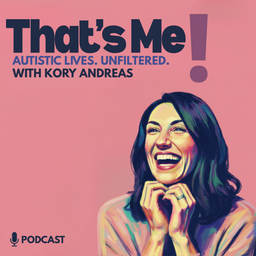
Podcast thumbnail for That's Me! Autistic Lives. Unfiltered.

That's Me! Autistic Lives. Unfiltered.

Claim This Podcast

by Kory Andreas

5.0(7 reviews)
15 episodes
Updated Daily
Accepts GuestsHas SponsorsLocation 🇺🇸

Podcast Overview

<p>You know that moment when someone describes your exact experience and something in you goes - wait. That's ME?</p><p></p><p>That's where this podcast begins.</p><p></p><p>Hosted by Kory Andreas, a late-diagnosed AuDHD therapist and advocate, That's Meeee: Autistic Lives Unfiltered explores the lives of late-diagnosed, high-masking autistic adults. They say if you've met one autistic person, you've met one autistic person...and these are the ones who aren't in the textbooks, the movies, or the diagnostic criteria.</p><p></p><p>We bring you real stories about burnout, masking, misdiagnosis, and what happens when you finally recognize yourself. Featuring autistic adults and the professionals who actually get it.</p><p></p><p>This podcast is for autistic adults, people who love them, and anyone looking to come into our world with curiosity.</p><p></p><p>New episodes weekly!</p>

Language

🇺🇲

Publishing Since

2/25/2026

1 verified contact email on file for That's Me! Autistic Lives. Unfiltered.

Pitch yourself as a guest, propose sponsorships, or reach out directly to the host.

Recent Episodes

Episode thumbnail for The Magic Glasses: What Binocular Vision Dysfunction Has to Do With Autism

August 3, 2026

The Magic Glasses: What Binocular Vision Dysfunction Has to Do With Autism

<p>Dr. Tamara Mendez is an optometrist who specializes in binocular vision dysfunction and she has been quietly transforming the lives of autistic people who had no idea their eyes were part of the problem!</p><p>Binocular vision dysfunction (BVD) is what happens when your eyes aren't working together as a team. Your brain is constantly compensating, all day long. And for autistic people already dealing with sensory overload, that compensation is exhausting in ways that show up as anxiety, headaches, neck pain, reading difficulty, feeling overwhelmed in crowds, and mood dysregulation by the end of the day.</p><p></p><p>In this episode, Dr. Mendez breaks down what BVD actually is, why standard eye exams completely miss it, and what microprisms can do that regular glasses can't.</p><p></p><p>Kory shares her own experience getting diagnosed and fitted including the daily 2pm headaches that stopped within 1 day, the nail polish aisle that looked like it was full of tiny minis, and what it felt like to give a presentation without memorizing every slide for the first time in her life.</p><p></p><p>We also talk about the VR headset that measures 12,000 data points in three minutes, why the appointment takes two to four hours, what it looks like to do this work in a way that's actually safe for autistic patients, and why so few providers are connecting the dots between BVD and the autistic experience.</p><p></p><p>This one might change your life. Or at least your prescription.</p><p></p><p>Find Dr. Tamara Mendez:</p><p>Website: <a rel="noopener noreferrer nofollow" href="https://chevychaseeyecare.com" target="_blank">chevychaseeyecare.com</a></p><p>Phone/Text: 301-242-3927</p><p>Located in the DMV area</p><p>Search "BVD near me" her website will pop up</p><p>Online screening available on her website to see if BVD might apply to you</p><p></p><p>Mentioned in this episode:</p><p>Binocular vision dysfunction (BVD)</p><p>Microprisms</p><p>Dr. Debbie Feinberg / NeuroVisual Medicine Institute</p><p>VR headset screening (12,000 data points in 3 minutes)</p><p>POTS and EDS connection to BVD</p><p>Dry eye / ocular surface disease</p><p>Visual field testing</p><p>Eye tracking / reading test</p><p></p><p>Resources:</p><p>Learn more about high-masking, late-diagnosed autism: <a rel="noopener noreferrer nofollow" href="instagram.com/neurokoryous" target="_blank">Instagram.com/neurokoryous</a></p><p>Unmasking Retreats: <a rel="noopener noreferrer nofollow" href="http://koryandreas.com" target="_blank">koryandreas.com/retreats</a></p><p>YouTube: <a rel="noopener noreferrer nofollow" href="youtube.com/thatsmepod" target="_blank">youtube.com/ThatsMePod</a></p>

Episode thumbnail for The Gut-Brain Connection, ARFID, and Why Autistic Tummies Are So Complicated

July 20, 2026

The Gut-Brain Connection, ARFID, and Why Autistic Tummies Are So Complicated

<p>Dr. Ellen Joseph is a counseling health psychologist at GI Psychology, a practice dedicated entirely to the gut-brain connection. And if you're an autistic person who has ever been told your lab work is normal while feeling anything but, this episode is for you.</p><p></p><p>In this episode, Dr. Ellen explains why autistic and ADHD brains are particularly vulnerable to GI distress, from the way interoception turns the volume way up on pain and way down on hunger, to the vicious cycle that forms when your nervous system starts treating your own gut like a threat. <br /><br />Dr. Ellen breaks down what ARFID is and why it's completely different from other eating disorders, why intuitive eating advice can be counterproductive for autistic people, and how clinical hypnosis is used to literally turn the dial on sensory sensations in the body.</p><p>We also talk about PDA and the gut, grief after GI diagnoses, why "you must finish your plate" is one of the most counterproductive things you can say to an autistic child, and what it looks like to be treated by providers who actually listen.</p><p>This one is for every autistic person who has spent years being told their gut issues are just anxiety, and every provider who wants to do better!</p><p><br /><b>Find Dr. Ellen Joseph:</b></p><ul><li>Website: <a rel="noopener noreferrer nofollow" href="http://gipsychology.com" target="_blank">gipsychology.com</a></li><li>Instagram: <a rel="noopener noreferrer nofollow" href="instagram.com/gipsychusa" target="_blank">@gipsychusa</a></li><li>LinkedIn and Facebook: GI Psychology</li><li>Free Brain Bytes video series (6 videos) available on their website</li><li>Team of 15+ clinicians available for matching</li><li>Out of network provider:single case agreements and superbills available</li><li>Contact their team to discuss provider matching and logistics</li></ul><p></p><p><b>Mentioned in this episode:</b></p><ul><li>Gut-brain axis / gut-brain connection</li><li>Clinical hypnosis (evidence-based treatment)</li><li>ARFID (Avoidant Restrictive Food Intake Disorder)</li><li>Disorders of gut-brain interaction (33 diagnoses for adults, 24 for kids)</li><li>Inflammatory bowel disease, celiac disease, reflux</li><li>Interoception and sensory processing in the gut</li><li>PDA profile and GI distress</li><li>Intuitive eating and why it doesn't always work for autistic people</li></ul><p></p><p><b>Resources:</b></p><ul><li>Learn more about high-masking, late-diagnosed autism: <a rel="noopener noreferrer nofollow" href="instagram.com/neurokoryous" target="_blank">Instagram @neurokoryous</a></li><li>Unmasking Retreats: <a rel="noopener noreferrer nofollow" href="http://koryandreas.com/retreats" target="_blank">koryandreas.com</a></li><li>YouTube: <a rel="noopener noreferrer nofollow" href="youtube.com/thatsmepod" target="_blank">@ThatsMePod</a></li></ul>

Episode thumbnail for I Love You Exactly As You Are: Why Neurodivergent People and Their Animals Are Everything

July 6, 2026

I Love You Exactly As You Are: Why Neurodivergent People and Their Animals Are Everything

<p>Jess Kwerel LPC, LCPC is a psychotherapist who specializes in pet grief and she became the person she needed. When she couldn't find a therapist who truly understood the depth of losing an animal, she built that practice herself. Since 2018, she's been doing the work most therapists won't touch: sitting with people in the most untethered, disorienting, portal-walking grief there is.<br /></p><p>In this episode, Jess explains why the brain doesn't differentiate between skin and fur, it's the same attachment system, the same oxytocin, the same neural pathways as our deepest human bonds. She talks about why "at least" is one of the most harmful things you can say to a grieving person, why "moving on" is the wrong framework entirely, and what it actually looks like to move forward <i>with</i> your animal instead.</p><p></p><p>We also talk about why neurodivergent people have especially deep bonds with their animals, why dogs just make sense to autistic people in a way humans often don't, and what happened when Jess had to take a step back after unexpectedly losing her own senior hound, Daisy earlier this year.</p><p></p><p>This one is for everyone who has ever loved an animal with their whole heart. Which, if you're listening to this podcast, is probably all of you. So grab your favorite furry friend, and enjoy the laughs and tears with Jess Kwerel!</p><p></p><ul><li>Instagram: <a rel="noopener noreferrer nofollow" href="instagram.com/petlossdc" target="_blank">@PetLostDC</a></li><li>Website: <a rel="noopener noreferrer nofollow" href="https://jessicakwerel.com/" target="_blank">https://jessicakwerel.com/</a></li><li>Resources, articles, podcast recommendations, and books available on her website<br /></li></ul><p><b>Mentioned in this episode:</b></p><ul><li>Attachment theory and the neurobiology of bonding</li><li>Oxytocin and pair bonding</li><li>The difference between sympathy and empathy ("at least" vs "I'm right here")</li><li>Buford and Daisy (Jess's dogs)</li><li>Harvey (Herby) Pickles (The dog Kory will compare all dogs to forever)</li><li>Senior dog adoption<br /></li></ul><p><b>Resources:</b></p><ul><li>Learn more about high-masking, late-diagnosed autism: IG: <a rel="noopener noreferrer nofollow" href="instagram.com/neurokoryous" target="_blank">@neurokoryous</a></li><li>Unmasking Retreats: <a rel="noopener noreferrer nofollow" href="http://koryandreas.com" target="_blank">koryandreas.com/retreat</a></li><li>YouTube: <a rel="noopener noreferrer nofollow" href="https://www.youtube.com/@ThatsMePod" target="_blank">@ThatsMePod</a></li></ul>

15 total episodes available

Deep-dive analytics for That's Me! Autistic Lives. Unfiltered.

Frequently asked questions

Have a different question and can't find the answer you're looking for? Reach out to our support team by sending us an email and we'll get back to you as soon as we can.

What is That's Me! Autistic Lives. Unfiltered.?
<p>You know that moment when someone describes your exact experience and something in you goes - wait. That's ME?</p><p></p><p>That's where this podcast begins.</p><p></p><p>Hosted by Kory Andreas, a late-diagnosed AuDHD therapist and advocate, That's Meeee: Autistic Lives Unfiltered explores the lives of late-diagnosed, high-masking autistic adults. They say if you've met one autistic person, you've met one autistic person...and these are the ones who aren't in the textbooks, the movies, or the diagnostic criteria.</p><p></p><p>We bring you real stories about burnout, masking, misdiagnosis, and what happens when you finally recognize yourself. Featuring autistic adults and the professionals who actually get it.</p><p></p><p>This podcast is for autistic adults, people who love them, and anyone looking to come into our world with curiosity.</p><p></p><p>New episodes weekly!</p>
How often does this podcast release new episodes?

This podcast updates daily.

Where can I listen to this podcast?

This podcast is available on 4 platforms including Apple Podcasts, Spotify, and more. You can also use the RSS feed directly.

Does this podcast accept guests?

Yes, this podcast regularly features guests.

Legal Disclaimer

Pod Engine is not affiliated with, endorsed by, or officially connected with any of the podcasts displayed on this platform. We operate independently as a podcast discovery and analytics service.

All podcast artwork, thumbnails, and content displayed on this page are the property of their respective owners and are protected by applicable copyright laws. This includes, but is not limited to, podcast cover art, episode artwork, show descriptions, episode titles, transcripts, audio snippets, and any other content originating from the podcast creators or their licensors.

We display this content under fair use principles and/or implied license for the purpose of podcast discovery, information, and commentary. We make no claim of ownership over any podcast content, artwork, or related materials shown on this platform. All trademarks, service marks, and trade names are the property of their respective owners.

While we strive to ensure all content usage is properly authorized, if you are a rights holder and believe your content is being used inappropriately or without proper authorization, please contact us immediately at hey@podengine.ai for prompt review and appropriate action, which may include content removal or proper attribution.

By accessing and using this platform, you acknowledge and agree to respect all applicable copyright laws and intellectual property rights of content owners. Any unauthorized reproduction, distribution, or commercial use of the content displayed on this platform is strictly prohibited.