- 192
- Episodes
- Daily
- Cadence
- 2026
- First episode
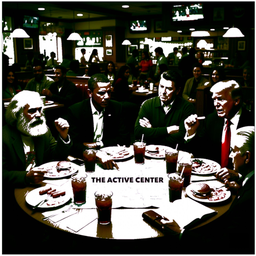
About The Active Center
A A . . . . . . . . .
- Publisher
- David Sepe
- Category
- government · history · news
- Language
- en
- Explicit
- No
- First episode
- 3 Jan 2026
- Latest episode
- 15 Oct 2026
Latest episodes
192 episodes in the feed.
15 Oct 2026
Strike 27: Analyzing the Viability of YouTubing, Barnstorming and Banana Ball During an MLB Work Stoppage
During an active Major League Baseball (MLB) work stoppage, whether triggered by a lockout or a players’ strike, the traditional machinery of North American professional baseball comes to a halt. Currently, the MLB owners have a $2,000,000,000 “collective” war chest to sustain them over the looming 2027 MLB lockout. The players have what they have individually to get them by, but not all MLB contracts are equal and we haven’t even mentioned the MiLB talent and their net pay. Apparently, “the issue” will be the salary cap. The owners apparently want it and the MLBPA will never give up what they already possess, large contracts over years, years, and even more years. So, the question is will the owners with their collective war chest be able to wait out the rank and order of the MLBPA who do not have millions upon millions of guaranteed dollars in the bank? However, do “the players” have options today that past generations of locked out or striking players did not have to help lessen the blow of withheld MLB paychecks? As Bobby Dylan said, “the times are a changin’” Could Aaron Judge, Mike Trout, and dozens of other MLB superstars offer live and private hitting or pitching lessons for $5K for one-hour on YouTube for the more wealthy and willing? Those funds could be pooled for funding stipends for MLB and MiLB players who may be struggling financially during the lockdown? Could players create “Strike 27” podcasts and other “online influencer” content to be monetized with the funds distributed to those less fortunate MLB players? In this operational void, a compelling question emerges: could MLB free agents and uncontracted talent join independent novelty teams like the Savannah Bananas or assemble full barnstorming rosters to play exhibition games for profit? What are the legal, financial, and logistical realities of such an endeavor? While free agents possess the legal freedom to suit up for independent entities or organize competing tours, replacing MLB-level revenues is structurally impossible. Nevertheless, through alternative broadcasting, crowdsourcing, and regional venue selection, such barnstorming initiatives could provide essential stipends for lower-earning players and minor leaguers while underscoring the Major League Baseball Players Association’s (MLBPA) unwavering stance against structural economic concessions like a salary cap. Labor conflicts in professional sports invariably test the economic endurance of both owners and players. During an MLB work stoppage, players under existing major league contracts are restricted from traditional team activities, but free agents operate in a distinct legal category. Because free agents do not hold active player contracts tied to MLB franchises, they are legally permitted to participate in outside athletic entertainment ventures. The central thesis of this analysis is clear: while MLB free agents could technically join existing independent outfits such as the Savannah Bananas or form collective barnstorming teams during a strike, doing so to earn equivalent major league compensation is entirely unrealistic. Instead, the primary value of alternative play during a dispute lies in fan engagement, brand maintenance, and generating hardship stipends for vulnerable colleagues, rather than replicating the multi-million-dollar economic ecosystem of Major League Baseball. The Savannah Bananas, operating their proprietary ”Banana Ball” format, represent one of the most remarkable modern successes in independent sports entertainment. Because the organization functions completely outside the governing authority of MLB and the MLBPA, any free agent could legally sign a short-term contract or make exhibition appearances with the club during a work stoppage. During an extended MLB strike, public attention on alternative baseball formats would
14 Oct 2026
The Heart of the Sound: A History of U.S. Music (1981–1985) and the Rise of New Wave, Synth-Pop, Alternative, and The Moog Revolution Part II
The early 80s were defined by the democratization of music production. Historically, synthesizers were room-sized machines reserved for elite studios. However, the influence of Bob Moog and the introduction of cost-effective, portable synthesizers (like the Minimoog and later digital counterparts) allowed garage bands to create professional-grade recordings. This technological shift broke the ”gatekeeper” model of the 70s. With affordable gear, artists across all genres, from the funk of Rick James to the cinematic pop of Duran Duran, could craft ”expensive” sounds on a budget. This shift was supercharged by the MIDI (Musical Instrument Digital Interface) protocol established in 1983. For the first time, instruments from different manufacturers could ”talk” to each other. A bedroom musician could now trigger a Roland drum machine from a Yamaha keyboard, creating a ”virtual band” without the need for expensive session players. This led to a boom in the underground and alternative markets, where the barrier to entry was no longer a massive record label budget, but rather the artist’s imagination and technical curiosity. While Moog defined the analog 70s, the 80s were defined by the Yamaha DX7 (1983). It was the first commercially successful digital synthesizer, providing crisp, glassy sounds that became the sonic wallpaper of the decade. From the intro of A-ha’s ”Take On Me” to the bass lines of Kenny Loggins, the DX7’s FM synthesis represented the futuristic, ”clean” aesthetic of the 80s. More than any other band, Duran Duran embodied the aspirational, tech-forward glamour of the early 80s. While they were often dismissed as ”pretty boys,” their iconic status was built on a foundation of high-level musicality and visual innovation. They were among the first to realize that MTV was a visual medium requiring cinematic quality. Working with director Russell Mulcahy, they shot videos like ”Rio,” ”Hungry Like the Wolf,” and ”Save a Prayer” on 35mm film rather than videotape. This gave their music a lush, widescreen, ”Indiana Jones-meets-Vogue” aesthetic that stood out from the grainy studio clips of their peers. They leaned into the ”Jet Set” lifestyle, sailing yachts in Antigua, chasing through Sri Lankan jungles, which perfectly aligned with the Reagan/Thatcher era’s embrace of capitalism and upward mobility. They looked like superstars before they even had the bank accounts to match. Musically, they were a powerhouse. John Taylor was one of the decade’s most technically proficient bassists, blending Bernard Edwards’ (Chic) funk-slap technique with punk energy. Nick Rhodes (keyboards) was a texture genius, utilizing the Roland Jupiter-8 and the Fairlight CMI to create complex, atmospheric soundscapes that elevated them above standard synth-pop. They were the bridge between the ”weird” New Romantics and the global stadium audience, proving that high fashion and synthesizer experimentation could be a 10-million-selling commodity. The Specials were the architects of the 2-Tone movement, a subgenre that intentionally fused the ”white” energy of punk with the ”black” rhythms of Jamaican ska. They became iconic by serving as the social conscience of a Great Britain fractured by economic recession and racial tension. Ghost Town is arguably the most important British single of the decade. Released during the summer of the 1981 UK riots, its haunting organ melody and slow ”dread” reggae beat captured the atmosphere of urban decay under Thatcherism. It reached #1 precisely as cities like Brixton were burning, proving that pop music could be a direct mirror to social crisis. A Message to You, Rudy featuring the legendary Jamaican trombonist Rico Rodriguez, this song bridged the gap between 60s ska pioneers and 80s punk. It was a plea to disaffected youth to stop the violence and ”think of your future,” establishing the band as mentors to a generation.
13 Oct 2026
Preserving Direct Accountability: Why California Voters Should Reject Proposition 5
On November 3, 2026, California voters will cast their ballots on Proposition 5, a legislatively referred constitutional amendment originating from Senate Constitutional Amendment 1 (SCA 1). Proposition 5 proposes a structural overhaul of California’s century-old recall election process for statewide elected officers. Under existing state law, established during the Progressive Era in 1911, a recall ballot presents voters with two simultaneous questions: The Removal Question: Should the incumbent official be recalled from office? (Requires a simple majority of + 1. The Replacement Question: If recalled, who should replace them? (Selected by a plurality vote among qualified candidates). If passed, Proposition 5 would eliminate the replacement question entirely. Instead of allowing voters to choose a successor on the same ballot, a successful recall would declare the office vacant, filling the seat through established constitutional line-of-succession rules—such as automatically elevating the Lieutenant Governor to Governor—or by scheduling a subsequent, separate special election. For California’s growing electorate of fiscal conservatives, social liberals, and pragmatic moderates, Proposition 5 represents a step backward for government efficiency and civic empowerment. This essay analyzes Proposition 5, details why moderate and fiscally minded voters should vote NO, outlines three core arguments against the measure, and examines the coalitions opposing its passage. Proposition 5 is a constitutional amendment placed on the ballot by a supermajority vote of the California State Legislature. Its primary legislative sponsors include State Senator Josh Newman and Assemblymember Isaac Bryan. Key Provisions of Proposition 5: Removal of Successor Choice: Strips the replacement candidate election from the initial recall ballot. Automatic Succession for Executive Vacancies: If the Governor is recalled, the Lieutenant Governor automatically assumes the governorship for the remainder of the term (unless the recall occurs within the first two years before candidate nomination deadlines, in which case a subsequent special election is triggered). Separate Special Elections: For legislative and other statewide offices, vacancies created by a recall would be filled through existing vacancy protocols or standalone special elections held at a later date. Allows Recalled Officials to Run Again: Removes the prohibition that currently prevents recalled officers from running in subsequent special elections for their former seats. California Moderates, social liberals, and fiscal conservatives share a common commitment: transparent, accountable government that respects taxpayer dollars and maximizes democratic agency.
Contact The Active Center
- Guest appearances
- Does not typically book guests
Based on episode analysis; this does not confirm that the show is currently accepting guests.
Host of The Active Center?
Claim your podcast to manage its listing and keep your show details accurate.
Pod Engine is an independent podcast discovery and analytics service and is not affiliated with or endorsed by this podcast. Artwork and show content belong to their owners. Full legal notice.
Explore this show
Podcast research with Pod Engine