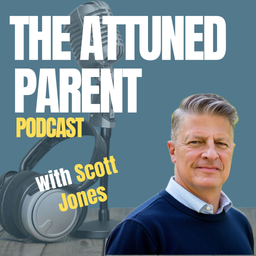
Helping overwhelmed parents move from control to connection using attachment, neuroscience, and attunement.
Parenting today can feel overwhelming. Anxiety is rising. Disconnection feels constant. And many parents are left wondering: Am I doing this right?
On this podcast, Scott Jones, Licensed Clinical Mental Health Counselor and Executive Director of Stillwater Academy, brings nearly 30 years of experience working with teens and families navigating anxiety, depression, trauma, addiction, and attachment struggles .
Each episode helps you understand the “why” behind your child’s behavior — and what to do about it. Instead of quick fixes or shame-based strategies, Scott offers practical tools rooted in neuroscience, attachment theory, family systems, and trauma-informed care. You’ll learn how to regulate yourself before reacting, attune to your teen, set boundaries without losing connection, and repair when things fall apart .
If you want to lead your family with calm authority, deeper connection, and confidence — you’re in the right place.
Because relationship is the intervention.
Is Your Teen Manipulating You — Or is Something Else Going On?
A common parenting thought is, "My kid is just manipulating me!" This episode helps parents move from accusing teens of manipulation to understanding what behaviors accomplish and why they happen.
Scott unpacks the difference between intent and function, explains why effective behavior gets mistaken for strategic behavior, and walks through what actually changes when a parent stops trying to out-argue the behavior and starts becoming harder to move.
Along the way you'll learn why holding a boundary makes things worse before it makes them better, how to tell the rare deliberate case from the common protective one, and what to say out loud in the moment.
Scott offers practical strategies—five concrete habits to practice, examples for common situations, and the shift from reacting to steady, attuned leadership that holds boundaries while staying connected.
12 Sept 2026
If Behavior Is Protective, Where Do Consequences Fit?
If behavior is protective — if it's coming from somewhere, if it's your teenager's best attempt at managing something hard — where do consequences fit? Where does accountability fit?
Scott explains how to hold teenagers accountable without turning consequences into punishment by pairing curiosity and connection with clear, logical limits.
He outlines the ATTUNE framework, the "yellow card" metaphor for pre-agreed consequences, practical questions for creating fair responses, and guidance for safety-related situations.
For the free How to Set Consequences guide go to www.scottjonestherapist.com/consequences
24 Aug 2026
Eye Rolls, Slamming Doors, and What They Mean: Decoding Teen Behavior
Scott Jones and producer Steve answer parents' real-world questions about distinguishing trauma, dysregulation, attachment, and normal teenage behavior. They cover practical skills: how to pause, notice patterns, regulate your own nervous system, sequence connection before consequences, teach missing skills, and repair relationship ruptures.
30 Jul 2026
The Long Game: Parenting Through the Years When Nothing Seems to Be Working
Scott Jones uses the Chinese bamboo metaphor and attachment neuroscience to encourage parents of struggling teenagers: change often happens underground before behavior shifts appear.He explains how to spot micro‑shifts, offers a simple weekly practice to record small progress, and gives three anchors — hope, history, and horizon — to sustain long‑term caregiving. He also urges parents to bend like bamboo and build a supportive community, reminding listeners that relationship and consistent presence are the most powerful interventions.
22 Jul 2026
Stop Doing It Alone with Your Teen: Building the Support Ecosystem Your Teen Needs
In this episode, Scott introduces the Support Ecosystem Model: a framework for thinking about the full network of relational support a teenager with trauma, attachment challenges, or behavioral difficulties actually needs. He walks through the three concentric rings of that ecosystem — Home, Extended Community, and Professional Support — and addresses the practical questions parents most need answered: How do I find the right therapist? What do I do when the school isn’t getting it? How do I get all the adults in my teen’s life speaking the same language? And how do I take care of myself in the middle of all of this without feeling like I’m abandoning my kid?
This is the episode that gives parents permission to stop carrying it alone — and a map for building something more durable.
15 Jul 2026
The Attachment Playbook: 4 Attachment Styles Every Parent Needs to Know
Last episode, we introduced the Attachment Window — the idea that adolescence is a second, biologically real opportunity to build secure attachment, even when early childhood didn’t provide it. We talked about the Attachment Paradox: how teens who need connection most often fight hardest against it.
This week, we get specific.
Most parents have encountered the language of attachment styles — secure, anxious, avoidant, disorganized — usually in the context of infants or in their own adult relationships. But these patterns look almost nothing like their textbook descriptions once they show up in a fifteen-year-old. An anxiously attached teen doesn’t look clingy. An avoidantly attached teen doesn’t look sad. A disorganized teen doesn’t look traumatized — they look unpredictable, sometimes manipulative, sometimes frightening to live with.
In this episode, Scott walks through each of the four attachment styles exactly as they present in adolescence: what the behavior actually looks like, what it gets misread as, what it’s communicating underneath, and — most importantly — the specific response each style requires. This is the episode parents come back to and reference for years, because once you can identify the pattern, you stop guessing.
7 Jul 2026
The Attachment Paradox: How Attachment Shapes Everything Your Teen Does
In Episode 12, we named what happens when helplessness becomes a habit — when a teen learns that not trying is safer than trying and failing. We talked about victimstance: the pattern of learned helplessness that calcifies around real pain. This week, we pull the lens back even further. Because underneath victimstance, underneath trauma responses, underneath defiance and shutdown and rage — there is almost always an attachment story.
Attachment is the word most parents associate with infants and bonding. But the attachment system doesn’t switch off at twelve months. It runs through adolescence, shaping how your teen tolerates closeness, responds to correction, handles conflict, and decides — often unconsciously — whether you are safe to need.
In this episode, Scott introduces the concept of the Attachment Window — the second major developmental lens parents need alongside trauma awareness — and explains why so many behaviors that look like defiance, manipulation, or emotional unavailability are actually the nervous system doing exactly what it learned to do in its earliest relationships. This is especially relevant for parents of adopted teens, but it speaks to every parent who has ever felt like the harder they try to connect, the further away their teen seems to go.
29 Jun 2026
When Help Becomes Harm: How Over-Helping Keeps Teens Stuck
Scott explores how genuine pain in teenagers can harden into a 'victim stance'—a learned helplessness that gets rewarded and stuck. He explains three common parental traps (over-rescue, endless validation, and lowered expectations) and offers the ACE framework (Acknowledge, Connect, Expect) to hold compassion while promoting agency.
The episode includes practical examples, signs that distinguish real trauma from a victim stance pattern, and one simple action step: notice when you accommodate instead of expecting more.
21 Jun 2026
Why Your Teen's Baffling Behavior Makes Sense. A New Way to Understand Teen Reactions
Scott Jones explains how frustrating teen behaviors—screaming, shutdown, refusal, and reflexive lying—are often protective responses rooted in the nervous system. Using attachment science and simple neuroscience, he teaches a three-question “behavior transition” tool to understand what each behavior is protecting, what it once solved, and what the teen needs now.The episode emphasizes regulation first, downstream boundaries second, and offers practical examples and a weekly challenge to help parents move upstream and rebuild safety and trust.
9 Jun 2026
What is My Teen's Behavior Telling Me??— Moving From Frustration to Curiosity
In this episode, Scott Jones makes the case for one of the most important shifts in trauma-informed parenting: moving from “what’s wrong with my child” to “what is this behavior telling me.” He breaks down the neuroscience of why behaviors that look like defiance, manipulation, or apathy are almost always something else entirely, what different behaviors are typically communicating, and how to use that understanding to respond in ways that actually reach your teen.
Finally, Scott gives three real-time questions parents can use to shift from reactivity to curiosity, create safety for accountability, and strengthen the relationship over time.
This is the episode for the parent who already suspects there’s more to the story — and wants a framework for reading it.
2 Jun 2026
Showing Up After You Mess Up — A Parent's Guide to Relationship Repair
Every parent has been there. The conversation that went too far. The thing you said that you can't take back. The door that slammed. The silence that followed for days.
In this episode, Scott Jones tackles the fear that keeps most parents stuck after a rupture — the belief that relationship repair undermines authority. He breaks down what the research actually says about parental credibility, how to move from knowing you should repair to actually doing it, and a step-by-step framework for what repair looks like when it’s done well. This episode is for the parent who wants to come back but doesn’t know how — and needs permission to believe that coming back is the strongest thing they can do
26 May 2026
When Teen Behavior Is Trauma: See the Nervous System, Not the Attitude
When a teenager is defiant, reactive, or emotionally unavailable, the instinct is to reach for more structure, more consequences, or more pressure. But what happens when those responses not only fail — they make things worse. In this episode, Scott Jones of the Attuned Parent Podcast explains why many teen behaviors — explosive anger, withdrawal, avoidance, and defiance — are often survival responses rooted in trauma, not simply bad attitude.
Scott walks through what trauma actually does to the developing adolescent brain, why so many trauma responses get mislabeled as behavior problems, and how the ATTUNE framework becomes a trauma-informed tool in the hands of a regulated parent.
What You'll Learn
Why trauma rarely looks like what we expect — and what it looks like instead
The neuroscience of the trauma response: what's happening in the brain when a teen "overreacts"
The difference between a trauma response and a choice
Polyvagal Theory and the window of tolerance — made simple and practical
How to recognize trauma signatures in everyday teen behavior
What ATTUNE looks like when trauma is in the room
A full real-life scenario walkthrough using the trauma-informed ATTUNE approach
The transition from reactive parenting to repair-based parenting
18 May 2026
When Teen Attitude Isn't About You: Distress, Defiance, or Disrespect?
When your teen rolls their eyes, snaps at you, or shuts down completely — it feels personal. It can feel like rejection. And when everything looks like disrespect, the instinct is to clamp down. But what if you’re misreading the moment?
In this episode, Scott Jones breaks down the critical difference between distress, defiance, and disrespect — three behaviors that look similar on the surface but require completely different responses. Then he walks through the full ATTUNE framework: a practical, step-by-step tool for reading your teen correctly and responding in a way that actually builds influence instead of burning it.
What You’ll Learn
Why parents misread teen behavior — and what it costs them
The neurological reason behavior is often a protection strategy, not a personal attack
How to distinguish distress, defiance, and disrespect — and why it matters
All six steps of the ATTUNE framework with real examples
A full real-life scenario walkthrough using ATTUNE in a high-tension moment
The one question that changes how you respond to every difficult moment
6 May 2026
The Digital Loop: Teens, Dopamine, and the Developing Brain
One of the most common — and most misunderstood — conflicts in modern family life: phones, screens, and teenagers who can't seem to put them down. In this episode, Scott Jones unpacks the neuroscience behind teen tech use, identifies the three loops keeping adolescents stuck, and gives parents practical language for setting boundaries without destroying the relationship.
What You'll Learn
Why your teen's phone use isn't a character flaw — it's developmental biology
The three loops: Comparison, Performance, and Belonging — and how to tell which one your kid is in
What parents get wrong when they try to address screen time (and both extremes that backfire)
A language shift that opens conversations instead of shutting them down
A real script for setting a phone boundary without triggering World War Three
How to approach monitoring apps
24 Apr 2026
What Parents Are Really Asking: A Best of Conversation
This special episode answers the questions parents are actually asking, in real time, about real struggles.
Host Scott Jones, Executive Director of Stillwater Academy, and Producer Steve Cutler, addresses twelve of the most resonant questions from listeners and parents, covering everything from escalation and power struggles to the neuroscience of naming feelings. Not theory for theory’s sake — just practical insight rooted in clinical experience and attachment research.In this episode: • Why today’s teens aren’t just “too sensitive” — they’re overloaded • What’s actually happening neurologically in a power struggle with your teen • The Iceberg Effect: why the behavior you see isn’t the problem you’re dealing with • How to “regulate before you correct” — and what that looks like in a real moment • Why taking responsibility as a parent is one of the most powerful things you can do • The brain science behind naming a feeling • When to seek professional support — and why it’s discernment, not failure
Subscribe, leave a review, and share this episode with a parent who needs it.
To connect with Stillwater Academy, go to www.stillwateracademy.org
12 Apr 2026
When They Push You Away: How to Stay Connected When Your Teen Shuts You Out
When your teen shuts you out — snaps, goes silent, or looks right through you — what’s actually happening? And what do you do in that moment? In Episode 4, we break down the neuroscience of adolescent shutdown, why it triggers parents, and a clear three-step framework for staying connected when everything in you wants to escalate.
1 Apr 2026
Teens, Phones, and Dopamine: What's Really Happening in the Developing Brain
What’s really happening when your teenager can’t put the phone down? In this episode, we break down the neuroscience of dopamine, the three digital loops most teens get stuck in, and practical tools parents can use tonight — including word-for-word scripts for the conversations that matter most.
16 Mar 2026
Anchor in the Storm: Why Regulated Parents Have More Influence
n this episode, Scott explores one of the most powerful shifts a parent can make: regulating yourself before trying to regulate your teen.
Drawing from neuroscience, family systems theory, and years of clinical experience working with struggling teens and their families, Scott explains why traditional approaches like punishment, lectures, and control often escalate conflict instead of resolving it.
You’ll learn why your nervous system plays a bigger role in your teen’s behavior than you might realize—and how becoming a calm emotional anchor can transform difficult moments into opportunities for connection and growth.
Scott also introduces his ATTUNE Framework, a practical roadmap parents can use to stay connected with their teen while still holding healthy boundaries.
If you’ve ever wondered:
“Why does every conversation with my teen turn into an argument?”
“Why does my child shut down when I try to help?”
“How do I stay calm when everything feels out of control?”
This episode will help you understand what’s actually happening beneath the surface—and what to do next.
Because when parents regulate first, influence grows.
If you feel like you need more help with your teen, go to www.stillwateracademy.org for more resources
4 Mar 2026
From Control to Connection: Parenting Teens in a Wired World
Parenting today can feel overwhelming. Anxiety is rising. Disconnection feels constant. And many parents are left wondering: Am I doing this right?
On this podcast, Scott Jones, Licensed Clinical Mental Health Counselor and Executive Director of Stillwater Academy, brings nearly 30 years of experience working with teens and families navigating anxiety, depression, trauma, addiction, and attachment struggles .
Each episode helps you understand the “why” behind your child’s behavior — and what to do about it. Instead of quick fixes or shame-based strategies, Scott offers practical tools rooted in neuroscience, attachment theory, family systems, and trauma-informed care. You’ll learn how to regulate yourself before reacting, attune to your teen, set boundaries without losing connection, and repair when things fall apart .
If you want to lead your family with calm authority, deeper connection, and confidence — you’re in the right place.
Because lasting change doesn’t come from control.It comes from connection.
Reach and audience
Public platform figures. Ratings count people who left a rating, not total listeners.
Apple Podcasts (US)
5.0 / 5
10 ratings
Spotify
5.0 / 5
2 ratings
Contact The Attuned Parent Podcast
Guest appearances
Does not typically book guests
Based on episode analysis; this does not confirm that the show is currently accepting guests.
Host of The Attuned Parent Podcast?
Claim your podcast to manage its listing and keep your show details accurate.
Pod Engine is an independent podcast discovery and analytics service and is not affiliated with or endorsed by this podcast. Artwork and show content belong to their owners. Full legal notice.
Explore this show Podcast research with Pod Engine