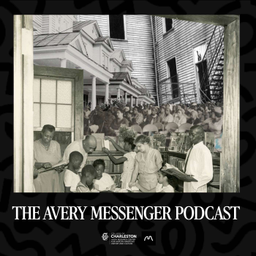
The Avery Messenger Podcast
D'Aujai Kelley & Georgette Mayo
5.0from 1 ratings
- 10
- Episodes
- 1
- Ratings
- 2025
- First episode
About The Avery Messenger Podcast
The Avery Messenger is a continuation of the work of former executive director Karen Chandler who created the Avery Messenger in 2003. The newsletter coincided with the 50th Anniversary planning of the last class of the Avery High School. Prior to the Avery Messenger the Avery Institute of Afro American History and Culture published the Avery Bulletin as its outreach arm to inform on the progress securing 125 Bull St and reaching former Averyites. As we embark on the next chapter of the Avery Research Center we are reaching in our past to bring to you the present work on the legacy built on a spirt that would not die in discussing Black education, preservation and documenting present issues in the Charleston
- Publisher
- D'Aujai Kelley & Georgette Mayo
- Category
- education · history
- Language
- en
- Explicit
- No
- First episode
- 16 Oct 2025
- Latest episode
- 7 Jul 2026
Latest episodes
10 episodes in the feed.
7 Jul 2026
Preserving Family Legacy: The Hoffman Papers and the Power of Archives| Avery Messager Episode 9
Every family has a story—but not every story is preserved. In this season finale of The Avery Messenger, we explore the importance of family archives, Black history preservation, and archival donations through a conversation with donor Norma Hoffman Davis and organizer Dana Campbell. The episode begins with a reflection on Season One before diving into the remarkable Hoffman Family Papers, documenting generations of Charleston history, education, community leadership, and the enduring legacy of the Avery Normal Institute. Listeners also hear practical advice on organizing family records, preserving photographs and letters, and ensuring future generations can access their history. Whether you're interested in genealogy, Black history, archives, museums, or preserving your own family's legacy, this episode offers valuable insight into why personal collections matter. Resources: Avery Research Center — https://findingaids.library.charleston.edu/repositories/3 (https://findingaids.library.charleston.edu/repositories/3) Avery exhibitions — https://avery.charleston.edu/exhibitions/ (https://avery.charleston.edu/exhibitions/) Season One episodes — https://www.youtube.com/playlist?list=PLFfFS65DPyFgitCmIbxKTDmTKox9P6G07 (https://www.youtube.com/playlist?list=PLFfFS65DPyFgitCmIbxKTDmTKox9P6G07) Guest: Norma Hoffman Davis Dana Campbell Time Stamps / Chapters: 00:00 Welcome & Season One Recap 00:04 Introducing Conversations with Our Donors 06:02 The Hoffman Family's Charleston Roots 10:06 The Avery Normal Institute Legacy 14:01 Music, Fisk University & Family Connections 19:05 Growing Up Around Avery 22:48 College, Civil Rights & Leaving Charleston 30:53 Why Preserving Family Archives Matters 34:22 Organizing the Hoffman Collection 38:12 Letters That Tell a Family Story 42:05 Advice for Preserving Your Family History 43:21 Avery Announcements & Season Wrap-Up 45:19 Season One Farewell
1 Jun 2026
Ancestors, Archives, and Black Resistance
Podcast Description: African spirituality, ancestral traditions, Black archives, and civil rights history all intersect in this powerful episode of the Avery Messenger Podcast. Avery Messager hosts speak with Dr. Kameelah L. Martin about African spiritual traditions, ancestor reverence, Vodou, hoodoo, colonization, and reconnecting with African diasporic practices. Later, historian and archivist Dr. Bobby Donaldson shares his journey into public history, civil rights scholarship, and preserving African American history through archives, education, and activism. This episode is for anyone interested in African diaspora studies, Black history, spirituality, civil rights history, archives, education, and cultural preservation. The Avery Research Center’s symposium, June 9-11, 2026: Those Who Have Must Turn Around and Give: Celebrating 40 Years of Preserving Black History and Education: https://avery.charleston.edu/liblitsymp/ (https://avery.charleston.edu/liblitsymp/) The South Carolina Black History Bugle https://avery.charleston.edu/publications/south-carolina-black-history-bugle/ (https://avery.charleston.edu/publications/south-carolina-black-history-bugle/) View our Mellon Foundation sponsored event on African Spirituality featuring Dr. Kameelah L. Martin and Shantrelle P. Lewis, hosted by D’Aujai Kelley: Echoes of the Ancestors: African Spirituality in the Diaspora: https://www.youtube.com/watch?v=cTY_QKMGJqQ (https://www.youtube.com/watch?v=cTY_QKMGJqQ) Do you have suggestions for Season 2 of the Avery Messenger? You can contact Ms. DaNia Childress at: childressd@cofc.edu (mailto:childressd@cofc.edu) Time Stamps / Chapters: 00:00 Introduction to the Avery Messenger Podcast 00:01 Meet Dr. Kameelah L. Martin 00:02 What African Spirituality Means 00:03 Dr. Martin’s Journey Into African Spiritual Traditions 00:05 Differences Between Ifá, Vodou, and Hoodoo 00:05 How Colonization Impacted African Spiritual Practices 00:10 African Spirituality and Social Media Visibility 00:11 Reconnecting With Ancestors and the African Diaspora 00:14 Misconceptions About African Spiritual Systems 00:19 What Ancestor Veneration Really Means 00:22 Advice for Exploring African Spirituality Respectfully 00:32 Introduction to Dr. Bobby Donaldson 00:39 Building Civil Rights Archives and Historical Preservation 00:46 Religion, Education, and the Civil Rights Movement 00:52 Black Resistance Through Education, Art, and Archives 01:00 Mentorship, Archives, and Preserving Black History 01:10 Symposium Announcement and Closing Remarks YouTube Tags: African spirituality, African diaspora, ancestor veneration, Black history, Vodou explained, hoodoo traditions, Ifa religion, African spiritual systems, civil rights history, Black archives, Dr Kamille Martin, Bobby Donaldson, African American history, Black resistance, public history, Black church history, civil rights archives, Avery Research Center Hashtags: #AfricanSpirituality #BlackHistory #CivilRightsHistory Keywords: African spirituality explained ancestor veneration traditions Vodou and hoodoo differences African diaspora spirituality Black history preservation civil rights archives African American public history Black resistance history Black church civil rights movement preserving Black archives public history and activism African spiritual traditions Black cultural preservation civil rights scholarship African American archives
13 Apr 2026
Black Foodways and Culture: The History, Resistance, and Future of Food
Podcast Description: Black foodways are more than cuisine—they’re culture, resistance, and history. In this episode, we explore how food has shaped Black identity across generations and why it still matters today. From the role of food in the civil rights movement to the ongoing fight for food justice and cultural recognition, this conversation breaks down how Black food traditions have survived, evolved, and are now being reclaimed. Whether you're interested in food history, culture, or social impact, this episode offers a deeper understanding of how what we eat connects to who we are. Chef Amethyst Ganaway: Website: waterwhippin.com Instagram: @thizzg Facebook: @chefamethyst Alison Hall Kibbe: Assistant Professor of African American Studies, College of Charleston Website: alisonkibbe.com Suggested readings on Black Foodways: Cooking the Gullah Way Morning, Noon, & Night and Gullah Home Cooking the Daufuskie Way, by Sallie Ann Robinson. If I Can Cook/You Know God Can by Ntozake Shange. Vibration Cooking: or The Travel Notes of a Geechee Girl by Vertamae Smart-Grosvenor The Taste of Country Cooking by Edna Lewis. The Avery Research Center three-day symposium: “Those Who Have Must Turn Around and Give: Celebrating Forty Years of Preserving Black History and Education” focused on Black education and the preservation of Black History through archives and community engagement, at the College of Charleston in Charleston, South Carolina. The symposium registration link is provided in our Show Notes. https://avery.charleston.edu/liblitsymp/ (https://avery.charleston.edu/liblitsymp/) Dr. Conseula Francis Reading Circle Celebration with Susana M. Morris, author of "Positive Obsession: The Life and Times of Octavia E. Butler April 16, 2026 Zoom link https://cofc.zoom.us/j/3902057839?omn=89850268865 (https://cofc.zoom.us/j/3902057839?omn=89850268865) Echoes of the Ancestors: African Spirituality in the Diaspora Streaming live on the Avery Research Center YouTube Channel and in person Time Stamps / Chapters: 00:12:19 – Food as resistance and cultural survival 00:13:00 – Preserving Black culture through foodways 00:13:25 – Food in civil rights and Black Power movements 00:14:00 – Why food reveals hidden cultural contributions 00:15:21 – The future of Black foodways 00:16:30 – Reclaiming Black food culture today 00:17:27 – Misconceptions about Black Southern food 00:18:35 – Black agriculture and land access challenges 00:20:01 – What makes a “decent meal” 00:21:00 – Essential seasonings every kitchen needs 00:22:34 – Influential chefs, scholars, and writers 00:25:32 – Upcoming cookbook and food projects 00:27:30 – Closing thoughts and announcements
13 Mar 2026
Why Archives Matter: The William & Ellen Craft Legacy and Black Style
Archives help preserve the stories that history almost loses. In this episode, we explore personal archives, the William and Ellen Craft legacy, and how Superfine: Tailoring Black Style connects fashion, resistance, and Black history. Hosted by the Avery Research Center, this conversation brings together Georgette Mayo, Dr. Monica L. Miller, Julia Ellen Craft Davis, and Ronni Craft Robinson. The episode looks at why archives matter, how family collections shape public history, and what it means to see the Craft family story featured in a major museum exhibition. This episode is for anyone interested in archives, African American history, family legacy, Black style, and the power of preservation. It is also especially relevant for listeners caring for personal collections at home and educators looking for compelling ways to teach history. Time Stamps / Chapters: Chapters / Timestamps 00:00:00 Welcome and episode overview 00:01:15 Caring for your personal archive at home 00:03:11 Brown Bag Lunch Talk and episode setup 00:03:33 The William and Ellen Craft collection at Avery 00:05:15 Guest introductions and Monica L. Miller’s background 00:07:48 Start of the donor conversation 00:08:06 What Zora Neale Hurston’s archive teaches about preservation 00:11:20 How Monica L. Miller begins archival research 00:13:58 Research, exhibitions, and curatorial inflection points 00:16:11 Why the Craft family story mattered in Superfine 00:19:14 How the Craft family learned about the Met exhibition 00:23:00 What attending the exhibition meant to the family 00:33:25 Teaching younger generations the Craft story 00:34:46 The foundation’s focus on archives, education, and scholarships 00:36:35 Why this history matters for young learners 00:38:52 Future exhibitions and projects 00:40:49 Closing thanks and credits Submission link: https://docs.google.com/forms/d/e/1FAIpQLSepBOGb5Dp5u7l4MxNAM2w-l9Pe0lImQ5sb2Jw3nROtY4f5dQ/viewform (https://docs.google.com/forms/d/e/1FAIpQLSepBOGb5Dp5u7l4MxNAM2w-l9Pe0lImQ5sb2Jw3nROtY4f5dQ/viewform) Dating Journal: https://www.amazon.com/dp/B0F9B7M5B3?th=1 (https://www.amazon.com/dp/B0F9B7M5B3?th=1) Avery Research Center Blog: https://avery.charleston.edu/blog/ (https://avery.charleston.edu/blog/) Avery Research Center Finding aid: AMN 1102: Craft and Crum families papers: https://findingaids.library.cofc.edu/repositories/3/resources/176 (https://findingaids.library.cofc.edu/repositories/3/resources/176) Selected items Craft and Crum families papers on the Lowcountry Digital Library: https://lcdl.library.cofc.edu/lcdl/?f%5Bcollection_titleInfo_title_facet%5D%5B%5D=Craft+and+Crum+Families%2C+1780-2007&q=Craft+and+Crum+families (https://lcdl.library.cofc.edu/lcdl/?f%255Bcollection_titleInfo_title_facet%255D%255B%255D=Craft+and+Crum+Families,+1780-2007&q=Craft+and+Crum+families)+ Books: Slaves to Fashion: Black Dandyism and the Styling of Black Diasporic Identity. Duke University Press, 2009. Exhibition catalog: Superfine: Tailoring Black Style: https://www.metmuseum.org/exhibitions/superfine-tailoring-black-style (https://www.metmuseum.org/exhibitions/superfine-tailoring-black-style) Dr. Conseula Francis Reading Circle with the Craft Family descendants and author Ilyon Woo: https://www.youtube.com/watch?v=qdoivIOGg9c&t=4s (https://www.youtube.com/watch?v=qdoivIOGg9c&t=4s) YouTube Tags: William and Ellen Craft, family archives, personal archives, Black history, African American history, Monica L. Miller, Superfine Tailoring Black Style, black dandyism, Avery Research Center, archival preservation, preserving family history, cultural legacy, Met exhibition, Black style, Ellen Craft, William Craft Hashtags: #WilliamAndEllenCraft #Archives #BlackHistory Keywords: William and Ellen Craft family archives preservation personal archive tips archival preservation at home Black history archives African American archives Monica L. Miller Superfine Tailoring Black Style Black dandyism history preserving family history Avery Research Center Ellen Craft disguise material culture research archives and cultural legacy William and Ellen Craft legacy Reel 1: Why Archives Matter More Than You Think Your story matters. 📚 Archives aren’t just about famous writers or historical figures. They’re about families, memories, and the people who came before us. Personal archives help us understand where we come from and how that history shapes the future. Knowing our history can strengthen us, guide us, and remind us of our place in the larger story. ✨ Preserve the past. Empower the future. #archives #familyhistory #historymatters #preservehistory #oralhistory #legacy #storytelling #historylovers Reel 2: History Isn’t Just the Past — It’s Still Living History isn’t just something we read in books. It’s alive through the people who carry those legacies today. Meeting descendants of figures like Frederick Douglass and Cab Calloway is a powerful reminder that history continues through families, stories, and the work people are doing right now. Through storytelling, especially with children, these histories of enslavement, resistance, and self-liberation remain powerful and meaningful for new generations. Because legacy isn’t just about the past. It’s about what we do with it today. #blackhistory #frederickdouglass #legacy #familyhistory #blackstudies #livinghistory #storytelling #preservehistory #historymatters
19 Feb 2026
Black Librarianship in America: A Brief History and What’s Next
Podcast Description: Black librarianship in America has a long, overlooked history, one shaped by pioneers, segregation-era barriers, and ongoing struggles for equity and visibility. In this episode of Avery Messager, we trace key milestones in Black librarianship and explore how libraries and Black bookstores have served as sites of community, knowledge, and resistance. You’ll hear from Rodney Freeman Jr., librarian and executive producer of the documentary Are You a Librarian? The Untold Story of Black Librarians, on why he started documenting what he calls “silent erasure” and how the public can support the film ahead of its 2026 release. We also sit down with Katie Mitchell, storyteller and bookseller, to discuss her debut book Prose to the People: A Celebration of Black Bookstores, including why she distinguishes Black bookstores vs. Black-owned bookstores, and what her research reveals about the targeted threats Black bookstores have faced. Time Stamps / Chapters: 00:00 Welcome + Episode 5 overview (The Avery Messenger) 00:33 Phillis Wheatley Literary & Social Club + USPS stamp unveiling 01:03 Remembering Ms. Tammy McCottry 01:32 What’s ahead: Black librarianship + Black bookstores 01:54 Timeline: Black librarianship pioneers (brief survey) 07:40 ALA 2025 report + questions about inconsistent data 09:20 Guest intro: Rodney Freeman Jr. + documentary overview 10:09 Why he created Are You a Librarian? (erasure + missing history) 14:16 Choosing interviewees + perspectives across librarianship 16:21 Libraries growing up + comics + representation 19:22 Future of libraries: AI, access, and community 22:35 How to support the documentary (2026 screenings + sharing) 24:02 Guest intro: Katie Mitchell + Prose to the People 28:09 “Black bookstore” vs “Black-owned bookstore” 30:00 Targeted threats to Black bookstores + historical examples 35:03 Research process + archives 35:54 South Carolina spotlight + announcements + next episode teaser Resources: The Stacks Speaks https://www.youtube.com/watch?v=bz962vrrsNI (https://www.youtube.com/watch?v=bz962vrrsNI) Phillis Wheatly Stamp Unveiling https://www.youtube.com/watch?v=ljoQn21Ds-I (https://www.youtube.com/watch?v=ljoQn21Ds-I) Hashtags: #BlackLibrarianship #BlackBookstores #LibraryHistory Keywords: black librarianship in america history of black librarians black librarians documentary are you a librarian documentary rodney freeman jr librarian african american library history diversity in librarianship report future of libraries and AI black bookstores history prose to the people book katie mitchell black bookstores black bookstores vs black owned bookstores banned books and black literature libraries community building documenting is resistance
13 Jan 2026
Avery Messenger Ep. 4 Book Clubs and Banned Books
Book clubs and banned books are shaping how communities read, learn, and push back against censorship—especially when reading becomes a shared, collective practice. In this episode of Avery Messenger, hosts Georgette Mayo and D’Aujai Kelly explore the legacy and impact of Black-led reading communities, from Charleston’s longstanding Phillis Wheatley Literary and Social Club archives to the Dr. Consuela Francis Reading Circle and its 10-year milestone. You’ll also hear from OlaRonke Akinmowo, founder/director of the Free Black Women’s Library in Bedford-Stuyvesant, Brooklyn, and George M. Johnson, award-winning author of All Boys Aren’t Blue, on why storytelling matters—and what it takes to resist book bans and censorship. Links From Podcast: Avery Research Center for African American History and Culture website: https://avery.charleston.edu (https://avery.charleston.edu) Last Call for Proposals: “Those Who Have, Must Turn Around and Give:” Celebrating 40 Years of Preserving Black History and Education,” https://avery.charleston.edu/cfp_avery_mellon/ (https://avery.charleston.edu/cfp_avery_mellon/) AMN 1031: Phillis Wheatley Literary and Social Club records on the Lowcountry Digital Library: https://lcdl.library.cofc.edu/content/phillis-wheatley-literary-and-social-club-papers/ (https://lcdl.library.cofc.edu/content/phillis-wheatley-literary-and-social-club-papers/) Dr. Conseula Francis Reading Circle: Red Island House with author Andrea Lee: YouTube link: https://www.youtube.com/watch?v=-phSMuxVrPc (https://www.youtube.com/watch?v=-phSMuxVrPc) Article from the National Endowment for the Arts: “Federal Date on Reading for Pleasure: All Signs Show a Slump” by Sunil Iyengar. OlaRonke Akinmowo and The Free Black Women’s Library: https://www.thefreeblackwomenslibrary.com (https://www.thefreeblackwomenslibrary.com) Charleston City Paper article: “Activists say book bans infringe on free speech,” by Maura Hogan. Dated 3 October 2025. https://charlestoncitypaper.com/2025/10/03/activists-say-book-bans-infringe-on-free-speech/ (https://charlestoncitypaper.com/2025/10/03/activists-say-book-bans-infringe-on-free-speech/) George M. Johnson website: https://iamgmjohnson.com (https://iamgmjohnson.com) Time Stamps / Chapters: 00:56 Why book clubs matter: community + critical thinking 01:46 Phillis Wheatley Literary & Social Club (Avery archives) 03:30 Dr. Consuela Francis Reading Circle: origins + 10-year milestone 06:08 Zoom era: expanded reach + author conversations 08:18 Interview begins: OlaRonke Akinmowo + Free Black Women’s Library 14:04 From traveling library to storefront (5,000+ books) 18:08 Mutual aid in action: period pantry, free store, garden + care 22:53 Censorship + banned books: why cultural production matters 26:58 “Pretty Little Brick”: Black women writers collective + limited edition 34:08 George M. Johnson intro: All Boys Aren’t Blue + banned books context 36:03 Writing origins + Toni Morrison influence 41:22 Writing as liberation + chosen family + supporting youth 48:13 Book bans reality: activism, ideology, and impact 59:45 Subverting censorship: gifting books + “resource center” strategy 01:02:49 Announcements + acknowledgments + upcoming episodes
18 Dec 2025
Oral History, Archives, and Sweetgrass Traditions at the Avery Research Center
Hosts D'Aujai Kelley – Co-Host, The Avery Messenger Podcast Georgette Mayo – Processing Archivist, Avery Research Center for African American History and Culture Guests Deborah Wright – Retired Reference Librarian and Administrator, Avery Research Center for African American History and Culture; Former Editor of The Avery Messenger Dr. Dale Rosengarten, Ph.D. – Scholar of Sweetgrass (Lowcountry) Basket Making; Co-Creator of Grassroots: African Origins of an American Art Contributors DaNia Childress – Podcast Editor Georgette Mayo P.J. Kelly Sponsor Andrew Mellon Foundation Episode Summary This episode presents two in-depth conversations that highlight the importance of oral history, archival preservation, and cultural legacy at the Avery Research Center for African American History and Culture. The first segment features an oral history interview with Deborah Wright, who reflects on her upbringing in Brooklyn, New York, her academic training and international research experiences, and her long career at Avery. Wright discusses her many roles at the Center, including Reference Archivist, Director of Special Projects, Associate Director, Interim Director (briefly), and Editor of The Avery Messenger. She also shares the history and evolution of The Avery Messenger publication and emphasizes the role of oral history in preserving institutional memory. The second segment introduces a new recurring series, “Conversations with Our Donors,” featuring Dr. Dale Rosengarten. Dr. Rosengarten discusses the history and cultural significance of Lowcountry Sweetgrass basket making, the development of the traveling exhibition Grassroots: African Origins of an American Art, and her decision to donate extensive research and exhibition materials to the Avery Research Center for future scholarship and public access. Timestamped Breakdown [00:00:00 – 00:01:28] Introduction and Episode Overview [00:01:28 – 00:09:03] Oral History Interview with Deborah Wright: Early Life, Museums, and Archives [00:09:03 – 00:12:32] Deborah Wright’s Journey to the Avery Research Center and Roles Held [00:12:32 – 00:19:54] The History and Evolution of The Avery Messenger [00:19:55 – 00:26:47] Influential Colleagues, Community Impact, and Global Connections [00:26:47 – 00:32:21] Oral History Projects and Avery’s Role in Shaping Archives [00:32:21 – 00:34:32] Introduction of “Conversations with Our Donors” [00:34:32 – 00:41:22] Sweetgrass Basket Making: History and Significance [00:41:22 – 00:53:54] The Grassroots Exhibition and International Research [00:53:54 – 01:04:37] Challenges Facing Basket Makers and Cultural Preservation [01:04:38 – 01:08:47] Donating Collections to Avery and Future Impact [01:08:47 – 01:10:05] Announcements, Credits, and Closing Remarks Key Themes Oral history and institutional memory Archival preservation and donor partnerships African American cultural continuity Lowcountry and Gullah Geechee traditions Community-based scholarship The role of the Avery Research Center in global historical research Keywords Avery Research Center, Avery Messenger Podcast, Deborah Wright, Dale Rosengarten, Sweetgrass baskets, Lowcountry history, African American archives, oral history, Grassroots exhibition, Gullah Geechee culture, Mount Pleasant South Carolina, Charleston history, archival preservation, museum education Hashtags #AveryResearchCenter #AveryMessengerPodcast #AfricanAmericanHistory #OralHistory #SweetgrassBaskets #LowcountryHistory #GullahGeechee #ArchivalPreservation #MuseumEducation #BlackHistory #CulturalPreservation References & Resources Avery Research Center for African American History and Culture — avery.charleston.edu Grassroots: African Origins of an American Art Podcast Archive: Apple Podcasts, iHeart, YouTube
20 Nov 2025
Saving the Avery and the Formation of the Avery Institute of Afro American History and Culture
Saving the Avery and the Formation of the Avery Institute of Afro American History and Culture Hosts: Georgette Mayo – Processing Archivist at the Avery Research Center D’Aujai Kelley – Education Coordinator, Avery Research Center Guest: Dr. Millicent E. Brown – Director of Education and Exhibits, Educator, Activist, and former Education & Public Programs Specialist at the Avery Research Center; Author of Another Sojourner Looking for Truth: My Journey from Civil Rights to Black Power and Beyond Contributors: Nate Hubler, Veer Mehta, Georgette Mayo, Sasha Bozanic, DaNia Childress, and D’Aujai Kelley Sponsor: Andrew W. Mellon Foundation Episode Summary This episode explores the final years and closure of the Avery Normal Institute in 1954, its legacy, and the transition that led to the founding of the Avery Institute of Afro-American History and Culture. The hosts discuss what happened after the school closed, the fight to preserve the historic building, and the evolution of the institution into today’s Avery Research Center for African American History and Culture. The episode includes an in-depth interview with Dr. Millicent E. Brown, who shares her personal connection to Avery, insights on its alumni (“Averyites”), the founding of the Avery Institute, and the challenges of preserving Black history and community memory. The episode also features collection highlights showcasing early exhibits and archival materials from the Avery Research Center. Timestamped Breakdown [00:00:00 – 00:01:03] Introduction and Episode Overview [00:01:03 – 00:01:53] Hosts' Personal Reflections [00:01:53 – 00:04:40] Historical Overview: Closure of the Avery Normal Institute [00:04:41 – 00:09:21] Protests, Merger Attempts, and the Fate of the Building [00:09:21 – 00:14:18] Who Are Averyites? Notable Alumni & Formation of the Avery Institute [00:14:18 – 00:46:10] Interview with Dr. Millicent E. Brown [00:46:19 – 00:49:27] Collection Highlights [00:49:27 – 00:50:46] Final Clarifications & Closing Remarks Key Themes Preserving Black educational institutions Jim Crow era education Civil rights activism Institutional memory & legacy preservation Charleston’s racial and cultural history The transformation from Avery School → Avery Institute → Avery Research Center Keywords Avery Normal Institute, Avery Research Center, African American history, Charleston history, civil rights, desegregation, Black education, Averyites, Gullah Geechee, archival preservation, NAACP, Brown v. Board, Black Power, Lowcountry history, museum education, American Missionary Association Hashtags #AveryNormalInstitute #AveryResearchCenter #AfricanAmericanHistory #CharlestonHistory #CivilRights #BlackEducation #Averyites #GullahGeechee #SouthCarolinaHistory #BrownvBoard #NAACP #BlackPower #BlackHistory #MuseumEducation #LowcountryHistory References & Resources Initiative, Paternalism, and Race Relations: Charleston's Avery Normal Institute — Edmund L. Drago South Carolina Equalization Schools — scequalizationschools.org (Research by Rebekah Dobrasko) Another Sojourner Looking for Truth — Dr. Millicent E. Brown Avery Research Center — avery.charleston.edu Avery Institute of Afro-American History and Culture — averyinstitute.us Podcast Archive: Apple Podcasts, iHeart, YouTube
30 Oct 2025
The Legacy of the Avery Normal Institute: From Reconstruction to Civil Rights
In this episode of The Avery Messenger Podcast, host D’Aujai Kelley and co-host Georgette Mayo, Processing Archivist at the Avery Research Center, explore the story of the Avery Normal Institute, Charleston’s pioneering school for African-American education. Drawing on historic records and a conversation with guest Daron Lee Calhoun II (scholar, organizer, and former Charleston County School District trustee), the episode traces Avery’s evolution from its 1865 founding through the Civil Rights era. You’ll hear how Francis Cardozo, Benjamin F. Cox, and the American Missionary Association shaped generations of educators and activists; how Avery students helped catalyze Black-led public schools in Charleston; and how its legacy endures today. Calhoun also discusses the research journey behind The Cross, the Candle, and the Crown: A Narrative History of Morehouse College, 1867–2021, and examines philanthropic influence on Black education. DaNia Childress (Project Director, Mellon Grant) leads the interview segment. Avery Normal School history: excerpts from booklet: A History of Avery Normal Institute from 1856 to 1954 by Edmund L. Drago and Eugene Hunt, PhDs. Timestamps: 00:00 – Welcome & introduction by D’Aujai Kelley and Georgette Mayo 00:35 – Origins of Avery Normal Institute (1865–1868) 01:23 – Francis Cardozo’s leadership & Reconstruction headwinds 02:27 – Dedication of Avery; classical, college-prep curriculum 03:16 – Tuition challenges & breaking pre-war racial barriers 04:08 – Growth under the AMA and Principal Morrison A. Holmes 04:47 – Benjamin F. Cox becomes first permanent Black principal 05:29 – All-Black faculty tradition, student life, and culture 06:38 – Glee Club, athletics, and rising Black intellectual life 07:11 – NAACP petition for Black teachers in Charleston schools 08:20 – WWII era; transition from private to public education 09:41 – Closure (1954) and continuing legacy into Civil Rights 10:12 – 1916 photo of Benjamin F. Cox & its symbolism 11:11 – Guest introduction: Daron Lee Calhoun II 12:14 – Calhoun’s background & community leadership 13:07 – Researching The Cross, the Candle, and the Crown 14:29 – Philanthropy & control: Rockefeller’s influence 16:10 – Calhoun’s Morehouse story & research spark 17:18 – Alumni-powered fundraising at Avery & Morehouse 18:28 – Community role in sustaining Avery’s mission 19:16 – “Elitist” perceptions & classical vs. industrial education 21:27 – AMA’s post-war education objectives 22:09 – Rise of HBCUs & teacher-training models 23:14 – Avery’s pipeline to AMA-affiliated colleges 25:09 – How Avery safeguarded curricular autonomy 27:36 – Significance of an all-Black faculty 28:31 – Why Avery remained a training school (not a college) 30:01 – Avery’s lasting legacy in Black education & culture 30:55 – Closing & thanks to the Mellon Foundation
16 Oct 2025
Intro - The Avery Messenger Podcast
The Avery Messenger is a continuation of the work of former executive director Karen Chandler who created the Avery Messenger in 2003. The newsletter coincided with the 50th Anniversary planning of the last class of the Avery High School. Prior to the Avery Messenger the Avery Institute of Afro American History and Culture published the Avery Bulletin as its outreach arm to inform on the progress securing 125 Bull St and reaching former Averyites. As we embark on the next chapter of the Avery Research Center we are reaching in our past to bring to you the present work on the legacy built on a spirt that would not die in discussing Black education, preservation and documenting present issues in the Charleston
Reach and audience
Public platform figures. Ratings count people who left a rating, not total listeners.
- Apple Podcasts (US)
- 5.0 / 5
- 1 ratings
Contact The Avery Messenger Podcast
- Guest appearances
- Books guests
Based on episode analysis; this does not confirm that the show is currently accepting guests.
Host of The Avery Messenger Podcast?
Claim your podcast to manage its listing and keep your show details accurate.
Pod Engine is an independent podcast discovery and analytics service and is not affiliated with or endorsed by this podcast. Artwork and show content belong to their owners. Full legal notice.
Explore this show
Podcast research with Pod Engine