- 25
- Episodes
- 1
- Ratings
- Weekly
- Cadence
- 2025
- First episode
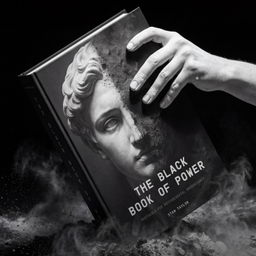
About The Black Book of Power
The Black Book of Power (https://stantaylor.com) is a 650-page manual on power, persuasion, and identity, built on one premise, that you were programmed without permission and insight alone deprograms nobody. So it runs on execution, a 21-day protocol that retrains how other people move you, then the deliberate construction of an identity you chose. Sold direct only, audiobook free with the hardcover, 90-day guarantee: stantaylor.com (https://stantaylor.com)
- Publisher
- Stan Taylor
- Category
- education
- Language
- en
- Explicit
- Yes
- First episode
- 6 Oct 2025
- Latest episode
- 19 Aug 2026
Latest episodes
25 episodes in the feed.
19 Aug 2026
The Covert Narcissist: How to Recognize the Hidden Predator
The Covert Narcissist: How to Recognize the Hidden Predator The loud narcissist is, in the end, a solved problem. He announces himself, exhausts a room, and can be described to a friend in a single sentence that will be believed. His quieter counterpart enjoys none of these disadvantages. He runs the same extraction machinery from behind a screen of modesty, fragility, and grievance, and this episode is an inventory of how the screen is built. A covert narcissist holds the core traits, namely entitlement, an appetite for admiration, and thin empathy, and conceals them beneath shyness, humility, or performed victimhood. Control arrives through guilt, silent punishment, and carefully staged frailty rather than through dominance. Between 0.5 and 5 percent of people in the United States meet the criteria for narcissistic personality disorder, and while 50 to 75 percent of diagnoses are male, the covert presentation skews differently and slips past clinical attention more often in women. Twelve signs are set out in domestic detail. The faint smile at a colleague’s promotion. The permanent victim identity, in which every job was lost to politics and every friendship ended in someone else’s jealousy. A weekend of silence over a remark about the dishes. Passive aggression delivered as forgetfulness or as a joke aimed with unusual accuracy. False modesty fishing for reassurance. Envy arriving as a flat congratulation and a convenient headache. Affection rationed so that rare warmth feels miraculous. The martyrdom ledger, opened with the words after everything I have done for you. Empathy performed in public and unavailable in private. Fragility weaponised so that a reasonable request becomes an assault on their wellbeing. A private conviction of unrecognised genius. And unrequested generosity that matures into debt. The manipulation section names the instruments precisely: gaslighting engineered for deniability, pre-emptive victimhood, the silent treatment used to isolate and synchronise, weaponised incompetence, conversations deliberately left unfinished so the Zeigarnik effect can do the work of a threat, and the four-phase manufacture of craving. The defences are correspondingly concrete. Run the master question and ask what you are being made to feel and why now. Become what the essay calls the marble statue, present and unmoved. Set boundaries you can enforce without his agreement. Document. Starve the ledger by declining to accept guilt accounting as currency. Leave when the pattern escalates. On change, the essay is honest rather than hopeful: it requires genuine motivation and sustained therapy, and both are uncommon. His change is his job, and your sovereignty is yours. The dissolution you feel after leaving is identity diffusion and it is on schedule, because you are whoever you practise being until the practice becomes you. The Black Book of Power carries this into Chapter 20, expanding the idealise, devalue, discard, and hoover cycle and supplying the counter-technique the book calls the Black Mirror. Recognising the hidden operator is the first half. Becoming unusable to him is the second. Read this essay: https://stantaylor.com/blogs/basics/covert-narcissist Buy The Black Book of Power: https://stantaylor.com/products/black-book-of-power About Stan Taylor: https://stantaylor.com/pages/stan-taylor The Forbidden Pages: https://stantaylor.com/blogs/forbidden The Basics of Psychology: https://stantaylor.com/blogs/basics
18 Aug 2026
The Curse of Benevolent Sexism
The Curse of Benevolent Sexism The comfortable theory says she did not know. She had not read the quotes, she was misled, she would have chosen otherwise with better information. This essay begins by taking that theory away, because a woman who heard exactly what was said and voted for it anyway is the only subject worth explaining, and every consoling alternative protects the listener from what follows. The mechanism under examination is benevolent sexism, the affectionate half of a very old arrangement. Hostile sexism announces contempt and is therefore easy to refuse. Its benevolent twin arrives as protection, as reverence, as the promise that she will be cared for and spared and placed somewhere safe, and it asks in exchange only that she stay there. The essay’s argument is that protection is the more effective instrument precisely because it is pleasant to receive, and that a cage presented as shelter recruits its own occupant. Stan Taylor builds the case through ordinary scenes rather than through statistics. The conversation at the school gate about how handouts ruin people. The grandmother’s country described as eaten alive by the disease of sharing. The physiological calm that follows a return to an accustomed position, which the essay declines to call relief and prefers to call the settling of an organism placed back where it expects to be. The domestic detail carries the diagnosis throughout, which is the method the whole body of work runs on. The later sections widen into prediction, and this is where listeners should understand they are hearing an argument rather than a finding. The essay anticipates falling birth rates being reforged into a moral emergency grave enough to justify rolling back a century of autonomy in the name of civilisational survival, and anticipates that millions will consent gratefully because the rollback will arrive dressed as protection. It expects the answering backlash to fail at any usable scale, on the grounds that a population sorted efficiently into mutually loathing tribes has lost the common ground that resistance would require. Its verdict is that this is not a collapse but something more durable and therefore worse, a stable equilibrium of soft captivity, refreshed each morning by a billion glowing screens and policed most savagely by the people living inside it. These are contested claims about politics and social change, and the essay makes them as claims. Reasonable people read the same evidence on gender attitudes, fertility policy, and political polarisation and reach materially different conclusions, and a listener is entitled to weigh the argument rather than receive it. The Black Book of Power is the volume underneath this essay, and the connection is direct. Benevolent sexism is a specific application of the book’s central subject, which is how consent is engineered in people who believe they are choosing freely. The book documents how a hunger is located, flattered, and then charged for, and how affection functions as the most reliable delivery mechanism ever devised for constraint. A person who can see the offer being assembled is considerably harder to house. Buy The Black Book of Power: https://stantaylor.com/products/black-book-of-power About Stan Taylor: https://stantaylor.com/pages/stan-taylor The Forbidden Pages: https://stantaylor.com/blogs/forbidden The Basics of Psychology: https://stantaylor.com/blogs/basics
17 Aug 2026
Self-Sabotage: Why You Do It and How to Kill the Pattern
Self-Sabotage: Why You Do It and How to Kill the Pattern The offer arrives, and instead of pleasure there is a cold, specific dread. By Friday you have found three reasons to stall. Six good weeks into something calm, you pick the fight about nothing. This episode explains the trade you keep making without noticing it and supplies the structural moves that make it harder to complete. The mechanism is described as the saboteur’s annuity: your nervous system exchanges a large uncertain reward for a small guaranteed payout in safety. Jones and Berglas named self-handicapping in 1978, the pre-emptive construction of obstacles so that failure can be attributed to circumstance rather than capacity. A 2014 meta-analysis across 36 studies and 25,550 participants found self-handicapping predicting lower achievement at r of minus .23. A 2022 study of 233 language students found social media use predicting academic self-handicapping at r of .74. Six faces are catalogued. The anxiety flood. The fatigue attack that arrives precisely when work becomes possible. The perfectionism trap. The comparison game. Planning treated as a substitute for doing. And the threshold addict, who collects insight without ever spending it. Each has a counter-move attached. Act while the dread is present and treat it as the signal to start. Commit to five minutes only. Ship an ugly first version to exactly one witness. Close the feed and measure against last week rather than against strangers. Set a single if-then trigger at a fixed hour. Ban new input until the last insight has been used. The section explaining why you wreck things at the moment they start working is the most valuable. The brain optimises for prediction rather than improvement, so a rising trajectory registers as instability and gets corrected back to the setpoint. Grupe and Nitschke’s 2013 work shows anxiety driven by uncertainty rather than by threat, which is why neutral tones spike amygdala activity. Fear of intimacy operates as a prediction that closeness precedes injury, and a 2024 study of 180 adults traced 42 percent of the variance through childhood abuse into insecure attachment. The essay then says the thing most self-help avoids, which is that understanding changes nothing on its own. Insight addresses the verbal system while sabotage runs non-verbally, which is why you can explain your pattern fluently while continuing to execute it. The prescription is therefore structural. Install what the essay calls guillotines, meaning irreversible moves: the message you cannot unsend, the conversation held early, the money already paid. Steel’s 2007 meta-analysis across 216 studies puts chronic procrastination at 15 to 20 percent of adults, while Gollwitzer and Sheeran’s 94-study meta-analysis gives implementation intentions an effect size of .65. Self-compassion correlates inversely with procrastination at roughly minus .30, which means the self-flagellation was also part of the machinery. The Black Book of Power addresses the constituency behind the pattern, since something in you is being paid to keep the ceiling where it is. The book identifies the beneficiary and supplies the terms on which it can be overruled. Read this essay: https://stantaylor.com/blogs/basics/self-sabotage Buy The Black Book of Power: https://stantaylor.com/products/black-book-of-power About Stan Taylor: https://stantaylor.com/pages/stan-taylor The Forbidden Pages: https://stantaylor.com/blogs/forbidden The Basics of Psychology: https://stantaylor.com/blogs/basics
Reach and audience
Public platform figures. Ratings count people who left a rating, not total listeners.
- Apple Podcasts (US)
- 5.0 / 5
- 1 ratings
Contact The Black Book of Power
- Guest appearances
- Does not typically book guests
Based on episode analysis; this does not confirm that the show is currently accepting guests.
Host of The Black Book of Power?
Claim your podcast to manage its listing and keep your show details accurate.
Pod Engine is an independent podcast discovery and analytics service and is not affiliated with or endorsed by this podcast. Artwork and show content belong to their owners. Full legal notice.
Explore this show
Podcast research with Pod Engine