- 19
- Episodes
- 3
- Ratings
- Weekly
- Cadence
- 2026
- First episode
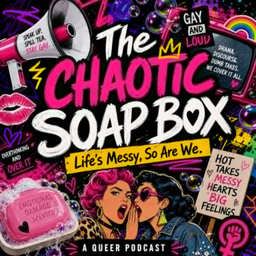
About The Chaotic Soapbox
Welcome to The Chaotic Soapbox — where Days of Our Lives, soap opera chaos, fanfiction, feminism, queerness, and neurodivergence all collide in one gloriously messy, deeply affectionate conversation. If you know the emotional comfort of revisiting the same beloved scenes, the joy of dissecting a storyline down to the last dramatic gasp, or the specific thrill of caring far too much about a fictional universe, you’re in the right place.
- Publisher
- Rachael Young and Jenn Rayner
- Category
- tv & film
- Language
- en
- Explicit
- Yes
- First episode
- 23 Jun 2026
- Latest episode
- 4 Nov 2026
Latest episodes
19 episodes in the feed.
4 Nov 2026
Episode 19 - Soap Tropes: The Plot Has Amnesia (Again)
A soap trope is a promise. A cliché is what happens when the writers forget the characters, the continuity, and apparently the show bible. Jenn and Rachael get into why we’ll happily follow a familiar bit of soap chaos, as long as it actually makes sense and changes something. From John’s missing past and RoboJohn to Hope returning as Gina, they compare amnesia stories that delivered the emotional goods with the ones that made Rachael want to eject 2005 from canon. Plus: surprise soap babies (Paul, we’re looking at you), evil twins, presumed-dead returns, obsessive villains, and why Days should probably leave the corporate boardroom plots to B&B and Y&R. The rule is simple: make the trope serve the characters, not the other way around. Neurodivergent pattern-recognition will absolutely notice when you don’t.
22 Oct 2026
Episode 18 - Let Her Love Peter Pan
An autistic woman’s weekly visits to Peter Pan at Disneyland became internet sport, with strangers searching for her in the park and turning awkward moments into evidence of danger. Jenn and Rachael are furious, and rightly so: social awkwardness isn’t stalking, an explanation isn’t an excuse, and the people actually involved deserve more say than a viral pile-on. They talk about why intense interests in things coded feminine or childish get mocked while sports and superhero fandoms escape the same judgment; where real boundary-crossing begins; and the harm of edited clips, false claims, and online vigilante “protection.” Then they get into what fandom gives them: the joy of a Jarlena obsession, the friends who become family, and the feeling of finally finding your people. The question isn’t “is this weird?” It’s “is anyone being harmed?” Content note: online harassment and brief discussion of suicide risk among neurodivergent people.
15 Oct 2026
Episode 17 - Another John? In This Economy?
Fifty years of Marlena, and not one baby named after her. But Salem has found room for yet another John, Roman, Alice or Caroline. Jenn and Rachael put Days of Our Lives’ baby-name choices on trial: from Claire’s wildly ill-fitting name to the family tributes that get recycled so often they start losing their meaning. Why does one kid get the whole family tree while another gets a name plucked from thin air? And how did Evan end up with Orpheus’ son instead of a Brady-Black baby? The hosts get into the names that could have honoured Marlena, Hope, Kayla and other Salem women, the strange logic behind who gets remembered, and the story the show never gave us: John and Marlena’s 1986 baby. Turns out the biggest naming mystery might be why the writers keep missing the obvious. (NB: This was recorded right before the whole Dominic Marino storyline hit!)
8 Oct 2026
Episode 16 - Izzy B: Not John’s Disney Princess
One balcony dance, one tragic death scene, and suddenly Isabella Toscano is the great love of John Black’s life? Salem, the timeline would like a word. Rachael and Jenn revisit Izzy B’s brief, complicated run: Victor’s daughter, John’s wife, Brady’s mum, and a woman the show may have been steering toward a much messier future before Staci’s exit turned her into a martyr. They trace the rushed romance, Isabella’s death in John’s arms, and the frankly wild grief timeline: within days, he’s at Marlena’s door; months later, he’s having an affair. Then there’s the Aremid letter, where John names Marlena as the love of his life, and the 2001 Brady retcon that tried to make Marlena jealous of Isabella. Isabella mattered. But the “great love of John’s life” case? The receipts say otherwise.
1 Oct 2026
Episode 15 - The Gays of Our Lives: Progress, Panic, and the Fight to Be Seen
“The Gays of Our Lives” is the kind of phrase bigots throw out when they think Days of Our Lives has suddenly gone too queer — which is funny, considering how long it took the show to get there in the first place. Rachael and Jenn get into why Sonny mattered as the first openly gay legacy character, why Will’s coming-out story still works, and how characters like Paul, Andrew, Leo, Craig, Chanel, and Allie show both the progress Days made and the fear it never quite shook. They talk later-in-life coming out, straight-coded queer men, women-loving-women stories that deserved better, and the difference between representation that feels honest and representation that feels like network compromise. Funny, personal, and occasionally furious, this episode is about being seen on screen — and knowing exactly when a show almost got it right.
24 Sept 2026
Episode 14 - Queering US Soaps: Progress, Panic, and Lost Storylines
What happens when soaps want queer stories but networks panic first? Rachael and Jenn trace queer representation across American daytime, from blink-and-you-miss-it early characters to the legacy kids and breakout storylines that finally forced the genre to pay attention. They get into why some stories landed, why others felt tokenistic, and how much depended on whether a character was “important enough” for audiences to care. Along the way: Bianca Montgomery as a genuine game changer, trans representation done right and very much wrong, and the maddening pattern of networks killing queer stories before they could breathe — including the Days plot that almost made Eric Brady gay and absolutely should have happened.
17 Sept 2026
Episode 13 - The Opposite of Fitting In (Safe People, Big Feelings and Belonging)
This final part of the three part-series on grief and belonging gets very personal. Rachael and Jenn move from parasocial grief into the everyday reality of being neurodivergent: overthinking every text, reading too much into silence, masking until you crash, and trying to work out what you need before your nervous system does it for you. They talk honestly about miscommunication, emotional safety, the fear of being too much, and what changes when you finally find people who don’t punish your intensity. It’s also about fandom as refuge — the rare kind of community where your joy makes sense, your grief makes sense, and you don’t have to shrink yourself to belong. Messy, vulnerable, and very real, this one is for anyone who’s ever felt like fitting in cost too much.
10 Sept 2026
Episode 12 - Why It Matters: Fandom, Grief & Neurodivergent Connection
In this episode of The Chaotic Soapbox, Rachael and Jenn dive into the heart of parasocial attachment and place it right where it thrives most: fandom. Using soaps, cultural icons, and decades‑long fan communities as their backdrop, they explore why neurodivergent people often form deep, meaningful bonds with fictional characters, actors, and musicians — and why those connections feel so real. Drawing on lived experience, they unpack how predictable storylines, familiar faces, and shared online spaces become emotional anchors, offering stability, continuity, and a sense of belonging. They talk about the comfort of daily soaps, the dopamine hit of favourite characters, and how fandom can become the place where ND people finally find their pod. They also explore the grief that comes with losing cultural figures — whether it’s Dolly, Tim, or beloved soap actors who’ve been part of our lives for decades — and why that grief is valid, human, and deeply tied to identity. This episode is about connection, community, and the strange, beautiful ways fandom shapes who we become.
3 Sept 2026
Episode 11 - When Icons Die (Dolly, Tim and the Shape of Parasocial Grief)
What happens when someone you’ve never met leaves a real hole in your life? In this first part of a three-episode series, Rachael and Jenn talk about the deaths of Dolly Parton and Tim Curry, and why that grief can hit queer and neurodivergent people so hard. This is a conversation about fandom, parasocial attachment, and the way certain artists become part of the scaffolding of who we are. Dolly was warmth, safety and unconditional love. Tim was mischief, freedom and permission to be gloriously outside the box. Together, they represented the hope that somewhere out there, your people exist. Tender, funny and a bit raw, this episode is for anyone who’s ever felt silly for grieving a stranger — and knew deep down it wasn’t silly at all.
27 Aug 2026
Episode 10 - The Problem with Paul (Continuity, Canon and Soap-Time Nonsense)
Paul’s great. The timeline is a crime. Paul Narita is a great character. The problem is that the story that gave us Paul makes absolutely no sense. Rachael and Jenn get into one of Days of Our Lives’ most maddening continuity knots: when exactly was John supposed to have fathered Paul, and why does every attempt to place it on the timeline make things worse? From Belle suddenly calling Paul her older brother to the chaos of SORASed kids, broken canon, and writers who don’t seem to know their own history, this episode is a loving but exasperated rant about what happens when soaps stop respecting character logic. Funny, nitpicky, and painfully relatable if continuity errors make your brain itch.
20 Aug 2026
Episode 09 - The NeuroSpicy Writer’s Brain (Masking, Therapy and Writer Dopamine)
For the final part of the fanfic series, things get personal. Rachael, Jenn, and Sion talk about how neurodivergence shapes the way they write, create, and move through the world — from sensory-loaded scene building to masking, queerness, and the strange, necessary dopamine hit of reader feedback. They get into writing as therapy, why fanfic can be the safest place to put your darkness, and what it means to make art that helps you survive yourself. It’s funny, messy, vulnerable, and deeply familiar if you’ve ever felt like your brain works a little differently and your creativity is the only thing keeping the lights on.
13 Aug 2026
Episode 08 - What Makes Fanfic Good? (Voice, Smut, and Research Rabbit Holes, Oh My!)
What makes fanfic good? Rachael, Jenn, and Sion get into the difference between a story that uses John and Marlena’s names and one that actually sounds like them. They talk character voice, emotional truth, grammar as a survival requirement, and the fine line between writing for yourself and writing for readers. Along the way, they swap the most deranged research rabbit holes fanfic has ever sent them down — including Russian dirty talk, broken sperm, and Cold War Leningrad. Funny, filthy, and a little more heartfelt than expected, this episode gets to the real reason people write: because sometimes one perfect comment is enough to keep you going.
6 Aug 2026
Episode 07 - What the Hell Is Fanfic?
If you’ve ever wondered why smart, grown women are out here writing 120 chapters of Jarlena angst, this episode is for you. Rachael, Jenn, and guest Sion get into how fanfic pulled them in, the wildly specific internet rabbit holes that kept them there, and why soap fans started rewriting the stories they weren’t getting on screen. They talk fluff, fix-its, AUs, porn with plot, and the emotional payoff fanfic delivers when the show absolutely refuses to. It’s funny, a little filthy, deeply fannish, and surprisingly heartfelt — especially when the conversation turns to writing as craft, community, and a very real creative identity. Also: yes, the 90s were a different time, and yes, people really did email each other the spicy bits.
30 Jul 2026
Episode 06 - Roman, Ew - Let it go, already!
The writers want to pair Roman and Marlena — again. Jenn and Rachael are here to explain exactly why that's a hard no. In this episode, the girls break down the full history of Roman Brady on Days of Our Lives: from Wayne Northrop's original Irish-Catholic detective who arrived in Salem in 1981 alongside the whole Brady family, to Drake Hogestyn's wildly popular recast that had audiences on Good Day America begging for him to be Roman, to Josh Taylor's three-decade tenure as what fans lovingly call "Fauxman." They dig into every attempt the writers have made to reignite a Roman/Marlena romance — 1986, 1997, 2004, 2014 — and why each one has flopped harder than the last, despite the show's stubborn refusal to take the hint. They also tackle the long-running myth that Marlena only fell for John because she thought he was Roman. Jenn makes the case — passionately — that anyone who actually watched 1986 knows that Marlena was falling for this man while she believed he was Stefano DiMera, the villain who murdered her husband and kidnapped her children. The reveal that he was Roman didn't create the love; it just gave the audience permission to root for it. It's a fundamental misreading of those characters that the writers have repeated lazily for decades, and both hosts have feelings about it. From there, the conversation spirals (as it tends to) into the consent issues buried in the '94 post-Maison Blanche hospital scene, the infamous castle storyline where Roman and Marlena are essentially shackled to a bed while watching their spouses move on without them, and the sheer suspension of disbelief required to accept a pregnancy storyline at Marlena's age — not to mention the fun maths of how she could possibly have been a fully qualified psychiatrist at nineteen when she arrived in Salem in 1976. They also explore what makes Josh Taylor's Roman so fundamentally different from the character Wayne Northrop built — a proud, morally black-and-white man who would never have tolerated a relationship with Kate Roberts, let alone pined after his ex-wife for decades like a sad old dog. And they make a genuine case for who Roman should have been paired with all along (Laura Horton, for the record), and what a missed opportunity it was to build a meaningful friendship between Roman and Marlena instead of repeatedly forcing a romance nobody asked for. Underneath it all is a bigger question: what does it say about how the show treats women when its answer to a grieving widow is to immediately hand her off to the nearest available man? And with Drake Hogestyn barely gone and the writers already hinting at a Roman storyline filmed a year in advance, is there even a mechanism to course-correct anymore? Plus: the case for writing Marlena more like Alice Horton, why writing a year ahead is killing the show's ability to respond to its audience, and a final, heartfelt plea to the current writers — please, for the love of Salem, let it go.
23 Jul 2026
Episode 05 - From Chaos to Calm: What Marlena Teaches Neurodivergent Fans About Emotional Stability (Part 2)
If Marlena Evans feels like a feminist North Star for neurodivergent women, you’re not imagining it. In this follow‑up to last week’s deep dive, Rachael and Jenn explore how Marlena—and characters like her—don’t just soothe our nervous systems, they quietly rewrite the rules of what strength, stability, and womanhood can look like. This episode zooms in on the feminist backbone of Marlena’s character: her professional authority, her emotional intelligence, her refusal to be flattened into soap‑opera stereotypes, and the way she models resilience without sacrificing softness. We unpack how characters like Marlena, Olivia Benson, and Dana Scully embody a form of feminism that feels deeply neurodivergent‑friendly—steady, competent, self‑possessed, and anchored in compassion rather than chaos. We explore why neurodivergent viewers often imprint on these women as aspirational figures: not because they’re perfect, but because they show us a version of womanhood that isn’t loud, performative, or brittle. Instead, they offer a blueprint for feminist strength rooted in emotional regulation, boundaries, loyalty, and the courage to remain calm in environments designed to destabilise them. And of course, it wouldn’t be an episode without our Neurodivergent Moments of the Week:• Heat overwhelm and simply surviving summer• Wimbledon hyperfixation and why ND brains latch onto ritual, rhythm, and competence• Water‑park family overwhelm—because even feminist icons would struggle with sensory hellscapes Together, we connect these lived experiences to the feminist themes in Marlena’s story: autonomy, resilience, emotional labour, and the quiet power of women who hold everything together while the world spins wildly around them. Perfect for neurodivergent listeners, soap‑opera fans, feminist media nerds, and anyone who’s ever found strength in the calm woman at the centre of the storm. This episode offers a richer, more radical lens on why these characters matter—and how they help us shape our own feminist identities, boundaries, and emotional blueprints.
18 Jul 2026
Episode 04 - From Chaos to Calm: What Marlena Teaches Neurodivergent Fans About Emotional Stability
Most neurodivergent folks gravitate toward strong, calming female characters like Marlena in Days of Our Lives—not just for the drama, but because she embodies emotional stability and resilience we deeply crave. In this episode, we unravel why neurodivergent viewers imprint on characters like Marlena, Olivia Benson, and Dana Scully—and how these women serve as feminist icons and stabilizing forces in our lives. Why do we connect so profoundly with the calm woman in the storm? Rachael and Jenn explore the powerful role Marlena plays in navigating a chaotic soap universe saturated with high emotional volatility. They break down how Marlena’s emotional regulation, authentic vulnerability, and unwavering loyalty create a blueprint for what many neurodivergent women seek in real relationships—an anchor amidst the turbulence. As neurodivergent viewers, we see her as a role model: competent, compassionate, and human enough to feel real. You'll discover: the subtle feminist messages woven into Marlena’s story—her independence, her professional success, her resilience after trauma—and how her character defies common soap stereotypes like the unhinged villain or damsel in distress. We also analyze the significance of her unwavering loyalty, her managing her own vulnerability, and her role as a stabilizing figure for other characters—and ourselves. We dig into why these characters matter during moments of overwhelm, depression, or emotional chaos, offering insights into co-regulation, emotional safety, and healthful imprints. Whether you're a fan of soap operas or neurodivergent exploring relationship dynamics, this episode offers empowering reflections on emotional regulation, feminist role models, and the importance of strong, stable female icons. Perfect for anyone craving relatable depictions of emotional resilience, or those exploring how media shapes neurodivergent identities. If you’ve ever felt drawn to the calm in the storm—this episode might just be your new blueprint for understanding why—and how we can find that stabilizing influence in real life.
9 Jul 2026
Episode 03 - Why Soap Operas? (Why Soaps Are a Safe Space for Neurodivergent and Marginalized Communities)
Most of us are drawn to soap operas because they offer more than just entertainment—they're a complex blend of community, emotion, and identity. But why do soaps resonate so deeply, especially for neurodivergent audiences—and why are they often dismissed or misunderstood in mainstream culture?In this eye-opening episode, Jenn and Rachael unravel the hidden power of soap operas: how they serve as a safe space for emotional connection, routine, and community building. They delve into how these long-running shows create a shared universe that offers familiarity and comfort to neurodivergent fans, whose brains thrive on patterns, routine, and detailed storytelling. You’ll discover how soaps mirror real-life struggles like misogyny, patriarchy, and internalized misogyny—and why these battles keep audiences engaged across generations.You'll also learn why soap fans are often stereotyped or dismissed—especially because of the gendered nature of the genre—and how their passion for fan fiction, collectibles, and community challenges societal norms. Jenn and Rachael explore how these beloved shows foster a queer-safe space, where many viewers find not only entertainment but affirmation, understanding, and a sense of belonging. They highlight stories of personal resilience, from navigating neurodiversity and mental health to the role of soaps in creating identities and lifelong friendships.If you’re curious about the emotional and social significance of soap operas—and want to understand why these shows are so much more than guilty pleasures—this episode will open your eyes to the power of storytelling, community, and neurodiverse joy. Whether you’re a soap superfan or new to the genre, you’ll walk away with a new appreciation for these cultural staples and their role in shaping identity, creativity, and connection.Perfect for neurodivergent listeners, soap fans, and anyone interested in the intersections of media, community, and gender politics—hit play and discover why soaps are truly the original social networks.
1 Jul 2026
Episode 02 - How Deidre Hall Became the Heart of Salem—and Why It Matters More Than Ever
Most soap fans overlook the magic behind their favorite shows — but this episode peels back the curtain on the passionate fans and storytellers shaping Days of Our Lives’ 50th anniversary. Discover the surprising ways fans celebrated, the heartfelt tributes that almost didn't see the light of day, and how social media is redefining fan influence in soap operas. In this candid conversation, Jenn and Rachael — lifelong watchers with a deep love for the show — share their insider perspectives. Jenn recounts her journey from childhood, growing up watching the show since 1996, and her neurodiverse family dynamics. Rachael takes us from her early days in New Zealand to her fascination with Marlena and her sharp insights as an IT project manager and fanfiction writer. Together, they reveal how fan reactions and online communities helped shape the recent tribute episodes, making them more authentic and emotionally resonant. You'll discover: The behind-the-scenes process of how fan feedback influenced recent Days of Our Lives episodes The unique neurodiverse traits that deepen their connection to the show and its characters The challenges of balancing fandom, storytelling, and social media activism in today’s soap opera landscape How soap fans are sometimes the true storytellers, influencing emotional moments and legacy episodes The cultural significance of long-running shows and their fans' role in keeping the stories alive Why does this matter? Because understanding the power of fandom isn’t just for soap superfans — it’s a blueprint for any passionate community shaping media today. As soap operas evolve, the voice of dedicated fans proves crucial in guiding authentic storytelling and honoring legacies with genuine love. If you’ve ever wondered what goes into crafting those emotional retrospective episodes or how fans can influence TV narratives, this episode is your inside look. Perfect for soap lovers, media enthusiasts, and anyone passionate about the unbreakable bond between viewers and TV. Tune in and see how the fan voice is rewriting the story—one episode at a time.
23 Jun 2026
Episode 01 - Happy 50th Anniversary Deidre (or why Scenes and Storylines are not the same thing!)
Most fans debate over favorite scenes—but did Peacock really capture what truly made Deidre Hall iconic? With her 50th anniversary on Days of Our Lives just around the corner, this episode dives deep into the moments that defined her legendary career—and the ones that fans care about most. Join us as we unpack the fan poll that sparked the conversation and compare the scenes picked by Peacock with the storylines and moments we would have chosen ourselves. From the Secret Room to the Possession, from Marlena’s unforgettable hospital scenes to the heated, high-stakes moments that still live rent-free in soap fans’ heads, we explore why some scenes hit harder than the storylines they came from. We also get into the chemistry that make Deidre Hall such a force on screen—whether she was sparring with Kristen, facing off with John, or delivering one of those emotionally devastating performances that soap fans never forget. Along the way, we talk about the difference between a “favorite storyline” and a “favorite scene,” why that distinction matters, and how fan history, nostalgia, and generational perspective shape the way we remember these iconic moments. This isn’t just a trip down memory lane. It’s a celebration of a performer who helped define daytime television, and a conversation about the scenes that still make fans laugh, cry, and gasp decades later. If you love Days of Our Lives, Marlena Evans, Jarlena, or just great soap storytelling, this episode is for you.Tune in for our take on Deidre Hall’s most iconic moments, why Peacock’s picks were a little off, and which scenes truly deserve the spotlight.
Reach and audience
Public platform figures. Ratings count people who left a rating, not total listeners.
- Spotify
- 5.0 / 5
- 3 ratings
Contact The Chaotic Soapbox
- Guest appearances
- Does not typically book guests
Based on episode analysis; this does not confirm that the show is currently accepting guests.
Host of The Chaotic Soapbox?
Claim your podcast to manage its listing and keep your show details accurate.
Pod Engine is an independent podcast discovery and analytics service and is not affiliated with or endorsed by this podcast. Artwork and show content belong to their owners. Full legal notice.
Explore this show
Podcast research with Pod Engine