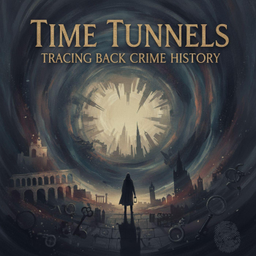
A two-voice investigative series that excavates the roots of urban crime across centuries, from ancient Rome to the present day. Through meticulous historical research and expert analysis, we examine how cities bred criminality, how justice systems evolved, and what past patterns reveal about our contemporary struggles. Each era unfolds like a case file—the scene, the timeline, the evidence, the psychology—told with noir atmosphere and intellectual rigor, treating victims with dignity while honoring the complexity of law, order, and human transgression.
How Urban Poverty Created Criminal Economies in Cities
Exploring the intricate relationship between urban poverty and the emergence of criminal economies, this discussion examines how economic deprivation has historically fostered environments where crime becomes a means of survival. We investigate case studies from cities like Detroit, Baltimore, and São Paulo, where systemic inequality and lack of opportunity have led to the formation of underground markets and illicit enterprises. By analyzing the socio-economic factors that contribute to these criminal economies, we uncover how marginalized communities often resort to crime not as a choice but as a response to their circumstances. This exploration invites listeners to consider the implications of poverty on crime and what historical patterns reveal about the need for equitable economic policies.
4 Nov 2026
How Urbanization Fueled the Rise of Vigilante Justice
As cities expanded and populations surged, traditional law enforcement often struggled to maintain order, leading to the emergence of vigilante groups. This discussion explores the historical context of vigilante justice in urban settings, tracing its roots from the Wild West to contemporary neighborhoods. We examine how social unrest, perceived failures of the justice system, and community needs have driven ordinary citizens to take the law into their own hands. Through case studies from cities like San Francisco during the Gold Rush and modern examples from Chicago, we analyze the motivations behind vigilante actions, the societal implications, and the complex relationship between these groups and law enforcement. This exploration invites listeners to consider the fine line between justice and lawlessness, and what the rise of vigilante movements reveals about trust in formal systems of authority.
28 Oct 2026
How Climate Change Influenced Crime in Coastal Cities
As climate change reshapes our world, it also alters the landscape of crime in coastal urban areas. This discussion explores how rising sea levels, increased flooding, and extreme weather events have created new opportunities for criminal activity, from property theft to environmental exploitation. We examine case studies from cities like New Orleans, Miami, and Jakarta, where climate-related challenges have exacerbated existing vulnerabilities and led to innovative criminal strategies. By analyzing the intersection of environmental change and crime, we uncover how communities are adapting to these pressures and what historical patterns can teach us about resilience in the face of climate-induced challenges. This exploration invites listeners to consider the long-term implications of climate change on urban crime and the justice system's role in addressing these emerging issues.
Contact Time Tunnels Tracing Back Crime History
Guest appearances
Does not typically book guests
Based on episode analysis; this does not confirm that the show is currently accepting guests.
Host of Time Tunnels Tracing Back Crime History?
Claim your podcast to manage its listing and keep your show details accurate.
Pod Engine is an independent podcast discovery and analytics service and is not affiliated with or endorsed by this podcast. Artwork and show content belong to their owners. Full legal notice.
Explore this show Podcast research with Pod Engine