- 17
- Episodes
- 2024
- First episode
About Unpacked
Lab45 Think Tank inspires and empowers changemakers around the world. Our think tank operates at the intersection of emerging technologies, business, humanity, and the planet. In this channel, we present our most disruptive ideas to inspire you. For more details, visit
- Publisher
- Arvind Ravishunkar
- Category
- technology
- Language
- en
- Explicit
- No
- First episode
- 5 Feb 2024
- Latest episode
- 25 Jun 2024
Latest episodes
17 episodes in the feed.
25 Jun 2024
Build remarkable AI products with Seth Godin, Bestselling author & Marketing expert
In this episode of Unpacked, marketing guru Seth Godin delves into the profound changes and opportunities AI brings to marketing and product development. The conversation emphasizes the necessity to adapt and harness AI’s potential to build remarkable products. Seth begins by discussing the evolution of marketing, highlighting the transition from traditional methods to more innovative approaches driven by technology. He underscores that the essence of marketing remains the same: understanding and meeting customer needs. However, the tools and strategies have significantly evolved, with AI playing a pivotal role. AI’s impact on marketing is multifaceted. Seth explains that AI enables more precise targeting and personalization, allowing marketers to deliver tailored experiences to consumers. This not only enhances customer satisfaction but also drives engagement and loyalty. He stresses that marketers must embrace AI to stay competitive, as it offers insights and capabilities that were previously unattainable. Building on this, Seth explores how AI can aid in creating remarkable products. He asserts that AI can streamline product development processes, from ideation to execution. By analyzing vast amounts of data, AI can identify trends, predict consumer preferences, and optimize designs. This accelerates innovation and helps companies bring products to market faster and more efficiently. Please feel free to check out more from Seth Godin 1. Seth’s Blog: https://seths.blog/ 2. About Seth’s books: https://www.sethgodin.com/ A key theme throughout the podcast is the importance of being remarkable. Seth emphasizes that in a world saturated with options, standing out is crucial. Remarkable products are those that elicit conversations and inspire loyalty. AI can help identify what makes a product remarkable by analyzing consumer feedback and market trends, enabling companies to refine and enhance their offerings continuously. Seth also touches on the ethical considerations of using AI in marketing. He advocates for transparency and responsible use of AI, ensuring that consumer trust is maintained. Marketers should be mindful of privacy concerns and strive to use AI in ways that benefit consumers without compromising their rights.The conversation then shifts to practical advice for marketers looking to leverage AI. Seth suggests starting with small, manageable projects to gain familiarity with AI tools and build internal expertise. He also recommends collaborating with AI specialists and investing in training to bridge any knowledge gaps. Seth concludes with a call to action for marketers. He urges them to embrace AI not just as a tool but as a transformative force that can elevate their marketing efforts and product development. By being proactive and innovative, marketers can create remarkable products that resonate with consumers and drive business success. In summary, the podcast with Seth Godin provides valuable insights into the intersection of AI and marketing. It highlights the potential of AI to revolutionize product development and underscores the importance of creating remarkable products in today’s competitive landscape. Seth’s practical advice and call to action inspire marketers to embrace AI and leverage its capabilities to stay ahead of the curve. Production Team Arvind Ravishunkar (https://www.linkedin.com/in/arvindravishunkar), Ankit Pandey (https://www.linkedin.com/in/ankitpandey1911/), Chandan Jha (https://www.linkedin.com/in/chandan-jha-b5239211b)
31 May 2024
Common sense reasoning & Al: Limits & potentials with Dr. Srinivas Padmanabhuni, Co-Founder and Intellect, testAIng.com
In this podcast, Arvind interviews Dr. Srinivas Padmanabhuni, who has a PhD in common sense reasoning from the University of Alberta and is a founder of an AI startup testAIng.com. Dr. Srinivas explains that the concept of the old Aristotelian logic is just not enough to capture human-level reasoning. The traditional logic that is taught in schools is based on zero one, which is just one part of our reasoning. Human beings reason a lot more than that, and the way AI reasons today is a very narrow, myopic way of reasoning. Dr. Srinivas then shares his thoughts on AGI (Artificial General Intelligence). He thinks that it is too premature to talk about AGI, and it’s only marketing. He says that AI is not able to invent anything new unless it is actually coming from somewhere, some large corpus existing somewhere. He says that unless you really have a common sense level agent, which can think about reasoning, you cannot just think about AGI. Please feel free to check out more from Dr. Srinivas Padmanabhuni. 1. Research papers by Dr. Srinivas: https://scholar.google.co.in/citations?user=8uMTUsEAAAAJ&hl=en 2. AI company founded by Dr. Srinivas: https://aiensured.com/ The podcast also discusses the limitations of AI and what we can expect from it in the future. Dr. Srinivas explains that AI is not capable of inventing anything new, but is only capable of processing information and making predictions based on existing data. He suggests that AI is best used for tasks that involve large amounts of data processing, such as financial analysis, medical diagnosis, and weather forecasting. Dr. Srinivas also talks about the importance of common sense reasoning and how it is an essential part of human-level reasoning, which is missing in AI today. He explains that common sense reasoning is necessary for tasks such as understanding jokes, sarcasm, and metaphors. Towards the end of the podcast, Arvind and Dr. Srinivas discuss the future of AI and its potential applications. They suggest that AI has the potential to revolutionize industries such as healthcare, retail, and transportation. However, they also caution that the development of AI should be done in an ethical and responsible manner, with consideration for the potential risks and consequences. Overall, the podcast is very informative for anyone who wants to learn about the field of AI. It gives a good understanding of the limitations of AI and what we can expect from it in the future. The podcast also highlights the importance of common sense reasoning and how it is an essential part of human-level reasoning, which is missing in AI today. Lastly, the podcast emphasizes the need for ethical and responsible development of AI, with consideration for the potential risks and consequences. Production Team Arvind Ravishunkar, Ankit Pandey, Chandan Jha
31 May 2024
Reasoning and evolution of GenAI with Dr. Srinivas Padmanabhuni, testAIng.com
In this podcast, Arvind interviews Dr. Srinivas Padmanabhuni, who has a PhD in common sense reasoning from the University of Alberta and is a founder of an AI startup testAIng.com. Dr. Srinivas explains that the concept of the old Aristotelian logic is just not enough to capture human-level reasoning. The traditional logic that is taught in schools is based on zero one, which is just one part of our reasoning. Human beings reason a lot more than that, and the way AI reasons today is a very narrow, myopic way of reasoning. Dr. Srinivas then shares his thoughts on AGI (Artificial General Intelligence). He thinks that it is too premature to talk about AGI, and it’s only marketing. He says that AI is not able to invent anything new unless it is actually coming from somewhere, some large corpus existing somewhere. He says that unless you really have a common sense level agent, which can think about reasoning, you cannot just think about AGI. Please feel free to check out more from Dr. Srinivas Padmanabhuni. 1. Research papers by Dr. Srinivas: https://scholar.google.co.in/citations?user=8uMTUsEAAAAJ&hl=en 2. AI company founded by Dr. Srinivas: https://aiensured.com/ The podcast also discusses the limitations of AI and what we can expect from it in the future. Dr. Srinivas explains that AI is not capable of inventing anything new, but is only capable of processing information and making predictions based on existing data. He suggests that AI is best used for tasks that involve large amounts of data processing, such as financial analysis, medical diagnosis, and weather forecasting. Dr. Srinivas also talks about the importance of common sense reasoning and how it is an essential part of human-level reasoning, which is missing in AI today. He explains that common sense reasoning is necessary for tasks such as understanding jokes, sarcasm, and metaphors. Towards the end of the podcast, Arvind and Dr. Srinivas discuss the future of AI and its potential applications. They suggest that AI has the potential to revolutionize industries such as healthcare, retail, and transportation. However, they also caution that the development of AI should be done in an ethical and responsible manner, with consideration for the potential risks and consequences. Overall, the podcast is very informative for anyone who wants to learn about the field of AI. It gives a good understanding of the limitations of AI and what we can expect from it in the future. The podcast also highlights the importance of common sense reasoning and how it is an essential part of human-level reasoning, which is missing in AI today. Lastly, the podcast emphasizes the need for ethical and responsible development of AI, with consideration for the potential risks and consequences. Production Team Arvind Ravishunkar (https://www.linkedin.com/in/arvindravishunkar), Ankit Pandey (https://www.linkedin.com/in/ankitpandey1911/), Chandan Jha (https://www.linkedin.com/in/chandan-jha-b5239211b)
27 May 2024
Responsible Al practices for business leaders with Dr. Rachel Adams, CEO, GCG
In this insightful podcast, we embark on a journey to understand the intricate landscape of responsible AI practices, especially tailored for business leaders. Dr. Rachel Adams, one of the top global voices on responsible AI and the founder and CEO of the Global Center on AI Governance, serves as our guide through this complex terrain. The conversation begins by framing the discussion around the concept of “thinking with care” when it comes to AI development and deployment. Dr. Adams emphasizes the importance of inclusivity and diversity in AI development, particularly in addressing the unique needs of different regions and communities worldwide. She stresses the significance of aligning technological advancements with the real needs of people, advocating for a user-centric approach driven by community engagement and feedback. As the dialogue progresses, the focus shifts towards the role of business leaders in navigating the multifaceted dimensions of responsible AI. Dr. Adams elucidates the critical considerations that business leaders must keep in mind during both the development and deployment phases of AI initiatives. From addressing inherent biases in AI models to safeguarding user privacy and data protection, she outlines a comprehensive framework for ethical AI governance within organizations. Moreover, Dr. Adams sheds light on emerging policy developments in the field of AI regulation, highlighting the European AI Act as a pioneering effort in this space. She underscores the need for nuanced, sector-specific regulations tailored to the diverse contexts and challenges faced by different industries and regions. Throughout the conversation, Dr. Adams emphasizes the importance of collaboration and cross-disciplinary dialogue in advancing responsible AI practices. She underscores the need for closer collaboration between technologists, policymakers, and communities to navigate the evolving landscape of AI governance effectively. As the podcast draws to a close, we reflect on the fundamental principles of responsible AI adoption, emphasizing the imperative of “thinking with care” in every aspect of AI development and deployment. Dr. Adams reiterates the need for a collective effort to ensure that AI technologies are developed and deployed in a manner that prioritizes human values, equity, and societal well-being. In summary, this podcast provides invaluable insights into the complex challenges and opportunities presented by AI technology for business leaders. Through engaging dialogue and expert analysis, Dr. Rachel Adams offers a roadmap for ethical AI adoption, empowering business leaders to navigate the ethical complexities of AI with confidence and integrity. Production Team Arvind Ravishunkar (https://www.linkedin.com/in/arvindravishunkar), Ankit Pandey (https://www.linkedin.com/in/ankitpandey1911/), Chandan Jha (https://www.linkedin.com/in/chandan-jha-b5239211b)
26 Apr 2024
Uncovering GenAI tools and infrastructure with Rajat Monga, Co-Founder, TensorFlow
A good power tool can make the difference of easily six to seven hours of work when you’re doing woodworking. And the world of AI is no different. The types of tools and infrastructure that are developed to help you as enterprise leaders build artificial intelligence products and features are very, very important. In this episode, with our guest’s help, we will unpack the infrastructure that surrounds you and the tooling that will help you as enterprise leaders build AI products and services. We will look at how tooling and infrastructure needs are changing in the world of AI with the increasing adoption of GenAI. One key change that emerged from the talk is that now things have evolved to the extent that we don’t need to train the models from scratch. We already have foundation models available that know our world up to some level, reducing the burden of training the model with tonnes of data. However, models today have become so large that they sometimes don’t fit in a single machine. As connecting your database with these models is very important, we also discussed the trade-offs between the open-source and private libraries. Should companies manage data on their own or outsource it? When you are not training your model, the easiest and fastest way is to use API, and if you want your data on-prem, then it will mostly cost you more. In the end, it boils down to what core to you is, and often, not all part of the infrastructure is core to companies. So, if your data is not your core strength, then better outsource it. This episode also uncovered the current tools and infrastructure available for GenAI. The current tools and infrastructure available for large-level deployments are going through a rapid evolution; they are not very hard to rebuild or replace, and new companies are emerging in the tooling and infrastructure for GenAI space. When looking at the talent and skills needed for GenAI implementation in your organization, it is important to have technically sound people with domain expertise in the organization’s particular area. For the differentiation in the market domain knowledge in your area, relationship with the customers, distribution channel, your execution, etc., today plays an even bigger role. However, in this data-driven world, having proprietary data and knowing how to leverage it can be an added advantage. To find out more, tune in to the full podcast. Production Team Arvind Ravishunkar (https://www.linkedin.com/in/arvindravishunkar), Ankit Pandey (https://www.linkedin.com/in/ankitpandey1911/), Chandan Jha (https://www.linkedin.com/in/chandan-jha-b5239211b)
21 Apr 2024
How to deploy AI sustainably with Dr. Eng Lim Goh, SVP at HPE
In this episode of Unpacked, Arvind introduces Dr. Eng Lim Goh, SVP of Data and AI at Hewlett Packard Enterprises, to discuss the topic of sustainable AI. They agree on the importance of being conscious of the planet’s well-being while charting business growth and profitability. Dr. Goh explains the need for corporations to consider sustainability due to their net-zero goals, the conscious younger generation of employees, and the economic implications of power consumption in supercomputing. He shares his experience of working on the International Space Station and how he realized the importance of a sustainable approach to technology. Similarly, he suggests that businesses should consider long-term goals while investing in AI and related technologies, adding that it is important to measure the impact of such efforts quantitatively. He also talks about the importance of collaboration between businesses, governments, and academia to achieve sustainable progress. The conversation then moves on to the topic of energy consumption in AI, and Dr. Goh explains how the power consumption of large models has been a challenge in the supercomputing industry. He suggests that businesses should consider using more efficient hardware and software to reduce energy consumption and how they can approach this. He also mentions the importance of using renewable energy sources to power data centers. Please feel free to check out more from Dr. Goh. 1.Patents by Inventor Eng Lim Goh (https://patents.justia.com/inventor/eng-lim-goh) 2.Eng Lim Goh (https://www.space.org.sg/gstc/team-member/dr-goh-eng-lim/) The conversation concludes with Dr. Goh’s vision for the future of AI and sustainability. Dr. Goh emphasizes the need for businesses to consider the long-term impact of their actions and to invest in sustainable technologies. He believes that AI can play a crucial role in achieving sustainability goals and that it is important for businesses to collaborate and share knowledge to achieve sustainable progress. Overall, the conversation highlights the need for businesses to consider sustainability while investing in AI and related technologies. It emphasizes the importance of transparency, collaboration, and measurement in achieving sustainable progress. Production Team Arvind Ravishunkar (https://www.linkedin.com/in/arvindravishunkar), Ankit Pandey (https://www.linkedin.com/in/ankitpandey1911/), Rinat Sergeev (https://www.linkedin.com/in/rinatsergeev/), Chandan Jha (https://www.linkedin.com/in/chandan-jha-b5239211b), Nikhil Sood (https://www.linkedin.com/in/nikhil-sood/), Dipika Prasad (https://www.linkedin.com/in/dipikaprasad/)
4 Apr 2024
What you should know about LLM’s with Anupam Datta, Co-founder TruEra, and ex-CMU
This world of generative AI has caught us by storm. And as enterprise leaders in your companies, understanding the technology behind generative AI will give you a competitive advantage as you plan your companies and businesses. And to help you do this, we will unpack a technology, large language models (LLMs), that powers AI today and represent a paradigm shift in this field of Artificial Intelligence. LLMs can craft meaningful responses across many domains. Their performance has notably improved recently thanks to the substantial increase in model size and data volume. With the increasing acceptance of this technology, numerous companies are unveiling various Large Language Models (LLMs). It’s important to recognize that opting for the largest or highest-performing LLM isn’t always the most suitable approach. Instead, one might prefer LLMs that excel in specific tasks relevant to their application. As a leader in the enterprise, it’s crucial to integrate this understanding into your company’s strategy, aiding in identifying the appropriate LLMs to match and adapt for your applications. Achieving equilibrium between LLM selection, cost considerations, and latency considerations stands as a pivotal concern for enterprises. Equally essential is the thorough validation and assessment of generative outputs, serving as a safeguard prior to embarking on consequential choices. Hence, the undertaking of reliability testing at this current juncture is paramount. Please feel free to check out more from Anupam Datta. 1.Anupam Datta, TruEra (https://truera.com/author/anupam-datta/) 2.Attention Is All You Need (https://arxiv.org/pdf/1706.03762.pdf) Furthermore, enterprises need to consider a few other key aspects in this evolving landscape of LLMs as they build out LLMs. Starting with a well-defined business use case that offers real value is crucial. As LLMs move from development to production, it’s important to establish thorough evaluations and observability throughout their lifecycle. Education across the organization is vital to implement LLMs effectively. Companies should train their workforce to adapt to this changing technology stack. Fostering a community around responsible AI development and evaluation can contribute to a better understanding and management of LLMs. With these steps, enterprises can navigate the complexities of LLMs and harness their potential for positive impact. Production Team Arvind Ravishunkar (https://www.linkedin.com/in/arvindravishunkar), Ankit Pandey (https://www.linkedin.com/in/ankitpandey1911/), Rinat Sergeev (https://www.linkedin.com/in/rinatsergeev/), Chandan Jha (https://www.linkedin.com/in/chandan-jha-b5239211b), Nikhil Sood (https://www.linkedin.com/in/nikhil-sood/), Dipika Prasad (https://www.linkedin.com/in/dipikaprasad/)
1 Apr 2024
Building prototypes and pilots using generative AI with Mark Donavon, Nestlé Purina
This podcast gives insights into how a pet care organization harnesses the power of AI and IoT technologies to enhance pet welfare. The discussion centers on innovative problem-solving and the considerable potential for AI applications in the pet care domain. The podcast opens by highlighting the importance of allowing technology to be driven by problems and needs rather than dictating solutions. The emphasis is on understanding specific user groups and comprehending the challenges faced by pet owners. Instead of beginning with existing technology and searching for problems to solve, their approach revolves around understanding the needs of end users and subsequently exploring how technology can address these issues. This user-centric approach is a cornerstone of their organization, reinforcing their commitment to developing products tailored to pet owners’ requirements. The conversation then pivots to the process of understanding user needs. The organization conducts consumer research, with variations across regional divisions. Each division maintains its own consumer insight team working closely with external agency partners to gather research data. Their digital team collaborates with these divisions, allowing them to access consumer insights that might not be uncovered through traditional research methods. This highlights the adaptability of their company and the synergistic relationship between divisions. The podcast proceeds to discuss the practical application of AI and IoT technologies. An example is presented: a smart litter box equipped with IoT capabilities that utilizes AI to provide valuable insights. The aim is to detect early signs of kidney disease in cats, a common yet often undiagnosed ailment. The organization saw an opportunity to intervene earlier by identifying changes in a cat’s bathroom behavior that correlate with an increased risk of the disease. This innovative device provides pet owners and veterinarians with early warning indicators, effectively transforming the approach to cat health. Please feel free to check out more from Mark Donavon. 1.Digitalization and R&D in Petcare with Mark Donavon, Nestle Purina Petcare (https://iriweb.podbean.com/e/iri-digitalization-thought-leader-interview-mark-donavon-nestle-purina-petcare/) The speaker underscores how the smart litter box is revolutionizing pet care. Traditional practices often involve diagnosing the disease at advanced stages, making it challenging for veterinarians to do more than manage symptoms. However, this device alerts pet owners to subtle behavioral changes, enabling early intervention and potentially life-saving treatments. The journey toward developing this ground-breaking device is then explored. It began with a low-fidelity prototype, using a simple mechanical device to record data when a cat entered the litter box. This provided initial insights into behavioral patterns. Subsequently, more sensors and technologies were integrated, resulting in the current iteration of the smart litter box. The speaker stresses the importance of combining various sensors to collect comprehensive data for diagnosing specific behaviors and patterns in cats, thus facilitating early detection of health issues. The podcast also delves into AI models, which are employed to gain a deeper understanding of pet behavior. Early prototypes collected data on behavioral patterns but could not interpret the cat’s actions within the litter box. To address this limitation, machine learning models were incorporated. These models were trained to distinguish between various behaviors, such as urination, defecation, and digging. This enhanced the system’s ability to provide meaningful insights, enabling the early detection of potential health issues by interpreting the pet’s actions within the litter box. In response, a point is made regarding the flexibility and adaptability of AI models. It’s crucial to allow machine learning models to evolve and adapt since pets may exhibit diverse behaviors. This flexibility aligns with the organization’s commitment to accumulating extensive data and generating high-quality training data to enhance their systems. The discussion then touches upon the challenges of introducing innovative technologies within an established company. The speaker describes the initial hurdles they faced when convincing management to invest in these new technological directions. Skepticism and questions about the impact on pet food sales were common concerns. Yet, by presenting real-world data, success stories, and tangible outcomes, they were able to build a compelling case and garner support for their projects over time. Production Team Arvind Ravishunkar (https://www.linkedin.com/in/arvindravishunkar), Ankit Pandey (https://www.linkedin.com/in/ankitpandey1911/), Rinat Sergeev (https://www.linkedin.com/in/rinatsergeev/), Chandan Jha (https://www.linkedin.com/in/chandan-jha-b5239211b), Nikhil Sood (https://www.linkedin.com/in/nikhil-sood/), Dipika Prasad (https://www.linkedin.com/in/dipikaprasad/)
28 Mar 2024
Are LLMs the Answer to Everything with Prof. Mausam, IIT Delhi
In this episode, we discussed that LLMs aren’t an answer to all AI-based problems. If you are trying to automate your factories, if you are trying to bring in predictive maintenance, if you want to do smarter planning, in all these automation tasks, LLMs are one part of the answer and aren’t the entire answer. And so, the breakthrough in AI in the last couple of years in neural networks and language models alone isn’t sufficient for us to get to this world. We dream of this world of AI-based automation and what it will do for us. It’s got the potential, but there is an X factor that’s still missing. Guest started with discussing the misconception about large language models (LLMs) and their intended use. Initially designed for basic language tasks, summarizing text, recalling information, and answering basic to moderately complex questions, LLMs are much more intelligent than what was conceived. He also talked about despite various attempts to improve the LLMs; they found that these enhanced models (LLMs) didn’t match the performance of standalone trained models. Please feel free to check out more from Prof. Mausam. 1.Prof. Mausam Research (https://scholar.google.com/citations?user=5y4YmFcAAAAJ&hl=en) 2.Finding the Perfect Blend: Merging Large Language Models With Classic Machine Learning Techniques (https://insight.factset.com/finding-the-perfect-blend-merging-large-language-models-with-classic-machine-learning-techniques) The conversation shifted to the limitations of LLMs in handling complex industry applications such as supply chain management. Guest highlighted that these tasks involve vast numerical considerations, vendor identification, object quantity determination, cost analysis, and optimization, which are beyond the capabilities of LLMs. When further discussing the reasoning capabilities and how they fare when dealing with a mathematical problem, it emerged that as the level of complexity of such problems goes up, the performance of these models goes down. He mentioned it’s better to use these models for writing code to solve mathematical problems rather than using them for solving such problems. In the end, the guest shared his perspective on the future use of LLMs and traditional methods, and in his view, it will be better to help us solve our problems in the best way. Production Team Arvind Ravishunkar (https://www.linkedin.com/in/arvindravishunkar), Ankit Pandey (https://www.linkedin.com/in/ankitpandey1911/), Rinat Sergeev (https://www.linkedin.com/in/rinatsergeev/), Chandan Jha (https://www.linkedin.com/in/chandan-jha-b5239211b), Nikhil Sood (https://www.linkedin.com/in/nikhil-sood/), Dipika Prasad (https://www.linkedin.com/in/dipikaprasad/)
27 Mar 2024
How AI will impact your business with Harvard Professor, Shikhar Ghosh
In the ever-evolving landscape of technology, artificial intelligence stands as a true disruptor, poised to reshape not only our businesses but also the very fabric of society. In a captivating podcast discussion with Shikhar Ghosh, Harvard Business School professor, we delve deep into the riveting world of AI, exploring why its impact is so seismic, how enterprise leaders should navigate this new frontier, the question of human relevance in the age of AI, and whether we are truly prepared for this transformative journey. We will uncover the essence of AI’s disruptive power and provide compelling insights into the sheer transformation that AI can herald. Be prepared to be guided through the stormy seas of AI influence on businesses. Our expert highlights the critical importance of a well-defined AI approach. Enterprise leaders must be agile and proactive, recognizing that AI is not merely a tool but a transformational force. We will discuss how to approach AI with an open mindset, viewing it as a catalyst for innovation rather than just a threat. Please feel free to check out more from Omid Bakhshandeh. 1.Replika: Embodying AI (https://www.hbs.edu/faculty/Pages/item.aspx?num=63508) 2.InstaDeep: AI Innovation Born in Africa (https://www.hbs.edu/faculty/Pages/item.aspx?num=62019) We will also see why leaders should maximize the upside of AI. This underscores the value of human-machine collaboration, emphasizing that AI augments human capabilities rather than replacing them entirely. It’s a matter of harnessing AI’s analytical prowess to inform decision-making and free up human resources for more creative and strategic pursuits. One of the most intriguing segments of the podcast explores the question that lingers in the minds of many: Will humans remain relevant in the age of AI? This is discussed with nuances that business leaders can take a leaf from and be proactive in embracing AI wisely and effectively. In a world teetering on the precipice of AI-driven transformation, this podcast offers a compelling exploration of why AI is the disruptive force of our era. It presents an alluring narrative that transcends the technical jargon, making the topic accessible and engaging for both the tech-savvy and those new to the AI landscape. As we listen to Professor Shikhar’s captivating insights, we are left with a resounding question: Will we embrace AI as a catalyst for positive change, or will we be swept aside by its inexorable tide of disruption? The answer may very well determine the fate of businesses and society as we know it. Find out more, tune in to the full podcast and embark on a journey into the future of AI, business, and our shared human experience. Production Team Arvind Ravishunkar (https://www.linkedin.com/in/arvindravishunkar), Ankit Pandey (https://www.linkedin.com/in/ankitpandey1911/), Rinat Sergeev (https://www.linkedin.com/in/rinatsergeev/), Chandan Jha (https://www.linkedin.com/in/chandan-jha-b5239211b), Nikhil Sood (https://www.linkedin.com/in/nikhil-sood/), Dipika Prasad (https://www.linkedin.com/in/dipikaprasad/)
20 Mar 2024
Develop GenAI Strategy for your organization with AI Scientist, Omid Bakhshandeh
Whether you are the company’s CEO or leading a business unit, if you’re asking yourself the question, should I develop an AI strategy? That’s the wrong question because today, we know that if you don’t have an AI strategy, the odds of you being successful in the next couple of years will diminish. So, the right question is, what is my AI strategy, and how fast can I deploy this strategy? To answer this question, large language models are at the heart of every company’s AI strategy. In a previous episode with Professor Anum Datta, we unpacked LLMs and explored what LLMs are. In this episode, that conversation was taken to the next level, and we discussed the key things you need to know about LLMs that’ll help you develop your company’s AI strategy. Looking at the current landscape of Large Language Models (LLMs), these LLMs capture vast amounts of knowledge and serve as repositories of knowledge that have given rise to foundational models. With this concept, there’s no need to initiate the training of an LLM from the ground up. Instead, existing LLMs available in the market, which have already encapsulated knowledge, can be harnessed and seamlessly integrated into applications. It is beneficial for companies in most cases to follow this strategy. The inherent trade-off pertains to the risk of foregoing the utilization of established LLMs, which could result in a delay in promptly reaching the market. Please feel free to check out more from Omid Bakhshandeh. 1.How to Build a Private LLM? (https://www.leewayhertz.com/build-private-llm/) 2.Essential Guide to Foundation Models and Large Language Models (https://thebabar.medium.com/essential-guide-to-foundation-models-and-large-language-models-27dab58f7404) On the contrary, some companies, characterized by their possession of significant volumes of unique and customized data, may contemplate the development of proprietary foundational models and specific LLMs. This strategic manoeuvre facilitates the integration of such models into their respective industries and provides avenues for potential monetization opportunities. The key for leaders is to pay close attention to the potential use cases, data, and the support system available when building the AI strategy. Production Team Arvind Ravishunkar (https://www.linkedin.com/in/arvindravishunkar), Ankit Pandey (https://www.linkedin.com/in/ankitpandey1911/), Rinat Sergeev (https://www.linkedin.com/in/rinatsergeev/), Chandan Jha (https://www.linkedin.com/in/chandan-jha-b5239211b), Nikhil Sood (https://www.linkedin.com/in/nikhil-sood/), Dipika Prasad (https://www.linkedin.com/in/dipikaprasad/)
13 Mar 2024
Exploring reinforcement learning with MIT Professor Vivek Farias
Learning systems with humans date back to almost 5,000 years ago. And these learning systems have what allowed us to progress as a society. Being able to teach other people what we know and share knowledge has been the foundational pillars of our evolution and civilization. And interestingly, these learning systems are not unique to just humans. Animals also have these learning systems. When you look at orcas, dolphins, the higher-order intelligent animals spend time training and teaching their young ones. In the last 50 to 60 years, we have not just been teaching humans how to learn, but we have been teaching machines how to learn. And this artificial intelligence area has benefited from our understanding of these learning systems. The guest started with highlighting the importance of acknowledging uncertainty and balancing between exploiting what is known and exploring to learn more about the environment. This problem is referred to as a “multi-arm bandit problem” and is considered fundamental in reinforcement learning, where the goal is to optimize actions in an environment. When looking at it specifically for Large Language Models (LLMs) the role of Reinforcement Learning. RL has played the central role in building general purpose chatbots that are based on LLMs. Because the resulting model that has been trained on data might not give you the refined output that you are expecting from it. When discussing about rewards and losses in reinforcement learning phase, it came out that the way we structure rewards and penalties for AI models greatly influences their reliability, how they interact with public and the accountability. Overall deploying AI involves a balance. Backend deployment offers some level of predictability, while front-end deployment is uncertain. Successful business must experiment and capitalize in both aspects. Production Team Arvind Ravishunkar (https://www.linkedin.com/in/arvindravishunkar), Ankit Pandey (https://www.linkedin.com/in/ankitpandey1911/), Rinat Sergeev (https://www.linkedin.com/in/rinatsergeev/), Chandan Jha (https://www.linkedin.com/in/chandan-jha-b5239211b), Nikhil Sood (https://www.linkedin.com/in/nikhil-sood/), Dipika Prasad (https://www.linkedin.com/in/dipikaprasad/)
13 Mar 2024
Performance and choice of LLMs with Nick Brady, Microsoft
AI has been at the forefront of transformation for more than a decade now. Still, the Open AI launch of chat GPT in November 2022 will be noted as a historical moment – the scale of which even Open AI did not expect – in the history of technological innovations. Most people don’t realize or fully appreciate the magnitude of the shift that we’re in. Now, we’re able to directly express to a machine a problem that we need to have solved; equipping these technologies with the right reasoning engines and the right connectivity could bring the biggest technology leapfrog not just for enterprises but even in everyday lives. The onset of leapfrog does bring out a few questions for enterprises looking to adopt GenAI as a part of their strategy, operations and way ahead, like: What use cases are best suited to adopt the models? While most customers are looking for how this could reduce business costs in their organizations, the true value is when it is used to maximize business value productivity and downstream that could lead to employee satisfaction and customer satisfaction. Any place where there’s language – programming or natural language – is a good use case for generative AI, and that probably would be the most profound shift. So, if you have language, if you have a document, if you have big data where you’re trying to sort of synthesize, understand what that content and what the content is, generative AI models can do this ad nauseam without any delay. The most common metric used across the world to describe LLMs is the number of parameters; in the case of GPT 3, it is trained on 175 billion parameters, but what does this mean? Parameter size refers to essentially the number of values that the model can change independently as it learns from data and stores all information in the vast associative ray of memory as its model weights. What’s perhaps more important for these models, and it speaks to more of their capability, is their vocabulary size. How does one decide and evaluate which would be the best-suited model for the selected use cases? The best practice really is to start with the most powerful and advanced language model like GPT 4.0 to test, if it’s even possible, with your use case. Post confirming the possibility of use case trickle down to simpler models to find its efficacy and efficiency. If the simpler model can probably achieve 90% of the way, with just a little bit of prompt engineering, then you could optimize for costs. Organizations would have to define what quality means to them. It could be the model’s output, its core response, or performance in terms of latency, where the quality of the output may not be as important as how quickly we can respond back to the user. The key for leaders is to pay close attention to the potential use cases, test them with the best model and then optimize the model to balance the cost, efficacy and efficiency factors. Production Team Arvind Ravishunkar (https://www.linkedin.com/in/arvindravishunkar), Ankit Pandey (https://www.linkedin.com/in/ankitpandey1911/), Rinat Sergeev (https://www.linkedin.com/in/rinatsergeev/), Chandan Jha (https://www.linkedin.com/in/chandan-jha-b5239211b), Nikhil Sood (https://www.linkedin.com/in/nikhil-sood/), Dipika Prasad (https://www.linkedin.com/in/dipikaprasad/)
5 Feb 2024
Leading the AI transformation of your company with Prof. Gregory LaBlanc
Transformation is a concept that elicits a range of emotions in people. For some, it’s a thrilling journey filled with curiosity and excitement. Greg, for instance, was drawn into the world of strategy and transformation due to his innate curiosity and passion for learning. He has spent his career teaching others about various topics related to transformation, leveraging the power of curiosity as a guiding force. Learning itself is a form of transformation. When you acquire new knowledge, you inevitably challenge and replace existing notions of how the world operates. While this process can be unsettling for some, for others, it’s a source of exhilaration. The key lies in one’s approach to transformation, with curiosity emerging as a potent human trait that propels us forward. In the realm of transformation, individuals tend to fall into two camps: those who emphasise long-term trends and those who believe that everything is constantly evolving and, therefore, everything must change. This duality echoes in the digital and AI transformations of our era. Some view these changes as unprecedented, while others draw parallels to past transformations. As humans, we are inherently wired to reduce entropy and create order. We seek to make sense of our world by establishing practices, routines, and automated systems. Efficiency arises from recognising patterns and engaging in repetitive actions. However, the world is not static; it evolves, demanding adjustments to established routines. In response, organisations have several strategies: adapting to the changing world, attempting to shape it, or resisting change through regulation or market power. The challenge is finding the right balance of flexibility. Too much flexibility leads to chaos, while too little results in stagnation. The ideal solution involves determining the optimal level of flexibility and creating systems designed to adapt to a changing environment. This paradoxical approach aims to routinise change and curiosity, essentially creating standard operating procedures for discovery. Please feel free to check out more from Gregory Lablanc. 1. AI Transformation Playbook (https://d6hi0znd7umn4.cloudfront.net/content/uploads/2018/12/AI-Transformation-Playbook.pdf) 2. AI Transformation in 2023: In-Depth guide for executives (https://research.aimultiple.com/ai-transformation/) In the world of artificial intelligence, each new discovery often triggers excitement and proclamations of a revolution. However, these breakthroughs are part of a continuous series of developments within the field. The technology itself advances rapidly, but managerial techniques, organisational structures, and architectural innovations tend to lag behind. This lag poses a challenge for established companies trying to adapt to new technologies. Organisations have their own immune systems, comprised of individuals with a natural propensity to resist new ideas. Leadership plays a critical role in overcoming this resistance by providing a vision, incentives, and clear messaging. Before the emergence of generative AI, more basic forms of machine learning were relatively easy to adopt, especially when they addressed specific, narrow tasks with obvious cost-saving or revenue-boosting benefits. However, integrating these technologies across complex supply chains and value chains can be challenging. A prime example of this challenge is evident in the automotive industry, where traditional companies face difficulties adapting their supply chains and value chains optimised for internal combustion engines to accommodate new technological innovations. Companies like Tesla, with integrated production and design processes, have a competitive advantage in this regard. Ultimately, the true competitive advantage in the age of transformation and AI lies in data, not just in the tools used for analytics. Organisations that harness and leverage their data effectively will have a lasting edge in an ever-changing landscape. Production Team Arvind Ravishunkar (https://www.linkedin.com/in/arvindravishunkar), Ankit Pandey (https://www.linkedin.com/in/ankitpandey1911/), Rinat Sergeev (https://www.linkedin.com/in/rinatsergeev/), Chandan Jha (https://www.linkedin.com/in/chandan-jha-b5239211b), Nikhil Sood (https://www.linkedin.com/in/nikhil-sood/), Dipika Prasad (https://www.linkedin.com/in/dipikaprasad/)
5 Feb 2024
Develop AI strategy for your organization with Dr. Kavita Ganesan
Many programmes, specifically AI-based programmes, start with the right intentions but often fail when they go into production. And, to explore this topic, we had an insightful discussion with our guest in this episode to understand why this happens and how it can be solved. Most of the AI initiatives today fail to make it into production because people are not solving the right problems with AI, and there is a lack of understanding of what AI is at the leadership level. The perception that Gen AI can solve every problem is inaccurate, and understanding this is crucial for enterprise leaders. There are many other AI techniques that can solve business problems and it’s important to have a general understanding of what AI is and what types of problems it can solve. As implementing AI is not only cost intensive, but it also comes with many risks. After the emergence of Gen AI, contrary to what many people think today, data collection is still a very integral part of AI initiatives in order to fine-tune the models for company-specific problems. When deciding on the application of AI, it is advisable to use it for intricate issues that require numerous narrow prediction tasks. In such cases, a large amount of data points needs to be evaluated for making decisions, which could be challenging for human minds to process. It’s important for companies to have a strategic approach while implementing AI. Instead of just focusing on the latest trends (like implementing Gen AI for all the problems), companies should identify the problems that need to be solved in their business in order to have a huge business impact. Production Team Arvind Ravishunkar (https://www.linkedin.com/in/arvindravishunkar), Ankit Pandey (https://www.linkedin.com/in/ankitpandey1911/), Rinat Sergeev (https://www.linkedin.com/in/rinatsergeev/), Chandan Jha (https://www.linkedin.com/in/chandan-jha-b5239211b), Nikhil Sood (https://www.linkedin.com/in/nikhil-sood/), Dipika Prasad (https://www.linkedin.com/in/dipikaprasad/)
5 Feb 2024
Why AI hallucinates and why it matters with Ankur Taly, scientist at Google
Machines are supposed to work without mistakes, just like a calculator does math correctly. But in the world of artificial intelligence, errors, often called ‘AI hallucinations,’ are common. This makes us wonder about these mistakes and the computer programs behind them. For businesses that use AI in their work, especially when dealing with customers, making sure AI works without errors is very important. Understanding how AI makes decisions and being clear about its processes is very important. Business leaders need to be able to watch and explain how AI makes decisions. This will be crucial for using AI in their companies in the future. To fight AI hallucinations, grounding is important. Grounding means making sure AI answers are based on real facts. This involves teaching AI systems using correct and reliable information and making them give answers that can be proven. Grounding stops AI from making things up or giving wrong information.When businesses use LLMs (large language models) in their work, they should think about some important things. First, they need to use good data to teach AI because bad data can lead to wrong or unfair results. It’s also important to have rules about how AI is used in the company to avoid causing harm or misusing AI information. Businesses also need to keep an eye on AI’s results to fix mistakes or wrong information. Having people check and filter AI’s work ensures that it’s correct and consistent. It’s also important to teach employees and users about what AI can and can’t do to avoid misunderstandings or misuse. Even though AI hallucinations can be a problem, they can also have some positives. They can make people think creatively and find new solutions to tough problems. AI’s imaginative ideas can be fun, offering new types of art and media. Plus, AI hallucinations can help with learning by making people think and talk about interesting topics. Production Team Arvind Ravishunkar (https://www.linkedin.com/in/arvindravishunkar), Ankit Pandey (https://www.linkedin.com/in/ankitpandey1911/), Rinat Sergeev (https://www.linkedin.com/in/rinatsergeev/), Chandan Jha (https://www.linkedin.com/in/chandan-jha-b5239211b), Nikhil Sood (https://www.linkedin.com/in/nikhil-sood/), Dipika Prasad (https://www.linkedin.com/in/dipikaprasad/)
5 Feb 2024
Unpacked with Arvind Ravishunkar
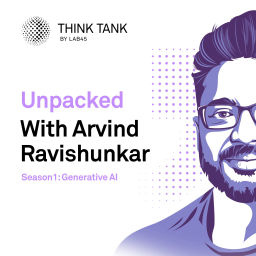
In this series, Unpacked, I explore and unpack the most important concepts that business leaders need to know about emerging technologies. I connect with reputed scholars, industry experts and leaders through conversations. I also do short 5 min episodes on key concepts. I am your host Arvind Ravishunkar and this is Season 1 : Generative AI
Contact Unpacked
- Guest appearances
- Books guests
Based on episode analysis; this does not confirm that the show is currently accepting guests.
Host of Unpacked?
Claim your podcast to manage its listing and keep your show details accurate.
Pod Engine is an independent podcast discovery and analytics service and is not affiliated with or endorsed by this podcast. Artwork and show content belong to their owners. Full legal notice.
Explore this show
Podcast research with Pod Engine