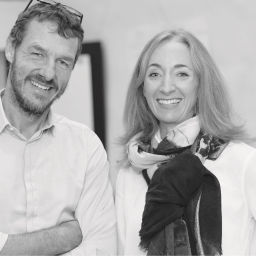
Executive coaches Pia & Bart on living deliberately. Real conversations for leaders and entrepreneurs — about work, relationships, health, and everything else that matters.
Years ago we used a simple picture in our leadership programmes: the human battery. It has a capacity, it charges, it runs down, and sometimes it leaks. The leak is the part we find most interesting. It's the unresolved conflict, the decision you keep reopening, the email you've read fifteen times and still not answered. None of it looks like work, yet it drains you all the same. We dust the model off, along with the Harvard Business Review line we used to hand out, that energy rather than time is what performance really runs on.
We talk about how the physical, mental, emotional and spiritual batteries pull on each other. A hard gym session after a day of vibe coding leaves the body tired and the head clear. The end of summer comes as a relief to two introverts who have been out and about for weeks. We compare our own leaks, from a nagging injury to 3 a.m. wake-ups to grief after losing a close friend, and own up to our "false friends": the glass of wine, the chocolate, the Netflix evening that feels like rest but doesn't top anything up. Spiritual energy turns out to be the one we're least sure about, and possibly a blind spot. We finish with a small habit worth trying: ask yourself how charged you are when you wake up, check again later in the day, and let that answer, rather than the gaps in your calendar, decide what you say yes to.
27 Aug 2026
Solitude vs Loneliness
We open by untangling three words that are often conflated but point to very different experiences: alone, lonely, and in solitude. Being alone is neutral — a simple fact of circumstance. Loneliness is an unwanted emotional state, a signal that connection is missing. Solitude is something else entirely — an intentional inner state that can happen just as easily in a crowded airport as in an empty room. We share personal examples of loneliness that stay with us precisely because they were so unexpected: feeling like a lost child in a Manila hotel room shortly after losing a mother, and feeling disconnected in a room full of friends — slipping away to the bathroom not to escape people, but to find yourself again.
We explore loneliness as a signal with a function — much like hunger points you toward food, loneliness points you toward belonging and authentic connection. We discuss why some of the most connected people on earth — CEOs, celebrities, leaders — can feel profoundly lonely, drawing on the concept of loneliness at the top and the particular isolation of never quite knowing whether people are with you for who you are or what you represent. And we examine solitude as its own practice: how introverts and extroverts experience it differently, why the phone is often a bigger obstacle to true solitude than other people, and why being surrounded by noise and movement can sometimes make going inward easier, not harder. We close with two invitations: if loneliness shows up, stay with it long enough to hear what it's telling you — and if solitude appeals, try it somewhere unexpected.
31 Jul 2026
80. Intuition
We open with a reference to The Celestine Prophecy — James Redfield's novel built entirely around a man guided through Peru by intuition and meaningful coincidence — as the perfect entry point into a conversation about what intuition actually is, where it comes from, and how to trust it. We explore the science first: the gut and heart each contain their own neural networks, in constant dialogue with the brain, sending signals that shape our emotions and decisions in ways we rarely consciously register. Intuition, we suggest, may be the subconscious mind surfacing the intelligence of thousands of past experiences we can no longer consciously recall.
We discuss how intuition is accessed — through slowing down, presence, and creating space — and how it gets blocked when we are over-stimulated, over-scheduled, and over-reliant on analysis. We explore synchronicity as one of the richest languages of intuition: what it means to stay open to meaningful coincidence, how to sit with the harder question of what a synchronicity is actually trying to tell you, and how the meaning we choose to make from these moments can itself become generative. We share personal examples — from a spontaneous trip to Valencia to a carefully considered decision made far from home — where intuition was the first and sometimes only nudge needed. We close with an invitation to experiment: lead with intuition, test it with your thinking mind where needed, and notice what happens when you trust the signal before you talk yourself out of it.
Reach and audience
Public platform figures. Ratings count people who left a rating, not total listeners.
Apple Podcasts (US)
5.0 / 5
1 ratings
Spotify
4.9 / 5
9 ratings
Podcast Authority Score: 37 / 100
A composite of feed quality, social presence, YouTube performance and engagement. Read the methodology.
Quality
46
Social presence
0
YouTube
0
Engagement
68
Contact Vidya by Pia & Bart
Guest appearances
Books guests
Based on episode analysis; this does not confirm that the show is currently accepting guests.
Questions about Vidya by Pia & Bart
Who hosts Vidya by Pia & Bart?
Bart and Pia host the show. Published by Pia & Bart.
How often do new episodes come out?
The show publishes monthly, based on its RSS feed.
Does Vidya by Pia & Bart take guests?
Yes. Guests have been identified in episode analyses.
Host of Vidya by Pia & Bart?
Claim your podcast to manage its listing and keep your show details accurate.
Pod Engine is an independent podcast discovery and analytics service and is not affiliated with or endorsed by this podcast. Artwork and show content belong to their owners. Full legal notice.
Explore this show Podcast research with Pod Engine