Hi! My name is Karolína and I'm a virology PhD student. And because I believe virology is full of fascinating stories, I decided to share some of them. Join me on a journey to the world of viruses, dangerous epidemics and unexpected scientific discoveries. :)
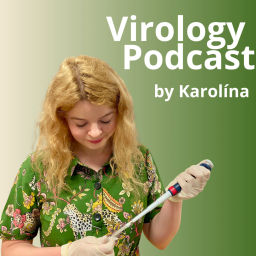
Virology Podcast by Karolina
Claim This Podcastby Karolína Štaflová
5.0(15 reviews)
9 episodes
Updated Bi-weekly
Accepts GuestsHas SponsorsLocation 🇨🇿
31
Podcast Authority
BetaPoorBased on show quality, social media presence, reviews, charts, and more

Quality38
Social0
YouTube0
Engagement60
Podcast Overview
Hi! My name is Karolína and I'm a virology PhD student. And because I believe virology is full of fascinating stories, I decided to share some of them. Join me on a journey to the world of viruses, dangerous epidemics and unexpected scientific discoveries. :)
Language
🇺🇲
Publishing Since
1/8/2024
Unlock The Full Podcast Authority Score Report
See how your podcast performs across key metrics
31
Podcast Authority
BetaPoorBased on show quality, social media presence, reviews, charts, and more
Quality38
Social0
YouTube0
Engagement60
7
Excellent Areas
1
Good Performance
11
Growth Opportunities
excellent
Episode Length
20 minutes
Performing excellently!
good
iTunes Tags
6.5/10
Recommendations available
Unlock the full report to see detailed tips
poor
Publishing Consistency
Every 69 days
Recommendations available
Unlock the full report to see detailed tips
+16 More Metrics
Unlock comprehensive insights including:
- • YouTube presence analysis
- • Social media reach metrics
- • RSS compliance scoring
- • Podcast 2.0 features
- • Technical standards
What's Included in Your Full Report
Detailed Analytics
- Complete breakdown of all 19 authority metrics
- Personalized recommendations for each metric
- Industry benchmarks and comparisons
- Technical RSS feed analysis and compliance scoring
Growth Strategies
- Step-by-step action plans for improvement
- Quick wins to boost your score immediately
- Pro tips from successful podcasters
Get your free podcast insights report
See how your show performs across every key metric
Instant delivery
No spam
Attract Better Guests
High authority scores make your podcast more attractive to industry leaders and influencers who want to appear on credible shows.
Secure Sponsorships
Sponsors look for podcasts with proven authority and engagement. Your score demonstrates your podcast's value to potential partners.
Grow Your Audience
Understanding your strengths and weaknesses helps you make data-driven decisions to expand your listener base effectively.
1 verified contact email on file for Virology Podcast by Karolina
Pitch yourself as a guest, propose sponsorships, or reach out directly to the host.
Recent Episodes
April 21, 2026
9: Phage Therapy
<p>Maybe you’ve had the experience of being sick, and your doctor struggling to find the right antibiotics to treat your infection. Or maybe you had to restart your treatment with different antibiotics because the first ones didn’t work.</p><p><br></p><p>Situations like this are becoming more and more common, as antibiotic-resistant bacteria continue to spread. At the same time, new antibiotics are being developed very slowly.</p><p><br></p><p>So the question is: could there be another solution?</p><p>Another way to treat bacterial infections?</p><p><br></p><p>One possibility is to use the natural predators of bacteria: viruses that specifically infect bacteria and destroy them. And what might surprise you is that this is not some futuristic idea. It’s an approach that has already been used to successfully treat patients, and it was developed more than a hundred years ago.</p><p><br></p><p>As you probably guessed by now (and, well… as the title says), today’s episode is all about phage therapy.</p><p>*</p><p>If you enjoyed this episode and want to stay updated on more virology stories, please follow @virology_podcast or @karolina_science on Instagram :). The podcast is also available in Czech as “Podcast o virech”.</p><p>*</p><p>Sources: </p><p>L. Zeldovich, 2024: The Living Medicine • A. Oromí-Bosch, 2023: Developing Phage Therapy That Overcomes the Evolution of Bacterial Resistance • S. A. Strathdee, 2019: The Perfect Predator • S. Uyttebroek, 2022: Safety and efficacy of phage therapy in difficult-to-treat infections: a systematic review • S. Arientová, 2025: Successful systemic phage therapy for implant-associated MRSA spondylodiscitis • S. A. Strathdee, 2023: Phage therapy: From biological mechanisms to future directions • G. F. Hatfull, 2021: Phage Therapy for Antibiotic-Resistant Bacterial Infections • Q. Yang, 2023: Regulations of phage therapy across the world • J. P. Pirnay, 2018: The Magistral Phage • R. Larcher, 2025: Phage therapy in patients with urinary tract infections: a systematic review • S. Djebara, 2025: Implementation challenges of personalised phage therapy • L. H. Lang, 2006: FDA approves use of bacteriophages to be added to meat and poultry products • D. A. Schofield, 2011: 'Bioluminescent' reporter phage for the detection of Category A bacterial pathogens</p>
July 13, 2025
8: Measles
<p>We all know the story. When Europeans set sail for the so-called “New World”, they didn’t just bring ships and cargo - they also brought deadly diseases. They introduced pathogens into regions where no one had ever encountered them before. And in some areas, these outbreaks wiped out between 50–90% of local populations within just a few years. Most of us can name the usual suspects—smallpox or influenza… But fewer people realize that measles was nearly as deadly. In fact, historians often rank measles as the second deadliest of the imported epidemics. And in today’s episode, we’re diving into everything measles.</p><p>You probably already know to be cautious, when somebody calls measles a harmless childhood disease. But how dangerous measles really is? And how common are the serious complications?</p><p>Spoiler alert: it’s far from innocent.</p><p>*</p><p>If you enjoyed this episode and want to stay updated on more virology stories, please follow @virology_podcast or @karolina_science on Instagram :). The podcast is also available in Czech as “Podcast o virech”.</p><p>*</p><p>Sources: </p><p>A. Ratner, 2025: Booster Shots: The Urgent Lessons of Measles and the Uncertain Future of Children's Health • J.M. Hübschen, 2022: Measles • P.M. Strebel, 2019: Measles • D.E. Griffin, 2018: Measles Vaccine • A. Lo Vecchio, 2021: Vitamin A in Children Hospitalized for Measles in a High-income Country • J.P. Byrne, 2022: Encyclopedia of Pestilence, Pandemics, and Plagues; chapter: Measles in the colonial Americas • M.J. Mina, 2019: Measles virus infection diminishes preexisting antibodies that offer protection from other pathogens • S. Xia, 2022: Assessing the Effects of Measles Virus Infections on Childhood Infectious Disease Mortality in Brazil • C.S. Benn, 2023: Measles vaccination and reduced child mortality: Prevention of immune amnesia or beneficial non-specific effects of measles vaccine? • WHO measles, mumps, rubella fact sheets (online, accessed 13/04/2025) • B. Deer, 2011: How the case against the MMR vaccine was fixed; 2020: The Doctor Who Fooled the World</p>
March 23, 2025
7: The Discovery of Giant Viruses
<p>When people think about viruses, one of the first things that comes to mind is that they’re small. And to be honest, that's how I would describe them too. I mean, that’s how we discovered viruses in the first place: they passed through filters that trapped bacteria, so we knew this infectious substance had to be smaller than any known cell.</p><p>So when scientists came across the very first giant virus, they naturally assumed it must be a brand-new bacterium. In fact, this “mystery microbe” spent nearly a decade in a freezer before anyone realized it wasn’t a bacterium at all. </p><p>This discovery opened the door to an entirely new world of giant viruses, which had gone unnoticed simply because no one was looking for something so large in the virus realm. And it also raised an important question that remains controversial: If some of these giant viruses cause disease in humans?</p><p>*</p><p>If you enjoyed this episode and want to stay updated on more virology stories, please follow @virology_podcast or @karolina_science on Instagram :). The podcast is also available in Czech as “Podcast o virech”.</p><p>*</p><p>Sources: </p><p>B. La Scola, 2003: A giant virus in amoebae • C. Abergel, 2015: The rapidly expanding universe of giant viruses: Mimivirus, Pandoravirus, Pithovirus and Mollivirus • N. Brandes, 2019: Giant Viruses—Big Surprises • D. R. Wessner, 2010: Discovery of the Giant Mimivirus • B. La Scola, 2008: The virophage as a unique parasite of the giant mimivirus • F. Sakhaee, 2022: Detection of Mimivirus from respiratory samples in tuberculosis‑suspected patients • J. M. Claverie, 2018: Mimiviridae: An Expanding Family of Highly Diverse Large dsDNA Viruses Infecting a Wide Phylogenetic Range of Aquatic Eukaryotes • D. Raoult, 2006: Laboratory infection of a technician by mimivirus • N. Yutin, 2014: Origin of giant viruses from smaller DNA viruses not from a fourth domain of cellular life • M. Khan, 2007: Pneumonia in mice inoculated experimentally with Acanthamoeba polyphaga mimivirus • T. J. Rowbotham, 1983: Isolation of Legionella pneumophila from clinical specimens via amoebae, and the interaction of those and other isolates with amoebae • D. Raoult, 2007: The discovery and characterization of Mimivirus, the largest known virus and putative pneumonia agent • A. Levasseur, 2016: MIMIVIRE is a defence system in mimivirus that confers resistance to virophage • J. M. Claverie, 2016: CRISPR-Cas-like system in giant viruses: why MIMIVIRE is not likely to be an adaptive immune system • J. Abrahao, 2018: Lack of evidence of mimivirus replication in human PBMCs</p>
9 total episodes available
Deep-dive analytics for Virology Podcast by Karolina
Frequently asked questions
Have a different question and can't find the answer you're looking for? Reach out to our support team by sending us an email and we'll get back to you as soon as we can.
- What is Virology Podcast by Karolina?
- How often does this podcast release new episodes?
This podcast updates bi-weekly.
- Where can I listen to this podcast?
This podcast is available on 8 platforms including Apple Podcasts, Spotify, and more. You can also use the RSS feed directly.
- Does this podcast accept guests?
Yes, this podcast regularly features guests.
Legal Disclaimer
Pod Engine is not affiliated with, endorsed by, or officially connected with any of the podcasts displayed on this platform. We operate independently as a podcast discovery and analytics service.
All podcast artwork, thumbnails, and content displayed on this page are the property of their respective owners and are protected by applicable copyright laws. This includes, but is not limited to, podcast cover art, episode artwork, show descriptions, episode titles, transcripts, audio snippets, and any other content originating from the podcast creators or their licensors.
We display this content under fair use principles and/or implied license for the purpose of podcast discovery, information, and commentary. We make no claim of ownership over any podcast content, artwork, or related materials shown on this platform. All trademarks, service marks, and trade names are the property of their respective owners.
While we strive to ensure all content usage is properly authorized, if you are a rights holder and believe your content is being used inappropriately or without proper authorization, please contact us immediately at hey@podengine.ai for prompt review and appropriate action, which may include content removal or proper attribution.
By accessing and using this platform, you acknowledge and agree to respect all applicable copyright laws and intellectual property rights of content owners. Any unauthorized reproduction, distribution, or commercial use of the content displayed on this platform is strictly prohibited.