
Welcome to "Borderlands", a multi-episode podcast about the US-Mexico migration border policies and their impact on communities living in the borderlands, in one of the most militarized, controlled and deadly counties of the border: Pima county, in the State of Arizona.
Welcome to Borderlands
Claim This Podcastby Welcome to Borderlands
5.0(1 reviews)
7 episodes
Updated Daily
Accepts GuestsHas SponsorsLocation 🇺🇸
Podcast Overview
Welcome to "Borderlands", a multi-episode podcast about the US-Mexico migration border policies and their impact on communities living in the borderlands, in one of the most militarized, controlled and deadly counties of the border: Pima county, in the State of Arizona.
Language
🇺🇲
Publishing Since
5/17/2022
1 verified contact email on file for Welcome to Borderlands
Pitch yourself as a guest, propose sponsorships, or reach out directly to the host.
Recent Episodes
July 6, 2022
Episode 6 - Missing person: identification process
Hi everyone!!! Welcome to "Borderlands", a multi-episode podcast about the US-Mexico migration border policies and their impact on borderlands communities, in one of the most militarized, controlled and deadly counties of the border: Pima county, in the State of Arizona. I’d like in this new episode to reflect on what happens to those whom the desert has engulfed. For some of them, their bodies will be found by hikers, hunters, ranchers, Tohono O’Odham nation members, by people living in the Borderlands. For others, the desert, its climate and its fauna will take care of erasing their traces in the upcoming days and they could be lost forever. It’s impossible to say exactly how many people have died trying to cross the border through the Arizonian Sonoran Desert or how many bodies of people are currently there without having been recovered to date. The figures available are those meticulously kept by the PCOME, the Pima County Office of the Medical Examiner. Since the 90’s, the PCOME, based in Tucson, have recorded the cases that pass through these services, which represent a good part of the border between Arizona and Mexico. According to these figures, between 1990 and March 2022, 3624 people died trying to cross the US Mexico border in Pima County, Arizona. 64% have been identified by the PCOME. At the end of 2021, 1244 people remain to be identified. This sixth episode will focus on the different key players intervening in the identification process of people found dead in the desert of Sonora. A warning, this episode may contain parts that are difficult to listen to. Once pointed at lost souls, the desert, its climate and its fauna can descend without warning and erase the traces of a body in a few days. No words can soften the planned and unjust violence of what is playing out in the Sonoran Desert. In this episode we’ll listen to officials, practitioners, NGOs, researchers working on the identification process in Pima county, Arizona. Let’s begin with Mario AGUNDEZ, border patrol missing migrant program’s coordinator for the Tucson sector. He explains the missing migrant program of the border patrol agency…The Border Patrol missing migrant program works in partnership with different institutions… Let’s continue to listen to Mario Agundez talking about the work with the PCOME, Pima county office of the medical examiner… (...) Thank you for following “Borderlands” … a multi-episode podcast about the US-Mexico migration border policies and their impact on communities …and don’t forget: this episode was mixed by Nicolas Puissant. Merci Nico! Speakers of Episode #6: Mario AGUNDEZ, border patrol missing migrant program’s coordinator for the Tucson sector Jason de Leon, Professor of anthropology at UCLA (University of California in Los Angeles), president of the Colibrí center for human rights and executive director of the undocumented migration project Robin Reineke, Assistant Research Social Scientist at the University of Arizona’s Southwest Center. Mirza Monterosso, Director of the DNA/missing migrant project at the Colibrí center for human rights, as Enrique Gomez Montiel, Deputy consul of the Consulate of Mexico in Tucson Greg Hess, Forensic pathologist and chief Medical examiner of the PCOME.
June 29, 2022
Episode 5 - Missing person: Families and supports’ struggles
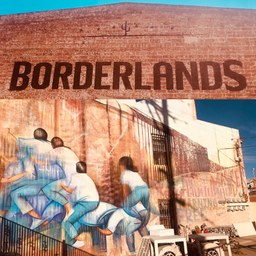
Hi everyone!!! Welcome to "Borderlands", a multi-episode podcast about the US-Mexico migration border policies and their impact on communities living in the borderlands, in one of the most militarized, controlled and deadly counties of the border: Pima county, in the State of Arizona. This fifth episode will focus on Missing persons, families and supporters’ struggles to know the truth about their loved ones and also artists and researchers trying to raise the question of the missing at the borders. In the previous episode, we noted the lack of official’s response in terms of search and rescue of people in distress in the desert. At the origin and at the heart of search and rescue actions, you have families and relatives who fight daily to find their loved ones. Often with no response from the authorities, they organize themselves. All over the world, families are mobilizing and looking for their missing loved ones along the migratory route. This search can take years. Sometimes, no persons are found. It leaves loved ones in limbo, impacting their daily lives, physically and psychologically. We speak of “ambiguous loss” in the language of psychology. Pauline Boss, a professor emeritus in the department of family social science at the University of Minnesota, was the one who conceptualized the ambiguous loss in the 70’s. The loss has long term consequences on living ones. Families organize themselves in different ways around the world, as an independent collective, as in Mexico, for example, where they struggle on a daily basis to obtain answers from the authorities, to push them to change their practices. They are getting closer to structures that support them, such as the Argentine Forensic Anthropology Team or La Fundacion para la Justicia, for instance. In the United States, they contact different organizations to help them. One, based in Tucson, is central: the Colibrí center for human rights. Families have created their own mobilization network within this structure. Other forms of mobilization exist, those of family’s supporters. For more than 20 years, people in the city of Tucson have come together to commemorate those who have disappeared and died in the Sonoran Desert. There are also artists who try to make visible what happens for migrants in the desert. Alvaro Encizo, artist based in Tucson, has different projects, “where dreams die”, is one dedicated to put secular crosses in the Sonoran desert where people were found dead. Alvaro Encizo shows that the American dream seems not to be for everybody. Making things more visible, more accessible. Artists and researchers use technology and public access tools to make visible the consequences of the US border regime on people who try to cross without authorization. This fifth episode shows us how families and their supporters take different actions in the search of truth. Episode #6 will talk about the different key players intervening in the identification process of the remains found in the desert of Sonora. Thank you for following “Borderlands” … a multi-episode podcast about the US-Mexico migration border policies and their impact on communities…See you soon… and don’t forget: this episode was mixed by Nicolas Puissant. Speakers of Episode #5: Perla Torres, family network’s director at the Colibrí Center for Human Rights. Robin Reineke, Assistant Research Social Scientist at the University of Arizona’s Southwest Center. Isabel Garcia, La Coalicion de Derechos humanos. Alvaro Enciso, artist Alyssa Quintinilla, a researcher, who did her PhD in critical studies at the University of Pittsburg. Credits: Borderlands is a podcast by Eva Ottavy, mixed by Nicolas Puissant. Music: Dusty Sun by Serj Anto. Graphic Identity by Eva Ottavy (Borderlands brewery’s front in Tucson-Arizona and “Chinche al agua”, a mural painting of Victor “Mask” Casas in El Paso-Texas)
June 22, 2022
Episode 4 - Search and Rescue, civil responses
Hi everyone!!! Welcome to "Borderlands", a multi-episode podcast about the US-Mexico migration border policies and their impact on communities, in one of the most militarized, controlled and deadly counties of the border: Pima county, in the State of Arizona. This fourth episode will focus on several civil responses in terms of water, supplies and search and rescue needs. Witnesses of the border brutalities, people living in the borderlands have been mobilized since the end of the 70’s. For the past 40 years, many actors come to the direct aid of people who attempt to cross this border. From demonstration or water and deposits in the desert to rescue operations and links with families searching for a missing loved one, different communities and groups are fighting against the border regime. In the beginning of the 2000’s, deaths and disappearances were rising in the borderlands. Based on the Pima County Office of the Medical Examiner statistics of where the bodies of people who tried to cross were found, a group of people decided to put water station in the desert, trying to prevent death. This organization, Humane Borders, placed 48 water stations in the borderlands. Humane border water stations have been placed in the desert, on dirty roads accessible by car. In 2002, a new organization was created, the Tucson Samaritans, in order to drop water deeper in the desert. As the situation for people who tried to cross in the borderlands got worse and worse, in 2004, a coalition of activists set up No More Deaths, to operate on a daily basis in the desert of Sonora. No More Deaths volunteers have been sued for their action on the field. Besides organizations based in Tucson and more broadly in Arizona, you also have several groups of people coming from California every weekends, trying to find people lost in the desert of Sonora. Contacted by families and relatives of people who cross the US Mexico border, those groups with information shared by the relatives look for the missing people. There are several Search and Rescue groups like this: The Aguilas del desierto, Armadillos …. This fourth episode shows us the multiple ways of action in the Sonora desert regarding people who try to cross without authorization, including missing persons. At the origin and at the heart of these actions, you have relatives who fight daily to find their loved ones. Often with no response from the authorities, they organize themselves... Thank you for following “Borderlands” … a multi-episode podcast about the US-Mexico migration border policies and their impact on communities…See you soon… and don’t forget: this episode was mixed by Nicolas Puissant. Speakers of Episode #4: Isabel Garcia, La Coalicion de derechos humanos Rebecca Fowler, administrator of Humane Borders Gail Kocourek, in charge of media and education for the Tucson Samaritans Parker Deighan, volunteer and coordinator of the No more deaths abuse documentation group Gerardo campos, Paralelo 31/Parallel 31, a search and rescue group Glossary episode #4: GAO: General attorney office Read more episode #4 La Coalicion de derechos humanos : https://derechoshumanosaz.net/ Humane Borders : https://humaneborders.org/ The Tucson Samaritans: http://www.tucsonsamaritans.org/ No More Deaths/No Mas Muertes: https://nomoredeaths.org/en/ Paralelo 31/Parallel 31: https://www.facebook.com/parallel31sar/ Aguilas del desierto: https://aguilasdeldesierto.org/ Armadillos: https://www.niunmigrantemenos.org/ The Batallion Search and Rescue: https://battalionsar.com/ The teaser of “Borderlands” podcast available (2’30): https://soundcloud.com/eva-ottavy/borderlands-podcast-teaser Credits: Borderlands is a podcast by Eva Ottavy, mixed by Nicolas Puissant. Music: Dusty Sun by Serj Anto. Graphic Identity by Eva Ottavy (Borderlands brewery’s front in Tucson-Arizona and “Chinche al agua”, a mural painting of Victor “Mask” Casas in El Paso-Texas)
7 total episodes available
Deep-dive analytics for Welcome to Borderlands
Frequently asked questions
Have a different question and can't find the answer you're looking for? Reach out to our support team by sending us an email and we'll get back to you as soon as we can.
- What is Welcome to Borderlands?
- How often does this podcast release new episodes?
This podcast updates daily.
- Where can I listen to this podcast?
This podcast is available on 4 platforms including Apple Podcasts, Spotify, and more. You can also use the RSS feed directly.
- Does this podcast accept guests?
Yes, this podcast regularly features guests.
Legal Disclaimer
Pod Engine is not affiliated with, endorsed by, or officially connected with any of the podcasts displayed on this platform. We operate independently as a podcast discovery and analytics service.
All podcast artwork, thumbnails, and content displayed on this page are the property of their respective owners and are protected by applicable copyright laws. This includes, but is not limited to, podcast cover art, episode artwork, show descriptions, episode titles, transcripts, audio snippets, and any other content originating from the podcast creators or their licensors.
We display this content under fair use principles and/or implied license for the purpose of podcast discovery, information, and commentary. We make no claim of ownership over any podcast content, artwork, or related materials shown on this platform. All trademarks, service marks, and trade names are the property of their respective owners.
While we strive to ensure all content usage is properly authorized, if you are a rights holder and believe your content is being used inappropriately or without proper authorization, please contact us immediately at hey@podengine.ai for prompt review and appropriate action, which may include content removal or proper attribution.
By accessing and using this platform, you acknowledge and agree to respect all applicable copyright laws and intellectual property rights of content owners. Any unauthorized reproduction, distribution, or commercial use of the content displayed on this platform is strictly prohibited.