
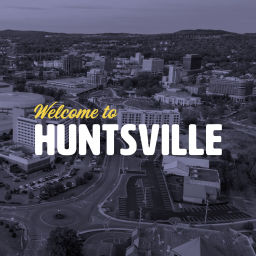
Welcome to Huntsville (formerly Housing for Huntsvillians)
Claim This PodcastPodcast Overview
<p>Formerly <em>Housing for Huntsvillians </em>,this podcast chronicles one couple’s quest to eliminate homelessness in their hometown by August 2026.</p> <p>Huntsville, Alabama is one of the best places to live in large part due to how far your paycheck goes here. But, all that is changing as housing costs have skyrocketed over the past five years. And as housing prices rise, rates of homelessness are rising too.</p> <p>Huntsville is hardly alone. Rates of homelessness are skyrocketing in growing cities across the US.</p> <p>The reason is simple. In high-growth cities, housing costs are rising faster than paychecks.<br /> According to The Council of Economic Advisers, poverty researchers, and advocates, the cost of housing is, by far, the biggest contributor to rising homelessness.</p> <p>A recent landmark report from the Benioff Homelessness and Housing Initiative at the University of California, San Francisco, draws from nearly 3,200 questionnaires and 365 in-depth interviews. It’s the single deepest study on homelessness in America in decades, the largest representative study of homelessness since the mid-1990s, and the first large-scale representative study to use mixed methods (surveys and in-depth interviews). According to the authors, “High housing costs and low income left participants vulnerable to homelessness.” And high housing costs keep unhoused people unhoused. “While participants faced many barriers to returning to housing, the primary one was cost,” the authors write.</p> <p>Mental health, addiction, and disability do make it more difficult for a person to afford housing. But they do not cause homelessness. We’re creating far more homeless people every day in this country than the much slower rise in mental illness, addiction, or disability can explain. What causes homelessness is not being able to afford a home.</p> <p>Huntsville is hardly alone. Cities across the US are facing severe nationwide housing crises. Nationwide, half of renters must spend more than 30 percent of their income on housing.<br /> This is a direct result of cities severely underbuilding housing.</p> <p>We know housing prices create and exacerbate homelessness nationwide. But just looking at Huntsville, we can see that both housing prices and the number of homeless individuals both began to rise around 2016. Today, Huntsville is home to an estimated 600 unhoused people.</p> <p>Since at least 2016, Huntsville’s population has been growing faster than we’ve built new homes – just like in San Francisco, Seattle, Denver, and Austin have been doing for far longer. And just like in those cities, high rents have priced residents out of their homes and onto the streets, spiking homelessness too.</p> <p>Between 2000-2020 Huntsville added 57,000 new residents but built fewer than 10,000 new units of housing. When demand rises faster than supply, prices rise. If projections are correct, Huntsville will end up having added 28,089 new units of housing between 2004 and 2024. But even that isn’t going to be enough to lower average rents.</p> <p>The only way to lower average housing costs in Huntsville is to build far more abundant, affordable, dense new housing.</p> <p>There will always be a small percentage of the population who, due to physical and/or mental challenges, cannot manage to secure and maintain housing without assistance. But we’re not seeing rates of homelessness grow at an alarming pace because so many more people are suddenly facing crippling illness. What they’re suddenly facing is rising rents and stagnant incomes. And in nearly every case, homelessness creates or worsens physical illness, mental illness, and addiction, not the other way around.</p> <p>While it’s true that labor and materials have become more expensive, the primary reason for rising housing prices and rising homelessness is a simple one: Supply and demand. All else equal, when demand outstrips supply, prices rise. And when supply outstrips demand, prices fall.</p> <p>That data is clear that when cities build more homes, average rents decrease. That’s what happened in Seattle and the Navy Yard neighborhood of Washington, D.C. We can see supply and demand impacting housing prices through the fact that rents fell in expensive cities after people left during the pandemic.</p> <p>Building more dense housing means everyone pays less for shelter, which frees up resources and alleviates stress for families across Huntsville.</p> <p>But that’s only the beginning.</p> <p>Denser, more affordable housing positively impacts nearly every area of life. The research shows that abundant, affordable, dense new housing reduces rates of poverty and homelessness. Building new housing reduces income and health inequalities. It narrows the racial wealth gap, reduces racial and economic geographical segregation, and helps close gaps in racial education outcomes.</p> <p>Dense, abundant, affordable housing benefits the environment, promotes public health, and boosts economic growth. It even increases fertility.</p> <p>And it reduces costs for city services.</p> <p>And that’s just how new homes help Huntsvillians. But the benefits don’t stop there. Building new homes in Huntsville will help the full quarter of the US population living in what researchers call “areas of low economic opportunity” where opioid addiction, diabetes, stroke, heart attacks, and high blood pressure and “deaths of despair” are rampant. “Where one lives shapes when one dies,” writes Derek Thompson. Refusing to build condemns who weren’t born into thriving cities to miserable lives and early deaths.</p> <p>If you want to eliminate homelessness in Huntsville, or wherever you live, subscribe to Housing for Huntsvillians, the Podcast, today.</p>
Language
🇺🇲
Publishing Since
8/2/2023
1 verified contact email on file for Welcome to Huntsville (formerly Housing for Huntsvillians)
Pitch yourself as a guest, propose sponsorships, or reach out directly to the host.
Recent Episodes
March 6, 2024
Mandy Kilgore on Community of Hope, Homelessness, and Holistic Support
<p>This week we are joined by Mandy Kilgore from Community of Hope, an organization aiming to address homelessness in Huntsville by creating a master-planned community with mental health services, addiction therapy, and workforce development.</p> <p>Read more and watch the video version of this episode at <a href="https://hsvyimby.com/podcast/community-of-hope">https://hsvyimby.com/podcast/community-of-hope</a></p> <p>To learn more about Community of Hope, visit <a href="https://hsvcommunityofhope.org/" target="_blank" rel="noopener">https://hsvcommunityofhope.org/</a></p>
February 21, 2024
We’re moving in a new direction
<p>In this episode we announced the launch of Huntsville YIMBY and why we’re starting a new non-profit chapter (hint: it’s fundraising). We also talked about what’s next for Housing for Huntsvillians. We’re going in a new direction. Namely, we’re changing our name to Welcome to Huntsville and broadening our focus. Stay tuned!</p>
February 14, 2024
More than you ever wanted to know about guardianships
<p dir="ltr">For this episode of the <a href="https://hsvyimby.com/podcast/" target="_blank" rel="noopener" data-saferedirecturl="https://www.google.com/url?q=https://hsvyimby.com/podcast/&source=gmail&ust=1707990110268000&usg=AOvVaw1QXT63qiAaG3-zM5mFBUvm">pod</a> we were joined, once <a href="https://hsvyimby.com/podcast/zach-anderson-on-section-8-expansion/" target="_blank" rel="noopener" data-saferedirecturl="https://www.google.com/url?q=https://hsvyimby.com/podcast/zach-anderson-on-section-8-expansion/&source=gmail&ust=1707990110268000&usg=AOvVaw183zSaJnwVa2H2yfkMhTKh">again</a>, by elder law attorney Zach Anderson of <a href="https://andersonprotection.com/" target="_blank" rel="noopener" data-saferedirecturl="https://www.google.com/url?q=https://andersonprotection.com/&source=gmail&ust=1707990110268000&usg=AOvVaw33dfmy2kNAlkLxBNf9BcDb">Anderson Estate Planning</a>.</p> <p dir="ltr">The idea that mental illness is the main cause of homelessness is a myth that persists despite copious <a href="https://homelessnesshousingproblem.com/" target="_blank" rel="noopener" data-saferedirecturl="https://www.google.com/url?q=https://homelessnesshousingproblem.com/&source=gmail&ust=1707990110269000&usg=AOvVaw2l9s0_YJPRTijIeXhe099Z">research</a> debunking it.</p> <p dir="ltr">But there is a relationship between mental illness and homelessness. For example, all else equal, people with severe mental illness are more likely to experience homelessness. Also, homelessness causes and exacerbates existing mental illness. Most importantly for this discussion, simply building enough housing to meet demand would solve homelessness for the vast majority of people. Cash assistance would keep the vast majority of extremely low-income families out of homelessness. But for a very small percentage of the population, severe mental illness and/or addiction prohibits them from being able to stay housed even with cheaper housing and cash assistance.</p> <p dir="ltr">This conversation follows up on our <a href="https://hsvyimby.com/podcast/mike-tanner-on-five-policies-that-actually-reduce-homelessness/" target="_blank" rel="noopener" data-saferedirecturl="https://www.google.com/url?q=https://hsvyimby.com/podcast/mike-tanner-on-five-policies-that-actually-reduce-homelessness/&source=gmail&ust=1707990110269000&usg=AOvVaw2C5WquG9qik1QvfYAzBX_X">interview with Mike Tanner</a> about conservatorship. We discuss with Zach how the law defines guardianship/conservatorship, who’s eligible, and the legal mechanisms that are in place, and need to be in place, to protect these individuals from the harms of homelessness. It was an extremely enlightening conversation for me, and I hope you enjoy it as well.</p>
30 total episodes available
Deep-dive analytics for Welcome to Huntsville (formerly Housing for Huntsvillians)
Frequently asked questions
Have a different question and can't find the answer you're looking for? Reach out to our support team by sending us an email and we'll get back to you as soon as we can.
- What is Welcome to Huntsville (formerly Housing for Huntsvillians)?
<p>Formerly <em>Housing for Huntsvillians </em>,this podcast chronicles one couple’s quest to eliminate homelessness in their hometown by August 2026.</p> <p>Huntsville, Alabama is one of the best places to live in large part due to how far your paycheck goes here. But, all that is changing as housing costs have skyrocketed over the past five years. And as housing prices rise, rates of homelessness are rising too.</p> <p>Huntsville is hardly alone. Rates of homelessness are skyrocketing in growing cities across the US.</p> <p>The reason is simple. In high-growth cities, housing costs are rising faster than paychecks.<br /> According to The Council of Economic Advisers, poverty researchers, and advocates, the cost of housing is, by far, the biggest contributor to rising homelessness.</p> <p>A recent landmark report from the Benioff Homelessness and Housing Initiative at the University of California, San Francisco, draws from nearly 3,200 questionnaires and 365 in-depth interviews. It’s the single deepest study on homelessness in America in decades, the largest representative study of homelessness since the mid-1990s, and the first large-scale representative study to use mixed methods (surveys and in-depth interviews). According to the authors, “High housing costs and low income left participants vulnerable to homelessness.” And high housing costs keep unhoused people unhoused. “While participants faced many barriers to returning to housing, the primary one was cost,” the authors write.</p> <p>Mental health, addiction, and disability do make it more difficult for a person to afford housing. But they do not cause homelessness. We’re creating far more homeless people every day in this country than the much slower rise in mental illness, addiction, or disability can explain. What causes homelessness is not being able to afford a home.</p> <p>Huntsville is hardly alone. Cities across the US are facing severe nationwide housing crises. Nationwide, half of renters must spend more than 30 percent of their income on housing.<br /> This is a direct result of cities severely underbuilding housing.</p> <p>We know housing prices create and exacerbate homelessness nationwide. But just looking at Huntsville, we can see that both housing prices and the number of homeless individuals both began to rise around 2016. Today, Huntsville is home to an estimated 600 unhoused people.</p> <p>Since at least 2016, Huntsville’s population has been growing faster than we’ve built new homes – just like in San Francisco, Seattle, Denver, and Austin have been doing for far longer. And just like in those cities, high rents have priced residents out of their homes and onto the streets, spiking homelessness too.</p> <p>Between 2000-2020 Huntsville added 57,000 new residents but built fewer than 10,000 new units of housing. When demand rises faster than supply, prices rise. If projections are correct, Huntsville will end up having added 28,089 new units of housing between 2004 and 2024. But even that isn’t going to be enough to lower average rents.</p> <p>The only way to lower average housing costs in Huntsville is to build far more abundant, affordable, dense new housing.</p> <p>There will always be a small percentage of the population who, due to physical and/or mental challenges, cannot manage to secure and maintain housing without assistance. But we’re not seeing rates of homelessness grow at an alarming pace because so many more people are suddenly facing crippling illness. What they’re suddenly facing is rising rents and stagnant incomes. And in nearly every case, homelessness creates or worsens physical illness, mental illness, and addiction, not the other way around.</p> <p>While it’s true that labor and materials have become more expensive, the primary reason for rising housing prices and rising homelessness is a simple one: Supply and demand. All else equal, when demand outstrips supply, prices rise. And when supply outstrips demand, prices fall.</p> <p>That data is clear that when cities build more homes, average rents decrease. That’s what happened in Seattle and the Navy Yard neighborhood of Washington, D.C. We can see supply and demand impacting housing prices through the fact that rents fell in expensive cities after people left during the pandemic.</p> <p>Building more dense housing means everyone pays less for shelter, which frees up resources and alleviates stress for families across Huntsville.</p> <p>But that’s only the beginning.</p> <p>Denser, more affordable housing positively impacts nearly every area of life. The research shows that abundant, affordable, dense new housing reduces rates of poverty and homelessness. Building new housing reduces income and health inequalities. It narrows the racial wealth gap, reduces racial and economic geographical segregation, and helps close gaps in racial education outcomes.</p> <p>Dense, abundant, affordable housing benefits the environment, promotes public health, and boosts economic growth. It even increases fertility.</p> <p>And it reduces costs for city services.</p> <p>And that’s just how new homes help Huntsvillians. But the benefits don’t stop there. Building new homes in Huntsville will help the full quarter of the US population living in what researchers call “areas of low economic opportunity” where opioid addiction, diabetes, stroke, heart attacks, and high blood pressure and “deaths of despair” are rampant. “Where one lives shapes when one dies,” writes Derek Thompson. Refusing to build condemns who weren’t born into thriving cities to miserable lives and early deaths.</p> <p>If you want to eliminate homelessness in Huntsville, or wherever you live, subscribe to Housing for Huntsvillians, the Podcast, today.</p> - How often does this podcast release new episodes?
This podcast updates inactive.
- Where can I listen to this podcast?
This podcast is available on 7 platforms including Apple Podcasts, Spotify, and more. You can also use the RSS feed directly.
- Does this podcast accept guests?
Yes, this podcast regularly features guests.
Legal Disclaimer
Pod Engine is not affiliated with, endorsed by, or officially connected with any of the podcasts displayed on this platform. We operate independently as a podcast discovery and analytics service.
All podcast artwork, thumbnails, and content displayed on this page are the property of their respective owners and are protected by applicable copyright laws. This includes, but is not limited to, podcast cover art, episode artwork, show descriptions, episode titles, transcripts, audio snippets, and any other content originating from the podcast creators or their licensors.
We display this content under fair use principles and/or implied license for the purpose of podcast discovery, information, and commentary. We make no claim of ownership over any podcast content, artwork, or related materials shown on this platform. All trademarks, service marks, and trade names are the property of their respective owners.
While we strive to ensure all content usage is properly authorized, if you are a rights holder and believe your content is being used inappropriately or without proper authorization, please contact us immediately at hey@podengine.ai for prompt review and appropriate action, which may include content removal or proper attribution.
By accessing and using this platform, you acknowledge and agree to respect all applicable copyright laws and intellectual property rights of content owners. Any unauthorized reproduction, distribution, or commercial use of the content displayed on this platform is strictly prohibited.