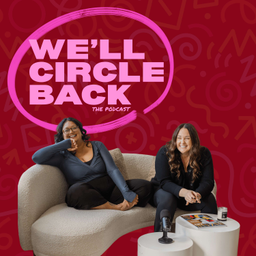
We’ll Circle Back is the meeting you actually want to attend. Hosted by two corporate dropouts turned business besties, this podcast serves unfiltered takes on work, life, motherhood, and the chaos in between. Expect sharp opinions, hilarious detours, and zero action items—just real talk for ambitious women who are building bold lives and laughing through the mess.
Should Podcasts Have Seasons? Why We're Taking a Break
Short answer: we're pausing, not stopping. Season two comes back when our businesses are quieter.
This is the season one finale of We'll Circle Back. Britt Holmes of Merit Media and Puja Malhotra of Roop Creative Agency talk about why they're stepping away, what they learned launching a podcast alongside two agencies and two families, and why "seasons" turned out to mean something different than they expected.
What we cover
Why we're pausing. Both businesses run quiet in late spring and summer, which is exactly when we launched. Q4 is coming and client work is picking up. Something had to give, and we'd rather choose it than let it collapse.
What a "season" actually means for a small business podcast. We labelled every episode season one from the start, assuming we'd follow a normal schedule. What we found is that our seasons are dictated by business cycles, not by a content calendar.
We stopped having time to be friends. The thing that surprised us most: a podcast made by two friends can quietly turn friendship into a production schedule. That was the clearest sign to step back.
Rose, thorn and rose?? — what worked and what didn't. We learned to launch and run a podcast for five months, which neither of us had done. Britt discovered a deep hatred of video editing. And hearing someone say they'd listened turned out to be the best part of the whole thing.
Guesting versus hosting. We were each aiming for twelve guest appearances last year and landed closer to twenty-five. Hosting is an entirely separate business, and it's worth being honest about which one you actually have capacity for.
Don't bite off more than you can chew. The founder lesson underneath all of it: know your own business trends, and build around them rather than against them.
Timestamps
00:00 Intro
00:52 We're closing out season one
01:39 Prioritizing clients, business and family
02:36 When friendship becomes a production schedule
03:33 Guesting on other people's podcasts
04:06 Why we planned for seasons from the start
06:41 Rose, thorn and rose??!
09:26 When season two might return
10:07 Knowing your quarterly business cycles
Send us topics if you want to lure us back sooner, and find us both on social. We'll circle back.
26 Aug 2026
What Would You Never Do for Free? Scope Creep, Contracts, and Client Boundaries
Short answer: if it isn't in the contract, don't do it.
Every service provider hits the same wall. A client asks for one small thing outside the scope of work, you do it because you're capable and you want to be helpful, and three weeks later they're treating it as something you owed them all along.
In this episode, Britt Holmes of Merit Media and Puja Malhotra of Roop Creative talk about where they draw the line on free work, why "I'll just help this one time" is a red flag rather than good service, and how to push back without damaging the relationship.
What we cover
What would you never do for free? Puja's rule is absolute: if it's not in the contract, it becomes an add-on. Britt's answer is weekends.
Why service providers get taken advantage of. Clients often see a service provider as someone who's going to save them, and compassionate people over-deliver into false expectations. The contract is what protects both sides from that.
Do you need a lawyer to write your client contract? Both of us started with a borrowed 20-page template and later paid a lawyer to do it properly. We talk about when to make that jump, and the friend-of-a-friend route if you're not there yet.
How to get a contract when you have no money. The chicken-and-egg problem every new founder faces, and what to spend on instead. (Puja's take: skip the business cards.)
The exact wording to use when a client asks for something out of scope. Puja's script: confirm you have the experience, answer briefly if you want to, state clearly that it's out of scope, then refer them to someone who actually specializes in it.
Doing a favour versus being asked for one. There's a real difference between choosing to go above and beyond, and a client pushing. One is generosity. The other is a pattern that won't stop.
Timestamps
00:00 What would you never do for free?
01:10 Why clients expect service providers to save them
02:28 Scope creep starts in corporate and follows you home
03:40 What a properly drafted contract should cover
04:40 How to get a contract when you're broke
06:06 Business cards vs hiring a lawyer
06:51 What to do instead at networking events
08:00 The difference between a favour and being taken advantage of
09:05 When being helpful backfires
10:18 The exact line to use in the email
Who this is for: freelancers, agency owners, consultants and anyone selling their time who's ever done unpaid work to keep a client happy.
12 Aug 2026
You Are Not Your Business: How Founders Cope With Rejection
Rejection is part of building anything — but for founders, a client walking away can feel personal fast. In this episode of We'll Circle Back, Britt Holmes (Merit Media) and Puja Malhotra (Roop Creative Agency) get honest about how they cope with rejection as business owners: the difference between a discovery-call "no" and a client who terminates early, why tying your self-worth to your work will wreck you, and how the right contracts, boundaries, and mindset let you move through it professionally.
Puja shares the hard-won lesson from a decade-plus in branding — that feedback builds a better result — while Britt, four years in and a self-described "recovering people-pleaser," opens up about the sting of losing a client and learning that something better is almost always right behind it. If you've ever taken a "no" too personally, this one's your permission slip.
Keywords: coping with rejection, rejection as a founder, entrepreneur rejection, losing a client, client feedback, self-worth and business, small business mindset, women founders, branding, marketing agency.
In this Episode:
The two very different kinds of rejection every founder faces — and why one barely stings while the other cuts deep
Why tying your self-worth to your work (a design, a result, a report) sets you up to suffer
How feedback — even the hard kind — builds something better and more timeless
The role of strong contracts and clear termination clauses in leaving on good terms
"Business is business": staying professional (even with clients who become friends) and never burning a bridge
Making room: how losing a client often clears space for something bigger
Puja's #1 tip for coping with rejection in any small business
Key takeaways
Separate your worth from your work. "I never associate my work as my self-worth." — Puja
Feedback is fuel, not failure. Rejection of a first draft usually leads to a stronger final one.
Ask what went wrong. Treat every no — even from a lead — as a data point to come back 100x better.
Protect the relationship. Never burn a bridge; the GTA is small and professionalism attracts professionalism.
Trust the wave. "Anytime a client leaves, something better is always on the horizon." — Britt
Reach and audience
Public platform figures. Ratings count people who left a rating, not total listeners.
Spotify
5.0 / 5
7 ratings
Contact We'll Circle Back
Guest appearances
Does not typically book guests
Based on episode analysis; this does not confirm that the show is currently accepting guests.
Host of We'll Circle Back?
Claim your podcast to manage its listing and keep your show details accurate.
Pod Engine is an independent podcast discovery and analytics service and is not affiliated with or endorsed by this podcast. Artwork and show content belong to their owners. Full legal notice.
Explore this show Podcast research with Pod Engine